Corporate Security & HEAT Training

Closed Circuit Rebreathers (CCR): Control, Complexity, and the Illusion of Efficiency

What a Rebreather Actually Does

A rebreather is not simply a more advanced scuba system. It is a completely different approach to life support underwater.

Unlike open circuit, where gas is breathed once and expelled, a rebreather recycles gas. Carbon dioxide is removed through a scrubber, oxygen is added back into the loop, and the diver breathes the same gas repeatedly.

This creates several advantages. Gas consumption is significantly reduced. Bubble production is minimal, which benefits both marine life interaction and tactical operations. Most importantly, oxygen levels can be controlled to optimise decompression.

But these advantages come at a cost.

The diver is no longer just breathing — they are managing a system.


The Illusion of Efficiency

CCR is often marketed or perceived as a more efficient way to dive. Longer bottom times, less gas logistics, and quieter operation all contribute to that perception.

However, efficiency in CCR is conditional.

The system only works if:

  • Sensors are accurate
  • Electronics function correctly
  • The scrubber is effective
  • The diver monitors everything continuously

If any part of that chain fails, the consequences are immediate and often invisible.

This is where the illusion lies. CCR is efficient only when perfectly managed. It does not forgive inattention.


Silent Failures: The Real Risk

One of the defining characteristics of CCR diving is that failures are often silent.

In open circuit, problems are usually obvious. Gas supply issues are felt immediately. Equipment failures are detectable through sound, resistance, or pressure changes.

In CCR, failure can occur without warning.

Oxygen levels may drop without sensation. Carbon dioxide may build up gradually. Sensors may provide incorrect readings while appearing normal.

The diver must not rely on feeling.

They must rely on:

  • Procedure
  • Monitoring
  • Verification

This is not intuitive diving. It is disciplined system management.


Control vs Automation

Modern rebreathers incorporate advanced electronics, automatic oxygen addition, and multiple safety systems. While these features increase capability, they also introduce a risk: overreliance.

Automation can create complacency.

Divers may begin to trust the system instead of verifying it. They may assume that electronics will compensate for human error.

Professional CCR divers understand that:

Automation assists.

It does not replace responsibility.

Control remains with the diver.

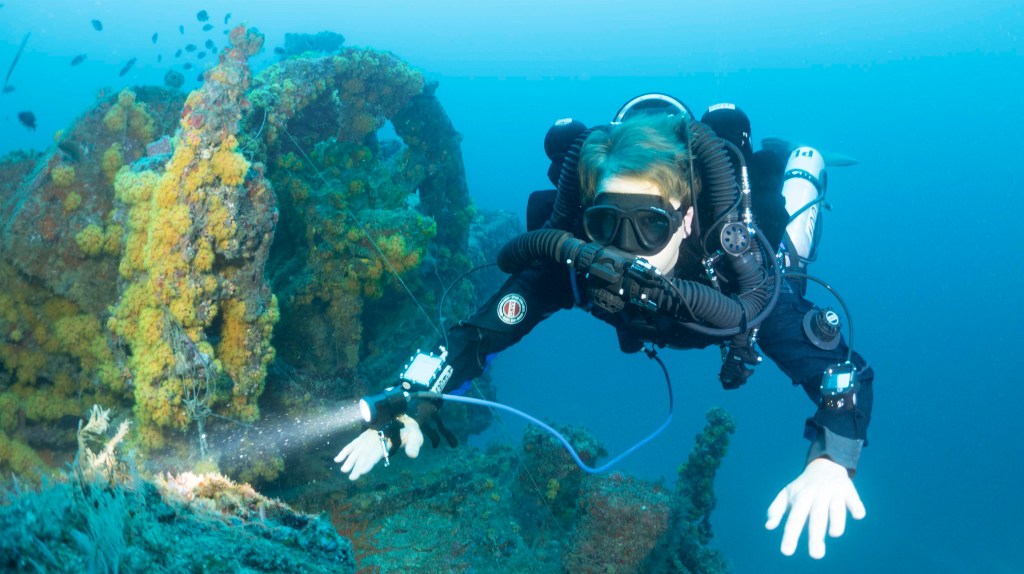
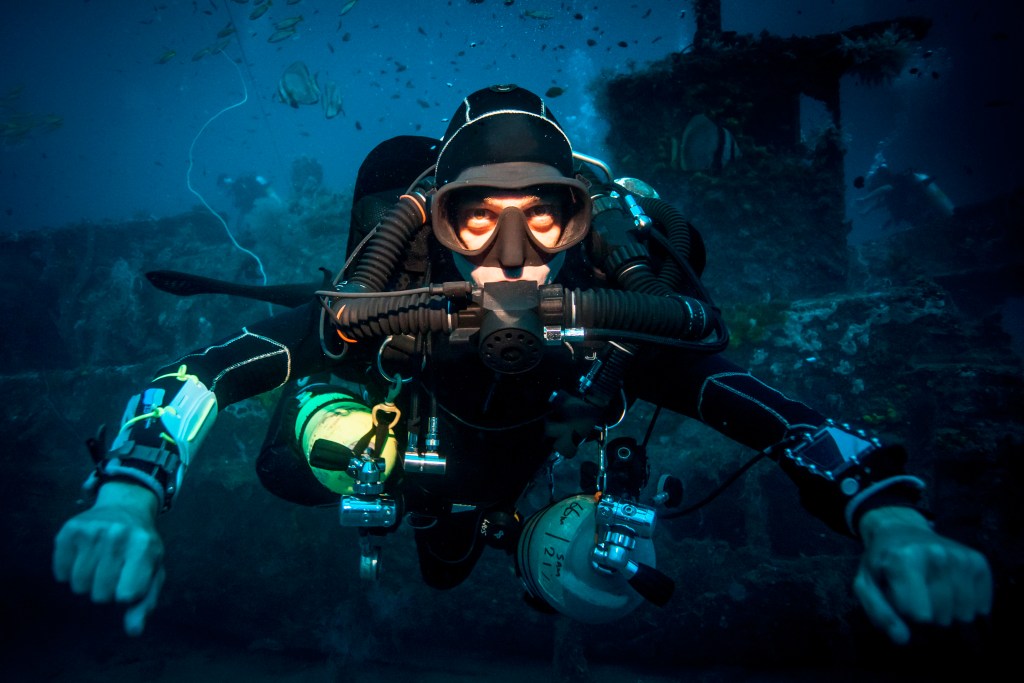
A scuba diver wearing a full wetsuit and diving mask explores an underwater shipwreck covered in colourful corals and marine growth, shining a torch on the wreckage.

The Importance of Checklists

CCR diving is built on checklists.

Pre-dive checks, loop checks, sensor calibration, bailout verification — all of these are structured processes that must be followed consistently.

Skipping steps or rushing preparation introduces risk before the dive even begins.

Checklists are not administrative tasks. They are operational tools.

They ensure that:

  • The system is configured correctly
  • Components are functioning
  • Redundancies are available

Professional CCR diving treats preparation as part of the dive.


Bailout: The Real Safety System

A common misunderstanding is that the rebreather itself is the primary life-support system.

In reality, the true safety system is:

Bailout.

Bailout gas allows the diver to exit the dive independently of the rebreather. It must be planned, configured, and accessible at all times.

Poor bailout planning is one of the most critical failures in CCR diving.

The system may be complex, but the exit strategy must remain simple.


Mental Discipline and Workload

CCR diving increases cognitive load.

The diver must:

  • Monitor oxygen levels
  • Track depth and decompression
  • Manage buoyancy through the loop
  • Remain aware of system status

This requires:

Calmness

Focus

Consistency

Stress, fatigue, or distraction degrade performance quickly.

The challenge is not physical. It is mental.

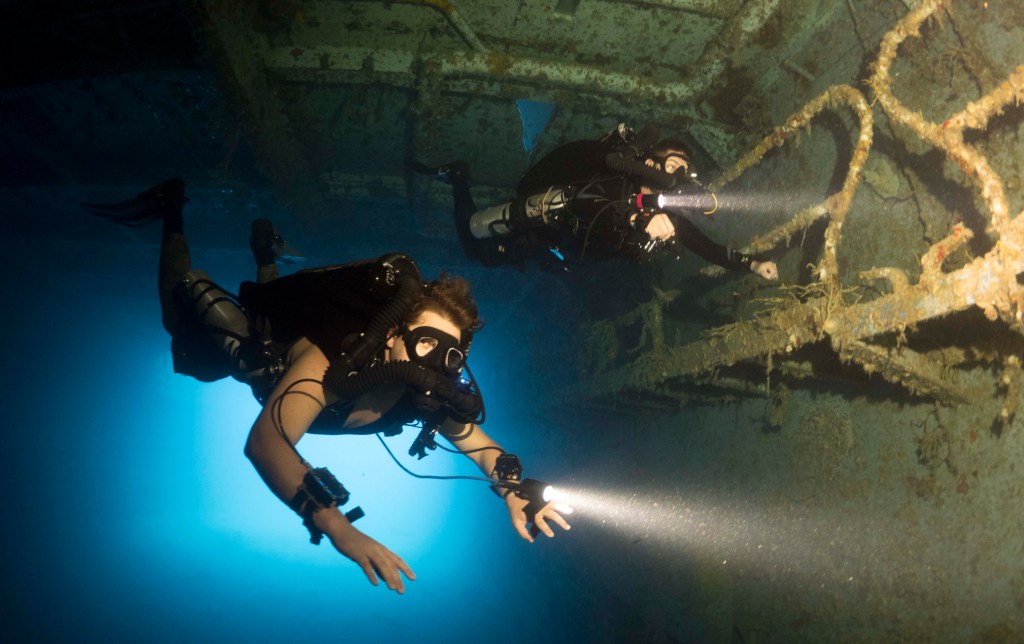
Two scuba divers with torches explore the dark interior of a sunken shipwreck underwater, surrounded by debris and illuminated by beams of light.

Training and Progression

CCR is not an entry-level system.

Progression must be structured, starting with:

  • Basic unit familiarity
  • Controlled environments
  • Limited depth and exposure

Advanced applications — cave, wreck, deep trimix — require additional layers of training and experience.

Skipping progression stages creates risk.

At N9BO℠, CCR training is approached with the same philosophy applied to all technical diving:

Standards are the baseline.

Competence is the objective.


Technology Does Not Replace Skill

One of the most persistent misconceptions is that advanced equipment compensates for limitations in skill.

It does not.

CCR amplifies both strengths and weaknesses.

A disciplined diver benefits from the system. An undisciplined diver is exposed by it.

The system is neutral.

The outcome depends on the operator.


Final Perspective

Closed Circuit Rebreathers represent one of the most powerful tools in modern diving. They extend range, reduce logistical constraints, and open environments that would otherwise be inaccessible.

But they demand something in return.

Discipline.

Attention.

Consistency.

CCR is not about convenience. It is about control of a system that does not tolerate complacency.

Because underwater, the system does not adapt to the diver.

The diver must adapt to the system.

A scuba diver in a wetsuit and mask swims underwater, surrounded by marine life and dark blue water. The diver holds equipment and appears to explore a sunken structure or wreck in the background.


Considering Rebreather Training?


Contact N9BO℠ to discuss CCR pathways, system selection, and structured progression into closed circuit diving.


From the N9BO℠ Knowledge Base


Share this

Travel Security: Risk Awareness Before, During, and After the Journey

Travel Is an Operational Environment

Many travellers perceive travel as transition time.

Professionals recognise it as an operational phase.

Risk begins:

  • During planning
  • In digital communications
  • In visa applications
  • In logistics coordination

Security is not activated at destination.

It begins at itinerary design.

Understanding this mindset shift prevents preventable exposure.


Pre-Travel Preparation: Risk Mapping Before Departure

Structured preparation includes:

  • Country risk assessment
  • Political and environmental stability review
  • Health infrastructure evaluation
  • Local transport analysis
  • Secure accommodation verification

Documentation readiness is critical.

Digital and physical copies of key documents reduce vulnerability.

Travel without preparation increases dependence on improvisation.

Improvisation under stress increases error.


Information Security While Travelling

Travel increases digital exposure.

Common vulnerabilities include:

  • Public Wi-Fi networks
  • Device theft
  • Unsecured USB charging ports
  • Visible laptop work in public spaces

Professionals mitigate exposure by:

  • Using VPN services
  • Minimising device data storage
  • Avoiding sensitive discussions in unsecured environments
  • Limiting visible corporate identification

Information leakage often precedes physical risk.

Digital discipline supports personal safety.

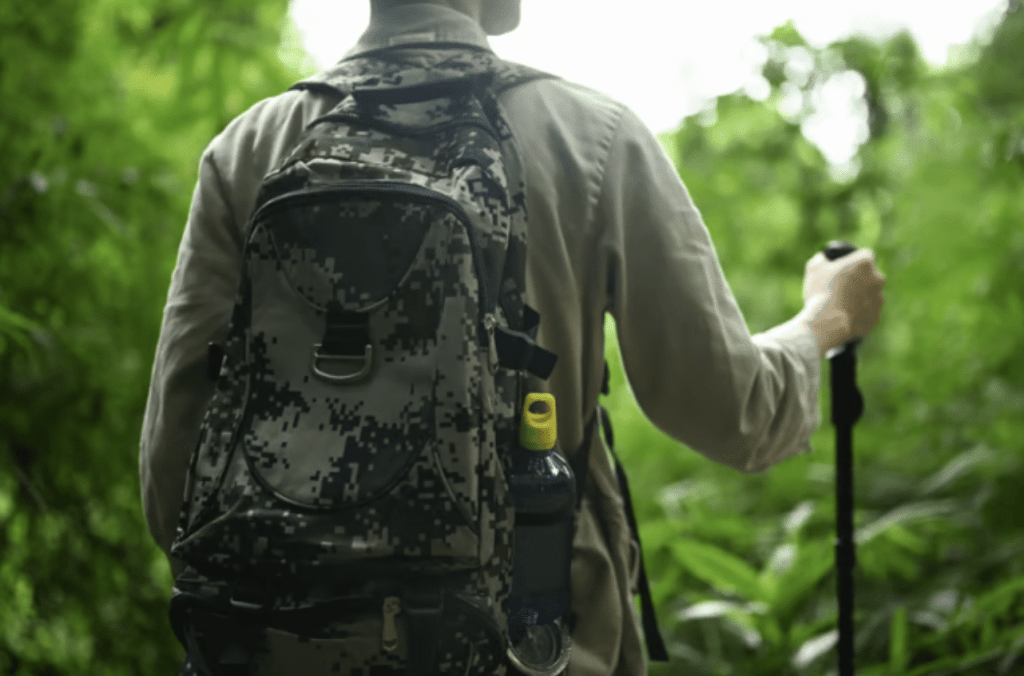
A person with a camouflage rucksack and walking stick hikes through lush green foliage, seen from behind in a forest or jungle setting.

Airport and Transit Behaviour

Airports concentrate:

  • Fatigue
  • Distraction
  • Asset vulnerability

Professional travellers maintain:

  • Luggage awareness
  • Device control
  • Situational scanning

Crowded environments increase theft opportunity.

Distraction increases vulnerability.

Fatigue degrades perception.

Discipline during transit prevents opportunistic exposure.


Accommodation Security

Hotel environments require:

  • Room inspection upon entry
  • Secondary locking mechanisms
  • Emergency exit awareness
  • Secure storage of documents

High-risk environments may require:

  • Advance security assessment
  • Controlled meeting locations
  • Transport verification

Security posture must match local risk profile.

Standardised procedure reduces complacency.

A white helicopter is seen from the front, hovering above the ground at an airfield with several small aeroplanes and buildings visible in the background under a partly cloudy sky.

Situational Awareness in Unfamiliar Environments

Environmental awareness includes:

  • Understanding local norms
  • Recognising cultural sensitivities
  • Identifying exit routes
  • Monitoring crowd behaviour

Subtle cues often precede instability.

Professional travellers observe:

  • Movement patterns
  • Crowd agitation
  • Police presence
  • Infrastructure changes

Awareness precedes avoidance.

Avoidance reduces confrontation.


Health and Medical Preparedness

Travel introduces medical uncertainty.

Prepared travellers maintain:

  • Medical kit familiarity
  • Insurance verification
  • Evacuation planning
  • Emergency contact structure

Environmental stressors include:

  • Climate
  • Hydration variation
  • Food hygiene
  • Vector-borne exposure

Health compromise reduces decision capacity.

Preparedness stabilises performance.


Post-Travel Debrief

Security does not end at arrival home.

Structured debrief includes:

  • Incident review
  • Information exposure assessment
  • Behavioural correction
  • Lessons learned documentation

Continuous improvement strengthens resilience.

Professional travel is iterative.

Each mission informs the next.


Travel Security as Behavioural Discipline

Travel security is not paranoia.

It is disciplined behaviour.

Professionals understand that:

  • Predictability increases vulnerability
  • Overconfidence reduces awareness
  • Fatigue magnifies risk

Structured routines stabilise performance.

At N9BO℠, we emphasise that security awareness integrates seamlessly with operational mindset. Whether deployed offshore, conducting training, or travelling for corporate operations, behaviour defines safety.

Prepared travellers reduce risk before risk escalates.

Several black boats are moored side by side on calm water, each equipped with bright orange lifebuoys and small rectangular screens or signs attached near the front.


Operating Internationally and Want to Reduce Travel Risk?


Structured travel security training builds awareness, resilience, and disciplined behaviour. Contact N9BO℠ to strengthen your operational readiness abroad.


From the N9BO℠ Knowledge Base


Share this

The Incident Command System (ICS): Structured Leadership When Chaos Tries to Take Over

Why Structure Matters in Crisis

Emergencies compress time and distort perception.

Without structure, common failures include:

  • Conflicting instructions
  • Duplicate efforts
  • Missed critical tasks
  • Communication breakdown
  • Leadership vacuum

ICS exists to prevent these failures.

It establishes a predictable architecture where everyone knows:

  • Who is in charge
  • What their role is
  • Where information flows
  • How decisions are escalated

Order stabilises response.


Core Principles of ICS

ICS is built on several foundational concepts:

1. Clear Chain of Command

Authority is defined — not assumed.

2. Modular Organisation

The structure scales depending on incident size.

3. Defined Roles

Operations, Planning, Logistics, and Finance/Administration form the core structure.

4. Unified Command

When multiple agencies are involved, authority is coordinated rather than fragmented.

Predictability reduces cognitive overload.

Three firefighters in orange suits and yellow helmets kneel on grass, aiming a hose that sprays water at a large, intense fire with billowing smoke.

Operations Section: Managing the Action

The Operations Section executes tactical objectives.

In diving or offshore contexts, this may include:

  • Rescue coordination
  • Evacuation management
  • Hazard containment
  • Asset protection

Operations should never function independently from Planning and Logistics.

Integrated coordination prevents resource waste.


Planning Section: Anticipating What Comes Next

Planning gathers information and forecasts development.

This includes:

  • Situation assessment
  • Resource tracking
  • Risk projection
  • Contingency development

Planning prevents reactive decision-making.

Anticipation reduces surprise.

Professional response teams prepare for escalation before it occurs.


Logistics Section: Sustaining the Response

Logistics ensures:

  • Equipment availability
  • Medical resources
  • Communication support
  • Personnel rotation
  • Transport coordination

Many incident failures stem from logistical breakdown rather than tactical error.

Sustained response requires infrastructure.


Finance and Administration: Accountability Under Pressure

Even during crisis, documentation matters.

Finance and Administration track:

  • Resource expenditure
  • Personnel hours
  • Contracted services
  • Legal exposure

Clear documentation protects organisations after the incident resolves.

Accountability strengthens credibility.

An offshore oil rig with red and yellow structure stands anchored in the sea under a partly cloudy sky, with cables stretching to the water and land faintly visible in the background.

ICS in Diving and Maritime Operations

ICS integrates naturally with:

  • Public Safety Diving operations
  • Offshore oil & gas platforms
  • Expedition teams
  • Corporate crisis management

Diving emergencies benefit from structured command, especially when:

  • Multiple vessels are involved
  • Surface support coordinates rescue
  • Medical evacuation is required

At N9BO℠, we integrate ICS principles into training frameworks to reinforce decision clarity under stress.

Structured leadership prevents escalation.


Authority Gradient and Communication Flow

ICS reduces authority gradient problems by defining communication pathways.

Personnel know:

  • Who to report to
  • How to escalate concerns
  • Where information originates

Clear reporting lines reduce hesitation.

In emergencies, silence increases risk.

Structure encourages communication.


Scalability: From Minor Incident to Major Crisis

ICS is adaptable.

A small diving incident may require only:

  • Incident Commander
  • Operations Lead

A large offshore emergency may expand to:

  • Full section chiefs
  • Unified multi-agency command
  • Medical and evacuation branches

The framework remains stable regardless of size.

Flexibility within structure defines resilience.


Training Before the Incident

ICS cannot be improvised effectively.

Personnel must train in:

  • Role understanding
  • Tabletop exercises
  • Scenario-based simulations
  • Communication drills

Familiarity with structure reduces hesitation.

Crisis reveals preparation.


When Chaos Is Organised

Incidents are unpredictable.

Leadership does not need to be.

ICS ensures that:

  • Decisions are documented
  • Authority is visible
  • Resources are tracked
  • Communication flows clearly

Structured command stabilises volatile environments.

At N9BO℠, we emphasise that professionalism includes leadership literacy. Whether underwater or in crisis coordination, clarity saves time — and time saves lives.

An offshore oil rig stands silhouetted against an orange sunset, with the sun low on the horizon over calm ocean waters and distant mountains.


Need Structured Crisis Management Training?


ICS builds clarity, coordination, and control under pressure. Contact N9BO℠ to explore structured command and emergency management training.


From the N9BO℠ Knowledge Base


Share this

Information Security While Travelling: Protecting Data Beyond the Office

Why Travel Amplifies Information Risk

In controlled office environments, data security is supported by:

  • Firewalls
  • Secured networks
  • Physical access controls
  • IT monitoring systems

When travelling, these protections weaken.

Professionals often rely on:

  • Public Wi-Fi
  • Hotel networks
  • Airport charging stations
  • Temporary meeting spaces

These environments increase exposure to:

  • Network interception
  • Device theft
  • Surveillance
  • Opportunistic access

Travel expands attack surfaces.

Awareness reduces vulnerability.


Digital Hygiene Before Departure

Information security begins before leaving home.

Best practices include:

  • Updating operating systems and software
  • Enabling multi-factor authentication
  • Backing up critical data
  • Removing non-essential sensitive files
  • Encrypting devices

Travelling with minimal necessary data reduces risk.

Less stored data means less compromised data if a device is lost.

Preparation is defensive strategy.

A person holds a mobile phone displaying a security screen with a shield icon and the words System Secure. Their finger is hovering over the Settings option on the phone.

Public Wi-Fi: Convenience vs Exposure

Public Wi-Fi networks are rarely secure.

Risks include:

  • Man-in-the-middle attacks
  • Fake hotspot networks
  • Packet interception
  • Credential harvesting

Professionals should:

  • Avoid accessing sensitive systems on unsecured networks
  • Use secure VPN services
  • Disable automatic Wi-Fi connections
  • Turn off Bluetooth when not required

Convenience should not override security posture.

Digital awareness mirrors situational awareness in physical space.


Device Theft and Physical Access

Laptops and mobile phones are attractive targets.

Data compromise often follows physical theft.

Preventative measures include:

  • Never leaving devices unattended
  • Using privacy screens in public spaces
  • Enabling device tracking and remote wipe
  • Locking devices even during short absences

Hotels and conference spaces do not guarantee device security.

Assume visibility equals vulnerability.

Professional discipline applies to digital assets as much as physical ones.

A man wearing a hard hat and high-visibility vest holds a laptop and a handheld device beside a lake, with forested hills and clear blue sky in the background.

Information Leakage Through Conversation

Data compromise is not always technical.

Casual conversations in:

  • Airport lounges
  • Taxi rides
  • Public cafés

can unintentionally reveal sensitive operational information.

Operational discretion includes verbal discipline.

Awareness of surroundings reduces information leakage.

Human behaviour often presents greater vulnerability than technology.


Border and Inspection Considerations

In certain jurisdictions, authorities may request access to electronic devices.

Organisations operating internationally should establish:

  • Clear device policies
  • Legal guidance
  • Data minimisation protocols

Carrying only necessary information reduces exposure.

Operational planning must consider jurisdictional realities.


Phishing and Social Engineering During Travel

Travellers are prime targets for social engineering attempts.

Common tactics include:

  • Fake hotel confirmation emails
  • Urgent payment requests
  • “Lost colleague” impersonation
  • Public Wi-Fi pop-up login prompts

Verification before action prevents compromise.

Urgency is often a manipulation tool.

Slowing down protects decision quality.


Integration With Personal Security

Information security overlaps with personal security.

Compromised data can:

  • Reveal travel plans
  • Expose accommodation details
  • Identify team members
  • Provide insight into operational schedules

Digital compromise may escalate into physical risk.

Integrated security thinking strengthens resilience.

At N9BO℠, we emphasise that corporate security extends beyond fences and access control — it includes behavioural and digital discipline.


Security as a Habit, Not a Reaction

Effective information security during travel requires:

  • Preparation
  • Awareness
  • Controlled behaviour
  • Structured digital hygiene

Security is strongest when habits are automatic.

Reactive security is weaker than preventative security.

Professionals operating in complex environments must treat information as an asset requiring protection.

Data integrity supports organisational continuity.

Person holding a mobile phone with a lock icon on the screen, using fingerprint authentication, sitting in front of a laptop displaying a login page with a password field and lock icon.


Strengthen Your Travel Security Posture


Digital discipline and situational awareness protect both people and information. Contact N9BO℠ to explore integrated travel and corporate security training.


From the N9BO℠ Knowledge Base


Share this

Defensive Driving for Field Operations: Mobility Without Vulnerability

Why Driving Is a Security Function

In unstable or remote environments, vehicles are:

  • Primary mobility platforms
  • Exposure points
  • Potential targets
  • Evacuation tools

Driving becomes part of operational security planning.

Road environments introduce:

  • Unpredictable civilian traffic
  • Checkpoints
  • Ambush risk in extreme contexts
  • Mechanical vulnerability
  • Environmental hazards

Mobility without discipline increases exposure.

Defensive driving reduces that exposure.


Defensive Driving vs Tactical Driving

It is important to distinguish:

  • Defensive driving — hazard avoidance and risk reduction
  • Tactical driving — high-speed manoeuvre under direct threat

For most corporate and field professionals, defensive driving is the relevant skillset.

Core principles include:

  • Anticipation
  • Controlled speed
  • Space management
  • Predictable movement
  • Exit route awareness

The objective is not confrontation — it is avoidance.


Situational Awareness Behind the Wheel

Driving narrows perception.

Field operators must consciously expand awareness by monitoring:

  • Traffic flow patterns
  • Sudden changes in vehicle behaviour
  • Environmental anomalies
  • Unusual roadside activity
  • Following vehicles

Risk assessment begins before entering the vehicle.

Route selection, timing, and local context matter.

Driving discipline begins with planning.

Aerial view of a white vehicle on a narrow dirt track surrounded by dense, lush green tropical forest and large leafy plants.

Positioning and Space Management

Professional drivers maintain:

  • Escape lanes
  • Controlled following distances
  • Clear lines of sight
  • Avoidance of boxed-in positioning

At traffic stops, leaving sufficient distance from the vehicle ahead allows manoeuvring if necessary.

Defensive spacing provides options.

Options preserve safety.


Checkpoint Conduct and Interaction

In certain regions, checkpoints are common.

Training addresses:

  • Behavioural composure
  • Clear communication
  • Document accessibility
  • Avoidance of sudden movements
  • Awareness of escalation cues

Driving discipline includes interpersonal discipline.

Composure reduces tension.

Professional conduct prevents unnecessary escalation.

Several off-road vehicles are parked on a rocky, desert landscape with rugged cliffs in the background under a partly cloudy blue sky. The scene is bathed in warm sunlight.

Environmental Hazards and Terrain

Field operations often involve:

  • Poor road conditions
  • Unpaved surfaces
  • Flood-prone zones
  • Remote terrain

Defensive driving includes understanding:

  • Traction control limitations
  • Load distribution effects
  • Brake distance variation
  • Hydroplaning risk

Mechanical sympathy reduces breakdown risk.

Vehicle reliability is part of risk management.


Fatigue and Cognitive Degradation

Driving fatigue is underestimated in operational planning.

Fatigue reduces:

  • Reaction time
  • Threat recognition
  • Decision clarity

Field schedules must integrate:

  • Rest planning
  • Driver rotation
  • Realistic travel windows

Professional mobility requires physiological awareness.

Driving is cognitive work.


Emergency Response While Driving

In crisis scenarios, drivers may need to:

  • Reroute
  • Evacuate
  • Seek safe haven
  • Coordinate via radio

Structured decision-making under pressure reduces panic-driven mistakes.

Defensive driving training builds familiarity with controlled response.

Calm behaviour stabilises vehicle control.


Vehicle as Operational Asset

Vehicles should be treated as:

  • Managed assets
  • Safety platforms
  • Logistical tools

Pre-departure checks include:

  • Tyre condition
  • Fuel levels
  • Communication equipment
  • Emergency kit availability

At N9BO℠, we emphasise that operational resilience includes mobility discipline. Vehicles are not merely transport — they are part of the safety system.


Mobility Without Exposure

The goal of defensive driving is simple:

Maintain mobility without increasing vulnerability.

Most road-based incidents are preventable through:

  • Planning
  • Awareness
  • Spacing
  • Discipline

Driving becomes safe when it is treated as a professional responsibility.

Routine thinking is the enemy of risk management.

A person wearing a brown jacket and gloves rests their arm out the window of a white off-road vehicle parked in a forest, with trees and earth visible in the background.


Strengthen Your Operational Mobility Skills


Defensive driving reduces exposure and improves crisis readiness in high-risk environments. Contact N9BO℠ to explore structured mobility and security training.


From the N9BO℠ Knowledge Base


Share this

What the HEAT Course Actually Covers: Preparing Professionals for High-Risk Environments

HEAT Is About Awareness, Not Aggression

The term “hostile environment” often conjures images of war zones. While HEAT programmes may be relevant to conflict regions, the concept applies more broadly:

  • Politically unstable countries
  • Remote field operations
  • Offshore industrial sites
  • Disaster-affected regions
  • High-crime urban environments

HEAT is not combat training.

It is structured risk literacy.

Participants learn how to identify, assess, and manage threats before they escalate.

Preparation replaces reaction.


Core Module 1: Risk Assessment & Situational Awareness

Every HEAT programme begins with understanding risk frameworks.

Participants are trained to:

  • Conduct dynamic risk assessments
  • Identify environmental indicators
  • Recognise behavioural anomalies
  • Evaluate threat vs vulnerability

Situational awareness is taught as a layered process:

  1. Observation
  2. Interpretation
  3. Decision
  4. Action

Awareness is not paranoia. It is disciplined perception.

At N9BO℠, we emphasise that awareness degrades under fatigue and stress — therefore it must be trained intentionally.


Core Module 2: Personal Security & Travel Protocols

Many field incidents occur outside operational sites — during transit.

Training covers:

  • Route planning
  • Vehicle positioning
  • Checkpoint interaction
  • Hotel security assessment
  • Behavioural profile management

Participants learn to reduce predictability and vulnerability.

Travel security is not about suspicion — it is about pattern management.

Professionals operating internationally must understand how their presence may be perceived.

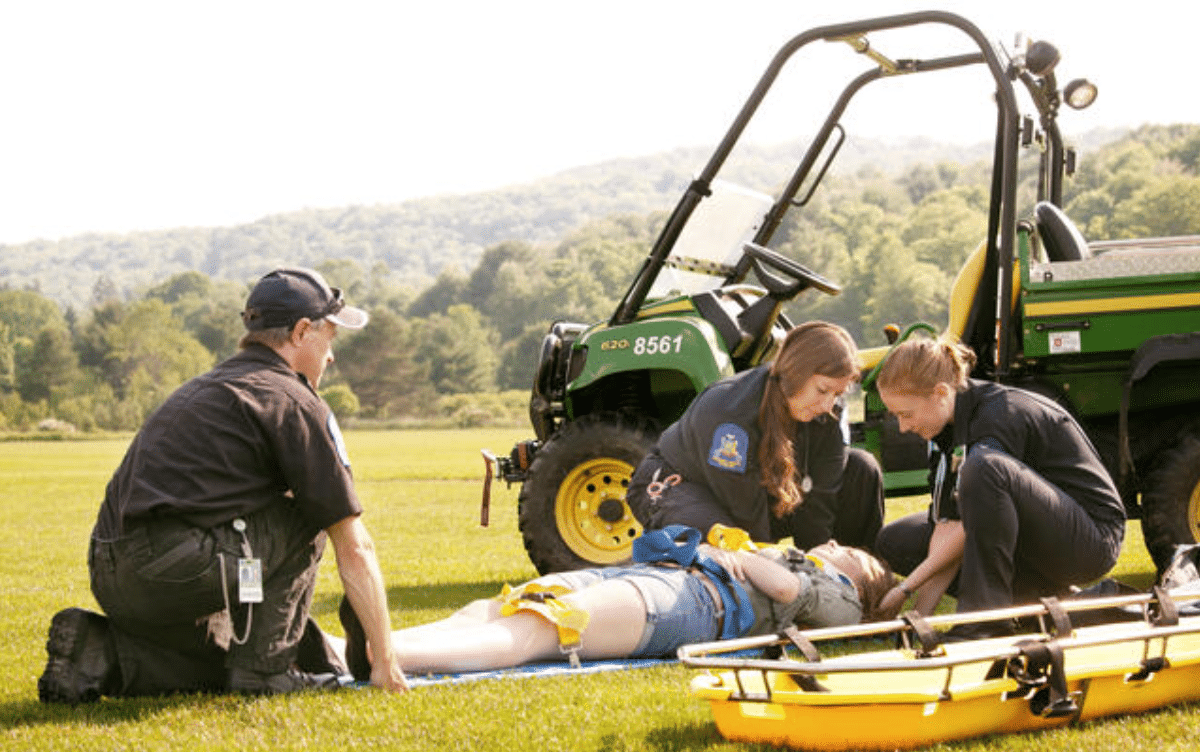
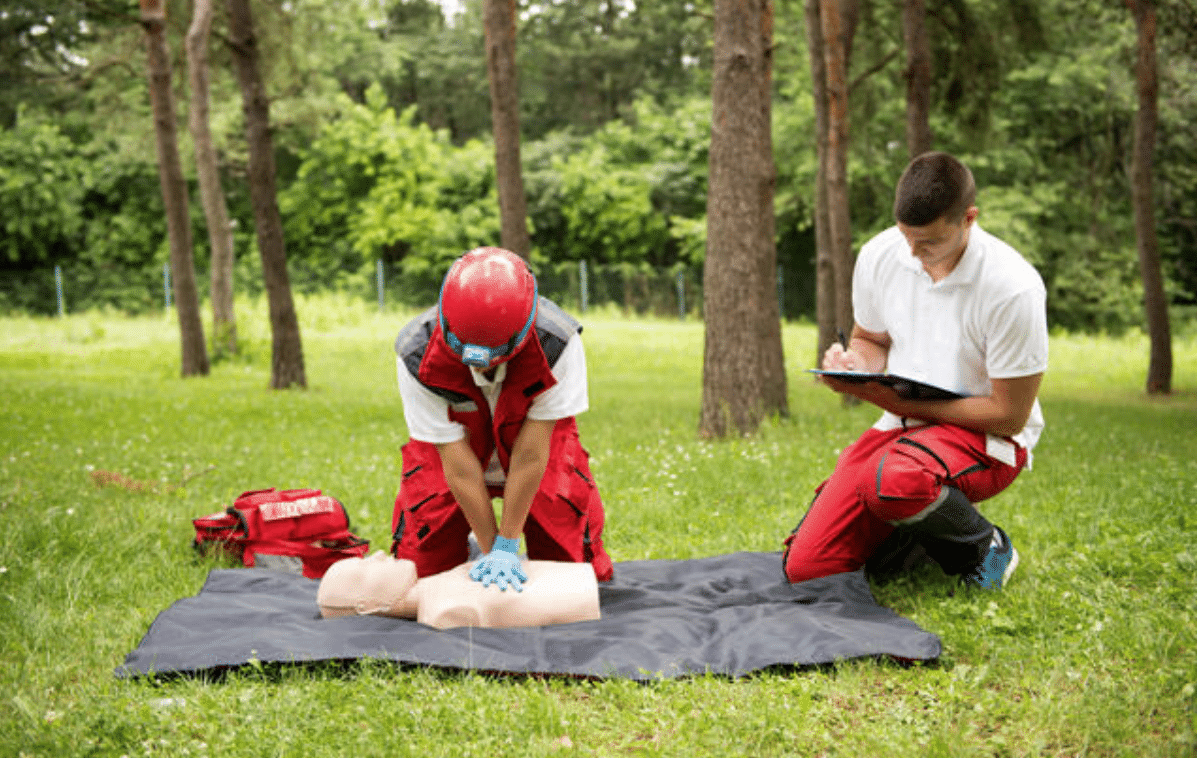
Three people gather around a CPR training manikin on a concrete floor, with one person preparing to check the airway and another holding a yellow first aid kit.

Core Module 3: Crisis Decision-Making Under Stress

Crisis compresses time perception.

Under stress, individuals:

  • Narrow focus
  • Experience cognitive overload
  • Default to habit

HEAT incorporates scenario-based simulations to expose participants to controlled stress environments.

The objective is not to overwhelm, but to:

  • Test decision clarity
  • Reinforce structured thinking
  • Identify behavioural weaknesses

Training under stress builds behavioural stability when real events occur.

Safe failure strengthens capability.


Core Module 4: Medical & Trauma Response

In remote or unstable environments, immediate medical infrastructure may be limited.

Participants are trained in:

  • Trauma assessment
  • Bleeding control
  • Tourniquet use
  • Airway management basics
  • Casualty movement

Medical competence reduces dependency on rapid evacuation.

Structured response preserves life during the critical first minutes.

Professional preparedness includes medical literacy.

Two people holding a bundle of sticks together outdoors, with others and tents blurred in the background, suggesting a group camping scene in the woods.

Core Module 5: Communications & Coordination

Communication breakdown escalates crises.

HEAT training addresses:

  • Radio discipline
  • Redundant communication systems
  • Incident reporting
  • Command structure integration

Participants learn how to communicate clearly under pressure and align with structured systems such as Incident Command System (ICS).

Clear information flow reduces confusion.


Core Module 6: Environmental and Operational Awareness

For industries such as oil & gas, logistics, or humanitarian operations, environmental hazards intersect with security risk.

Training addresses:

  • Working in remote terrain
  • Offshore operational safety
  • Emergency evacuation triggers
  • Security and safety integration

Operational awareness extends beyond threat — it includes environmental, logistical, and human factors.


Human Factors in High-Risk Environments

HEAT programmes also address:

  • Stress management
  • Fatigue recognition
  • Decision bias
  • Authority gradient
  • Team communication

Risk is often amplified by human behaviour rather than external threat alone.

Professional discipline mitigates this.


Why Structured HEAT Matters

Poorly designed hostile environment training risks theatrics over substance.

A professional HEAT course should:

  • Follow structured learning objectives
  • Integrate realistic but controlled scenarios
  • Align with recognised standards
  • Emphasise decision-making over spectacle

At N9BO℠, we deliver HEAT programmes grounded in operational realism and structured pedagogy. The objective is behavioural competence — not simulated chaos.

Preparation strengthens resilience.


From Awareness to Operational Confidence

Participants completing a structured HEAT course leave with:

  • Improved risk literacy
  • Clearer decision frameworks
  • Enhanced crisis composure
  • Greater environmental awareness

Confidence built through training differs from confidence built on assumption.

Operational environments reward preparation.

HEAT builds preparedness before risk materialises.

Two people use fire extinguishers to put out flames in a rectangular metal container outdoors, practising fire safety. An unused fire extinguisher sits on the ground nearby.


Preparing for High-Risk or Remote Operations?


Structured HEAT training strengthens awareness, decision-making, and crisis readiness. Contact N9BO℠ to discuss tailored programmes for your organisation.


From the N9BO℠ Knowledge Base


Share this

GNSS Explained: How Satellite Navigation Actually Works for Divers and Field Operators

GNSS vs “GPS”: Understanding the Terminology

Many people use the term “GPS” generically. In reality:

  • GPS refers to the United States satellite constellation.
  • GLONASS is operated by Russia.
  • Galileo by the European Union.
  • BeiDou by China.

Together, these systems form Global Navigation Satellite Systems (GNSS).

Modern receivers access multiple constellations simultaneously to increase accuracy and redundancy.

For divers and maritime operators, this means stronger signal reliability and faster position acquisition.

But GNSS is not magic.

It relies on physics, timing precision, and signal integrity.


How GNSS Determines Position

GNSS satellites broadcast time-stamped signals from known orbital positions.

Your receiver calculates position by:

  1. Measuring how long signals take to arrive.
  2. Converting travel time into distance.
  3. Triangulating position from multiple satellites.

A minimum of four satellites is required for:

  • Latitude
  • Longitude
  • Altitude
  • Time correction

The process is known as trilateration.

Accuracy depends on signal strength, satellite geometry, and atmospheric conditions.

A person in a teal shirt stands in a ship’s control room, looking down whilst talking on a corded phone, surrounded by navigation equipment and monitors, with the sea visible through large windows.

Surface Applications in Diving

GNSS supports diving operations in multiple ways:

  • Marking entry and exit points
  • Recording dive site coordinates
  • Tracking drift patterns
  • Supporting search grid planning
  • Logging expedition waypoints

Surface GPS devices are standard on dive boats.

However, GNSS does not function underwater.

Water blocks satellite signals almost immediately.

Divers must separate surface navigation systems from underwater navigation discipline.


Accuracy and Its Limitations

Consumer-grade GNSS receivers typically provide accuracy within:

  • 3–5 metres under optimal conditions

Factors reducing accuracy include:

  • Poor satellite geometry
  • Dense cloud cover
  • Obstructions (cliffs, vessels, buildings)
  • Ionospheric interference

Multipath error occurs when signals reflect off surfaces before reaching the receiver.

False precision creates operational risk.

GNSS accuracy must always be interpreted conservatively.


GNSS in Search and Recovery Operations

In public safety and research contexts, GNSS assists with:

  • Marking evidence recovery sites
  • Establishing search grids
  • Logging anchor positions
  • Coordinating surface support

However, underwater positioning requires different tools, including:

  • Surface marker buoys
  • Acoustic positioning systems
  • Compass navigation

GNSS enhances surface coordination — it does not replace underwater procedure.

At N9BO℠, we emphasise integration between navigation technologies and disciplined underwater execution.

A person stands on a small motorboat moving across calm water at sunset, with golden light reflecting on the rippling surface.

Overconfidence in Digital Navigation

Modern digital interfaces can create false security.

Common errors include:

  • Blind reliance on plotted waypoints
  • Ignoring environmental drift
  • Failing to cross-check compass headings
  • Overlooking tidal movement

GNSS provides position data, not judgment.

Situational awareness must always override screen confidence.

Digital navigation supports — it does not replace — human decision-making.


GNSS and Emergency Response

In emergency situations, precise coordinates accelerate:

  • Medevac response
  • Coastguard dispatch
  • Search and rescue deployment

Providing accurate latitude and longitude reduces response delay.

Operators must understand coordinate formats:

  • Decimal degrees
  • Degrees, minutes, seconds
  • Degrees and decimal minutes

Miscommunication of format can cause significant location error.

Structured communication prevents this.


Best Practices for Divers and Field Teams

Professional GNSS use includes:

  • Verifying coordinate format before transmission
  • Logging waypoints before departure
  • Maintaining spare batteries
  • Cross-checking plotted position against visual references
  • Updating firmware regularly

Redundancy enhances reliability.

A physical chart and compass remain valuable backups.

Technology fails — fundamentals persist.


Navigation Is a System, Not a Device

GNSS is one component within a broader navigation system.

Effective navigation integrates:

  • Satellite positioning
  • Compass discipline
  • Environmental awareness
  • Surface coordination
  • Contingency planning

Professional divers and field operators treat navigation as a structured process.

At N9BO℠, we teach that technological capability must be matched with procedural discipline. Precision improves safety — but overconfidence degrades it.

Navigation supports operations only when operators understand its limits.

A man wearing sunglasses and a white shirt steers a boat, looking out over blue water with distant islands visible. A navigation screen and controls are in front of him inside the boat's covered cockpit.

Want to Strengthen Your Navigation Skills?

Accurate positioning requires more than a device — it requires structured understanding. Contact N9BO℠ to explore navigation and operational planning training.


From the N9BO℠ Knowledge Base


Share this

Ham Radio Workshops for Divers and Expeditions: When Digital Fails, RF Still Works

Why Communications Redundancy Matters

Modern operations often rely heavily on:

  • Mobile networks
  • Internet connectivity
  • Satellite communication systems

While highly capable, these systems remain vulnerable to:

  • Infrastructure failure
  • Weather disruption
  • Network congestion
  • Power outages

Ham radio operates independently of centralised infrastructure.

It uses radio frequency transmission that can function when digital networks collapse.

For divers operating in remote regions, expedition leaders coordinating multi-site teams, or emergency response units, communication redundancy preserves operational continuity.

At N9BO℠, we reinforce that operational resilience includes independent communications capability.


What Ham Radio Actually Is

Amateur (ham) radio is a licensed communication system allowing operators to transmit voice or digital signals across:

  • Local VHF/UHF bands
  • Regional HF bands
  • International frequencies

Operators use:

  • Handheld radios
  • Mobile units
  • Base stations
  • Portable field antennas

Unlike consumer walkie-talkies, licensed ham radio allows broader transmission power, frequency access, and structured emergency networks.

It is both a technical discipline and a communication culture.

A man stands in the cabin of a boat, holding a radio and speaking into it, with windows showing the sea in the background and navigation equipment mounted above.

Relevance for Diving Operations

While underwater communication relies on line signals, slates, or specialised acoustic systems, surface coordination often determines mission success.

Ham radio supports:

  • Vessel-to-shore communication
  • Remote site logistics
  • Expedition coordination
  • Weather monitoring
  • Emergency response liaison

In disaster or field conditions where mobile networks collapse, RF networks often remain active.

Amateur operators frequently form volunteer emergency communication networks.

Structured communication protocols enhance clarity and reduce misunderstanding.


Discipline in Communication

Ham radio is not casual chatter.

Effective communication requires:

  • Clear call signs
  • Structured message format
  • Signal confirmation
  • Minimal unnecessary transmission
  • Accurate logging

Brevity prevents frequency congestion.

Clarity prevents error.

Communication under stress demands simplicity.

Structured radio discipline parallels structured dive procedures — both reduce ambiguity.

A person wearing a navy shirt and black trousers has a red walkie-talkie with an aerial clipped to their belt. The walkie-talkie’s display screen is visible, showing channel information.

Understanding Frequency and Propagation

Effective radio operation requires understanding:

  • Frequency selection
  • Line-of-sight limitations
  • Antenna orientation
  • Atmospheric propagation effects

HF signals can travel thousands of kilometres by bouncing off the ionosphere. VHF and UHF signals are primarily line-of-sight but provide excellent clarity locally.

Choosing the correct frequency band depends on:

  • Terrain
  • Distance
  • Time of day
  • Atmospheric conditions

Technical literacy enhances reliability.


Emergency Preparedness and ICS Integration

Ham radio aligns well with structured command systems such as Incident Command System (ICS).

In emergency scenarios, amateur radio operators can:

  • Relay status updates
  • Coordinate evacuation support
  • Maintain communication with command centres
  • Operate independent communication hubs

Communication breakdown often amplifies crisis severity.

Redundant communication preserves coordination.

At N9BO℠, we integrate communication resilience into broader safety and operational training frameworks.


Why Licensing Matters

Amateur radio operation requires:

  • Passing a regulatory examination
  • Understanding legal frequency use
  • Following national communication regulations

Licensing ensures:

  • Responsible frequency management
  • Knowledge of interference protocols
  • Ethical communication standards

Operating without understanding regulations risks interference with critical systems.

Professionalism includes compliance.


From Hobby to Operational Asset

Ham radio is often viewed as a hobbyist pursuit.

In operational contexts, it becomes a strategic asset.

Expeditions, offshore operations, research teams, and emergency responders benefit from:

  • Independent communication channels
  • Technical troubleshooting capability
  • Field-deployable equipment

Resilience is built before it is needed.

Communication redundancy reduces dependency on single-point failure systems.


Communications as a Safety Layer

In diving and field operations, risk management is layered:

  • Equipment redundancy
  • Gas redundancy
  • Team redundancy
  • Communication redundancy

When digital systems fail, analogue systems sustain continuity.

At N9BO℠, we believe professional operations extend beyond underwater competence. Communications planning is as critical as dive planning.

Signal clarity often determines operational clarity.

A worker in a high-visibility jacket and white hard hat holds a laptop and talks on a two-way radio inside an industrial facility with control panels and large metal tanks.

Strengthen Your Operational Communications Capability

Reliable communication is a core safety layer in expedition and field environments. Contact N9BO℠ to explore structured communication and resilience workshops.


From the N9BO℠ Knowledge Base


Share this

What Is Corporate Security? Protecting People, Continuity, and Reputation

Corporate Security Is a Business Function, Not a Cost

Corporate security exists to enable operations, not restrict them.

When done properly, it supports:

  • Business continuity
  • Duty of care obligations
  • Crisis resilience
  • Reputation management

Security that disrupts operations has failed its purpose.


Beyond Guards and Cameras

Physical measures are only one component.

Corporate security includes:

  • Risk assessment and threat analysis
  • Travel and personal security
  • Crisis management and incident response
  • Information and operational security
  • Coordination with safety and legal teams

It is a systems discipline, not a single solution.


Instructor Perspective: Security Without Context Fails

Instructors frequently encounter organisations that copy security measures without understanding their environment.

At N9BO℠, corporate security training starts with context—industry, geography, culture, and threat profile—before controls are designed.


Protecting People Comes First

People are the most valuable and most vulnerable asset.

Corporate security prioritises:

  • Staff safety during travel
  • Workplace security
  • Emergency preparedness
  • Psychological resilience

Assets can be replaced. People cannot.

A security guard in uniform sits at a desk, monitoring multiple CCTV feeds on large screens, and talks on a phone in a control room environment.

Corporate Security and Crisis Management

Security failures often escalate into crises.

Professional security planning integrates:

  • Early detection
  • Clear escalation paths
  • Decision authority
  • Media and reputational considerations

Prepared organisations respond calmly under pressure.


Legal and Ethical Responsibilities

Corporate security operates within strict legal frameworks.

Training ensures:

  • Proportionality
  • Respect for rights
  • Compliance with local laws

Poorly designed security creates liability instead of protection.


Insider Risk and Human Factors

Not all threats come from outside.

Corporate security addresses:

  • Insider threats
  • Negligence and complacency
  • Information leakage

Human behaviour remains the most complex variable.

A close-up of a security camera overlooking modern glass turnstiles with green arrow lights in a sleek, well-lit entrance area.

Security and Safety Must Align

Corporate security cannot operate in isolation.

Integration with:

  • Health and safety
  • Emergency response
  • Leadership structures

Prevents conflicting priorities during incidents.


Corporate Security in High-Risk Industries

Energy, offshore, logistics, and remote operations face elevated risk.

Professional security training ensures continuity where disruption is costly or dangerous.


Professional Parallels

Diplomatic missions, multinational corporations, and critical infrastructure operators all rely on integrated corporate security models.


The Bottom Line

Corporate security protects far more than buildings.

It protects people, decision-making, and organisational resilience. At N9BO℠, corporate security training equips organisations to anticipate risk, respond effectively, and continue operating when conditions deteriorate.

A man in a black jacket and cap holds a walkie-talkie whilst standing in front of an oil drilling rig under a blue sky.

Building or Reviewing Corporate Security Frameworks?

Corporate security protects people, operations, and organisational resilience. Contact us to discuss tailored corporate security and risk management training.


From the N9BO℠ Knowledge Base


Share this

Security and Safety Offshore: When Protection and Operations Must Align

Offshore Risk Is Never One-Dimensional

Offshore incidents rarely fit neatly into a single category.

A security issue can rapidly become a safety emergency, and a safety failure can expose serious security vulnerabilities. Offshore risk is systemic, not compartmentalised.


The False Divide Between Safety and Security

Safety traditionally focuses on accidents, while security focuses on intent.

Offshore, this distinction collapses:

  • An unauthorised access event may trigger evacuation
  • A protest or intrusion can escalate into fire or collision
  • Poor access control can compromise emergency response

Professional operations integrate both perspectives from the outset.


Instructor Perspective: Silos Create Blind Spots

Instructors frequently observe safety teams unaware of security vulnerabilities—and security teams unaware of operational hazards.

At N9BO℠, integrated training deliberately breaks down these silos, forcing teams to see risk as a shared responsibility.


Access Control Is a Safety Issue

Who enters an offshore facility matters.

Uncontrolled access can:

  • Introduce untrained personnel into hazardous zones
  • Interfere with emergency routes
  • Compromise accountability during incidents

Security controls directly support safety outcomes.

A metal container labelled Danger: Flammable Liquids with a fire extinguisher symbol is surrounded by pipes and machinery parts, indicating a hazardous materials area.

Emergency Response Requires Both Disciplines

During offshore emergencies:

  • Security manages access, perimeter, and movement
  • Safety manages hazards, evacuation, and rescue

Without coordination, these efforts conflict. Integration prevents friction when seconds matter.


Human Factors Bridge Security and Safety

Complacency, fatigue, and assumption affect both domains equally.

Professional training addresses human behaviour as the common failure point—regardless of whether the threat is accidental or intentional.


Communication and Command Integration

ICS provides the framework where safety and security align.

Clear command authority ensures:

  • Unified priorities
  • Consistent messaging
  • Coordinated action

Fragmented command creates dangerous overlap.

Close-up of a red oil well blowout preventer and associated pipes and cables on a drilling rig, with an industrial site visible in the background.

Offshore Threat Evolution

Modern offshore operations face evolving risks:

  • Protest activity
  • Criminal intrusion
  • Cyber-physical interference
  • Insider threats

Integrated training prepares teams to recognise and adapt to changing threat landscapes.


Legal and Reputational Consequences

Failures in either safety or security carry legal, financial, and reputational costs.

Integrated risk management protects organisations beyond immediate incident response.


Professional Parallels

Aviation, nuclear, and military operations integrate safety and security by design.

Offshore operations demand the same maturity.


The Bottom Line

Offshore environments do not allow for divided responsibility.

Safety and security must function as one system—aligned in planning, training, and response. At N9BO℠, integrated offshore training ensures protection and operations reinforce each other rather than compete.

A worker in a blue boiler suit, white hard hat, and sunglasses uses a tablet while leaning against large metal pipes outdoors. A radio is clipped to his chest.

Integrating Security and Safety Offshore?

Effective offshore operations require security and safety to function as one system. Contact us to discuss integrated security and safety training programmes.


From the N9BO℠ Knowledge Base


Share this
Facebook
Instagram
X (Twitter)
TikTok
Youtube
Whatsapp