What Is Wreck Diving?
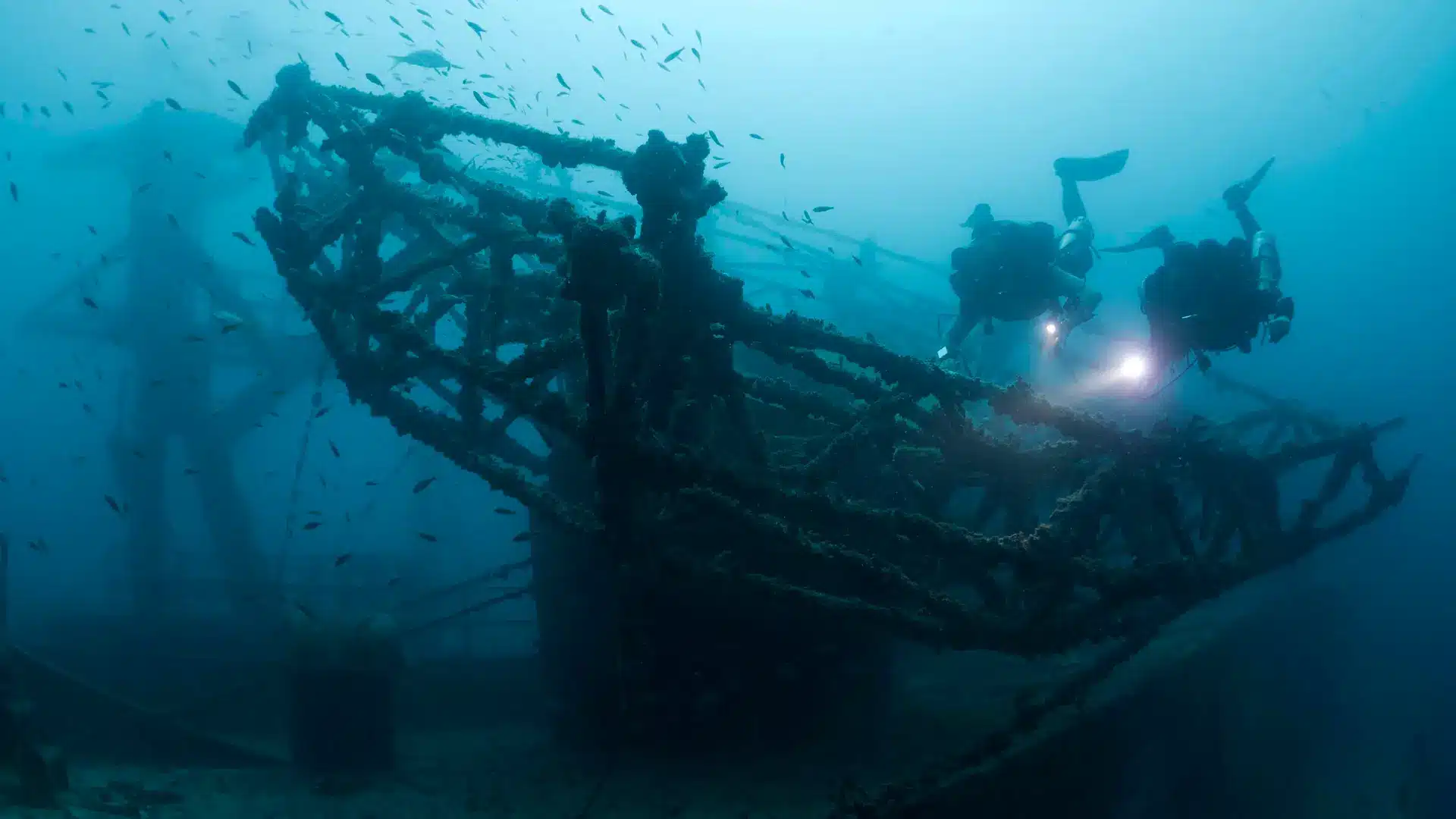
Wreck diving involves exploring submerged structures that have been intentionally sunk, accidentally lost, or naturally submerged over time. These may include:
- Ships and cargo vessels
- Aircraft
- Military wrecks
- Artificial reefs
- Vehicles and industrial structures
Most wreck dives remain outside the structure itself or within areas where natural light and direct access to the surface are maintained. More advanced penetration diving requires additional specialised training and procedures.
The objective is controlled exploration of submerged structures while maintaining environmental awareness and operational discipline.
At N9BO℠, we describe wreck diving as the intersection of exploration, history, and underwater awareness.
Why Wrecks Fascinate Divers
Wrecks create a unique underwater experience because they combine natural and human history within the same environment.
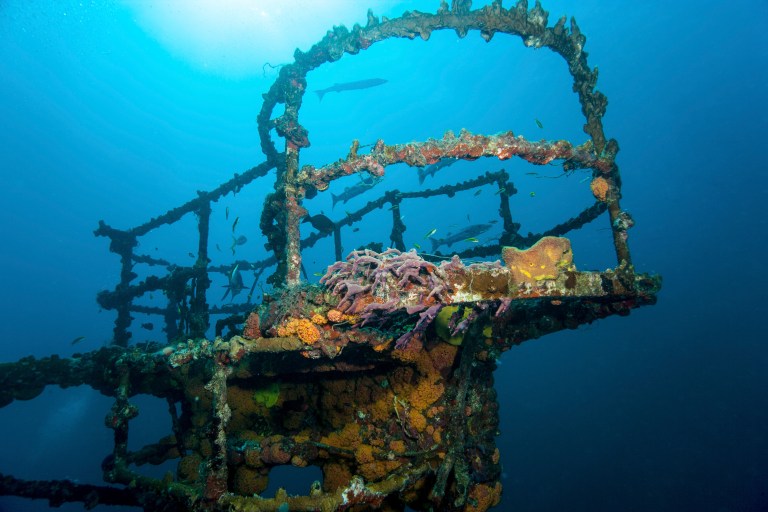
Every wreck carries a story. Some represent maritime trade routes, naval operations, engineering history, or local cultural heritage. Others have evolved into thriving artificial reefs supporting extensive marine ecosystems.
Divers are often drawn to wrecks because they offer:
- Large-scale underwater structure
- Historical significance
- Increased marine life activity
- Navigation and exploration opportunities
Swimming alongside a ship resting silently underwater creates a very different atmosphere from reef diving alone. The structure itself becomes part of the experience.
At N9BO℠, we encourage divers to approach wrecks with curiosity, awareness, and respect.
Artificial Reefs and Marine Ecosystems
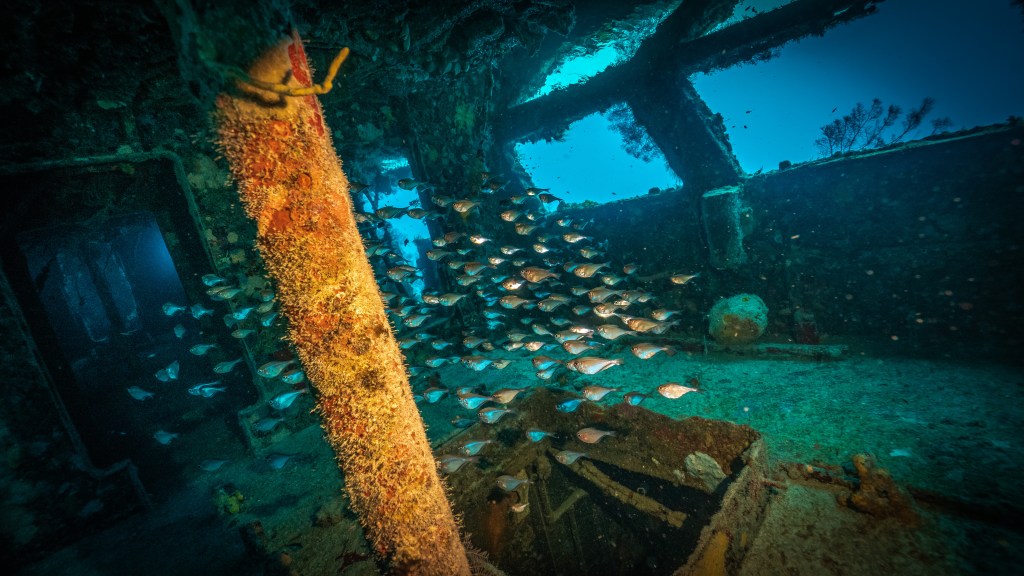
Over time, wrecks frequently transform into highly productive marine habitats.
The structure provides:
- Shelter for fish and invertebrates
- Surfaces for coral and sponge growth
- Feeding and breeding areas
- Protection from current and predators
As marine life colonises the wreck, the site often becomes a concentrated ecosystem supporting a wide range of species.
Many intentionally sunk wrecks are specifically designed to function as artificial reefs while simultaneously creating new diving environments.
The diver therefore experiences not only the wreck itself, but also the marine ecosystem that develops around it.
At N9BO℠, we teach that wreck diving is as much about observing marine adaptation as exploring underwater structure.

Buoyancy, Trim, and Precision Control
Wreck environments demand significantly greater buoyancy control than many open-water dives.
Sharp edges, confined spaces, overhead sections, and fragile marine growth mean that uncontrolled movement can:
- Damage the wreck or surrounding ecosystem
- Disturb sediment and reduce visibility
- Increase entanglement or injury risk
Divers must therefore maintain:
- Stable neutral buoyancy
- Controlled trim and body positioning
- Precise propulsion techniques
- Strong spatial awareness
Unlike open sandy environments, wrecks often leave little margin for careless movement.
At N9BO℠, we treat buoyancy and movement control as primary safety systems during wreck exploration.
Navigation and Situational Awareness
Wrecks can become surprisingly disorientating underwater, particularly on larger structures where multiple decks, openings, and pathways begin to look similar.
Divers must maintain awareness of:
- Orientation relative to the surface
- Exit routes and ascent areas
- Team positioning
- Current direction and movement
Large structures can also distort perception because depth, visibility, and scale appear differently underwater.
The diver therefore learns to continuously monitor surroundings rather than becoming fixated on individual features or artefacts.
At N9BO℠, we emphasise that good wreck navigation depends on overall environmental awareness rather than memorising the structure.
Environmental Conditions Around Wrecks
Wrecks interact with the surrounding water environment in ways that can significantly affect diving conditions.
Structures may:
- Alter current flow
- Create turbulence or sheltered areas
- Trap sediment
- Block natural light
This changes visibility, navigation, and overall dive planning.
Divers quickly learn that visibility can deteriorate rapidly if sediment is disturbed, especially around enclosed areas or lower decks.
Lighting also changes considerably around large structures. Even shallow wrecks may contain dark or shadowed sections that require additional awareness.
At N9BO℠, we teach divers to understand how structure and environment interact underwater.
Hazards and Operational Awareness
Although wreck diving can be highly rewarding, submerged structures still introduce hazards that require discipline and awareness.
Common considerations include:
- Corroded metal and sharp edges
- Fishing line and entanglement hazards
- Unstable structures
- Reduced visibility
- Depth and current exposure
Divers must also resist the temptation to enter confined or overhead areas beyond their training level.
Many wreck-related incidents occur because divers become overly focused on exploration while losing awareness of gas supply, depth, navigation, or environmental conditions.
At N9BO℠, we reinforce that patience and control are more important than aggressive exploration.
Historical and Cultural Responsibility
Many wrecks are historically significant sites and, in some cases, war graves or protected heritage areas.
Responsible wreck diving includes:
- Avoiding unnecessary contact
- Respecting local laws and protected zones
- Leaving artefacts in place
- Preserving the integrity of the site
The objective is observation and appreciation rather than disturbance or collection.
Divers become temporary visitors within environments that often hold historical, cultural, or memorial significance.
At N9BO℠, we encourage divers to act as custodians of underwater history rather than consumers of it.
The Psychological Appeal of Wreck Diving
Wreck diving creates a unique psychological atmosphere that many divers find deeply compelling.
The combination of:
- Structure and scale
- Silence and shadow
- Historical context
- Marine life colonisation
- Exploration and discovery
creates an experience unlike almost any other underwater environment.
For many divers, wrecks stimulate curiosity and imagination in ways that natural reefs alone may not.
This sense of exploration is one of the reasons wreck diving remains one of the most popular areas of diver development worldwide.
At N9BO℠, we believe wreck diving connects adventure, education, and environmental awareness in a uniquely powerful way.
Operational Mindset
Wreck diving reinforces an important operational principle: complex environments require disciplined diving behaviour.
The structure itself introduces:
- Increased task loading
- Navigation complexity
- Environmental hazards
- Psychological distraction
Divers must therefore maintain:
- Calm situational awareness
- Controlled buoyancy
- Conservative decision-making
- Respect for both the environment and the structure
Strong wreck divers are not defined by how deeply they penetrate or how aggressively they explore. They are defined by precision, awareness, and operational discipline.
At N9BO℠, we approach wreck diving as structured exploration supported by planning, control, and environmental respect.
The wreck may belong to the past, but safe exploration depends entirely on present awareness.
Explore Underwater History Safely and Responsibly
Contact N9BO℠ to begin wreck diving training and develop the buoyancy, awareness, and environmental discipline required to explore submerged structures safely and confidently.
From the N9BO℠ Knowledge Base