The ERDI Instructor Development Course: Training Public Safety Diving Educators
What Is the ERDI Instructor Development Course?
The ERDI Instructor Development Course is the professional-level programme designed to train qualified public safety divers and instructors to teach ERDI operational courses.
The programme specifically prepares candidates to conduct:
- ERDI Tender
- ERD I
- ERD II
- ERDI Supervisor programmes under the guidance and evaluation of an ERDI Instructor Trainer.
Unlike recreational instructor development alone, the ERDI IDC focuses heavily on operational diving environments involving:
- Search and recovery
- Public safety operations
- Black water environments
- Evidence recovery
- Risk management and scene control
The programme combines instructional development with operational public safety diving philosophy.
At N9BO℠, we describe the ERDI IDC as the transition from operational diver to operational educator.
The Purpose of the Programme
Public safety diving environments are fundamentally different from standard recreational diving operations.
ERDI instructors are expected not only to teach diving skills, but also to develop divers capable of operating safely in:
- Zero-visibility environments
- Contaminated water
- Evidence-sensitive operations
- High-stress emergency situations
The IDC therefore focuses on developing instructors who can teach:
- Operational discipline
- Team coordination
- Risk-benefit analysis
- Incident management
- Emergency response procedures
The course reinforces that public safety diving is mission-driven and procedural rather than recreational in nature.
At N9BO℠, we emphasise that ERDI instructors are operational mentors as much as technical educators.
The Structure of the ERDI IDC
The ERDI Instructor programme is divided into two major components:
- Instructor Development Course (IDC)
- Instructor Evaluation Course (IEC)
During the IDC phase, candidates develop instructional capability through:
- Academic workshops
- Teaching presentations
- Standards and procedures review
- Public safety diving skill evaluation
- Risk management exercises
The candidate is later evaluated during the Instructor Evaluation Course, where teaching performance and operational understanding are formally assessed.
This structure separates development from evaluation, allowing candidates to improve progressively before formal assessment.
At N9BO℠, we believe professional development should focus on building competence rather than creating unnecessary pressure.
Who the Course Is Designed For
The ERDI IDC is intended for experienced divers already operating within public safety or emergency response environments.
Prerequisites generally include:
- Professional-level diving certification
- Public safety diving experience
- Significant logged dive experience
- Current emergency care qualifications
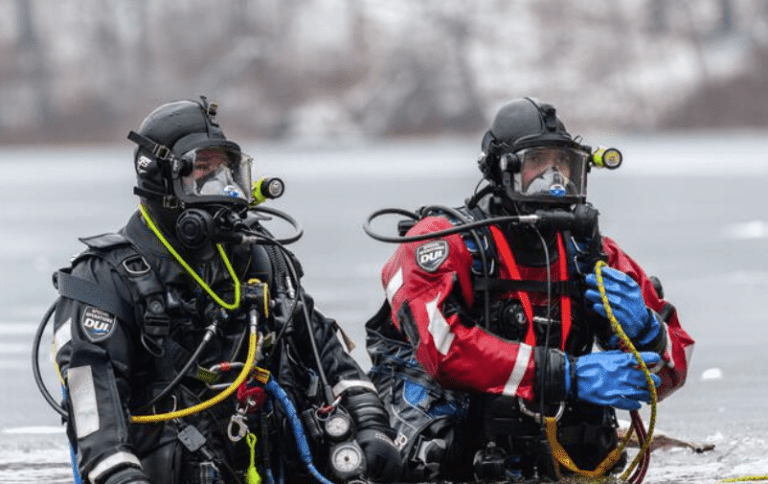
- Dry suit and full face mask operational experience
Candidates are expected to arrive with strong foundational skills and operational awareness.
The programme does not teach basic diving. Instead, it develops the instructional and leadership capability required to train others safely within public safety environments.
At N9BO℠, we position the ERDI IDC as advanced leadership development for experienced operational divers.

Teaching Public Safety Diving
Teaching public safety diving differs substantially from teaching standard recreational programmes.
ERDI instructors must be capable of teaching:
- Search patterns and recovery procedures
- Tender operations and communication systems
- Scene management
- Evidence handling protocols
- Contaminated water procedures
- Risk-benefit operational analysis
The instructional environment itself is often more physically and psychologically demanding than standard recreational training.
Students may be preparing for real operational incidents involving:
- Victim recovery
- Criminal investigations
- Hazardous environments
- Time-critical emergency response
The instructor must therefore maintain high standards of procedural discipline and operational realism.
At N9BO℠, we teach that credibility in public safety instruction comes from both competence and operational consistency.
Risk Management and Operational Awareness
Risk management is one of the defining themes of the ERDI IDC.
Candidates study:
- Occupational Safety and Health Administration (OSHA) considerations
- National Fire Protection Association (NFPA) standards
- Liability and documentation procedures
- Accident analysis and prevention
- Operational decision-making
Public safety diving environments often involve elevated risk profiles due to:
- Low visibility
- Contaminated water
- Entrapment hazards
- Operational urgency
The instructor must therefore teach divers how to operate methodically under pressure while maintaining procedural control.
At N9BO℠, we reinforce that operational discipline is the foundation of public safety diving safety.
Teaching Presentations and Evaluation
Instructor candidates are required to complete and demonstrate competency in:
- Classroom presentations
- Confined water teaching
- Open water instructional presentations
- Skill demonstrations
- Standards and procedures examinations
The focus is not only technical accuracy, but also:
- Communication clarity
- Organisational structure
- Student control
- Risk awareness
- Leadership presence
Candidates must demonstrate the ability to communicate effectively under operational conditions while maintaining professionalism and instructional consistency.
At N9BO℠, we emphasise calm, structured instruction over theatrical or overly aggressive teaching styles.
Watermanship and Physical Capability
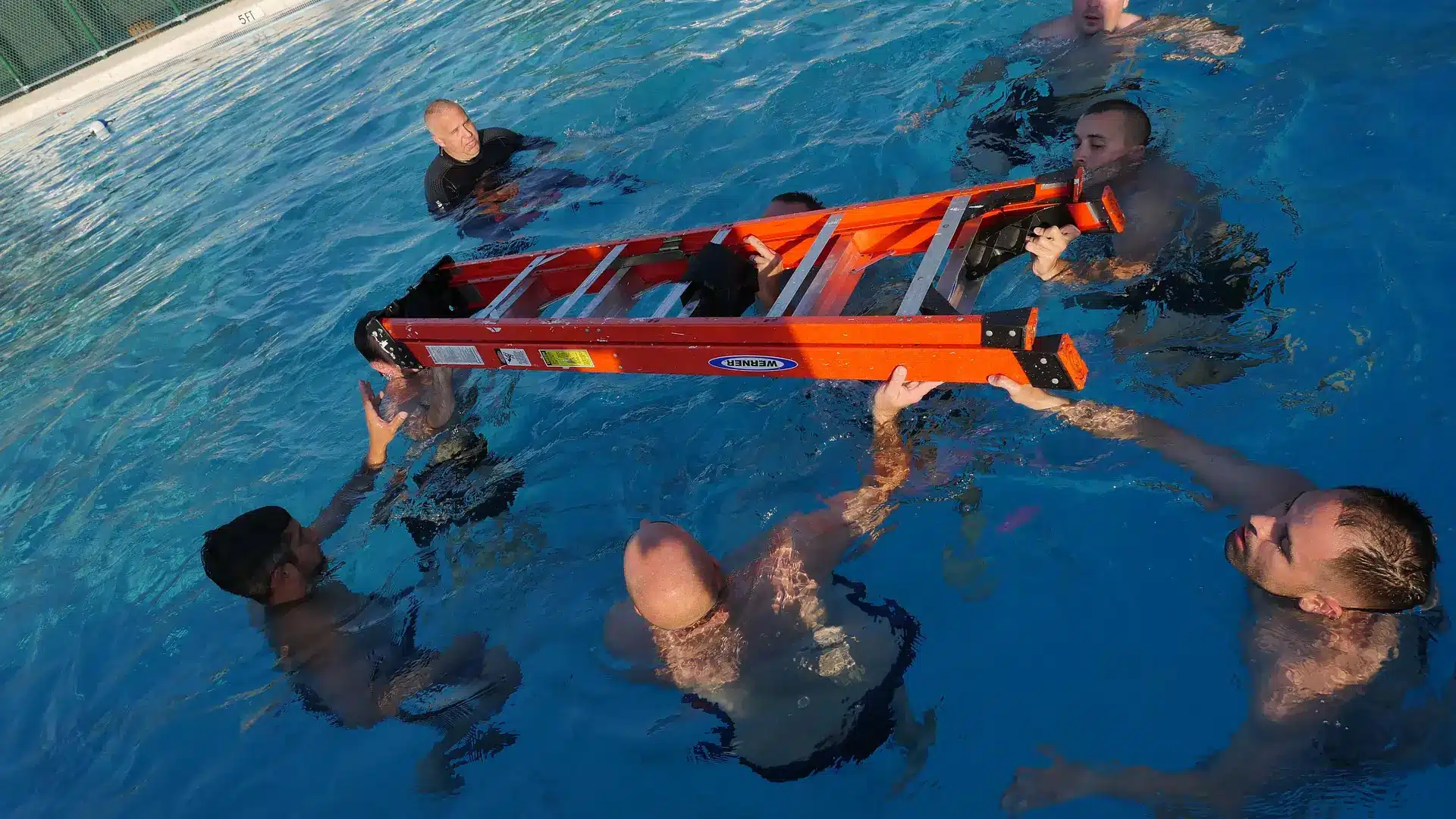
The ERDI IDC also evaluates physical capability and in-water professionalism.
Candidates are required to complete watermanship assessments such as:
- Distance swims
- Surface survival exercises
- Buddy tows
- Operational skill demonstrations
Public safety instructors must be physically capable of demonstrating skills and operating effectively in demanding environments.
However, the programme also reinforces that judgement, planning, and awareness are ultimately more important than physical strength alone.
At N9BO℠, we teach that professionalism underwater is demonstrated through control and composure rather than speed or aggression.
NFPA and OSHA Alignment
A major characteristic of ERDI training is alignment with recognised occupational and operational standards.
The IDC includes review of:
- NFPA 1006
- NFPA 1561
- NFPA 1670
- OSHA operational considerations
This helps ensure that training integrates effectively into broader emergency response frameworks and departmental operational structures.
Public safety diving is therefore approached as a professional emergency service activity rather than solely a diving discipline.
At N9BO℠, we emphasise interoperability and professional accountability within public safety operations.
Professional Leadership and Mentorship
The ERDI Instructor role extends beyond teaching individual courses.
Instructors often become responsible for:
- Team development
- Operational culture
- Safety standards
- Continuing education and readiness
This creates a leadership role within the broader public safety diving community.
Strong instructors influence:
- Diver behaviour
- Team professionalism
- Operational discipline
- Safety culture over time
At N9BO℠, we view ERDI instructors as operational leaders responsible for shaping future public safety divers.
Operational Mindset
The ERDI Instructor Development Course reinforces a critical principle: public safety diving instruction carries operational responsibility far beyond certification issuance.
The instructor is responsible for developing divers capable of operating safely in environments where:
- Visibility may be zero
- Conditions may be contaminated
- Operations may involve fatalities or criminal evidence
- Team coordination is essential
This requires:
- Structured leadership
- Calm communication
- Procedural discipline
- Operational judgement
- Strong risk management awareness
At N9BO℠, we approach ERDI instructor development as leadership training grounded in operational realism.
The strongest public safety instructors do not simply teach skills. They develop disciplined professionals capable of functioning safely under pressure.
Train the Next Generation of Public Safety Divers
Contact N9BO℠ to begin your ERDI Instructor Development Course and develop the instructional, operational, and leadership capability required to teach professional public safety diving programmes.
From the N9BO℠ Knowledge Base