Open Circuit vs Closed Circuit: A Different Philosophy
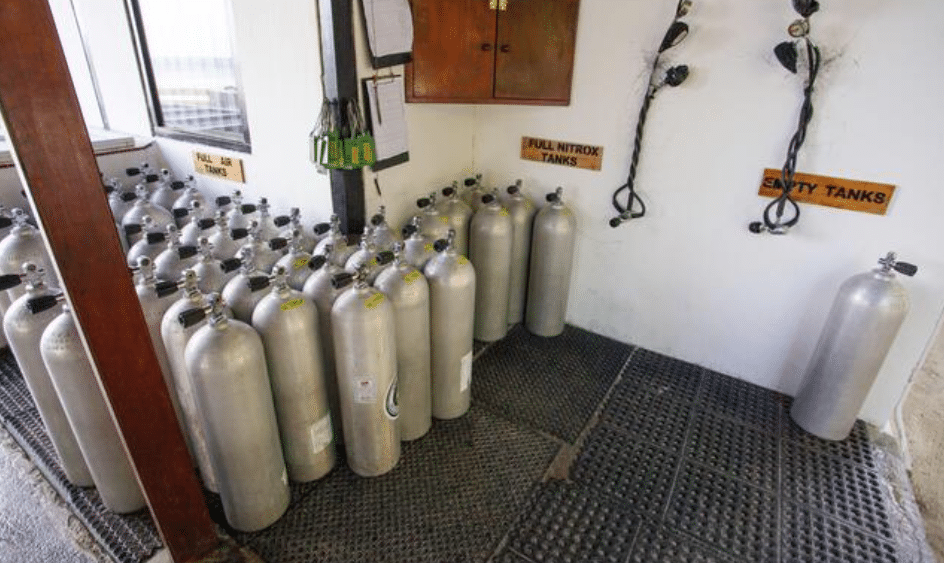
Open-circuit (OC) scuba vents exhaled gas into the water column. Gas supply is finite and directly linked to tank capacity.
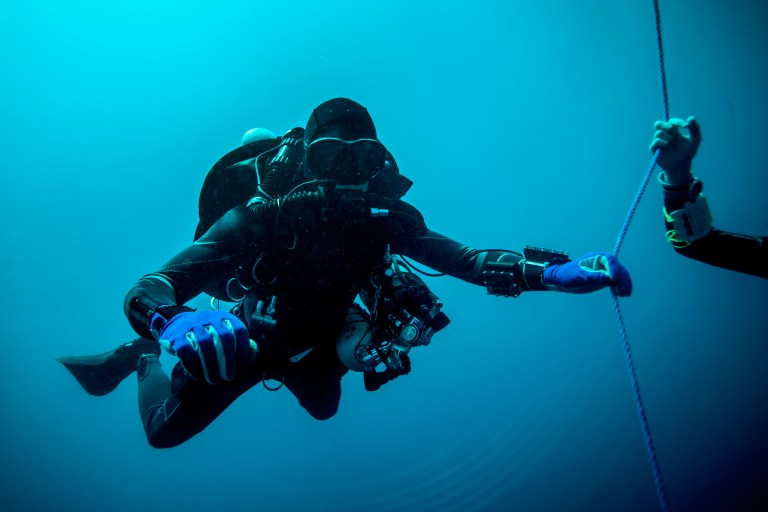
Closed-circuit rebreathers operate differently.
CCR units:
- Scrub carbon dioxide from exhaled gas
- Add oxygen to maintain target partial pressure
- Recycle the breathing loop
- Dramatically reduce gas consumption
The result is:
- Longer bottom times
- Optimised decompression
- Minimal bubbles
But the trade-off is complexity.
CCR diving is not simply quieter diving — it is system management.
How a CCR Works (Simplified)
A rebreather consists of:
- Breathing loop
- Scrubber canister (removes CO₂)
- Oxygen cylinder
- Diluent cylinder
- Oxygen sensors
- Electronics (in electronic CCRs)
The system maintains a set partial pressure of oxygen (PO₂) throughout the dive.
The diver monitors:
- Oxygen levels
- Scrubber duration
- Loop integrity
- Gas volumes
CCR requires constant awareness.
Gas planning becomes oxygen management.
Advantages of Closed-Circuit Diving
Properly used, CCR provides significant operational advantages:
1. Gas Efficiency
Oxygen is metabolised; diluent is conserved. Long dives become feasible without multiple stage cylinders.
2. Stable PO₂
Maintaining optimal oxygen partial pressure can reduce decompression obligation.
3. Reduced Noise
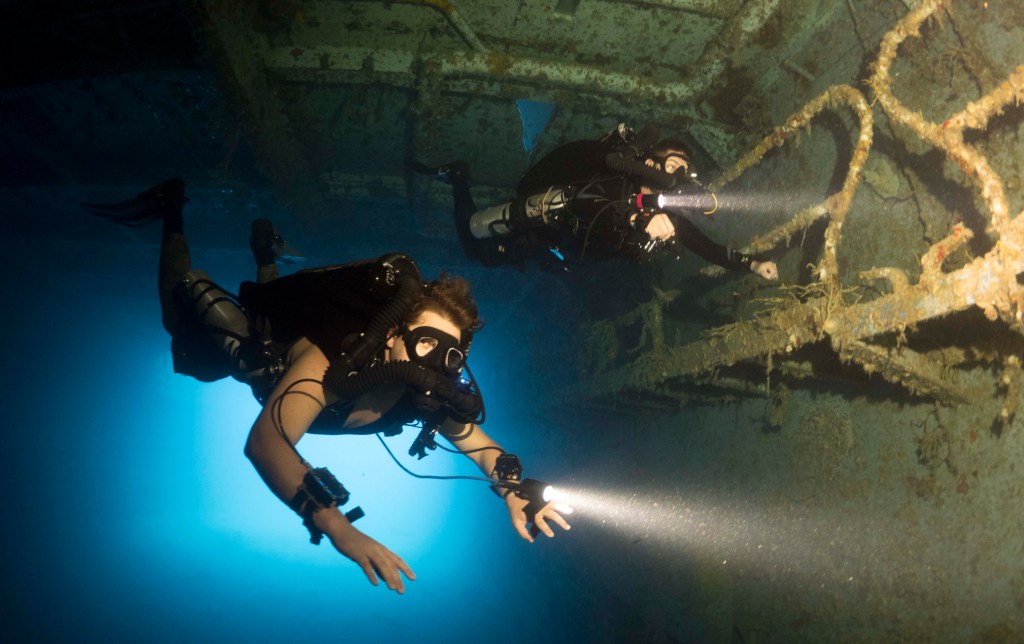
Minimal bubble output reduces disturbance to marine life and improves stealth in research or certain operational contexts.
4. Extended Range
Long cave or deep dives benefit from gas efficiency.
These advantages explain why CCR dominates advanced technical exploration.
New Risk Profiles
CCR does not eliminate risk — it redistributes it.
Potential hazards include:
- Hypoxia (low oxygen)
- Hyperoxia (excess oxygen)
- Hypercapnia (CO₂ retention)
- Loop floods
- Sensor failure
- Electronics malfunction
Unlike open circuit, many CCR failures are silent.
The diver must detect and respond before symptoms escalate.
Structured monitoring discipline prevents escalation.
Why Procedural Discipline Is Non-Negotiable
CCR diving demands:
- Pre-breathe protocols
- Checklist adherence
- Sensor validation
- Bailout planning
- Continuous PO₂ cross-checking
Checklists are not optional.
Memory degrades under stress.
Professional CCR divers trust procedure more than intuition.
At N9BO℠, we emphasise that rebreather competence is built on discipline, not comfort with equipment.

Bailout Planning: The Real Safety Net
CCR divers must carry independent bailout gas.
Bailout planning considers:
- Maximum depth
- Decompression obligation
- Worst-case oxygen failure
- Stress-adjusted consumption
The bailout plan must be executable.
Carrying bailout gas without realistic planning creates false confidence.
Redundancy works only when integrated with judgment.
Cognitive Load and Monitoring
CCR divers constantly monitor:
- PO₂
- Loop volume
- Depth
- Decompression status
- Team positioning
Cognitive bandwidth is finite.
Training builds automaticity in routine checks to preserve mental clarity for decision-making.
The goal is stable attention — not constant anxiety.
When CCR Makes Sense
Rebreathers are appropriate for:
- Long cave penetrations
- Deep wreck exploration
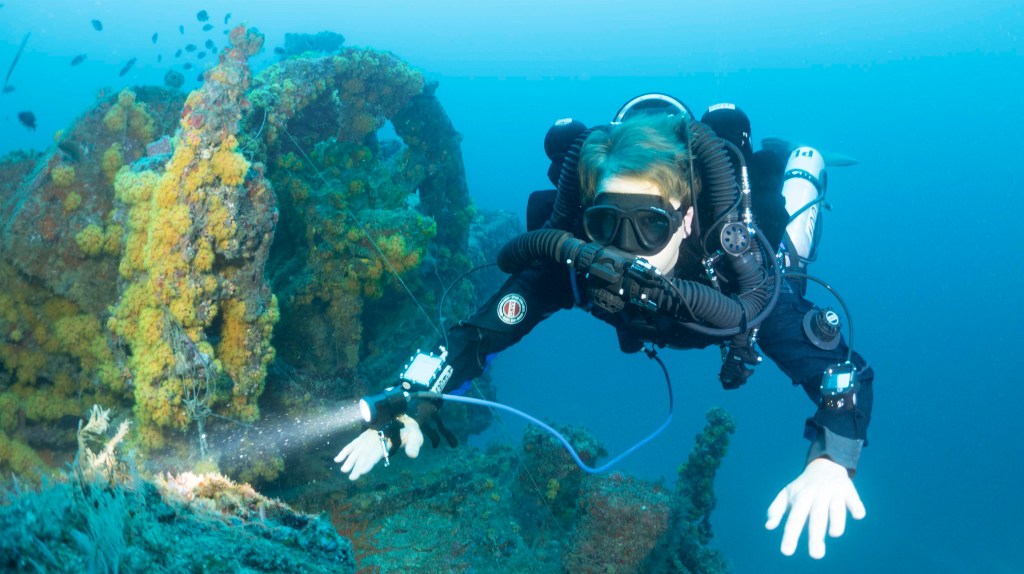
- Scientific research requiring minimal disturbance
- Expedition-level dives
They are not shortcuts to deeper diving.
They are tools requiring structured progression.
Choosing a Life Support System, Not a Trend
CCR selection should be based on:
- Operational objectives
- Environmental conditions
- Training progression
- Personal discipline
Technology cannot compensate for lack of judgment.
Rebreathers reward those who respect procedure.
They penalise complacency.
At N9BO℠, we view CCR training as an advanced discipline requiring maturity, not novelty-seeking.
Considering Closed-Circuit Rebreather Training?
CCR diving demands procedural discipline and structured progression. Contact N9BO℠ to discuss rebreather training pathways and readiness assessment.
From the N9BO℠ Knowledge Base