Why CPR Matters More in Oil & Gas
Oil & gas operations are often:
- Remote.
- Offshore.
- Isolated from urban medical facilities.
- Dependent on helicopter evacuation.
- Delayed in advanced medical access.
In cardiac arrest scenarios:
Brain injury begins within minutes.
Defibrillation success declines rapidly after:
3–5 minutes without intervention.
On a rig or remote site:
Ambulance arrival is not immediate.
Workforce members become:
First responders by necessity.
Cardiac Arrest in Industrial Environments
Cardiac emergencies in oil & gas settings may result from:
- Physical exertion.
- Heat stress.
- Dehydration.
- Electrical accidents.
- Falls.
- Pre-existing medical conditions.
- Confined space exposure.
Immediate response requires:
Structured action.
Clear role assignment.
Calm execution.
Panic wastes time.
Time determines survival.
The Role of AED in Workplace Survival
An Automated External Defibrillator (AED):
- Analyses heart rhythm.
- Advises shock if appropriate.
- Guides rescuers step-by-step.
AED deployment within the first few minutes:
Dramatically increases survival probability.
However:
AEDs are only effective when:
Personnel are trained.
Confident.
Unhesitating.
Equipment alone does not save lives.
Training activates capability.
FRTI Workplace CPR / AED Course Structure
The FRTI Workplace CPR / AED programme includes:
- Scene safety assessment.
- Patient responsiveness evaluation.
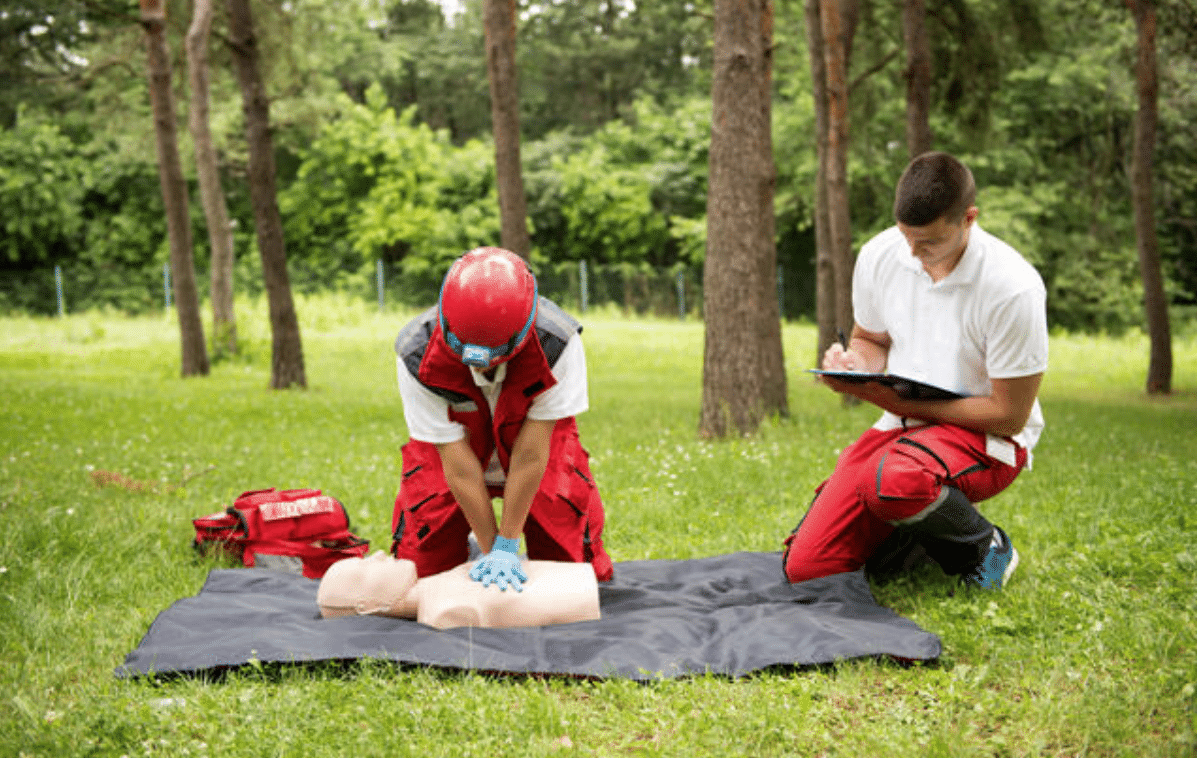
- Effective chest compressions.
- Rescue breathing protocols.
- AED deployment procedures.
- Team-based response coordination.
- Post-event management.
Training emphasises:
Muscle memory.
Clear communication.
Procedural sequencing.
Under stress, repetition protects performance.
Industrial Context Integration
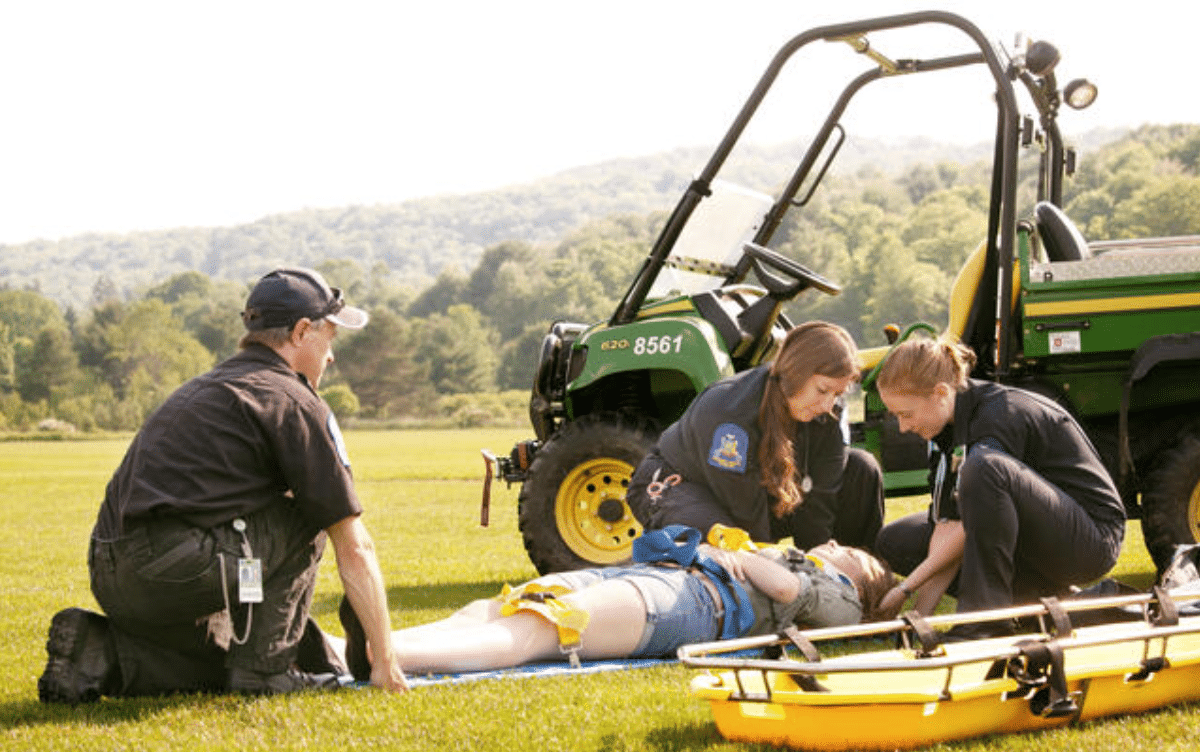
Oil & gas environments introduce:
- Noise.
- Restricted space.
- PPE interference.
- Weather exposure.
- Multi-level platforms.
CPR training must consider:
- Performing compressions in confined areas.
- Managing PPE removal safely.
- Coordinating in high-noise environments.
- Handling vertical evacuation scenarios.
Generic CPR instruction is insufficient.
Context matters.
Team-Based Response
Workplace CPR is rarely solo.
Effective response requires:
- Compressor rotation.
- AED operator.
- Scene controller.
- Emergency communication contact.
- Medical evacuation coordinator.
Structured drills reinforce:
Role clarity.
Leadership hierarchy.
Efficient task allocation.
Confusion increases risk.
Organisation increases survival odds.
Physical and Psychological Readiness
CPR is physically demanding.
Effective compressions require:
Depth consistency.
Rate control.
Minimal interruption.
Fatigue reduces compression quality.
Training includes:
Stamina awareness.
Rotation timing.
Controlled breathing.
Psychologically, responders must manage:
Adrenaline.
Shock.
Emotional response.
Structured training reduces hesitation.
Regulatory and Corporate Responsibility
Oil & gas operators have:
Duty of care.
Legal obligations.
Workplace safety standards.
Providing certified CPR / AED training:
Reduces liability.
Demonstrates safety culture.
Protects personnel.
Enhances operational resilience.
Compliance without competence is insufficient.
Competence must be measurable.
Integration With HEAT and Corporate Security
In high-risk operational regions:
Medical emergencies may coincide with:
Security incidents.
Evacuation protocols.
Travel disruption.
FRTI Workplace CPR / AED integrates within:
Broader corporate resilience systems.
Emergency response capability must align with:
HEAT protocols.
Crisis management frameworks.
Incident command structures.
Medical readiness is part of corporate security.
Why Regular Recertification Matters
Skills decay rapidly without repetition.
CPR technique quality declines within months.
AED familiarity diminishes.
Recertification:
Reinforces muscle memory.
Updates protocol changes.
Maintains operational readiness.
Training must be recurrent.
Not one-time.
Operational Realism at N9BO℠
At N9BO℠, FRTI Workplace CPR / AED training is delivered with:
Scenario realism.
Industrial context simulation.
Team coordination drills.
Clear performance evaluation.
Structured debriefing.
We emphasise:
Calm authority.
Clear communication.
Procedural discipline.
Because in oil & gas environments, emergency response must be decisive.
The Cost of Delay
Without trained responders:
- Precious minutes pass.
- Brain oxygen deprivation escalates.
- Survival probability decreases.
The difference between:
Prepared and unprepared.
Is often survival.
Industrial operations cannot depend solely on evacuation timelines.
Workforce capability fills the gap.
Final Perspective
In oil & gas operations:
Distance magnifies risk.
CPR and AED training:
Compress response time.
Expand survival margin.
Protect workforce integrity.
Workplace CPR / AED is not optional.
It is operational responsibility.
Is Your Workforce Ready to Respond in the First Critical Minutes?
Equip your oil & gas teams with structured FRTI Workplace CPR / AED training aligned with industrial realities.
From the N9BO℠ Knowledge Base