What a Rebreather Actually Does
A rebreather is not simply a more advanced scuba system. It is a completely different approach to life support underwater.
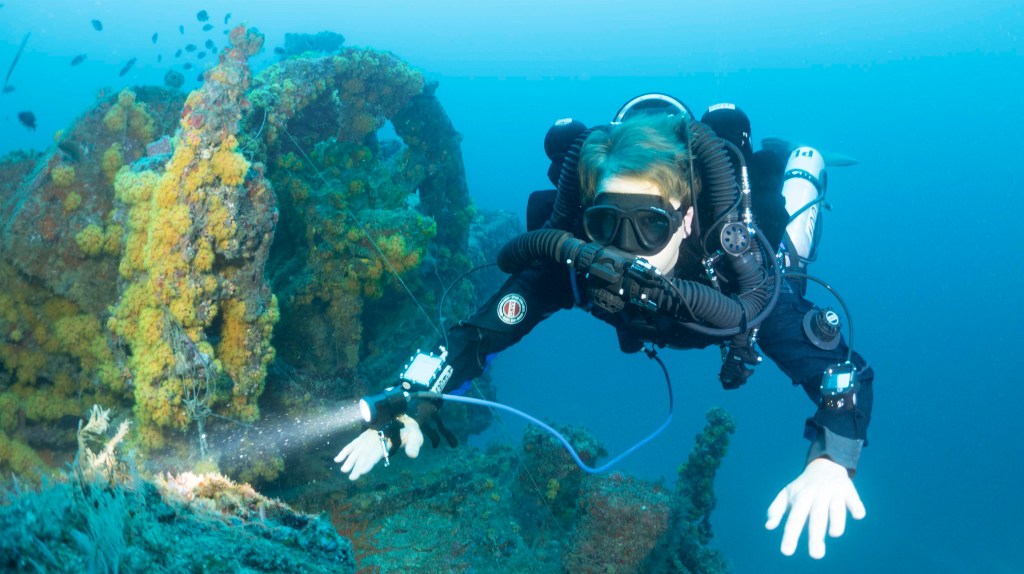
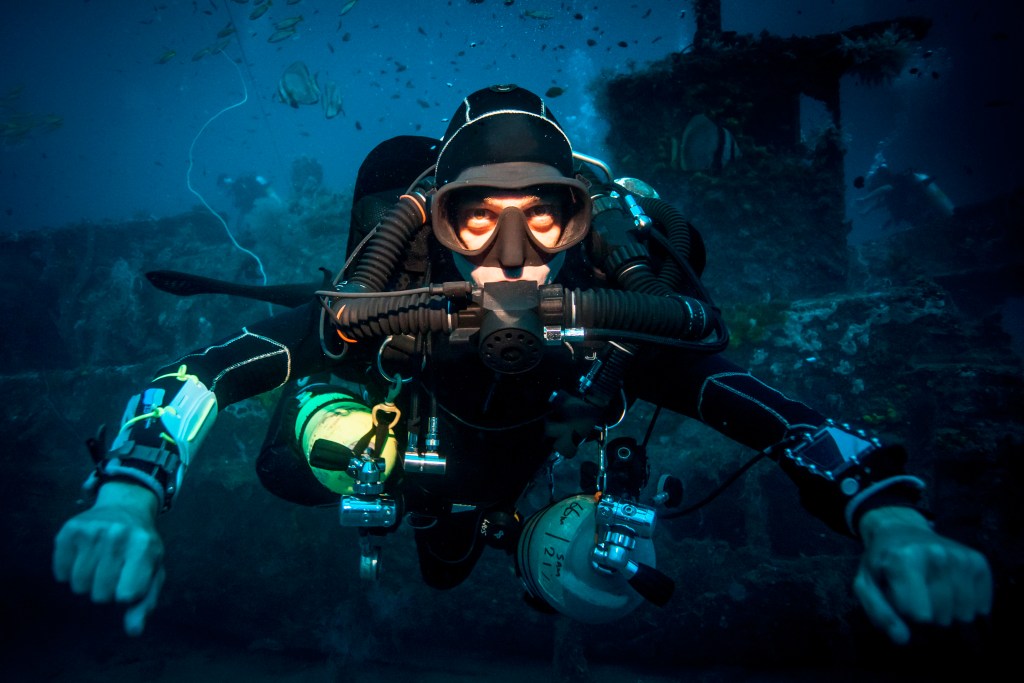
Unlike open circuit, where gas is breathed once and expelled, a rebreather recycles gas. Carbon dioxide is removed through a scrubber, oxygen is added back into the loop, and the diver breathes the same gas repeatedly.
This creates several advantages. Gas consumption is significantly reduced. Bubble production is minimal, which benefits both marine life interaction and tactical operations. Most importantly, oxygen levels can be controlled to optimise decompression.
But these advantages come at a cost.
The diver is no longer just breathing — they are managing a system.
The Illusion of Efficiency
CCR is often marketed or perceived as a more efficient way to dive. Longer bottom times, less gas logistics, and quieter operation all contribute to that perception.
However, efficiency in CCR is conditional.
The system only works if:
- Sensors are accurate
- Electronics function correctly
- The scrubber is effective
- The diver monitors everything continuously
If any part of that chain fails, the consequences are immediate and often invisible.
This is where the illusion lies. CCR is efficient only when perfectly managed. It does not forgive inattention.
Silent Failures: The Real Risk
One of the defining characteristics of CCR diving is that failures are often silent.
In open circuit, problems are usually obvious. Gas supply issues are felt immediately. Equipment failures are detectable through sound, resistance, or pressure changes.
In CCR, failure can occur without warning.
Oxygen levels may drop without sensation. Carbon dioxide may build up gradually. Sensors may provide incorrect readings while appearing normal.
The diver must not rely on feeling.
They must rely on:
- Procedure
- Monitoring
- Verification
This is not intuitive diving. It is disciplined system management.
Control vs Automation
Modern rebreathers incorporate advanced electronics, automatic oxygen addition, and multiple safety systems. While these features increase capability, they also introduce a risk: overreliance.
Automation can create complacency.
Divers may begin to trust the system instead of verifying it. They may assume that electronics will compensate for human error.
Professional CCR divers understand that:
Automation assists.
It does not replace responsibility.
Control remains with the diver.
The Importance of Checklists
CCR diving is built on checklists.
Pre-dive checks, loop checks, sensor calibration, bailout verification — all of these are structured processes that must be followed consistently.
Skipping steps or rushing preparation introduces risk before the dive even begins.
Checklists are not administrative tasks. They are operational tools.
They ensure that:
- The system is configured correctly
- Components are functioning
- Redundancies are available
Professional CCR diving treats preparation as part of the dive.
Bailout: The Real Safety System
A common misunderstanding is that the rebreather itself is the primary life-support system.
In reality, the true safety system is:
Bailout.
Bailout gas allows the diver to exit the dive independently of the rebreather. It must be planned, configured, and accessible at all times.
Poor bailout planning is one of the most critical failures in CCR diving.
The system may be complex, but the exit strategy must remain simple.
Mental Discipline and Workload
CCR diving increases cognitive load.
The diver must:
- Monitor oxygen levels
- Track depth and decompression
- Manage buoyancy through the loop
- Remain aware of system status
This requires:
Calmness
Focus
Consistency
Stress, fatigue, or distraction degrade performance quickly.
The challenge is not physical. It is mental.
Training and Progression
CCR is not an entry-level system.
Progression must be structured, starting with:
- Basic unit familiarity
- Controlled environments
- Limited depth and exposure
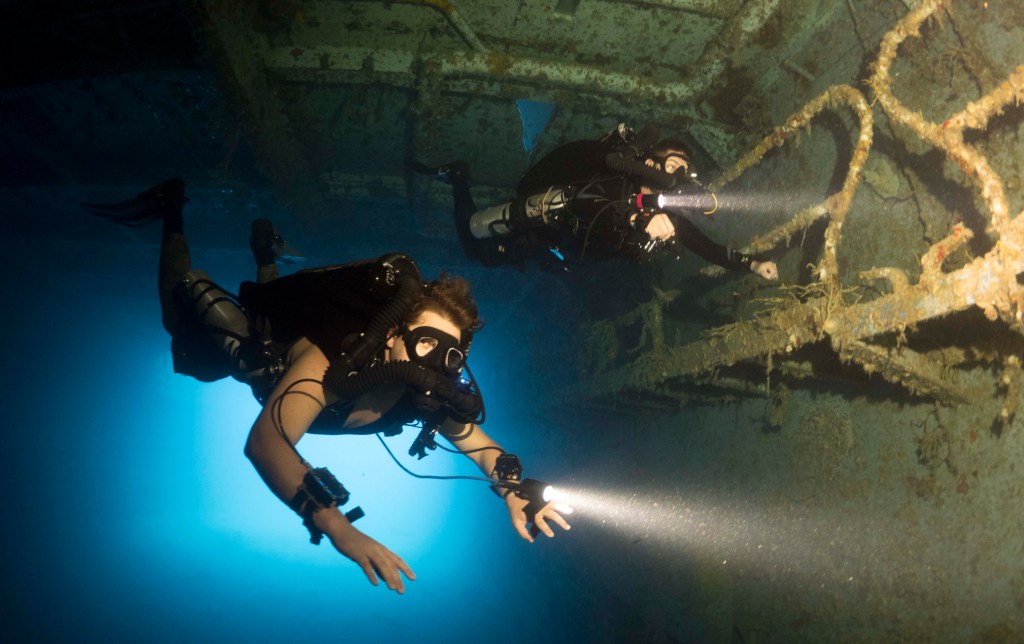
Advanced applications — cave, wreck, deep trimix — require additional layers of training and experience.
Skipping progression stages creates risk.
At N9BO℠, CCR training is approached with the same philosophy applied to all technical diving:
Standards are the baseline.
Competence is the objective.
Technology Does Not Replace Skill
One of the most persistent misconceptions is that advanced equipment compensates for limitations in skill.
It does not.
CCR amplifies both strengths and weaknesses.
A disciplined diver benefits from the system. An undisciplined diver is exposed by it.
The system is neutral.
The outcome depends on the operator.
Final Perspective
Closed Circuit Rebreathers represent one of the most powerful tools in modern diving. They extend range, reduce logistical constraints, and open environments that would otherwise be inaccessible.
But they demand something in return.
Discipline.
Attention.
Consistency.
CCR is not about convenience. It is about control of a system that does not tolerate complacency.
Because underwater, the system does not adapt to the diver.
The diver must adapt to the system.
Considering Rebreather Training?
Contact N9BO℠ to discuss CCR pathways, system selection, and structured progression into closed circuit diving.
From the N9BO℠ Knowledge Base