PADI TEC Technical Diving Training & Certifications
PADI TEC Technical Diving Instructor Development | N9BO℠ Thailand
PADI Tec programmes are designed for divers looking to expand their skills and knowledge beyond traditional recreational diving limits. PADI Tec provides structured technical diving training in Thailand, for experienced divers progressing beyond recreational limits into decompression and extended-range diving. PADI Tec programmes are designed to introduce divers to technical procedures, equipment configurations, and disciplined gas management, with a strong emphasis on safety, control, and progressive skill development.
N9BO℠ delivers PADI Tec training in Thailand, supporting divers as they transition from recreational profiles into entry-level and intermediate technical diving, including decompression procedures and extended range diving. Training follows a methodical, performance-based approach, focusing on buoyancy and trim, situational awareness, teamwork, and foundational technical skills, making PADI Tec an ideal pathway for divers preparing for more advanced technical, public safety, or mixed-agency technical training.
PADI TEC Courses
PADI TEC Courses (OC)
- Discover TEC
- TEC Basics
- TEC Advanced EANx Diver [Distinctive]
- TEC 40 Diver**
- TEC 45 Diver**
- TEC 50 Diver**
- TEC Trimix 65 Diver
- TEC Trimix Diver
- TEC Gas Blender
- TEC Trimix Blender
- TEC Rescue Diver [Distinctive]
- TEC Sidemount
- TEC Intro to Cave [Distinctive]
- TEC Full Cave [Distinctive]
- TEC Advanced Wreck [Distinctive]
**Trimix Training Pathway
All PADI Tec 40, Tec 45, and Tec 50 courses can be conducted with a Trimix option, allowing divers to progressively integrate helium into their training.
Contact us to integrate the Trimix option, or the Cave option for overhead-certified divers, into this course.
Already certified as a PADI Tec 40, 45, or 50 Diver? Contact us to upgrade to the Trimix option at your level
PADI Public Safety Diver™ training programmes
Recommended preparatory courses:
PADI [Distinctive Specialities]
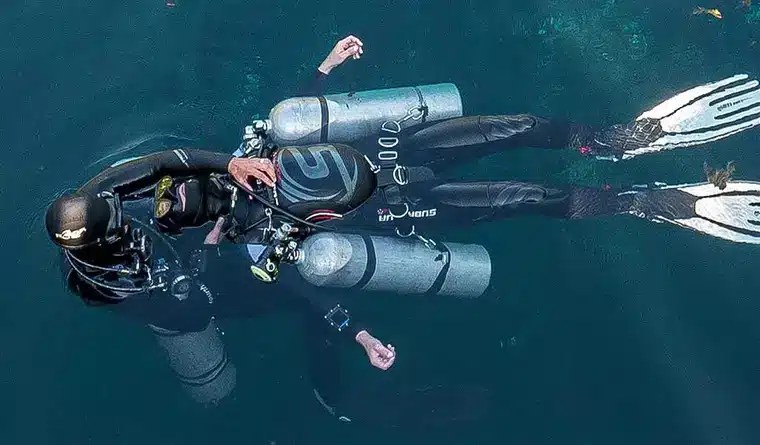


PADI Tec training goes significantly beyond recreational deep diving by introducing staged decompression, equipment redundancy, formal gas management, and procedural discipline. While recreational deep diving remains within no-decompression limits and relies on a single breathing system, technical diving assumes that the diver may incur mandatory decompression and must therefore plan, execute, and manage that obligation safely.
In practical terms, Tec divers are trained to operate with multiple cylinders, manage failures without immediate access to the surface, and execute structured ascent profiles using written plans rather than computer prompts alone. The emphasis shifts from “depth experience” to risk management, precision, and self-sufficiency.
Yes. PADI Tec 40 is specifically designed as an entry point into technical diving, provided all prerequisites are met. It introduces the foundational concepts of technical diving in a controlled and progressive manner, allowing experienced recreational divers to transition safely without being overwhelmed.
Tec 40 focuses on building correct habits from the outset: proper equipment configuration, gas planning, situational awareness, and disciplined ascent control. It is not about pushing depth, but about learning to manage complexity responsibly. For many divers, Tec 40 represents the first step toward a much broader technical skill set.
Yes. PADI Tec courses may be conducted in sidemount or backmount configurations, provided the chosen setup meets PADI standards and is appropriate for the training objectives. Sidemount has become increasingly popular in technical diving due to its flexibility, redundancy, and suitability for certain environments.
The configuration used during training is selected based on the diver’s experience, future goals, and the type of diving anticipated. Regardless of configuration, emphasis is placed on clean rigging, standardised procedures, and effective failure management, ensuring skills are transferable across different technical environments.
All PADI Tec programmes are as much about mindset and discipline as they are about equipment and procedures. The courses develop structured thinking, calm decision-making, and a methodical approach to problem-solving. Divers learn to slow down, plan deliberately, and operate within defined limits rather than relying on improvisation.
Key skills include buoyancy stability during task loading, precise ascents, gas tracking, and team communication. These competencies form the foundation for all higher-level technical training and are essential for safe progression beyond recreational limits.
Yes. Technical diving places greater physical and mental demands on the diver than recreational diving. Carrying additional equipment, managing multiple cylinders, and maintaining precise buoyancy and trim require a reasonable level of fitness and comfort in the water.
More importantly, technical diving training demands mental resilience, focus, and discipline. Divers must be able to process information, follow procedures accurately, and remain composed under stress. While extreme athleticism is not required, a solid baseline of fitness and strong foundational diving skills are essential for success.
Considering Technical Training?
Technical diving requires solid preparation and a clear understanding of progression. Contact us to discuss readiness, prerequisites, and pathways.