Why Navigation Matters in Diving
One of the most common challenges divers experience underwater is disorientation. Unlike on land, underwater environments often lack stable visual references, and depth, visibility, current, and terrain can quickly distort perception.
Even relatively simple dive sites can become confusing once a diver loses awareness of direction or position.
Good navigation allows divers to:
- Return accurately to exit points or boats
- Maintain orientation during the dive
- Reduce stress and uncertainty
- Improve gas and time management
- Operate more safely as a team
Navigation is therefore far more than a compass skill. It is a core component of underwater awareness and operational control.
At N9BO℠, we teach navigation as environmental awareness supported by disciplined procedure.
The Challenge of Navigating Underwater
The underwater environment changes how humans perceive direction and movement.
Factors such as:
- Reduced visibility
- Lack of horizon reference
- Current movement
- Light distortion
- Depth changes
can create confusion surprisingly quickly.
Divers also tend to focus narrowly on marine life, photography, or the dive itself, causing them to lose track of orientation gradually over time.
Unlike surface environments, underwater terrain can also appear repetitive, especially on sandy bottoms or large reef systems.
This makes structured navigation procedures extremely important.
At N9BO℠, we emphasise that divers rarely become lost suddenly. Disorientation usually develops progressively through reduced awareness.
Compass Navigation
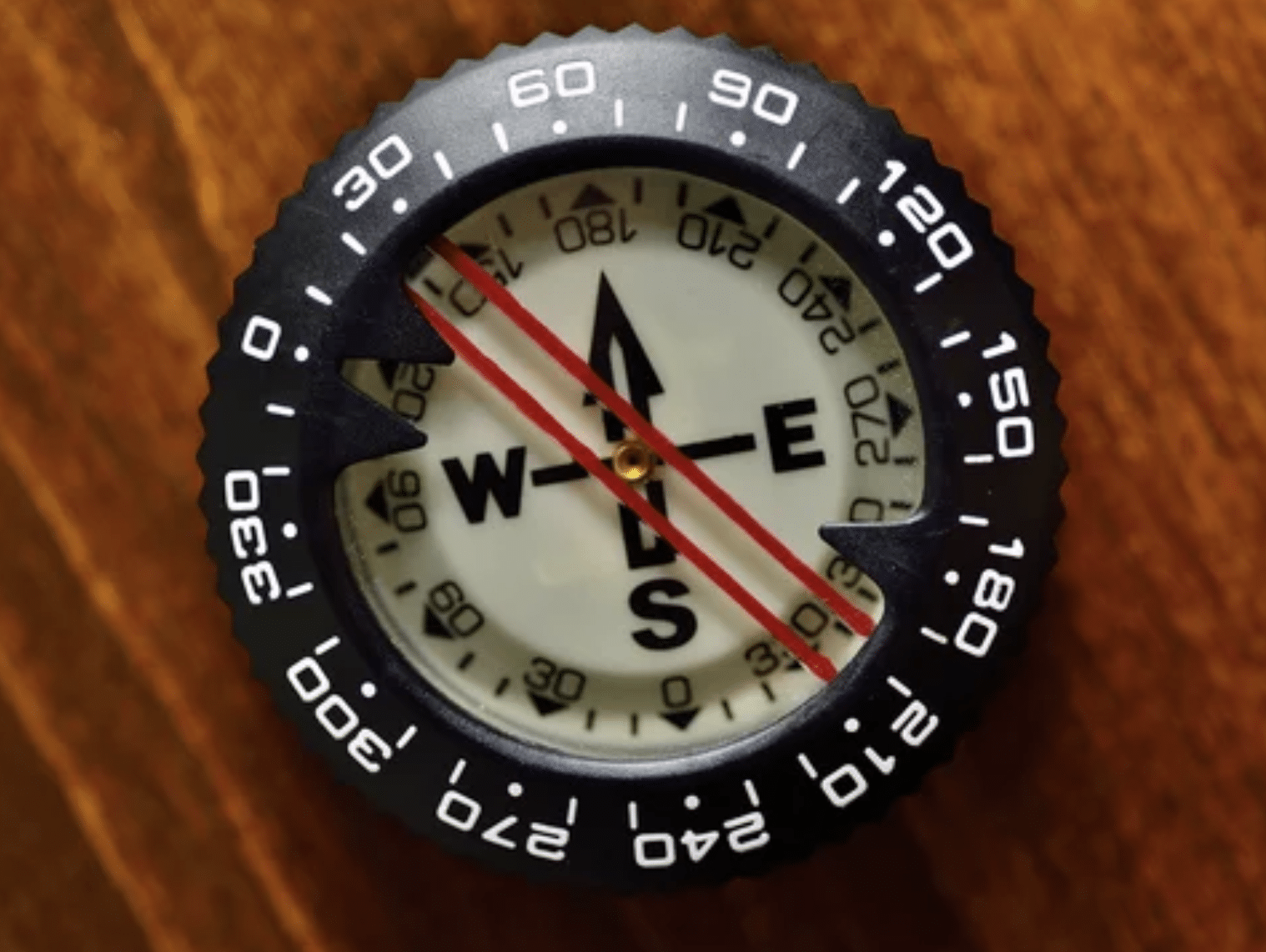
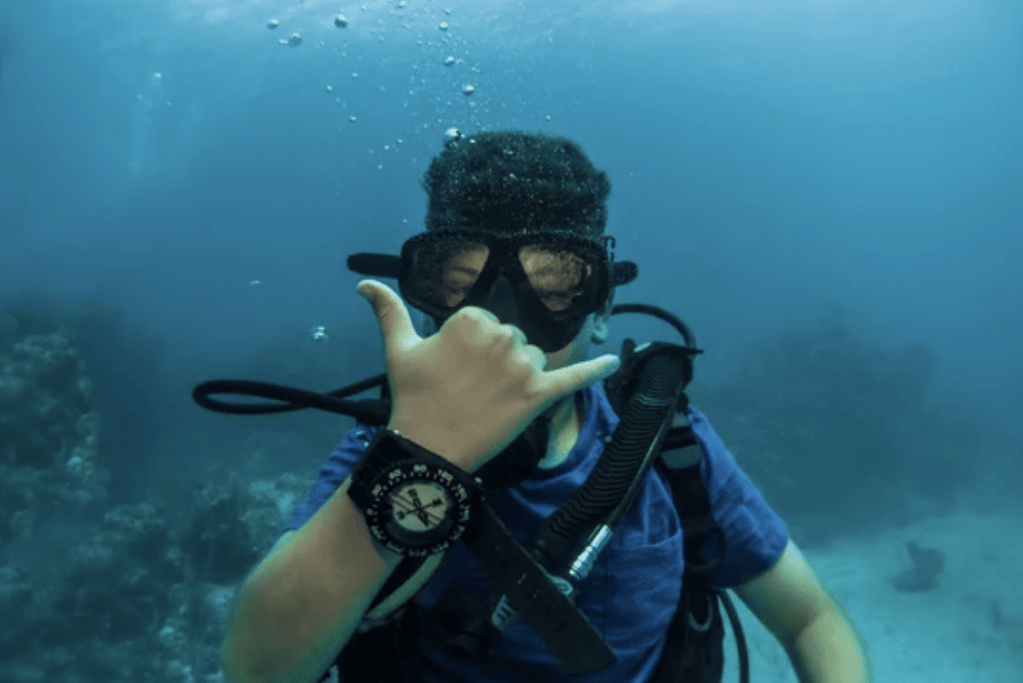
The underwater compass is one of the most important navigation tools available to divers.
The course introduces divers to:
- Compass headings
- Reciprocal navigation
- Straight-line swimming
- Square and triangular navigation patterns
- Combined compass and environmental navigation techniques
Although modern dive computers and GPS systems exist, the underwater compass remains one of the most reliable and universally applicable navigation tools.
Divers learn that effective compass navigation depends not only on reading the instrument correctly, but also on maintaining:
- Stable buoyancy
- Proper trim
- Consistent body positioning
- Controlled movement underwater
Even small changes in body alignment can gradually alter direction over distance.
At N9BO℠, we teach that compass navigation is ultimately a precision movement skill.
Natural Navigation Techniques
While compasses are important, strong divers also learn how to navigate naturally using environmental references.
Natural navigation may include:
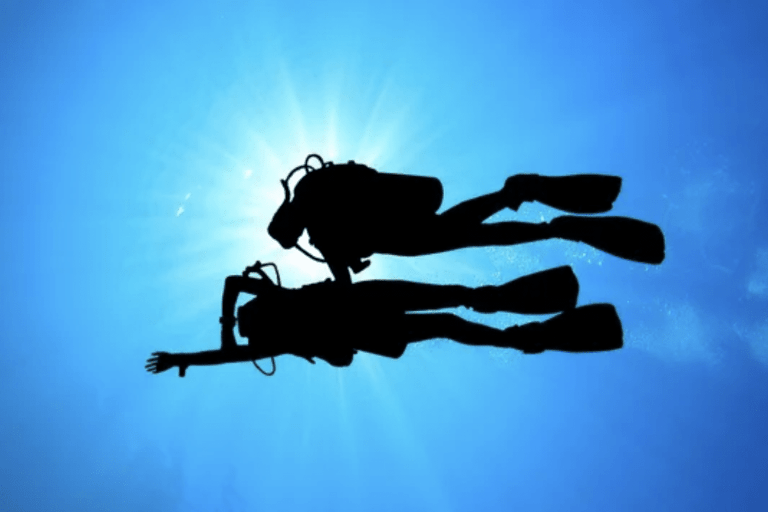
- Sunlight direction
- Bottom contours and terrain shape
- Current direction
- Reef structure
- Shadow and light orientation
- Surface reference points
Experienced divers continuously combine these environmental cues with compass awareness to build a broader understanding of their position underwater.
This creates more adaptable and resilient navigation capability.
Natural navigation also strengthens environmental observation and situational awareness.
At N9BO℠, we encourage divers to navigate with their entire environment, not just a compass.
Situational Awareness and Team Positioning
Navigation is closely linked to overall situational awareness.
Divers must continuously monitor:
- Direction of travel
- Depth and bottom profile
- Team spacing and communication
- Current movement
- Exit location and distance
This becomes especially important in:
- Reduced visibility
- Drift diving
- Wreck environments
- Night diving
- Complex reef systems
Good navigation keeps the team organised and reduces unnecessary stress or confusion during the dive.
Poor navigation, by contrast, often leads to increased gas consumption, anxiety, and rushed decision-making.
At N9BO℠, we reinforce that navigation failures are often awareness failures first.
Buoyancy and Navigation Efficiency
Navigation and buoyancy control are closely connected.
Divers with unstable buoyancy often struggle to maintain:
- Consistent compass headings
- Stable movement patterns
- Accurate distance estimation
Poor buoyancy also increases task loading, making navigation more difficult overall.
As divers improve trim and movement efficiency, navigation generally becomes smoother and more precise.
This is one reason navigation training often improves overall diving performance well beyond orientation alone.
At N9BO℠, we teach that efficient divers are usually easier to navigate because they move predictably and remain stable underwater.

Estimating Distance Underwater
One of the most difficult underwater navigation skills is distance estimation.
Because visibility and environmental scale change underwater, divers frequently misjudge how far they have travelled.
The course therefore introduces methods for estimating distance using:
- Kick cycles
- Time measurement
- Environmental references
- Controlled swimming speed
Learning to estimate distance accurately improves:
- Return navigation
- Gas planning
- Team coordination
- Dive timing
This becomes increasingly important during larger or more complex dives.
At N9BO℠, we emphasise consistency and awareness rather than speed during navigation exercises.
Navigation Under Stress and Reduced Visibility
Navigation skills become even more important when environmental conditions deteriorate.
Reduced visibility, current, darkness, or task loading can quickly increase stress and disorientation.
Divers who already possess strong navigation discipline tend to remain calmer because they maintain awareness of:
- Exit direction
- Team position
- Environmental layout
This reduces panic and improves decision-making during unexpected situations.
The course therefore develops not only technical navigation skill, but also confidence and composure underwater.
At N9BO℠, we believe navigation competence directly supports psychological control during difficult dives.
Applications Across Different Types of Diving
Navigation skills apply across almost every diving discipline.
Strong navigation is essential for:
- Reef diving
- Drift diving
- Wreck diving
- Night diving
- Search and recovery
- Public safety diving
- Cave and technical diving
As dive complexity increases, navigation usually becomes more structured and procedural.
For this reason, foundational navigation training benefits divers at every level of progression.
At N9BO℠, we position navigation as one of the most transferable skills in diving.
Operational Mindset
Underwater navigation reinforces a critical principle: awareness determines control.
Divers who understand where they are, where they are going, and how to return safely operate with greater calmness and confidence underwater.
Strong navigators are not simply divers who can follow a compass heading. They are divers who continuously observe, interpret, and adapt to the underwater environment.
This requires:
- Situational awareness
- Environmental observation
- Controlled movement
- Team coordination
- Procedural discipline
At N9BO℠, we approach navigation as a complete underwater awareness system rather than an isolated technical skill.
The best divers rarely appear lost because they are continuously paying attention long before confusion begins.
Navigate Underwater with Confidence and Precision
Contact N9BO℠ to begin underwater navigation training and develop the awareness, compass skills, and environmental understanding required to move safely and confidently beneath the surface.
From the N9BO℠ Knowledge Base