Equipment, Gas & Asset Management

PADI Air Compressor Operator: Controlling Air Quality Before the Dive Begins

Understanding PADI Distinctive Specialities

A PADI Distinctive Speciality is a course created by an instructor or training organisation and formally approved by PADI. Unlike standard PADI courses, which follow globally fixed curricula, distinctive specialities allow adaptation to specific operational needs, environments, and instructor expertise.

This flexibility allows integration of real-world procedures, local regulations, and industry standards into a structured training framework. The course remains within PADI’s quality assurance system while reflecting actual operational requirements.

In the case of the Air Compressor Operator course, the programme is designed to address a critical operational function that is not covered in standard recreational training, ensuring that gas production is managed safely and professionally.

At N9BO℠, we use distinctive specialities to align training with real operational demands.


Purpose of the Air Compressor Operator Course

The Air Compressor Operator course is designed to train both divers and non-diving personnel in the safe operation of compressor systems used to fill scuba cylinders. It focuses on understanding compressor mechanics, air quality, and operational procedures rather than diving performance.

The objective is to ensure that compressed air used for breathing meets required standards and is produced consistently under controlled conditions. This includes both technical understanding and practical execution.

The course emphasises that gas quality is not assumed. It must be produced, verified, and documented as part of a structured process.

At N9BO℠, we treat compressor operation as a critical upstream control that defines dive safety before entering the water.


Understanding Compressor Systems

A dive compressor is a high-pressure system designed to compress atmospheric air to pressures typically between 200 and 300 bar for storage in scuba cylinders.

This process involves multiple stages of compression, cooling, and filtration to ensure that the final gas is suitable for breathing. Compressors may be powered by electric motors or combustion engines and can be either stationary or portable depending on operational needs.

Not all compressors are suitable for diving. Only systems designed for breathing air, with proper filtration and maintenance, can be used safely.

Understanding how these systems function is essential. The operator must know how air is compressed, filtered, and stored, as well as how each component contributes to final gas quality.

At N9BO℠, we emphasise that compressor knowledge is operational knowledge, not theoretical background.


Breathing Air Quality and Contamination Control

Air quality is one of the most critical elements of compressor operation. Compressed air must meet breathing-grade standards, ensuring that it is free from harmful contaminants.

Common risks include carbon monoxide, carbon dioxide, oil vapours, and water contamination. These contaminants can enter the system through poor intake placement, inadequate filtration, or lack of maintenance.

The course teaches how to control these risks through:

  • Proper placement of air intake
  • Use and maintenance of filtration systems
  • Regular monitoring of air quality

The operator must understand that contamination is often invisible. It must be prevented through system control rather than detected after the fact.

At N9BO℠, we treat air quality as a non-negotiable safety requirement.
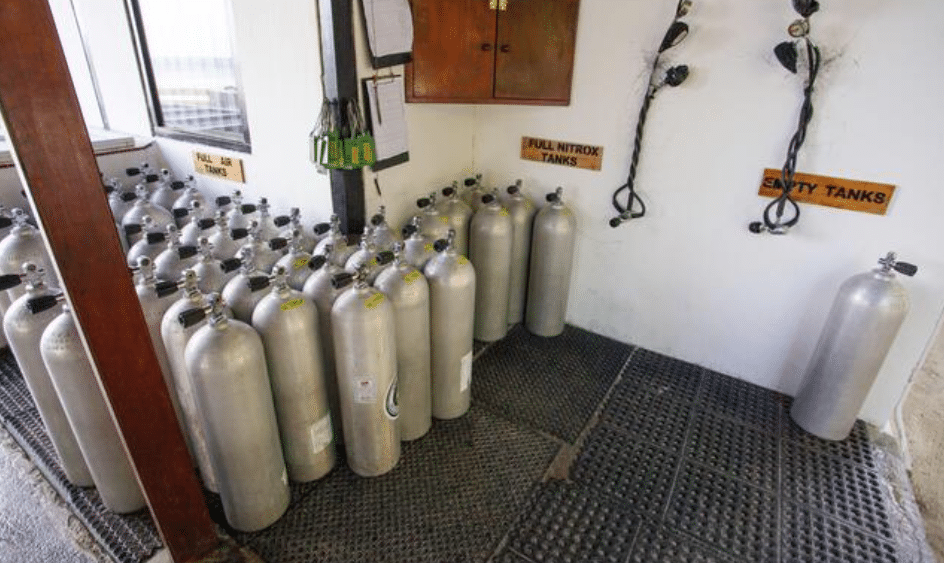
Rows of metal scuba cylinders stand upright on a rubber mat, with signs indicating sections for “Full Air,” “Full Nitrox,” and “Empty Cylinders” in a well-lit storage area. Some hoses hang on the wall.

Gas Laws and Compression Principles

Operating a compressor requires an understanding of basic gas physics. Key laws such as Charles’ Law, Gay-Lussac’s Law, and Avogadro’s Law directly affect how gases behave during compression and storage.

These principles explain how temperature, pressure, and volume interact during the filling process. For example, heat generated during compression increases pressure, which must be managed to avoid overfilling or equipment stress.

Understanding these relationships allows the operator to control the filling process more precisely and avoid unsafe conditions.

At N9BO℠, we emphasise that gas physics is not academic—it directly affects operational safety.


Operational Procedures and Cylinder Filling

The course provides structured procedures for filling cylinders safely. This includes pre-operational checks, correct connection of cylinders, controlled filling rates, and post-fill verification.

Before filling, the operator must confirm that cylinders are within testing requirements and free from damage. During filling, pressure must be increased gradually to control heat and ensure accuracy.

Cooling methods, such as water baths, may be used to manage temperature and reduce stress on the cylinder.

The process does not end when the cylinder is full. Post-operational checks and documentation ensure traceability and accountability.

At N9BO℠, we treat cylinder filling as a controlled procedure, not a routine task.


Maintenance and System Reliability

Compressor reliability depends on regular maintenance and inspection. The course teaches how to conduct both pre-operational and post-operational checks to ensure system integrity.

Key elements include:

  • Monitoring oil levels and mechanical components
  • Inspecting hoses, valves, and fittings
  • Draining condensation from tanks
  • Maintaining filtration systems

Operators must also maintain a compressor log, recording usage, maintenance, and any anomalies.

This ensures that potential issues are identified early and that the system remains within safe operating parameters.

At N9BO℠, we emphasise that maintenance is a continuous process, not a periodic task.
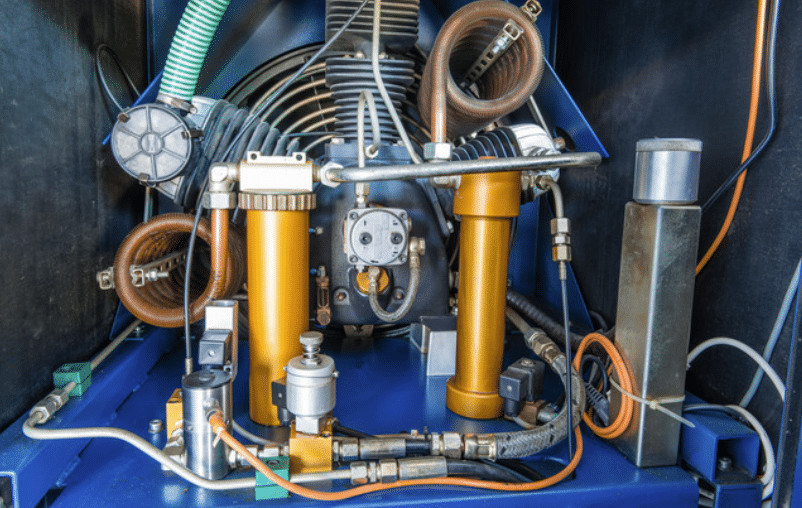
Industrial hydraulic/pneumatic machinery with orange vertical cylinders, hoses, coils and metal components on a blue base, likely part of a compressor or pump system.

Safety Systems and Risk Management

Operating a high-pressure compressor introduces significant risk if not managed correctly. The course introduces safety systems designed to prevent accidents and protect both operators and equipment.

These include pressure relief valves, burst disks, fill whip restraints, and emergency shutdown systems.

Personal protective equipment is also required, including hearing protection and appropriate clothing during operation.

Operators must follow structured procedures and adhere to local regulations governing high-pressure systems.

At N9BO℠, we treat compressor safety as a disciplined operational process.


Training Structure and Practical Application

The course combines knowledge development with practical training. Students must complete theory components before progressing to hands-on compressor operation.

Practical training includes multiple cylinder fills, system checks, and maintenance procedures. Students must demonstrate consistent and repeatable performance to meet certification requirements.

The programme can typically be completed within one day, but performance standards must still be met.

Training is performance-based. Certification is earned through demonstrated competence rather than attendance.

At N9BO℠, we align training with operational expectations, ensuring real-world capability.


Position Within the Diving Pathway

The Air Compressor Operator course sits alongside diving training rather than within it. It supports all levels of diving by ensuring that the gas used is safe and reliable.

It is particularly relevant for dive professionals, technicians, and anyone involved in dive centre operations.

The course also supports progression into related areas such as gas blending and equipment maintenance.

At N9BO℠, we position compressor operation as a core operational capability within dive operations.


Operational Mindset

The Air Compressor Operator course reinforces a critical principle: diving safety begins before the dive.

Gas quality defines the conditions under which the diver operates. If the gas is compromised, no level of skill can compensate.

The operator must approach compressor use with precision, discipline, and accountability. Every step, from intake placement to final fill, must be controlled.

At N9BO℠, we treat compressor operation as part of a larger safety system. It ensures that every dive begins with reliable, verified conditions.

In diving operations, control starts at the compressor—not at depth.
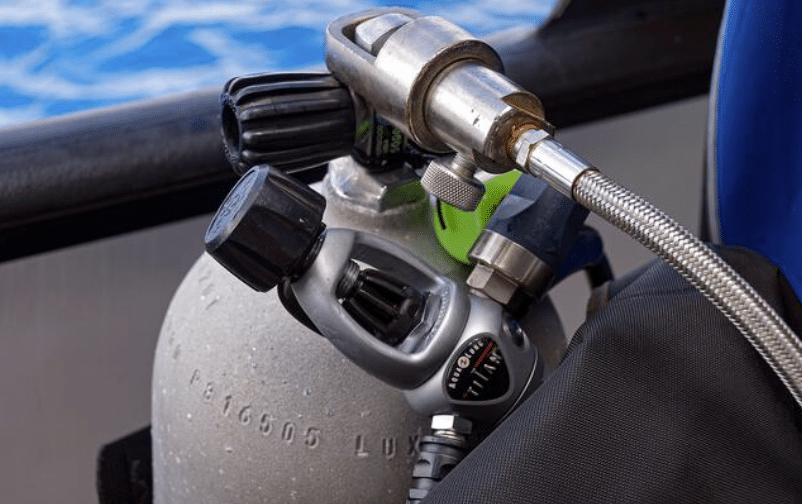
Close-up of a scuba diving cylinder with attached regulator and pressure gauge, placed on a boat near water.

Control the Air Before the Dive Begins

Contact N9BO℠ to integrate PADI Air Compressor Operator training into your operations, ensuring safe, reliable gas production and full control over your diving environment.


From the N9BO℠ Knowledge Base


Share this

PADI Tec Trimix Blender Course: Precision Gas Control for Advanced Technical Diving

Purpose of the Tec Trimix Blender Course

The Tec Trimix Blender course is designed to qualify individuals to blend trimix gases containing oxygen, nitrogen, and helium. It extends beyond enriched air blending by introducing helium as a third component, significantly increasing both complexity and operational importance.

This course is not about diving performance in the water. It is about ensuring that the gas used during the dive is correct, consistent, and safe. At advanced technical levels, gas composition directly defines depth limits, narcosis management, and decompression efficiency.

The objective is to produce accurate gas mixtures that align exactly with the dive plan. There is no tolerance for estimation or variation.

At N9BO℠, we treat trimix blending as a critical upstream control that determines the outcome of the entire dive.


From Nitrox Blending to Trimix Complexity

Moving from nitrox to trimix blending introduces a fundamental increase in complexity. Instead of managing a binary gas mix, the blender must now balance three components, each with a distinct operational role.

Oxygen defines exposure limits and maximum operating depth. Nitrogen contributes to narcosis and decompression loading. Helium reduces narcosis and gas density, but affects decompression behaviour.

The interaction between these gases must be calculated precisely. A change in one component affects the entire mixture and its suitability for the planned dive.

This requires a deeper understanding of gas physics and planning integration. The blender must think in terms of the dive profile, not just the final percentage.

At N9BO℠, we emphasise that trimix blending is not about mixing gases—it is about building a gas strategy.


Helium Handling and Operational Considerations

Helium introduces specific operational considerations. It is an inert gas with low density, but it is also costly and must be handled efficiently to avoid waste.

Blending with helium requires controlled sequencing. The order in which gases are added affects accuracy and final composition. Improper sequencing can lead to incorrect mixes or inefficient use of resources.

Helium also affects decompression planning. Its inclusion changes how the body absorbs and releases inert gas, which must be accounted for during dive planning.

This reinforces the need for precision. The blender must understand not only how to add helium, but why it is used and how it affects the dive.

At N9BO℠, we treat helium as a strategic component, not just an additive.

A yellow scuba cylinder connected to electronic diving equipment and a black bag, resting on a rough concrete surface next to a person's leg.

Blending Methods and Accuracy Control

The course introduces advanced blending methods, including partial pressure blending and continuous flow systems adapted for trimix production. Each method must be applied correctly to achieve the desired result.

Accuracy becomes more demanding. The final mixture must match the planned gas within tight tolerances, as even small deviations can alter depth limits or decompression profiles.

This requires careful measurement, controlled filling procedures, and continuous monitoring throughout the process.

Blending must be repeatable. The same procedure must produce the same result every time, regardless of conditions or operator.

At N9BO℠, we emphasise that precision in blending is non-negotiable at technical levels.


Gas Analysis and Verification

Verification is a critical step in trimix blending. The final gas must be analysed for both oxygen and helium content to confirm that it matches the intended composition.

This requires calibrated analyzers and correct measurement techniques. The blender must ensure that readings are accurate and consistent before approving the gas for use.

Without verification, the entire process is based on assumption. In technical diving, assumption is unacceptable.

Documentation must also be maintained, ensuring traceability of gas composition for operational and safety purposes.

At N9BO℠, we treat gas analysis as the final confirmation that the dive plan can be executed safely.

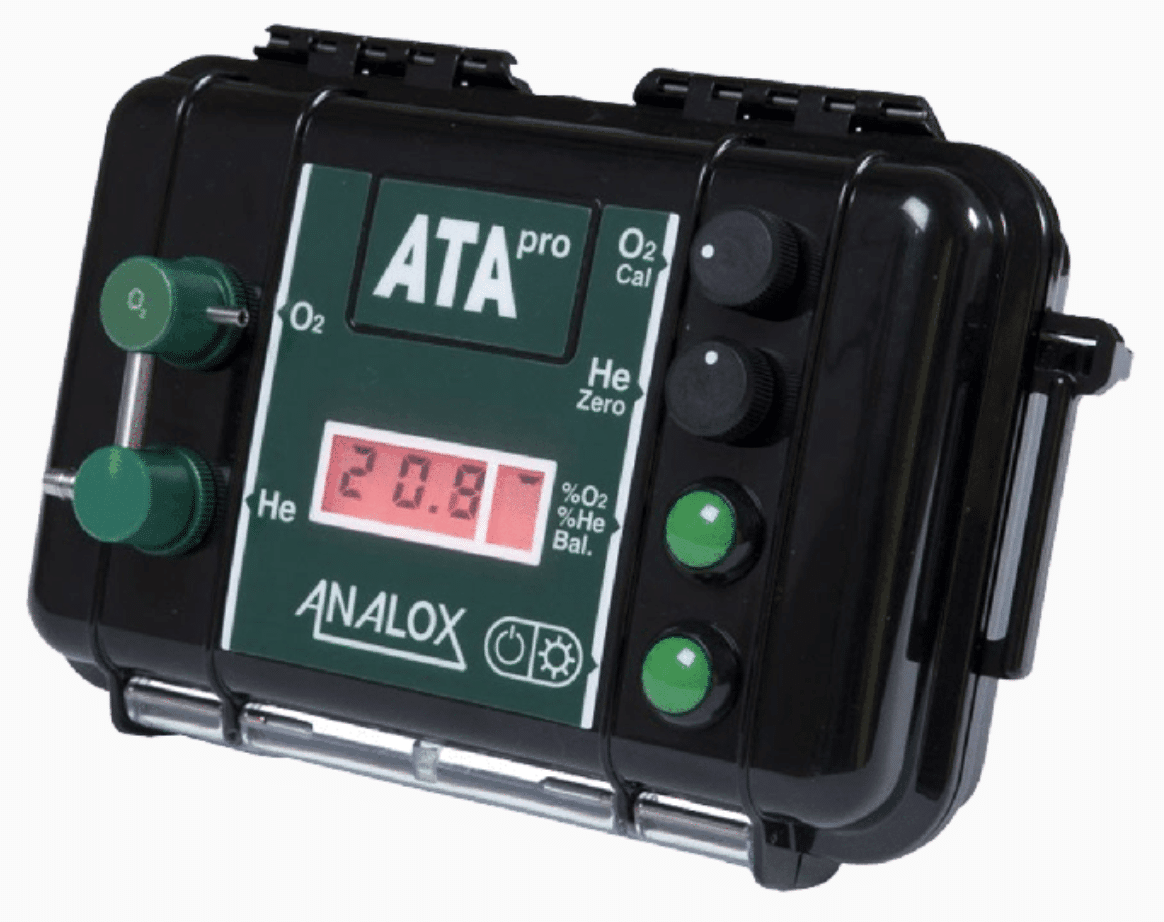
A black and green handheld ATA Pro ANALOX gas analyser with digital display screen showing 20.8, control knobs, buttons, and labelled indicators for O2 and He gases.

Equipment Systems and Operational Control

Trimix blending relies on a complete gas production system, including compressors, filtration units, cylinders, and blending panels. Each component must function correctly to ensure gas quality.

The blender must understand how these systems interact. Air quality, filtration performance, and equipment condition all affect the final mixture.

Operational control requires following a structured process. Preparation, blending, analysis, and documentation must all be completed without deviation.

Any failure in the system introduces risk. The blender must be capable of identifying and correcting issues before gas is released for use.

At N9BO℠, we treat gas production as an integrated operational system where each element must perform reliably.


Operational Relevance in Technical Diving

The Tec Trimix Blender course is directly relevant to advanced technical diving operations. As divers progress into deeper environments, reliance on accurate trimix becomes essential.

In dive centres, liveaboards, and expedition environments, the ability to produce trimix on-site ensures operational independence and reliability.

This capability reduces reliance on external suppliers and allows for immediate adjustment of gas strategies based on operational needs.

It also introduces accountability. The diver or operator producing the gas becomes responsible for its accuracy and safety.

At N9BO℠, we integrate trimix blending into operational readiness for advanced diving environments.


Position Within the Technical Pathway

The Tec Trimix Blender course builds on the Tec Gas Blender programme and represents the highest level of gas production training within the PADI TecRec system.

It complements diver-level trimix training by ensuring that the gases used in deep technical dives are produced to the required standard.

For divers, it provides a deeper understanding of how gas composition affects planning and execution. For professionals, it provides the ability to support advanced operations.

At N9BO℠, we recommend trimix blending as a critical capability for those operating at advanced technical levels.


Operational Mindset

The Tec Trimix Blender course reinforces that technical diving begins long before entering the water. Gas composition defines the dive profile, influences decompression, and determines operational limits.

Blending requires precision, discipline, and accountability. Every step must be controlled, and every result must be verified.

At N9BO℠, we approach trimix blending as a core operational function. It ensures that the dive is built on accurate and reliable conditions from the outset.

In advanced technical diving, control starts with the gas—and the gas must be right.

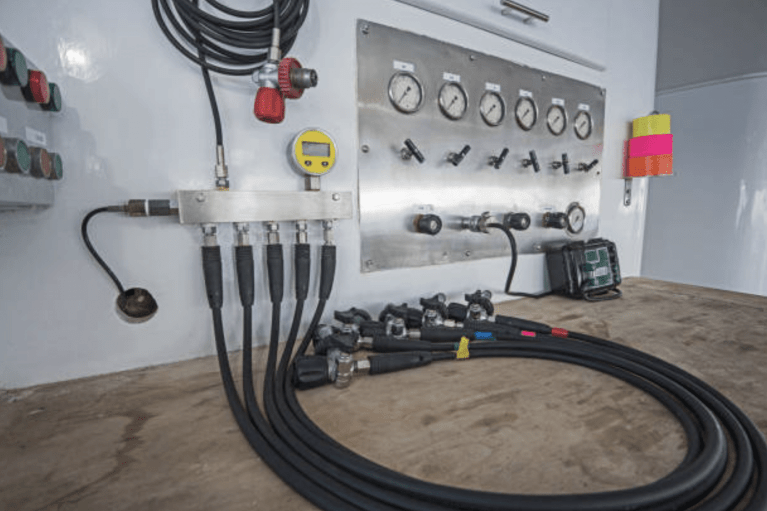
A close-up view of a control panel with multiple pressure gauges, switches, and a digital device, mounted on a boat with the sea visible in the background. Thick cables and hoses are connected below the panel.


Produce the Gas That Defines the Dive


Contact N9BO℠ to integrate PADI Tec Trimix Blender training into your operational capability, ensuring precision, safety, and full control over your advanced diving gases.


From the N9BO℠ Knowledge Base


Share this

PADI Tec Gas Blender Course: Controlling the Gas Before the Dive Begins

Purpose of the Tec Gas Blender Course

The Tec Gas Blender course is designed to qualify individuals to blend enriched air nitrox using structured and controlled methods. It is not a diving course, but an operational programme focused on gas production, handling, and verification.

As technical diving increases in complexity, the need for accurate and reliable gas becomes critical. Divers depend on precise gas composition for depth limits, decompression planning, and overall safety.

This course ensures that the individual producing the gas understands both the process and the consequences of error. The objective is not simply to create a mix, but to produce it consistently and within defined tolerances.

At N9BO℠, we treat gas blending as the first control point of any technical dive.


From Gas Consumer to Gas Controller

Most divers rely on external sources for their gas. This course changes that dynamic by placing responsibility on the individual to control gas composition directly.

This introduces a higher level of accountability. The blender must understand how gases behave under pressure, how mixtures are calculated, and how small inaccuracies can affect the entire dive plan.

Blending is a controlled process, not an estimate. The final product must match the intended mix precisely, as even minor deviations can alter maximum operating depth and decompression efficiency.

This shift in responsibility changes how divers approach their preparation. Gas is no longer assumed to be correct—it must be verified and controlled.

At N9BO℠, we emphasise that controlling gas is a direct extension of controlling the dive.


Oxygen Handling and Risk Management

A significant portion of the course is dedicated to oxygen handling. Oxygen presents unique hazards, particularly at high concentrations and pressures, where the risk of fire or explosion increases.

Students learn how to manage these risks through proper procedures, including oxygen cleaning, compatible materials, and controlled handling techniques.

This requires strict discipline. Equipment must be maintained to specific standards, and procedures must be followed without deviation.

Oxygen is safe when handled correctly, but unforgiving when it is not. The blender must understand both its benefits and its hazards.

At N9BO℠, we treat oxygen handling as a critical safety discipline within diving operations.

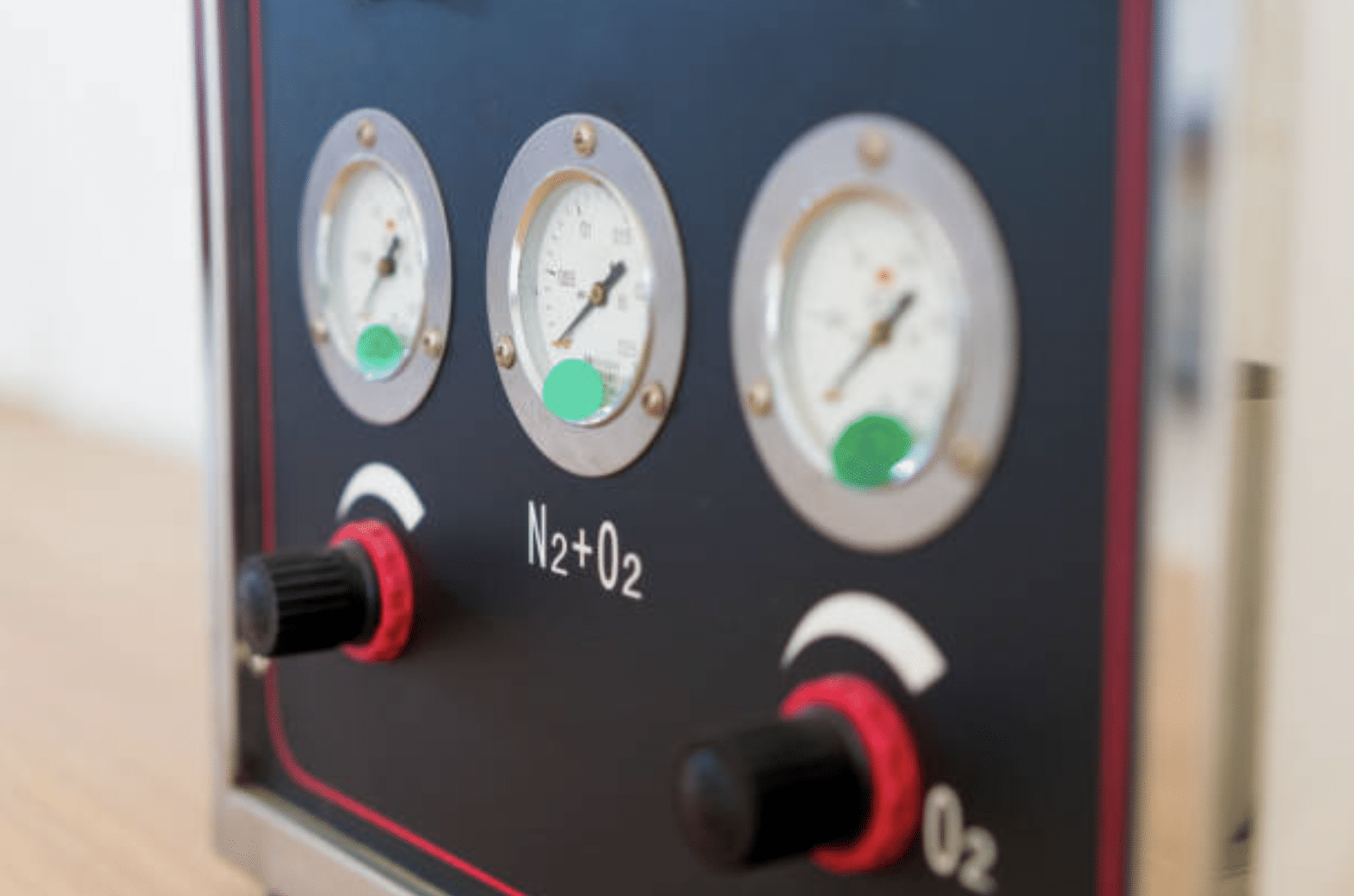
Close-up of a control panel with three pressure gauges and two black knobs labelled “N2+O2” for a nitrous oxide and oxygen delivery system, often used in medical or dental environments.

Blending Methods and Practical Execution

The course introduces standard gas blending methods, including partial pressure blending and continuous flow techniques. Each method has specific applications, advantages, and limitations.

Practical training forms the core of the programme. Participants are required to produce gas mixes within tight tolerances, reinforcing the need for precision and repeatability.

Blending is not a theoretical exercise. It is a hands-on process where the outcome must match the plan exactly.

This requires attention to detail, structured procedures, and continuous verification throughout the process.

At N9BO℠, we emphasise that consistency in blending is as important as accuracy.


Gas Analysis and Verification

Producing a gas mixture is only part of the process. Every cylinder must be analysed to confirm that it matches the intended composition.

This requires proper use of oxygen analysers, including calibration and correct measurement techniques. The blender must ensure that readings are accurate and repeatable.

Verification removes assumption. It ensures that the diver knows exactly what gas is being used, rather than relying on estimation or trust.

Documentation is also part of this process. Recording gas composition provides traceability and accountability within the operation.

At N9BO℠, we treat gas analysis as the final control step before the dive begins.

A group of silver scuba diving cylinders with yellow and green labels stands upright on a wet wooden decking near the sea, under a clear blue sky.

Equipment Systems and Operational Procedures

Gas blending is supported by a system that includes compressors, filtration units, cylinders, and fill panels. Each component plays a role in determining the quality of the final gas.

The blender must understand how these systems interact. Air quality, filtration performance, and equipment maintenance all affect the safety of the gas produced.

Blending must follow a structured sequence. Preparation, filling, analysis, and documentation are all required steps that must be executed consistently.

Skipping or modifying procedures introduces risk and reduces reliability.

At N9BO℠, we treat gas production as a system where every step contributes to the final outcome.


Operational Relevance in Dive Centres and Field Environments

The Tec Gas Blender course has direct operational relevance in dive centres, liveaboards, and remote environments. In these settings, gas must often be produced on-site, sometimes under time pressure or logistical constraints.

The ability to blend gas correctly ensures operational continuity. It allows diving activities to proceed without reliance on external supply chains.

In remote or expedition environments, this capability becomes essential. The team must be self-sufficient, and gas production becomes a critical function.

At N9BO℠, we integrate gas blending into operational readiness, particularly for field and project-based diving.


Position Within the Technical Pathway

The Tec Gas Blender course supports all levels of technical diving by ensuring that gas quality meets operational requirements. It is not a progression course, but a parallel capability that enhances independence and control.

It can lead to certifications in both enriched air and trimix blending, depending on the level of training completed.

For technical divers, this knowledge provides a deeper understanding of how gas affects planning and execution. For professionals, it provides the ability to support and manage diving operations.

At N9BO℠, we recommend gas blending as an essential skill for those seeking full operational control.


Operational Mindset

The Tec Gas Blender course reinforces that technical diving begins before entering the water. Gas composition defines the parameters of the dive and influences every subsequent decision.

Blending requires precision, discipline, and accountability. Every step must be controlled, and every result must be verified.

At N9BO℠, we approach gas blending as a critical control point in diving operations. It ensures that the dive begins with accurate and reliable conditions.

In technical diving, control does not start at depth. It starts at the fill station.

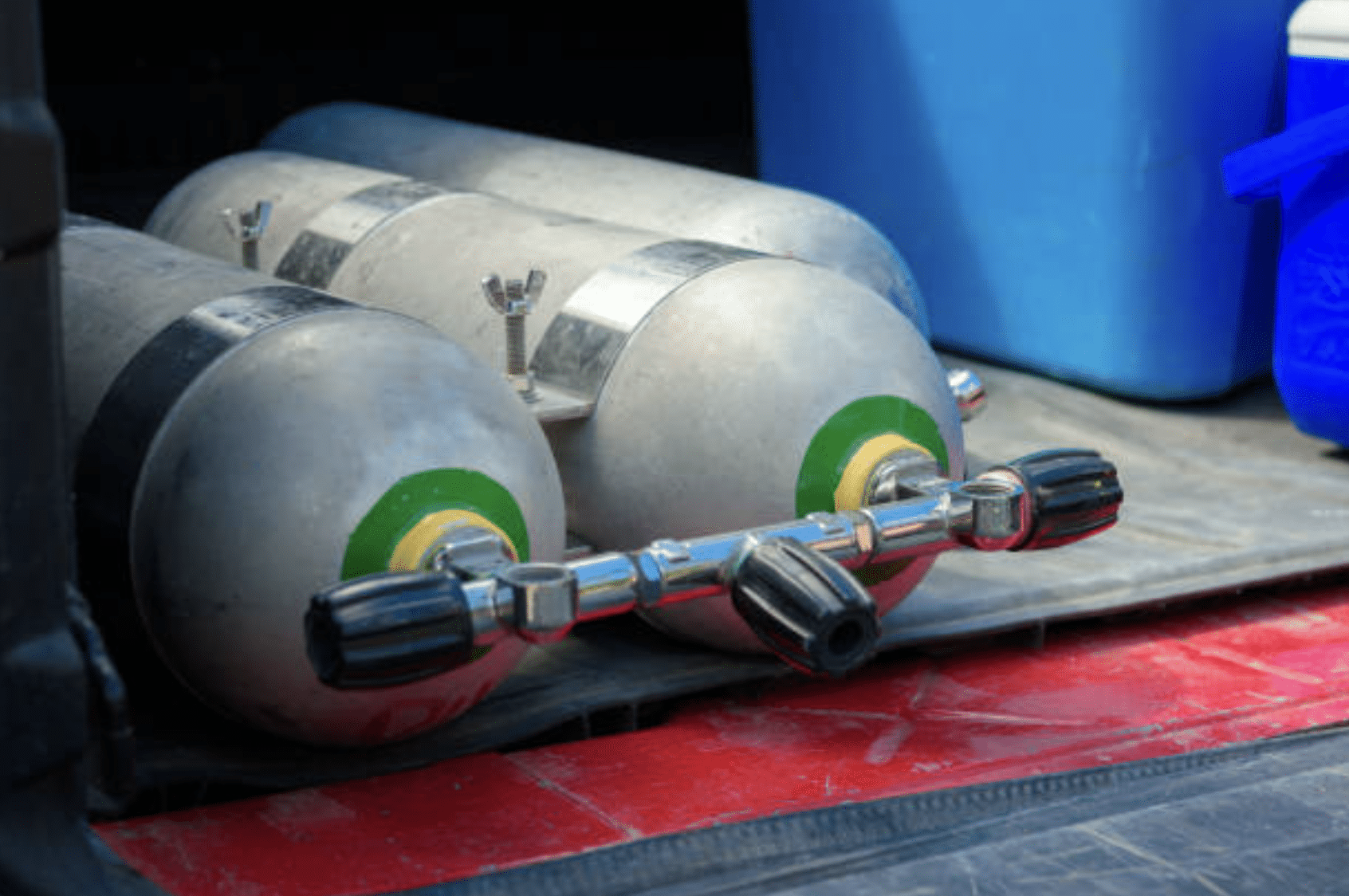
Two scuba diving air cylinders with green and yellow markings are lying on their sides next to blue cool boxes inside a vehicle, resting on a red and black surface.


Control Your Gas, Control Your Dive


Contact N9BO℠ to integrate PADI Tec Gas Blender training into your operational capability, ensuring accuracy, safety, and full control over your diving gases.


From the N9BO℠ Knowledge Base


Share this

Full-Face Mask Systems: Integration, Maintenance, and Operational Use

Understanding Full-Face Mask Systems

Full-face masks differ from standard regulators by enclosing the entire face, sealing around the diver’s face and delivering gas through an integrated system. This configuration allows for normal breathing through both nose and mouth, while also enabling communication systems to be integrated.

Key functional advantages include:

  • Protection of airway from contaminated water
  • Integrated communication capability
  • Improved thermal protection in cold environments
  • Reduced risk of regulator loss

These advantages make FFMs essential in specific operational contexts, particularly public safety, contaminated water, and surface-supplied diving.

At N9BO℠, we treat FFMs as specialised equipment that must be integrated into operations with clear procedures and training.


When Full-Face Masks Are Required

FFMs are not standard for all diving. Their use is driven by operational requirements where additional protection or capability is necessary.

Common applications include:

  • Contaminated water operations requiring sealed breathing systems
  • Public safety diving where communication is critical
  • Surface-supplied diving systems
  • Cold water environments requiring facial protection

In these scenarios, standard regulators do not provide sufficient protection or capability.

However, introducing FFMs increases system complexity. Their use must be justified by operational need.

At N9BO℠, we deploy FFMs based on risk assessment, not preference.


Integration with Communication Systems

One of the primary advantages of FFMs is the ability to integrate communication systems. This allows real-time voice communication between diver and surface or within the dive team.

Operational benefits include:

  • Immediate reporting of conditions
  • Real-time instructions and coordination
  • Improved situational awareness across the team

However, communication systems introduce additional points of failure. Wiring, connectors, and microphones must be maintained and tested regularly.

Communication protocols must also be standardised. Unstructured communication increases confusion and reduces effectiveness.

At N9BO℠, communication is treated as a controlled system requiring both technical and procedural management.

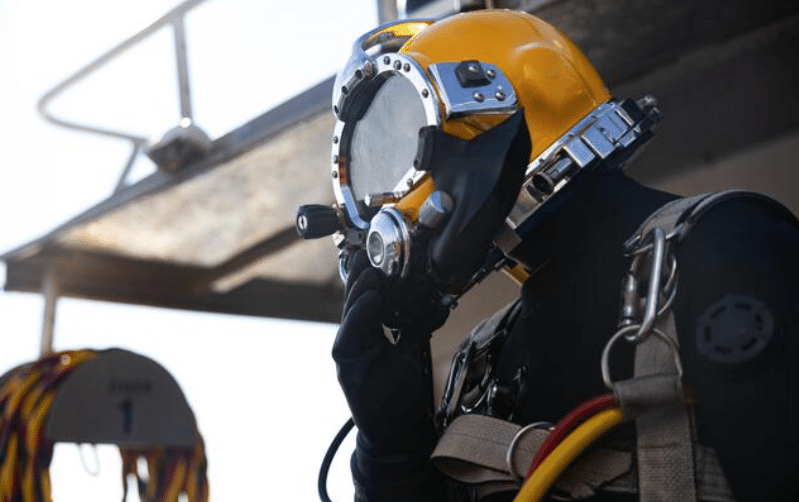
A person wearing a yellow diving helmet and black wetsuit prepares for a dive, holding their helmet, with safety harnesses and cables attached. A boat structure and coiled cords are visible in the background.

Fit, Seal, and Individual Compatibility

FFMs rely on a proper seal to function effectively. Poor fit compromises both safety and performance.

Key considerations include:

  • Correct mask size and adjustment
  • Compatibility with individual facial structure
  • Ensuring no obstruction to sealing surfaces

Hair, facial features, or improper adjustment may prevent an effective seal, leading to leaks or loss of protection.

Fit testing must be conducted before operational use. Assumptions about compatibility introduce risk.

At N9BO℠, we require individual fit verification as part of equipment allocation.


Maintenance and System Integrity

FFMs require regular maintenance to ensure reliability. The increased complexity compared to standard regulators introduces additional components that must be inspected and serviced.

Maintenance requirements include:

  • Inspection of seals and O-rings
  • Cleaning and disinfection after use
  • Verification of communication system functionality
  • Checking valves and internal components

Failure to maintain FFMs results in degraded performance and increased risk of failure.

Maintenance must be structured and documented, not informal.

At N9BO℠, FFM maintenance is integrated into equipment management systems to ensure consistency.


Emergency Procedures and Redundancy

FFMs change emergency response procedures. In the event of mask failure, the diver must be able to switch to an alternative gas source.

This requires:

  • Carrying a backup regulator
  • Training in mask removal and bailout procedures
  • Maintaining composure during transition

Emergency procedures must be practiced. The enclosed nature of FFMs can increase stress if failure occurs.

Redundancy is essential. FFMs do not eliminate the need for backup systems.

At N9BO℠, we emphasise that additional capability must be matched with additional preparedness.

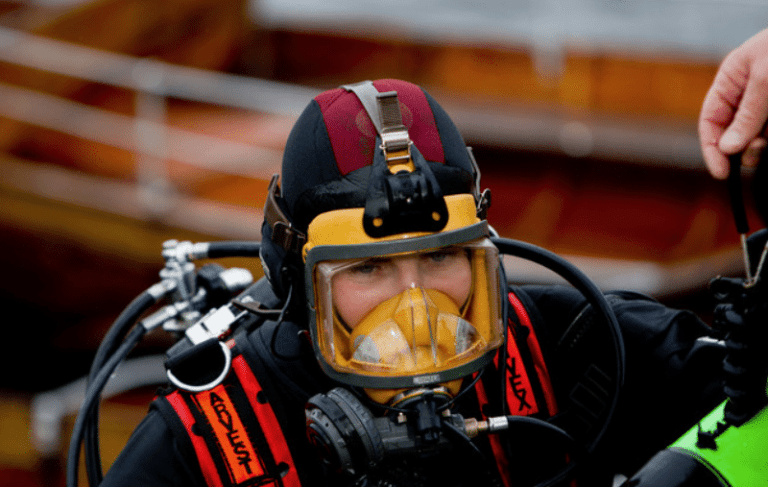
A close-up of a scuba diver underwater, wearing a full-face mask and helmet with attached lights and a camera, looking directly at the camera through murky green water.

Task Loading and Familiarity

FFMs introduce additional considerations for the diver, including communication management, mask control, and system awareness. This increases cognitive load.

Divers must be familiar with:

  • Breathing characteristics of the mask
  • Communication operation
  • Emergency procedures

Lack of familiarity reduces efficiency and increases risk, particularly under stress.

Training must ensure that operation becomes routine, allowing focus to remain on the task.

At N9BO℠, we integrate FFM training into operational preparation, ensuring competence before deployment.


Operational Limitations and Considerations

While FFMs provide advantages, they also introduce limitations.

These include:

  • Increased bulk and reduced field of view in some models
  • More complex donning and doffing procedures
  • Dependence on correct seal and system integrity

These limitations must be considered during planning. FFMs are not universally applicable.

Selecting FFMs without clear operational justification introduces unnecessary complexity.

At N9BO℠, equipment selection is aligned with operational requirements, balancing capability and simplicity.


Team Coordination and Standardisation

FFM use requires consistent procedures across the team. Differences in equipment or communication systems introduce variability.

Standardisation ensures:

  • Consistent communication protocols
  • Compatibility of equipment
  • Predictable response in emergency situations

Teams must operate within defined procedures to maintain control.

At N9BO℠, we standardise FFM systems and procedures to ensure consistency across operations.


Operational Mindset

Full-face masks enhance capability, but they also increase complexity. Their effectiveness depends on correct integration, disciplined maintenance, and trained personnel.

Without these controls, FFMs introduce additional risk rather than reducing it.

At N9BO℠, we approach FFMs as part of a system. Equipment, training, and procedures are aligned to ensure that capability is supported by control.

In diving operations, added capability must always be matched with increased discipline.

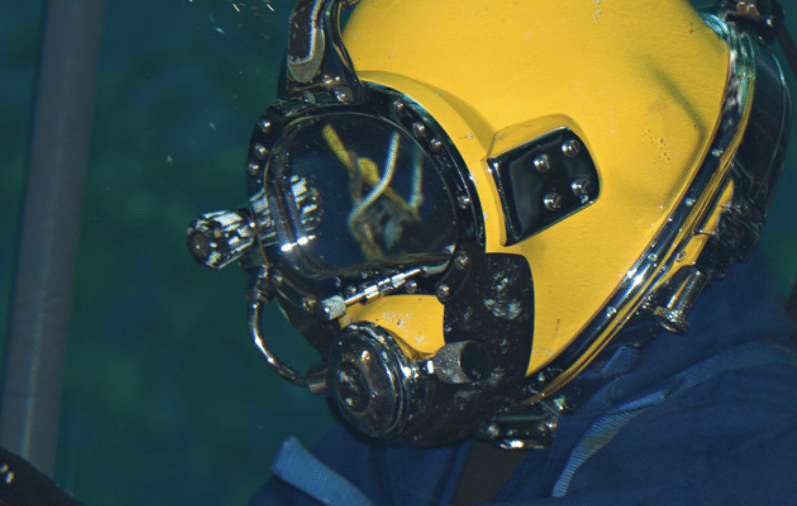
A close-up of a person underwater wearing a yellow commercial diving helmet with a clear visor and metal fittings, dressed in a blue suit.


Integrate Capability with Control


Contact N9BO℠ to integrate full-face mask systems into your dive operations and training, ensuring safe, effective, and controlled use in demanding environments.


From the N9BO℠ Knowledge Base

Share this

Surface-Supplied Diving Systems: When They Are Required and Why

Understanding Surface-Supplied Diving Systems

Surface-supplied diving replaces self-contained breathing systems with a continuous gas supply delivered from the surface via an umbilical. This umbilical typically includes breathing gas, communications, and often additional services such as pneumo lines or hot water supply.

Unlike SCUBA, where the diver carries a finite gas supply, SSDS provides:

  • Continuous breathing gas from a controlled source
  • Direct communication between diver and surface
  • Real-time monitoring of diver status

This changes the operational framework. The diver becomes part of a surface-managed system rather than an independent unit.

At N9BO℠, we treat surface-supplied diving as a system-based operation where control is centralised and continuously maintained.


When Surface Supply Becomes Necessary

Surface-supplied systems are required when the limitations of SCUBA introduce unacceptable risk. These conditions are typically linked to task complexity, environment, or duration.

SSDS is preferred or required in:

  • Low or zero visibility environments
  • Contaminated water operations
  • Long-duration or repetitive tasks
  • Complex work requiring continuous focus
  • Situations requiring uninterrupted communication

In these conditions, reliance on a finite gas supply and limited communication increases operational risk.

Surface supply provides stability. The diver does not need to manage gas reserves independently and can focus on task execution.

At N9BO℠, we determine system selection based on operational requirements, not convenience.


Continuous Gas Supply and Risk Reduction

One of the primary advantages of SSDS is the continuous gas supply. This eliminates a key limitation of SCUBA—finite gas reserves.

Operational benefits include:

  • Removal of gas management as a limiting factor
  • Reduced risk of out-of-gas scenarios
  • Ability to extend working time safely

This allows divers to maintain focus on task execution rather than monitoring remaining gas.

However, this does not eliminate risk. Gas supply systems must be redundant and monitored continuously. Surface failure affects the diver directly.

At N9BO℠, we emphasise that continuous supply increases control but requires robust system management.

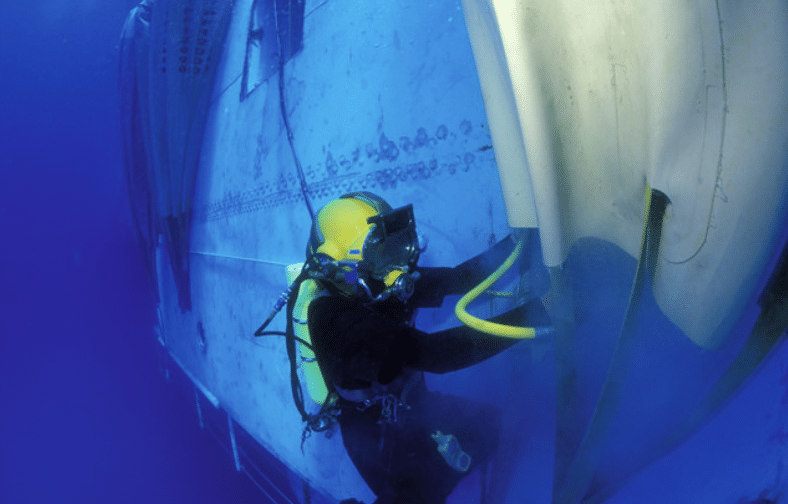
A scuba diver in a yellow helmet and black wetsuit works underwater, inspecting or repairing the side of a large submerged structure, possibly a ship or submarine, whilst holding a yellow hose.

Communication and Command Structure

Surface-supplied diving introduces real-time communication between diver and surface team. This fundamentally changes operational control.

Communication allows:

  • Immediate reporting of conditions and issues
  • Real-time instructions and adjustments
  • Continuous monitoring of diver status

This creates a command structure where the surface team maintains oversight and control of the operation.

The diver is no longer operating independently. Decisions are coordinated, reducing the likelihood of individual error.

At N9BO℠, communication is treated as a primary control mechanism, not a convenience.


Task Loading and Operational Efficiency

SSDS is particularly suited to tasks that involve high workload or complexity. These may include construction, inspection, recovery, or public safety operations.

Advantages in these scenarios include:

  • Reduced cognitive load related to gas management
  • Continuous support from the surface team
  • Ability to maintain position and focus for extended periods

This increases efficiency and reduces fatigue.

However, task loading must still be managed. Continuous supply does not eliminate physical or cognitive limits.

At N9BO℠, we integrate task management into SSDS operations, ensuring that workload remains within controllable limits.


Environmental Control and Safety

Surface-supplied systems are often used in environments where control is critical. This includes hazardous or confined environments where SCUBA limitations increase risk.

Examples include:

  • Contaminated water requiring full-face masks and sealed systems
  • Confined spaces with limited access or visibility
  • Strong current environments where stability is required

The umbilical provides both support and constraint. It must be managed to prevent entanglement while maintaining connection to the surface.

Environmental control is enhanced through:

  • Continuous monitoring
  • Immediate response capability
  • Structured diver support

At N9BO℠, we treat environmental risk as a determining factor in system selection.

A person in safety gear stands on a quay holding a rope and wearing headphones, while a diver in a wetsuit is partially submerged in a river, with trees and industrial buildings in the background.

Equipment Complexity and System Integrity

Surface-supplied systems are more complex than SCUBA. They involve multiple components, including gas supply systems, communication units, umbilicals, and helmets or full-face masks.

This complexity introduces additional requirements:

  • Rigorous pre-dive checks
  • System redundancy for critical components
  • Continuous monitoring during operation

Failure in any part of the system can affect the entire operation. System integrity must be maintained at all times.

At N9BO℠, SSDS is managed as an integrated system, where each component is critical.


Training and Team Coordination

Surface-supplied diving requires specialised training. Both divers and surface personnel must understand their roles within the system.

Key competencies include:

  • Umbilical management
  • Communication protocols
  • Emergency procedures
  • Surface team coordination

The operation depends on teamwork. The diver, tender, and supervisor must function as a coordinated unit.

Breakdown in coordination increases risk, particularly in complex environments.

At N9BO℠, we emphasise team integration and role clarity in all SSDS operations.


SCUBA vs Surface Supply: Operational Decision-Making

The choice between SCUBA and surface supply is not based on preference but on operational requirements.

SCUBA is appropriate for:

  • Mobile, low-complexity dives
  • Environments with manageable risk
  • Short-duration tasks

Surface supply is required when:

  • Continuous gas and communication are critical
  • Task complexity exceeds individual capacity
  • Environmental conditions increase risk

Selecting the wrong system introduces unnecessary risk.

At N9BO℠, system selection is treated as a risk management decision, not an operational default.


Operational Mindset

Surface-supplied diving represents a shift from individual operation to system-based control. The diver is part of a coordinated structure where safety and performance are managed collectively.

This requires discipline, communication, and adherence to procedure. The advantages of SSDS—continuous gas, communication, and control—are only effective when the system is properly managed.

At N9BO℠, we approach SSDS as a controlled operation. Every element, from equipment to personnel, is integrated into a structured framework.

In high-risk environments, control is not optional. Surface-supplied systems provide that control when applied correctly.

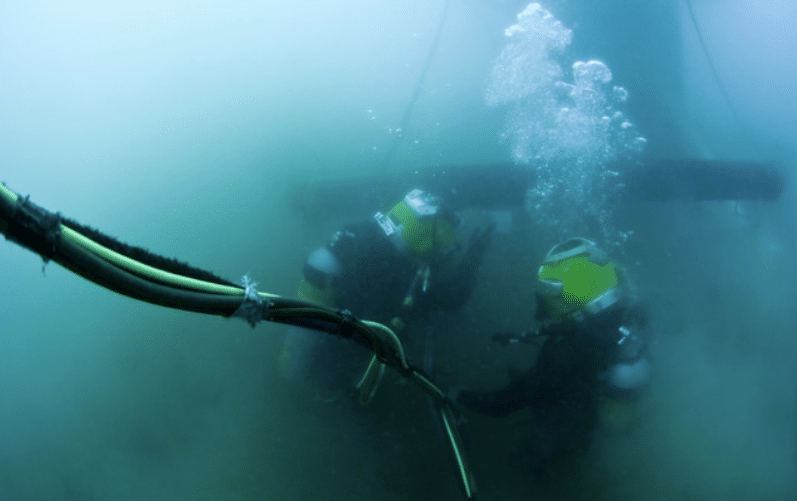
Two deep-sea divers in yellow helmets work underwater near thick cables and a large pipe, with air bubbles rising to the surface in the murky, blue-green water.


Choose the Right System for the Mission


Contact N9BO℠ to integrate surface-supplied diving systems into your operations and training, ensuring safe and effective performance in high-risk environments.


From the N9BO℠ Knowledge Base


Share this

Equipment Lifecycle Management: When to Service, Replace, or Retire Gear

Understanding Equipment Lifecycle in Dive Operations

Every piece of dive equipment has a defined lifecycle. This lifecycle is influenced by usage frequency, environmental exposure, maintenance quality, and storage conditions.

Unlike static assets, dive equipment operates under pressure, exposure to saltwater, and mechanical stress. These factors accelerate wear and introduce failure points that may not be immediately visible.

Lifecycle management involves:

  • Monitoring condition over time
  • Maintaining performance through servicing
  • Identifying when equipment is no longer fit for use

At N9BO℠, we treat equipment lifecycle as a continuous process, not a one-time assessment.


Service vs Replacement: Defining the Threshold

Servicing restores equipment to operational condition, but it does not reset its lifecycle. Over time, repeated servicing becomes less effective as materials degrade and tolerances change.

The decision to service or replace depends on:

  • Frequency and severity of wear
  • Availability of replacement parts
  • Cost relative to operational risk
  • Manufacturer recommendations

Servicing is appropriate when performance can be reliably restored. Replacement is required when degradation affects safety or reliability.

Indicators that servicing may no longer be sufficient include:

  • Recurring faults after maintenance
  • Visible material fatigue or corrosion
  • Reduced performance despite correct servicing

At N9BO℠, we base decisions on performance and risk, not on extending equipment life beyond safe limits.


Critical Equipment and Risk Prioritisation

Not all equipment carries the same level of risk. Life-support systems require stricter lifecycle management than non-critical items.

High-priority equipment includes:

  • Regulators and breathing systems
  • Cylinders and valves
  • Buoyancy control devices (BCDs)
  • Exposure suits in extreme conditions

Failure in these systems has direct safety implications. Lifecycle decisions must therefore be more conservative.

Lower-risk equipment may tolerate extended use, but still requires monitoring.

At N9BO℠, we prioritise lifecycle management based on risk exposure, ensuring that critical systems receive the highest level of control.

A man helps a diver adjust their helmet and kit beside an indoor swimming pool. The diver wears a drysuit and a large helmet with attached breathing apparatus.

Environmental Impact on Equipment Degradation

Environmental conditions play a significant role in equipment wear. Saltwater, UV exposure, and temperature variations accelerate degradation.

Common effects include:

  • Corrosion of metal components
  • Degradation of rubber and plastic materials
  • UV damage to exposure suits and hoses
  • Salt accumulation affecting moving parts

Equipment used in tropical, high-salinity environments degrades faster than in controlled conditions.

Storage also affects lifespan. Poorly stored equipment deteriorates even when not in use.

At N9BO℠, we factor environmental exposure into lifecycle planning, adjusting service intervals and replacement timelines accordingly.


Inspection and Condition Monitoring

Effective lifecycle management depends on regular inspection. Visual and functional checks identify early signs of wear or failure.

Inspection should include:

  • Visual assessment for damage, corrosion, or wear
  • Functional testing under operational conditions
  • Verification of seals, hoses, and connections

Routine inspections must be structured and documented. Informal checks are inconsistent and may miss critical issues.

Operators must be trained to recognise indicators of degradation and report them promptly.

At N9BO℠, inspection is treated as a formal process, integrated into daily operations.


Maintenance Records and Traceability

Tracking equipment history is essential for informed decision-making. Maintenance records provide visibility into usage, servicing, and performance over time.

Records should include:

  • Service dates and performed actions
  • Identified issues and corrective measures
  • Usage frequency and operational conditions

Without records, lifecycle decisions are based on assumption rather than data.

Traceability ensures accountability and supports compliance with operational and regulatory standards.

At N9BO℠, we maintain detailed equipment records to support lifecycle management and risk control.

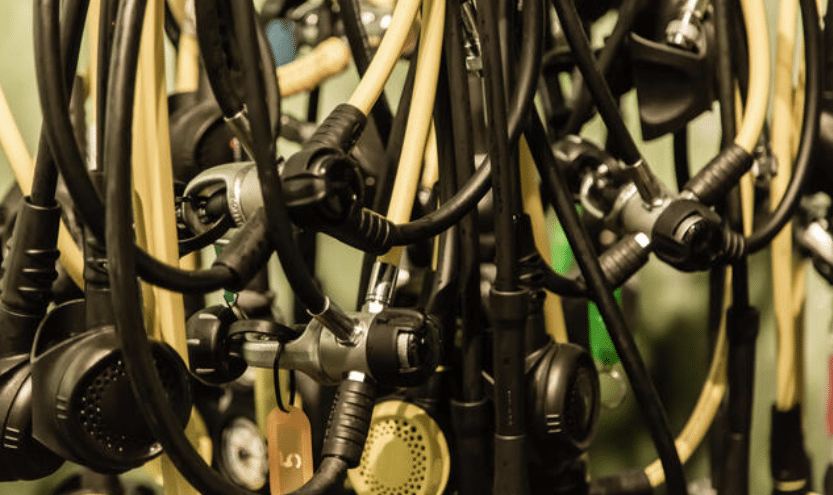
A close-up of several scuba diving regulators and hoses hanging together, showing mouthpieces, gauges, and tags, with the equipment appearing tangled and densely packed.

Retirement Criteria and Decision-Making

Retiring equipment is often delayed due to cost considerations or operational pressure. However, continued use of degraded equipment introduces unacceptable risk.

Retirement criteria should be clearly defined. Equipment must be removed from service when:

  • It fails to meet performance standards
  • Structural integrity is compromised
  • Manufacturer limits are reached
  • Safe operation cannot be guaranteed

Retirement decisions must be enforced consistently. Exceptions introduce variability and increase risk.

At N9BO℠, we treat retirement as a necessary control measure, not a last resort.


Standardisation and Fleet Management

Dive operations often manage multiple sets of equipment. Standardisation simplifies maintenance, training, and replacement.

Benefits of standardisation include:

  • Consistent servicing procedures
  • Reduced inventory complexity
  • Easier identification of faults or anomalies

Fleet management allows operators to monitor equipment collectively, identifying trends in wear or failure.

This supports proactive replacement and reduces unexpected downtime.

At N9BO℠, we manage equipment as a system, not as isolated items.


Balancing Cost and Risk

Cost is a factor in lifecycle management, but it must not override safety. Extending equipment life beyond safe limits reduces immediate cost but increases long-term risk.

Effective balance involves:

  • Planning for replacement as part of operational budgeting
  • Prioritising critical equipment for early replacement
  • Avoiding reactive decisions driven by failure

Investing in timely replacement reduces the likelihood of incidents and operational disruption.

At N9BO℠, we align financial planning with safety requirements, ensuring that cost does not compromise operational integrity.


Operational Mindset

Equipment lifecycle management is not a maintenance function alone—it is an operational responsibility. Decisions made at this level directly affect safety, reliability, and performance.

Waiting for failure is not acceptable. Degradation must be identified and managed before it becomes critical.

At N9BO℠, we emphasise proactive control, structured decision-making, and consistent application of standards. Equipment is treated as part of the safety system, not just operational support.

In dive operations, reliability is not assumed. It is maintained through disciplined lifecycle management.

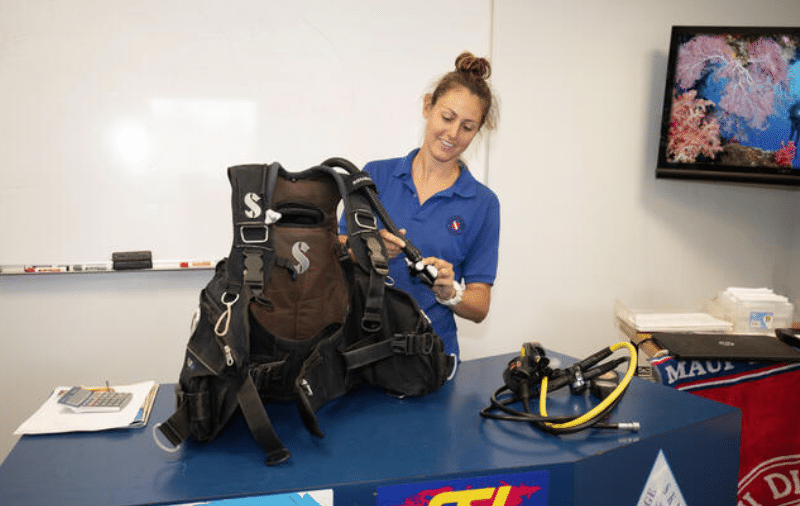
A woman in a blue shirt stands behind a counter, examining scuba diving equipment, with a TV displaying coral reefs and a whiteboard in the background.


Maintain Control Over Your Equipment


Contact N9BO℠ to integrate structured equipment lifecycle management into your dive operations, ensuring reliability, safety, and long-term operational efficiency.


From the N9BO℠ Knowledge Base

Share this

Oxygen Storage and Handling: Standards Every Dive Centre Must Follow

Understanding Oxygen as a High-Risk Gas

Oxygen is not flammable, but it supports combustion. In oxygen-enriched environments, materials ignite more easily, burn more intensely, and are significantly harder to extinguish.

This changes the risk profile of standard materials and environments. Substances that are stable in air may become hazardous when exposed to high oxygen concentrations.

Key risk factors include:

  • Increased flammability of materials
  • Rapid fire propagation
  • Sensitivity to contamination such as oil or grease

Even small ignition sources can result in severe incidents when oxygen is present.

At N9BO℠, we treat oxygen not only as a life-support gas, but as a controlled hazard requiring strict management.


Storage Requirements and Environmental Control

Oxygen cylinders must be stored in conditions that reduce the risk of fire, damage, and contamination. Storage areas must be designed to control both environmental and operational factors.

Key storage requirements include:

  • Well-ventilated areas to prevent accumulation
  • Protection from direct sunlight and heat sources
  • Separation from flammable materials and fuels
  • Secure positioning to prevent falling or impact

Cylinders must be clearly identified and segregated from other gases where necessary. Mixing oxygen with incompatible storage conditions increases risk.

Temperature control is critical. Elevated temperatures increase internal pressure and may compromise cylinder integrity.

At N9BO℠, oxygen storage is treated as a controlled environment, not a general equipment area.


Cleanliness and Contamination Control

One of the most critical aspects of oxygen handling is cleanliness. Oxygen systems must remain free from contaminants, particularly hydrocarbons such as oil or grease.

Contamination introduces ignition risk. Under pressure, even small amounts of oil can ignite spontaneously in oxygen-rich environments.

Control measures include:

  • Using only oxygen-clean equipment and components
  • Ensuring all fittings and valves are free from contaminants
  • Prohibiting the use of standard lubricants unless oxygen-compatible

Handling procedures must prevent contamination during connection, transport, and use.

At N9BO℠, oxygen cleanliness is treated as a non-negotiable standard. Any uncertainty requires immediate corrective action.

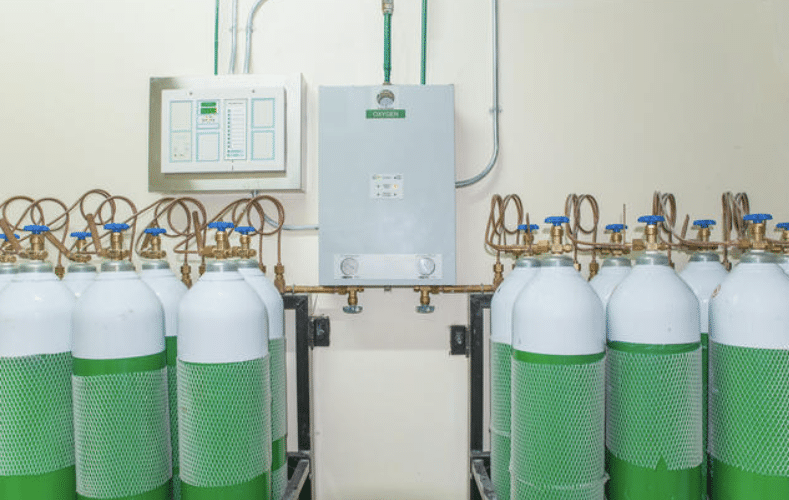
Rows of green and white oxygen cylinders are connected by copper pipes to a central control unit mounted on a wall in a medical or industrial setting.

Cylinder Handling and Transport

Improper handling of oxygen cylinders introduces both mechanical and fire risk. Cylinders must be managed carefully at all times.

Safe handling practices include:

  • Securing cylinders during transport to prevent movement
  • Avoiding impact, dropping, or rolling
  • Using appropriate lifting techniques or equipment
  • Keeping valve protection in place when not in use

Opening valves must be done slowly and deliberately. Rapid pressurisation increases temperature and may introduce ignition risk.

Transport within operational areas must also consider environmental factors, including proximity to heat sources or fuel.

At N9BO℠, cylinder handling is standardised to reduce variability and prevent error.


Filling Procedures and Pressure Control

Oxygen filling introduces additional risk due to high pressure and the potential for rapid temperature increase.

Filling must be conducted:

  • Slowly, to control heat generation
  • Using oxygen-compatible equipment
  • Within rated pressure limits

Adiabatic heating during rapid filling can create ignition conditions, particularly if contamination is present.

Operators must monitor pressure and temperature throughout the process. Any abnormal readings or behaviour requires immediate shutdown.

At N9BO℠, oxygen filling is treated as a controlled operation requiring trained personnel and strict adherence to procedure.


Equipment Compatibility and System Integrity

Not all equipment is suitable for oxygen use. Materials and components must be compatible with high oxygen concentrations.

This includes:

  • Regulators designed for oxygen service
  • Hoses and seals rated for oxygen use
  • Valves and fittings free from incompatible materials

Using non-compatible equipment increases the risk of ignition or failure.

System integrity must be maintained across all components. A single incompatible element compromises the entire system.

At N9BO℠, we ensure that all oxygen systems are verified for compatibility and maintained accordingly.


Fire Risk and Emergency Preparedness

Oxygen increases both the likelihood and severity of fire. This requires additional precautions in operational environments.

Fire risk is elevated in the presence of:

  • Heat sources or open flames
  • Electrical equipment with potential faults
  • Contaminated surfaces or materials

Emergency preparedness must include:

  • Fire extinguishers appropriate for the environment
  • Clear evacuation procedures
  • Immediate isolation of oxygen supply in case of incident

Personnel must be trained to recognise fire risk and respond quickly.

At N9BO℠, fire prevention and response are integrated into oxygen handling procedures.

Several large black and white medical oxygen cylinders are arranged in a room with gauges and pipes on the wall, and “MEDICAL OXYGEN” signs in red letters are visible in the background.

Training and Operational Discipline

Safe oxygen handling depends on personnel competence. Training must cover both theoretical understanding and practical application.

Key training areas include:

  • Properties and risks of oxygen
  • Correct handling and storage procedures
  • Recognition of contamination and system issues
  • Emergency response actions

Operational discipline ensures that procedures are followed consistently. Deviation from standard practice introduces risk.

At N9BO℠, we treat oxygen handling as a specialist function requiring trained and accountable personnel.


Integration with Dive Operations

Oxygen is used across multiple aspects of dive operations, including decompression, first aid, and gas blending. This requires consistent standards across all uses.

Integration ensures:

  • Consistent handling procedures
  • Standardised equipment compatibility
  • Clear responsibility and accountability

Failure in one area affects the entire system. Oxygen safety cannot be isolated to a single task.

At N9BO℠, we integrate oxygen management into overall operational control, ensuring consistency across all applications.


Operational Mindset

Oxygen handling is not routine. It is a controlled process that requires constant attention to detail, discipline, and adherence to standards.

The risks associated with oxygen are well understood, but incidents still occur due to complacency, contamination, or procedural failure.

At N9BO℠, we emphasise that safety is achieved through consistency. Procedures must be followed every time, without exception.

In dive operations, oxygen is essential—but it must be managed with the respect required by its risk profile.

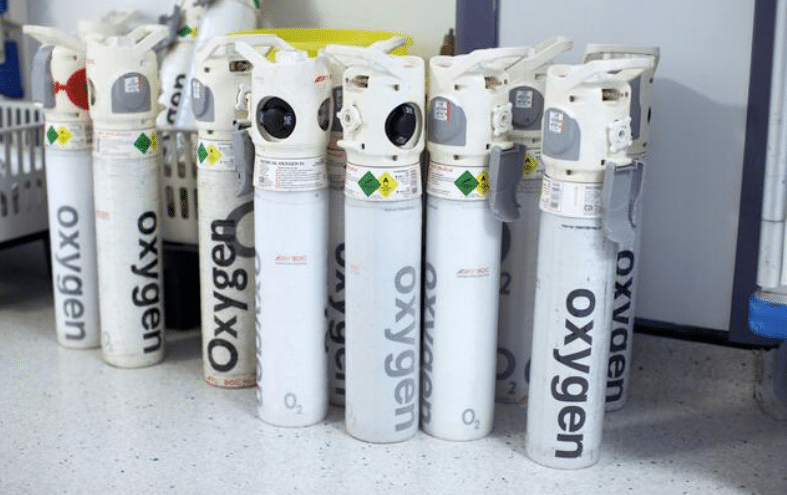
Several white oxygen cylinders with labelled oxygen stand upright on a floor. They have gauges and valves on top, and warning labels are visible on the tanks. The background includes shelves and other equipment.


Handle Oxygen with Control and Discipline


Contact N9BO℠ to integrate oxygen safety and handling standards into your dive operations, ensuring safe and compliant management of critical gas systems.


From the N9BO℠ Knowledge Base


Share this

Compressor Safety in Dive Operations: Risks, Maintenance, and Best Practices

The Compressor as a Critical Safety System

In dive operations, the compressor is not just equipment—it is a life-support system. Every cylinder filled depends on the compressor delivering clean, breathable gas at the correct pressure.

Failure at this stage is not immediately visible. Contaminated gas may appear normal but can result in serious injury or fatality when used underwater.

Risks associated with compressor systems include:

  • Contaminated air supply
  • Mechanical failure during operation
  • Incorrect pressure or fill procedures
  • Overheating and fire hazards

These risks are often underestimated because compressors operate in the background of daily operations.

At N9BO℠, we treat compressors as critical safety systems requiring the same level of control as any life-support equipment.


Air Quality and Contamination Risks

The primary function of a compressor is to deliver breathable air. This introduces the risk of contamination if intake air or internal components are compromised.

Common sources of contamination include:

  • Carbon monoxide (CO) from nearby exhaust sources
  • Oil vapour from compressor lubrication systems
  • Moisture leading to microbial growth or corrosion
  • Particulate matter entering through intake

Carbon monoxide is particularly dangerous, as it is colourless and odourless. Exposure underwater reduces the body’s ability to transport oxygen, leading to rapid impairment.

Contamination often results from poor intake placement or inadequate filtration. Compressors drawing air from enclosed or poorly ventilated spaces increase risk significantly.

At N9BO℠, air quality control begins at the intake point. If intake air is compromised, downstream systems cannot compensate.


Filtration and Moisture Control

Compressor filtration systems are designed to remove oil, moisture, and particulates before air is stored in cylinders. These systems rely on consumable filters that must be replaced at defined intervals.

Failure to maintain filtration results in:

  • Increased moisture content in cylinders
  • Oil contamination of breathing gas
  • Degradation of internal cylinder condition

Moisture is a critical factor. Excess moisture leads to corrosion inside cylinders and reduces air quality. In high-pressure systems, it can also affect regulator performance.

Effective filtration management includes:

  • Monitoring filter usage hours
  • Replacing cartridges before saturation
  • Ensuring correct filter type for the compressor system

At N9BO℠, filtration is treated as a consumable safety barrier that must be actively managed.

A close-up of a scuba diving cylinder with attached regulator and hoses, resting on a boat with water visible in the background.

Mechanical Integrity and Maintenance

Compressors operate under high pressure and temperature. Mechanical failure can result in equipment damage, injury, or interruption of operations.

Key components requiring regular inspection include:

  • Compression stages and valves
  • Drive systems (belts, motors)
  • Cooling systems
  • Pressure gauges and safety valves

Lack of maintenance leads to gradual degradation. This may not be immediately visible but increases the likelihood of failure under load.

Preventive maintenance is essential. Scheduled servicing, inspection, and part replacement reduce the risk of unexpected failure.

At N9BO℠, maintenance is not reactive. It is planned, documented, and enforced as part of operational procedure.


Operating Procedures and Control Measures

Safe compressor operation depends on consistent procedures. Variations in operation introduce risk, particularly in high-demand environments.

Critical operational controls include:

  • Pre-operation checks of intake, oil level, and system condition
  • Monitoring temperature and pressure during operation
  • Controlled filling procedures to prevent over-pressurisation
  • Immediate shutdown in case of abnormal noise, vibration, or readings

Operators must remain present during operation. Unattended compressors increase the risk of undetected failure.

Filling procedures must also be controlled. Rapid filling increases heat, affecting both air quality and cylinder integrity.

At N9BO℠, compressor operation is treated as an active process requiring constant supervision.


Cylinder Filling and Pressure Management

The interface between compressor and cylinder introduces additional risk. Incorrect filling procedures can result in over-pressurisation, heat buildup, and potential cylinder failure.

Key considerations include:

  • Adhering to rated pressure limits for each cylinder
  • Allowing for cooling during or after filling
  • Ensuring cylinders are within inspection and testing requirements

Temperature increases during filling can lead to inaccurate pressure readings. A cylinder filled to maximum pressure while hot may exceed safe limits once cooled.

Operators must account for this effect and adjust procedures accordingly.

At N9BO℠, pressure management is treated as a controlled process, not a routine task.

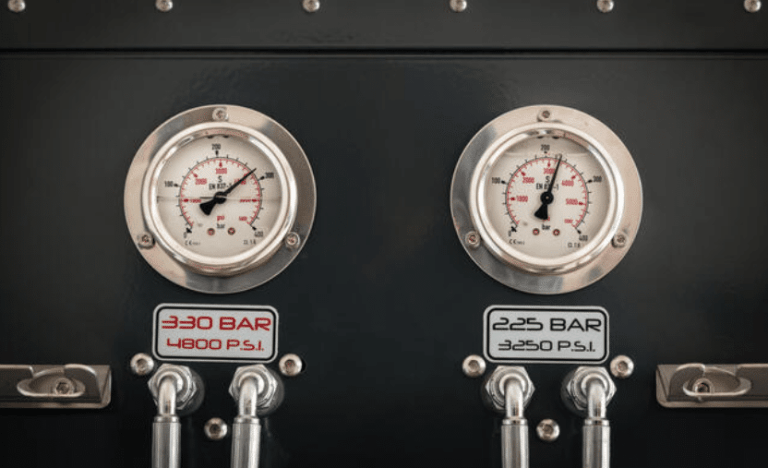
Close-up of two pressure gauges mounted on a panel, showing readings in bar and PSI, with labels indicating 330 BAR/4800 PSI on the left and 225 BAR/3250 PSI on the right, with metal pipes attached below each gauge.

Environmental and Operational Placement

Compressor placement affects both performance and safety. Poor placement increases contamination risk and reduces efficiency.

Best practice includes:

  • Locating intake away from exhaust fumes or enclosed spaces
  • Ensuring adequate ventilation for cooling
  • Protecting equipment from weather and environmental damage

Noise and heat generation must also be considered. Compressors operating in confined spaces increase both operator risk and equipment stress.

At N9BO℠, compressor placement is evaluated as part of site setup, ensuring optimal performance and reduced risk.


Training and Operator Responsibility

Compressor safety depends on operator competence. Personnel must understand both the equipment and the risks associated with its use.

Training should cover:

  • System operation and limitations
  • Recognition of abnormal conditions
  • Maintenance requirements
  • Emergency shutdown procedures

Untrained or poorly trained operators increase the likelihood of error. Compressor operation must not be treated as a secondary or informal task.

At N9BO℠, compressor operators are trained and assessed to ensure consistent performance.


From Equipment to System Control

A compressor is part of a larger system that includes cylinders, regulators, and divers. Failure at any point affects the entire system.

Effective management requires integration:

  • Air quality control at intake and filtration
  • Mechanical reliability through maintenance
  • Operational discipline during use

This integrated approach ensures that risks are managed across all stages.

At N9BO℠, we treat compressor systems as part of a broader safety framework, not isolated equipment.


Operational Mindset

Compressor safety is not achieved through isolated actions. It requires consistent application of procedures, maintenance, and monitoring.

The risks associated with compressors are often hidden. Gas contamination, mechanical degradation, and operational errors may not be immediately visible but have significant consequences.

At N9BO℠, we emphasise discipline, consistency, and accountability. Compressors are treated as critical systems that require continuous oversight.

In dive operations, the quality of the air supplied is non-negotiable. It must be controlled at every stage.

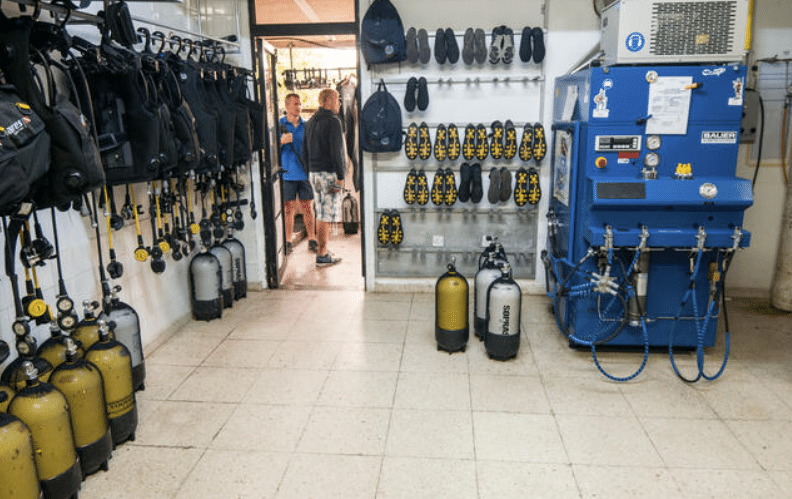
A scuba diving equipment room with air tanks, wetsuits, vests, and fins organised on the walls. Three people are seen talking in the doorway at the back. A blue air compressor machine is on the right.


Control the Source of Your Air Supply


Contact N9BO℠ to integrate compressor safety and air quality management into your dive operations, ensuring reliable and safe breathing gas for every dive.


From the N9BO℠ Knowledge Base

Share this

SDI VIP Inspector Course: The First Line of Defence in Cylinder Safety

Why Cylinder Inspection Is Non-Negotiable

A scuba cylinder contains:

  • Compressed air.
  • Enriched oxygen mixtures.
  • Technical gases at elevated pressure.

Inside that cylinder may be:

  • Moisture.
  • Corrosion.
  • Contaminants.
  • Metal fatigue.

Left unchecked, these issues can lead to:

  • Valve failure.
  • Neck cracking.
  • Burst discs activating.
  • Structural rupture.

A proper Visual Inspection (VIP) is:

Preventative safety.

Not administrative paperwork.


What the SDI VIP Inspector Course Covers

The SDI VIP Inspector course trains candidates to:

  • Identify external structural damage.
  • Detect internal corrosion.
  • Recognise neck and thread issues.
  • Inspect valves and O-rings.
  • Evaluate cylinder markings and specifications.
  • Apply proper cleaning standards.

It builds:

Observation discipline.
Inspection protocol adherence.
Documentation accuracy.

Inspection is systematic.

Not intuitive.


Understanding Pressure Vessel Risk

Scuba cylinders operate under:

High internal pressure.

Common working pressures include:

200 bar.
232 bar.
300 bar.

At these pressures:

Structural integrity matters.

Minor corrosion becomes critical over time.

Small thread defects may compromise valve seating.

Inspection prevents escalation.

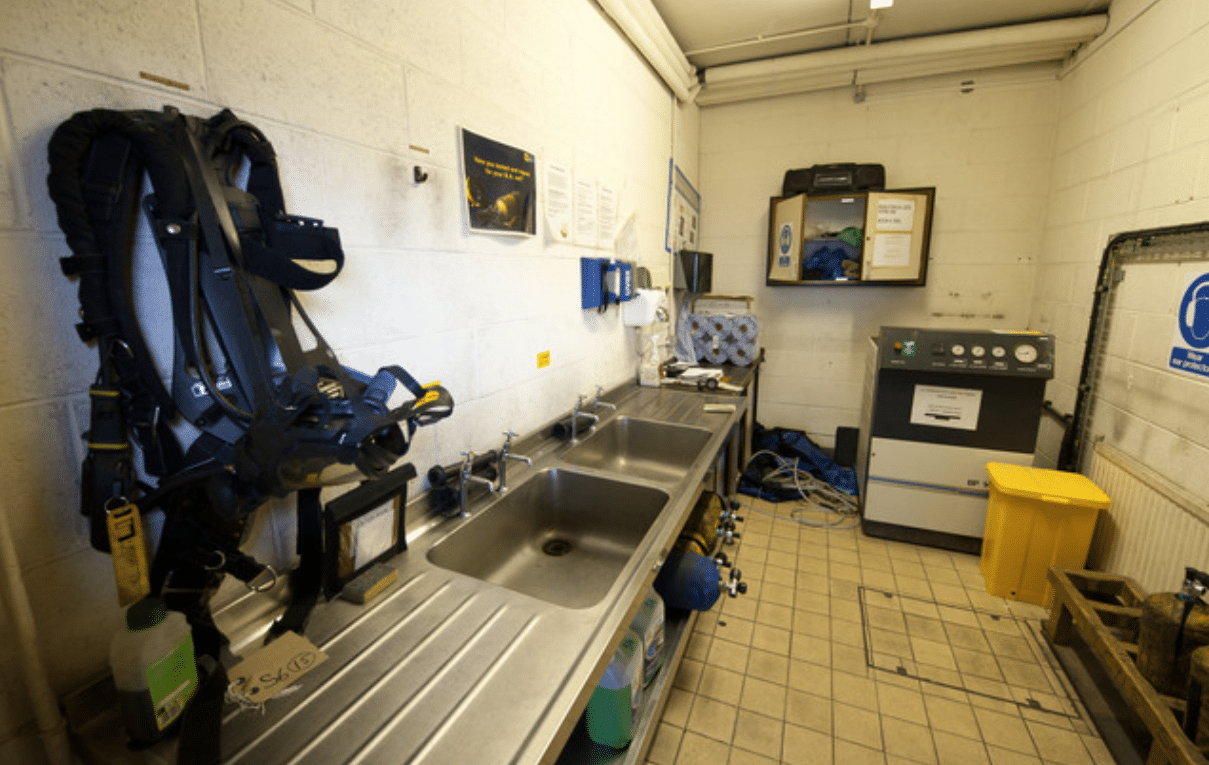
A small, well-lit room with stainless steel sinks, scuba diving gear hanging on the left wall, cleaning supplies, a yellow bin, and equipment for servicing scuba cylinders on the right. The floor is tiled.

Internal Corrosion: The Hidden Threat

Moisture introduced through:

  • Poor compressor maintenance.
  • Improper storage.
  • Valve mismanagement.

Creates:

Oxidation inside steel cylinders.
Aluminium pitting.
Contamination buildup.

Internal corrosion is not visible externally.

VIP procedures include:

Proper lighting.
Mirror inspection.
Surface texture evaluation.
Discolouration analysis.

Early detection extends cylinder lifespan.


External Damage Assessment

VIP Inspectors assess:

  • Dents.
  • Gouges.
  • Paint blistering.
  • Neck damage.
  • Thread deformation.
  • Boot-trapped corrosion.

Some defects are cosmetic.

Others are structural.

Training builds discrimination.


Valve Inspection and Cleanliness

The cylinder valve is:

A high-pressure control point.

Inspection includes:

  • Thread compatibility.
  • O-ring condition.
  • Oxygen service cleanliness (when applicable).
  • Seat integrity.

Improper valve condition:

Compromises entire gas system.

Inspection extends beyond the cylinder body.


VIP vs Hydrostatic Testing

Hydrostatic testing measures:

Structural expansion under pressure.

VIP inspection evaluates:

Surface condition and integrity.

Both are essential.

VIP inspections are typically conducted annually.

Hydrostatic tests occur at regulatory intervals.

One does not replace the other.


Why Professional Operations Cannot Skip VIP

In commercial or technical diving:

Cylinder volume and pressure increase.

Risk multiplies.

Professional operations must:

Document inspection cycles.
Maintain traceability.
Ensure compliance.
Reduce liability exposure.

A failed cylinder damages:

Equipment.
Reputation.
Trust.
Safety margin.


Oxygen Service Considerations

In enriched air or technical gas operations:

Oxygen compatibility matters.

VIP Inspectors learn:

Contamination control.
Cleaning protocols.
Lubricant compatibility.
Grease avoidance.

Oxygen-rich environments increase ignition risk.

Cleanliness is safety.

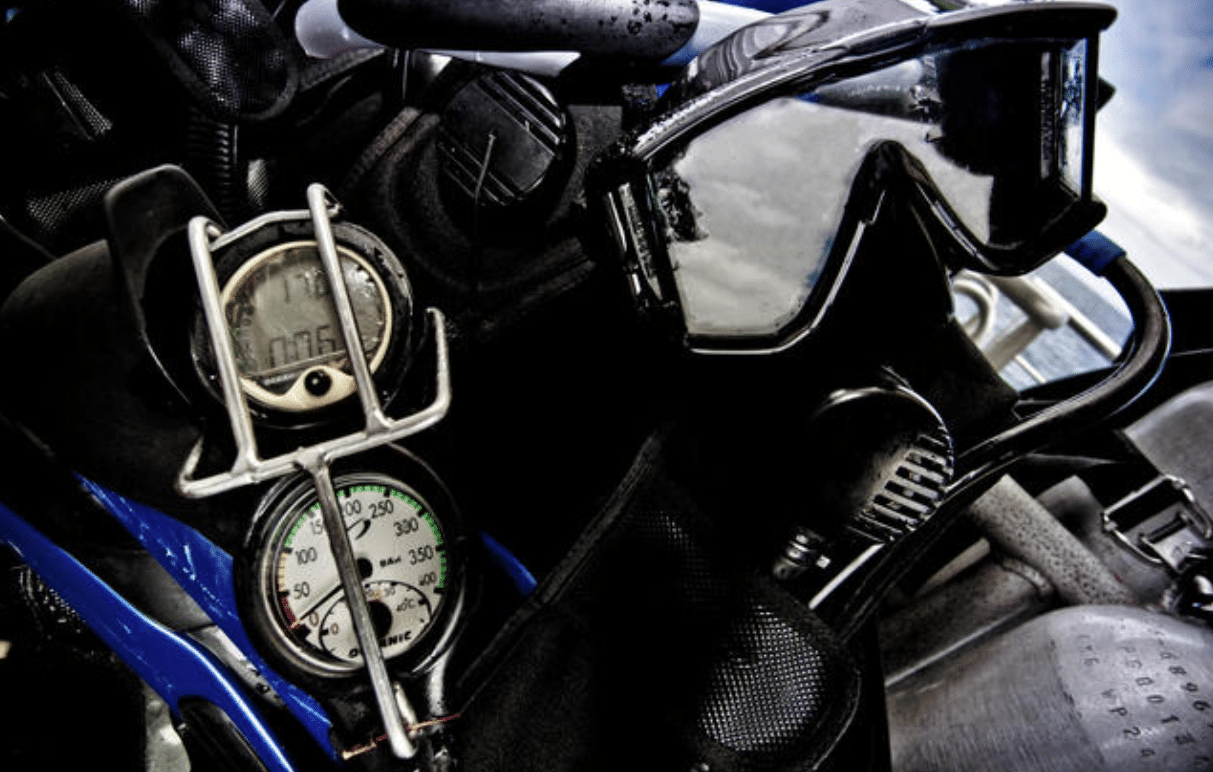
Close-up of scuba diving equipment, including a mask, pressure gauges, regulator, and parts of a dive cylinder, with reflections visible on the mask’s lens.

Legal and Liability Implications

Improperly inspected cylinders can result in:

Injury.
Facility damage.
Regulatory penalties.
Insurance complications.

Certified VIP Inspectors:

Provide documented oversight.

Professional inspection protects:

Operators.
Dive centres.
Technicians.
Clients.


Operational Discipline at N9BO℠

At N9BO℠, cylinder safety is treated as:

Operational discipline.

We emphasise:

Inspection accuracy. Documentation clarity.
Real-world defect examples.
Oxygen-clean awareness.
Professional responsibility.

VIP training is delivered as:

Risk prevention training.

Not checklist memorisation.


Who Should Take the SDI VIP Inspector Course

Ideal candidates include:

  • Dive centre staff.
  • Technical divers.
  • Gas blenders.
  • Equipment managers.
  • Professional instructors.
  • Fire and rescue personnel.

Any operation managing compressed cylinders:

Benefits from trained inspection personnel.


Why Authorisation Matters

Cylinder inspection requires:

Standardised procedure.
Recognised certification.
Proper documentation.

Unqualified inspection:

Increases risk.

Professional training:

Reduces guesswork.


The Bigger Safety Picture

Cylinder inspection is part of:

Gas management.
Asset control.
Equipment accountability.

Safe diving begins before:

The dive.

It begins with:

Properly maintained equipment.


Final Perspective

The SDI VIP Inspector course builds:

Attention to detail.
Structured inspection.
Risk awareness.
Professional accountability.

Cylinders do not fail randomly.

They fail when warning signs are ignored.

Inspection is:

The first line of defence.

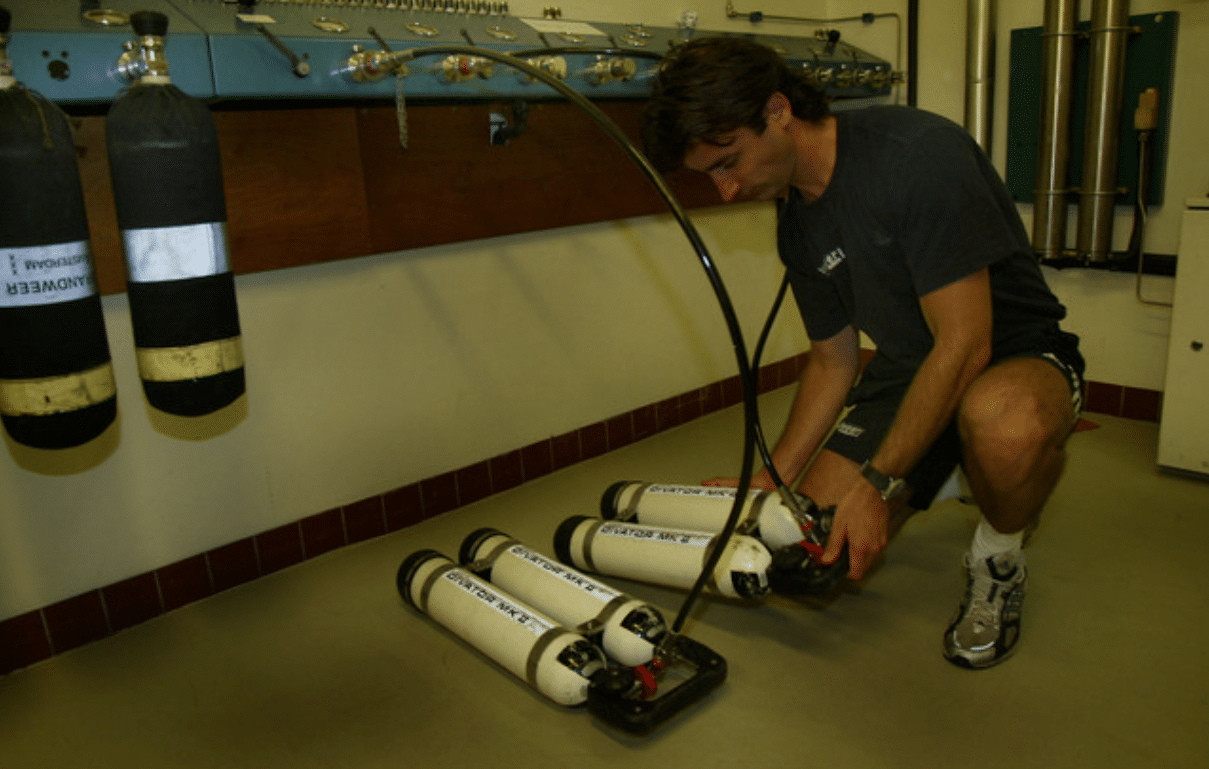
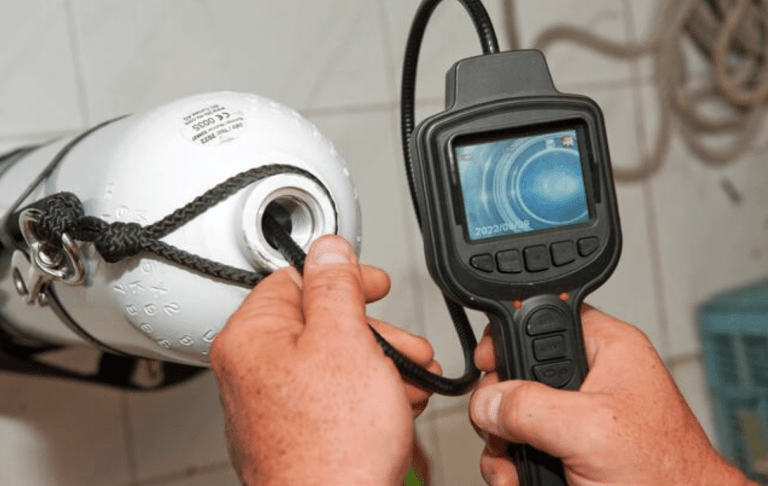
A person kneels on the floor, connecting air cylinders with hoses in a lab setting; more gas cylinders hang on the wall in the background.


Ready to Take Responsibility for Cylinder Safety?


Become a certified SDI VIP Inspector and protect your operation through structured inspection and professional standards.


From the N9BO℠ Knowledge Base

Share this

The Venturi Effect in Scuba Regulators: Why That Small Lever Matters More Than You Think

What Is the Venturi Effect?

The Venturi effect is a basic principle of fluid dynamics:

When a fluid (or gas) passes through a constricted area, its velocity increases and pressure decreases.

In a scuba regulator:

  • Air enters the second stage.
  • It is directed through a small opening.
  • The airflow accelerates.
  • A low-pressure area forms behind the diaphragm.
  • This assists the valve staying open during inhalation.

The result:

Easier breathing.

The regulator “helps” you inhale.

But that assistance must be controlled.


Why Regulators Have a Venturi Lever

Modern second stages typically include:

  • A Venturi lever or switch.
  • Often labelled “Pre-Dive / Dive”.
  • Or marked with + / – symbols.

This lever adjusts:

The direction of internal airflow.

In “Dive” mode:

Airflow is directed to enhance the Venturi effect.

In “Pre-Dive” mode:

Airflow is redirected to reduce assisted opening.

The purpose is simple:

Prevent free-flow when not in the diver’s mouth.


When the Venturi Is Set to “Dive”

In Dive mode:

  • Breathing effort is reduced.
  • Inhalation feels smooth.
  • Regulator performance improves.

However:

If the regulator is not in your mouth,

Or purged underwater,

Or exposed to strong current,

It may free-flow more easily.

The assisted airflow keeps the valve open.

Dive mode is for:

Breathing.

Not for transport.


When to Use “Pre-Dive” Mode

Pre-Dive mode reduces:

Venturi assistance.

It should be used when:

  • Entering water.
  • Regulator is dangling.
  • During giant stride entries.
  • During surface preparation.
  • Handing regulator to student.
  • Before boat entry.

Failure to switch to Pre-Dive mode may result in:

Sudden free-flow.

Gas waste.

Task distraction.

Unnecessary stress.

Small lever.

Large effect.


Common Mistakes Divers Make

  1. Never adjusting the lever.
  2. Not understanding what it does.
  3. Leaving regulator in Dive mode during water entry.
  4. Assuming free-flow indicates malfunction.
  5. Over-correcting breathing resistance by adjusting cracking pressure instead.

Many divers treat the Venturi lever as cosmetic.

It is functional.

Ignoring it reduces equipment control.

A scuba diver wearing a wetsuit and mask releases air underwater, creating a burst of bubbles that partially obscures their face. The background is a deep blue, indicating they are submerged in the sea.

Venturi vs Cracking Pressure

Important distinction:

Venturi lever affects airflow direction.

Cracking pressure adjustment affects:

The initial effort required to open the valve.

They are not the same.

Confusion between the two leads to:

Misdiagnosing regulator performance.

Proper equipment literacy includes:

Understanding both.


Free-Flow: Not Always a Malfunction

A free-flowing regulator may result from:

  • Strong current hitting purge.
  • Regulator facing upward.
  • Venturi set to Dive mode.
  • Sudden purge activation.
  • Improper mouthpiece angle.

Before assuming failure:

Check lever position.

Often the solution is simple.

Professional divers do not panic.

They troubleshoot.


Venturi and Stress Management

A free-flow can:

  • Startle a diver.
  • Increase breathing rate.
  • Elevate heart rate.
  • Increase gas consumption.

Understanding the Venturi lever:

Reduces surprise.

Reduces stress.

Reduces task loading.

Confidence grows from comprehension.


Teaching the Venturi Lever

Dive professionals must:

  • Explain function clearly.
  • Demonstrate switch positions.
  • Reinforce when to use each mode.
  • Correct student misuse early.

Instructors who ignore this detail:

Leave students vulnerable to avoidable stress.

Small details shape safety culture.


Technical Diving Considerations

In technical configurations:

  • Stage regulators may hang clipped.
  • Strong current may impact equipment.
  • Venturi setting influences free-flow risk.

Proper staging includes:

Switching to Pre-Dive before clipping off.

Procedural discipline protects gas reserves.

Gas is time.

Time is margin.

Close-up of a scuba diving regulator with attached hoses, including a prominent yellow hose, connected to a metal cylinder valve.

Maintenance and Awareness

Venturi components must:

  • Be serviced regularly.
  • Remain free of debris.
  • Function smoothly.

Sticky switches reduce usability.

Equipment management includes:

Function checks during pre-dive inspection.

At N9BO℠, we emphasise regulator literacy as part of professional development. Divers must understand not just how to breathe from equipment — but how it works under varying conditions.


Hydrodynamics and Orientation

The regulator’s orientation in water matters.

If second stage faces:

Downward and into current:

Venturi effect increases.

Facing away from current:

Reduces spontaneous free-flow.

Professional divers remain aware of:

Equipment positioning.

Small adjustments reduce risk.


Why This Knowledge Matters Professionally

Dive leaders must:

  • Control equipment behaviour.
  • Minimise unnecessary gas waste.
  • Reduce student distraction.
  • Prevent surface chaos during entry.

Understanding Venturi control:

Improves operational smoothness.

Professionalism shows in small details.


Final Perspective

The Venturi lever is:

Small.

Simple.

Often ignored.

Yet it governs:

Breathing comfort.

Free-flow risk.

Gas management.

Stress control.

True diving competence includes:

Mechanical literacy.

When you understand airflow dynamics,

You reduce uncertainty.

And reduced uncertainty increases safety.

A person wearing a red shirt, scuba diving mask, and gear holds a regulator to their mouth while partially submerged in a swimming pool.


Want to Strengthen Your Equipment Knowledge?


Understanding how your regulator works improves safety and confidence. Contact N9BO℠ to develop deeper equipment literacy through structured training.


From the N9BO℠ Knowledge Base


Share this
Facebook
Instagram
X (Twitter)
TikTok
Youtube
Whatsapp