Why Cylinder Inspection Is Non-Negotiable
A scuba cylinder contains:
- Compressed air.
- Enriched oxygen mixtures.
- Technical gases at elevated pressure.
Inside that cylinder may be:
- Moisture.
- Corrosion.
- Contaminants.
- Metal fatigue.
Left unchecked, these issues can lead to:
- Valve failure.
- Neck cracking.
- Burst discs activating.
- Structural rupture.
A proper Visual Inspection (VIP) is:
Preventative safety.
Not administrative paperwork.
What the SDI VIP Inspector Course Covers
The SDI VIP Inspector course trains candidates to:
- Identify external structural damage.
- Detect internal corrosion.
- Recognise neck and thread issues.
- Inspect valves and O-rings.
- Evaluate cylinder markings and specifications.
- Apply proper cleaning standards.
It builds:
Observation discipline.
Inspection protocol adherence.
Documentation accuracy.
Inspection is systematic.
Not intuitive.
Understanding Pressure Vessel Risk
Scuba cylinders operate under:
High internal pressure.
Common working pressures include:
200 bar.
232 bar.
300 bar.
At these pressures:
Structural integrity matters.
Minor corrosion becomes critical over time.
Small thread defects may compromise valve seating.
Inspection prevents escalation.
Internal Corrosion: The Hidden Threat
Moisture introduced through:
- Poor compressor maintenance.
- Improper storage.
- Valve mismanagement.
Creates:
Oxidation inside steel cylinders.
Aluminium pitting.
Contamination buildup.
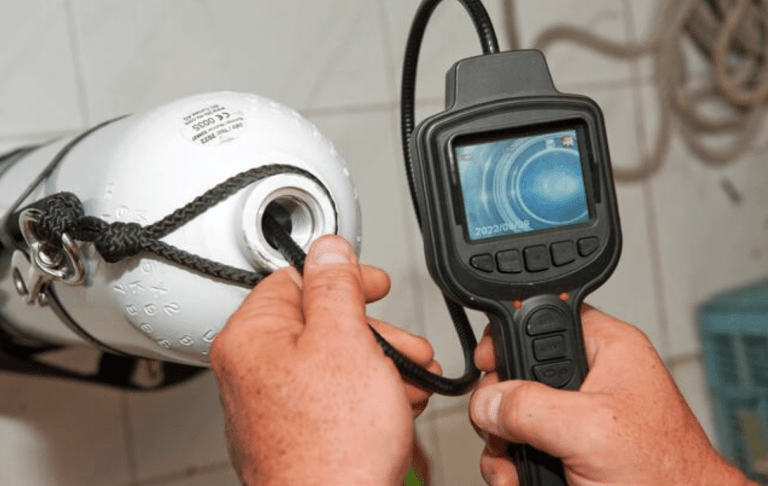
Internal corrosion is not visible externally.
VIP procedures include:
Proper lighting.
Mirror inspection.
Surface texture evaluation.
Discolouration analysis.
Early detection extends cylinder lifespan.
External Damage Assessment
VIP Inspectors assess:
- Dents.
- Gouges.
- Paint blistering.
- Neck damage.
- Thread deformation.
- Boot-trapped corrosion.
Some defects are cosmetic.
Others are structural.
Training builds discrimination.
Valve Inspection and Cleanliness
The cylinder valve is:
A high-pressure control point.
Inspection includes:
- Thread compatibility.
- O-ring condition.
- Oxygen service cleanliness (when applicable).
- Seat integrity.
Improper valve condition:
Compromises entire gas system.
Inspection extends beyond the cylinder body.
VIP vs Hydrostatic Testing
Hydrostatic testing measures:
Structural expansion under pressure.
VIP inspection evaluates:
Surface condition and integrity.
Both are essential.
VIP inspections are typically conducted annually.
Hydrostatic tests occur at regulatory intervals.
One does not replace the other.
Why Professional Operations Cannot Skip VIP
In commercial or technical diving:
Cylinder volume and pressure increase.
Risk multiplies.
Professional operations must:
Document inspection cycles.
Maintain traceability.
Ensure compliance.
Reduce liability exposure.
A failed cylinder damages:
Equipment.
Reputation.
Trust.
Safety margin.
Oxygen Service Considerations
In enriched air or technical gas operations:
Oxygen compatibility matters.
VIP Inspectors learn:
Contamination control.
Cleaning protocols.
Lubricant compatibility.
Grease avoidance.
Oxygen-rich environments increase ignition risk.
Cleanliness is safety.
Legal and Liability Implications
Improperly inspected cylinders can result in:
Injury.
Facility damage.
Regulatory penalties.
Insurance complications.
Certified VIP Inspectors:
Provide documented oversight.
Professional inspection protects:
Operators.
Dive centres.
Technicians.
Clients.
Operational Discipline at N9BO℠
At N9BO℠, cylinder safety is treated as:
Operational discipline.
We emphasise:
Inspection accuracy.
Documentation clarity.
Real-world defect examples.
Oxygen-clean awareness.
Professional responsibility.
VIP training is delivered as:
Risk prevention training.
Not checklist memorisation.
Who Should Take the SDI VIP Inspector Course
Ideal candidates include:
- Dive centre staff.
- Technical divers.
- Gas blenders.
- Equipment managers.
- Professional instructors.
- Fire and rescue personnel.
Any operation managing compressed cylinders:
Benefits from trained inspection personnel.
Why Authorisation Matters
Cylinder inspection requires:
Standardised procedure.
Recognised certification.
Proper documentation.
Unqualified inspection:
Increases risk.
Professional training:
Reduces guesswork.
The Bigger Safety Picture
Cylinder inspection is part of:
Gas management.
Asset control.
Equipment accountability.
Safe diving begins before:
The dive.
It begins with:
Properly maintained equipment.
Final Perspective
The SDI VIP Inspector course builds:
Attention to detail.
Structured inspection.
Risk awareness.
Professional accountability.
Cylinders do not fail randomly.
They fail when warning signs are ignored.
Inspection is:
The first line of defence.
Ready to Take Responsibility for Cylinder Safety?
Become a certified SDI VIP Inspector and protect your operation through structured inspection and professional standards.
From the N9BO℠ Knowledge Base