Air Is Life Support
Divers often focus on:
- Buoyancy.
- Equipment configuration.
- Gas planning.
- Decompression.
Yet all of these depend on one fundamental element:
Breathing gas quality.
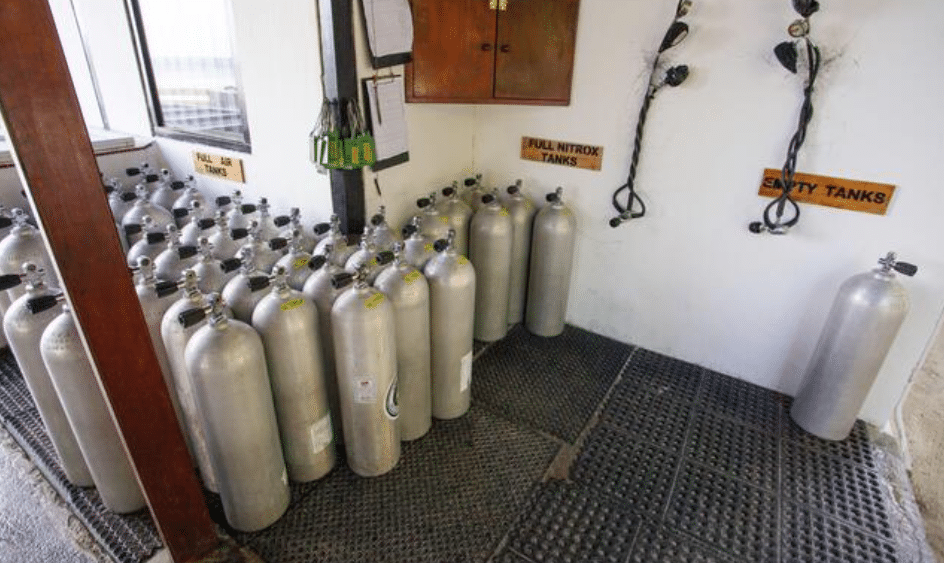
Compressed air is:
- Stored under high pressure.
- Delivered directly to the diver’s lungs.
- Relied upon without second thought.
If air quality is compromised, no amount of skill compensates.
Compressor operation is not background activity.
It is safety infrastructure.
Who Should Take the Course?
The PADI Air Compressor Operator course is suitable for:
- Dive centre staff.
- Boat crew.
- Expedition personnel.
- Public safety support teams.
- Industrial facilities.
- Non-divers responsible for air management.
You do not need to be a diver.
You need to understand responsibility.
Anyone operating or supervising a compressor must understand:
- Pressure.
- Contamination.
- Moisture.
- Heat.
- Filtration systems.
Understanding Compressor Systems
A diving compressor:
- Intakes atmospheric air.
- Compresses it in stages.
- Filters impurities.
- Removes moisture.
- Delivers clean, dry air into cylinders.
Each stage has risk factors.
Contamination sources include:
- Carbon monoxide.
- Oil vapour.
- Moisture.
- Particulate matter.
Failure to manage these risks can result in:
- Toxic exposure.
- Equipment corrosion.
- Regulator malfunction.
- Serious health incidents.

Air Quality Standards
Compressor operators must understand:
- Maximum allowable CO levels.
- Moisture limits.
- Oil vapour thresholds.
- Filtration change intervals.
Air must meet recognised standards.
Testing is not optional.
Monitoring must be documented.
Assumption is not quality control.
Verification is.
Moisture Management and Corrosion Prevention
Moisture in compressed air causes:
- Internal cylinder corrosion.
- Regulator contamination.
- Freezing risk in cold water.
- Equipment degradation.
Operators must manage:
- Drain intervals.
- Filter replacement.
- Condensation traps.
- Proper storage.
Dry air extends equipment life.
Dry air protects diver safety.
Filling Procedures and Pressure Discipline
Cylinder filling requires:
- Correct valve sequencing.
- Controlled pressure ramp-up.
- Monitoring temperature.
- Avoiding overfill.
- Final pressure verification.
Rapid filling increases:
- Heat.
- Stress on cylinder walls.
- Pressure instability.
Slow, controlled fills preserve integrity.
Professional discipline defines safety margin.
Compressor Maintenance and Inspection
Routine maintenance includes:
- Oil changes.
- Filter replacement.
- Hose inspection.
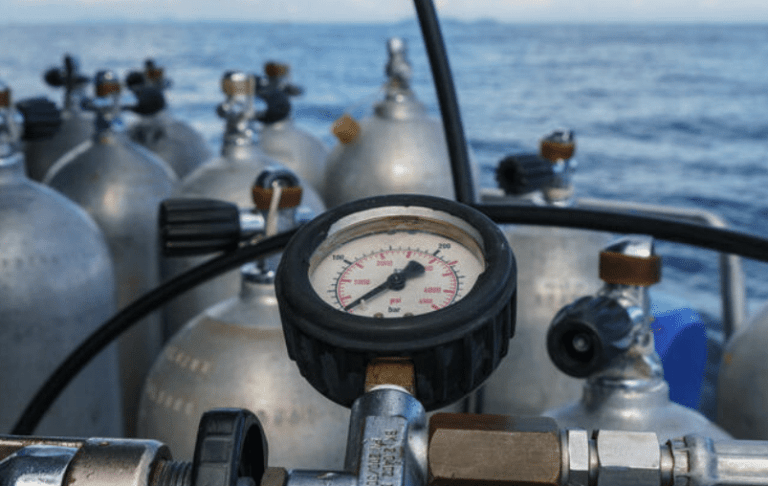
- Pressure gauge verification.
- Safety valve checks.
Deferred maintenance increases:
- Contamination risk.
- Mechanical failure probability.
- Operational downtime.
Documentation protects both operator and facility.
Infrastructure requires oversight.
Human Factors in Compressor Operation
Common errors occur due to:
- Distraction.
- Fatigue.
- Overconfidence.
- Poor documentation habits.
Compressor operation demands:
- Focus.
- Checklist use.
- Clear procedures.
- Accountability.
A compressor room is not a casual workspace.
It is a life-support environment.
At N9BO℠, we emphasise that air management is part of professional diving culture. Infrastructure discipline equals diver protection.
Legal and Operational Responsibility
Operators carry:
- Liability responsibility.
- Equipment stewardship.
- Health protection accountability.
Air contamination incidents can:
- Harm divers.
- Damage reputation.
- Trigger legal consequence.
Training reduces exposure.
Competence reduces risk.
Beyond Dive Centres
Compressor operator training is valuable for:
- Remote field operations.
- Expedition teams.
- Public safety units.
- Industrial facilities using compressed breathing air.
Breathing gas management extends beyond recreational diving.
Professional environments require structured oversight.
The Invisible Guardian Role
Divers rarely see:
- The compressor room.
- The filtration system.
- The maintenance logs.
But every breath they take depends on:
- A trained operator.
- Clean filters.
- Properly maintained equipment.
- Disciplined procedures.
Compressor operators protect divers before the dive begins.
Safety starts at the fill station.

Become a Certified PADI Air Compressor Operator
Clean, dry, safe breathing gas begins with trained infrastructure management. Contact N9BO℠ to learn more about the PADI Air Compressor Operator course.
From the N9BO℠ Knowledge Base