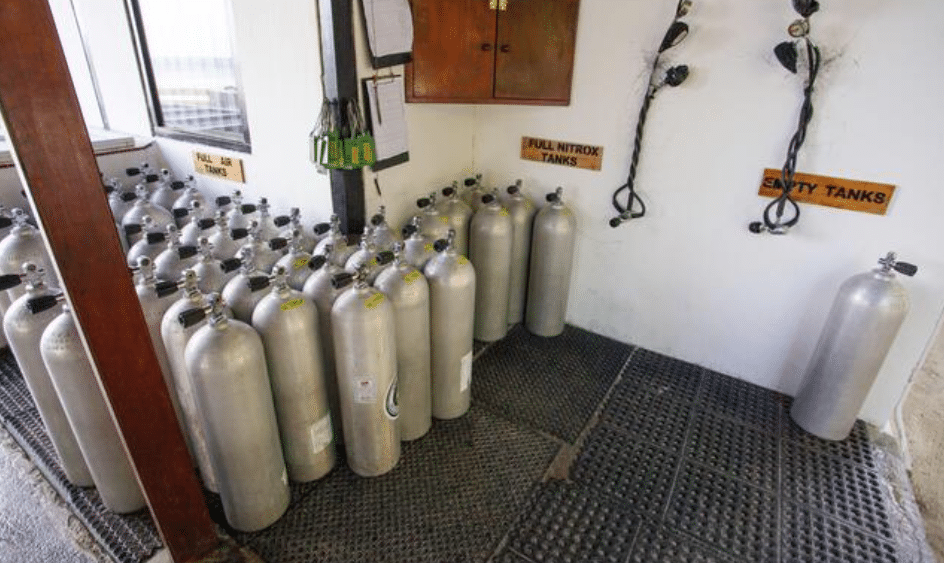
Why Cylinder Valves Deserve More Attention
Most divers focus on:
- Regulators.
- Buoyancy systems.
- Computers.
Few consider the valve.
Yet the valve is:
- The gatekeeper of breathing gas.
- The first mechanical control point.
- A potential failure location.
- A redundancy enabler.
Valve design influences:
- Gas awareness.
- Failure management.
- System redundancy.
Understanding valves is not historical trivia.
It is operational knowledge.
The J-Valve: Mechanical Reserve Before Pressure Gauges
Before submersible pressure gauges (SPGs) became standard, divers had no precise way to monitor remaining gas.
The solution:
The J-valve.
How It Worked
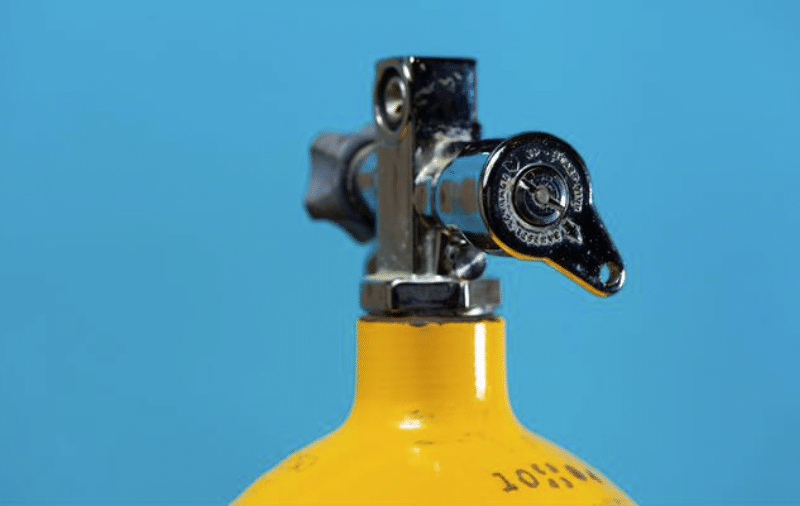
The J-valve contained:
- A spring-loaded mechanism.
- A mechanical reserve.
- A pull rod accessible to the diver.
When tank pressure dropped to a preset level:
- Gas flow restricted.
- Breathing became difficult.
- Diver pulled the reserve rod.
- Full remaining gas became available.
It was an early warning system.
But it had flaws.
Limitations of the J-Valve
The J-valve relied on:
- Mechanical calibration.
- Diver reaction.
- Proper maintenance.
Common issues included:
- Forgetting to reset the reserve.
- Accidental activation.
- Mechanical failure.
- False confidence in remaining gas.
As SPGs became standard:
Divers could see pressure directly.
Mechanical reserve became unnecessary.
The industry moved forward.
The K-Valve: Simplicity and Visibility
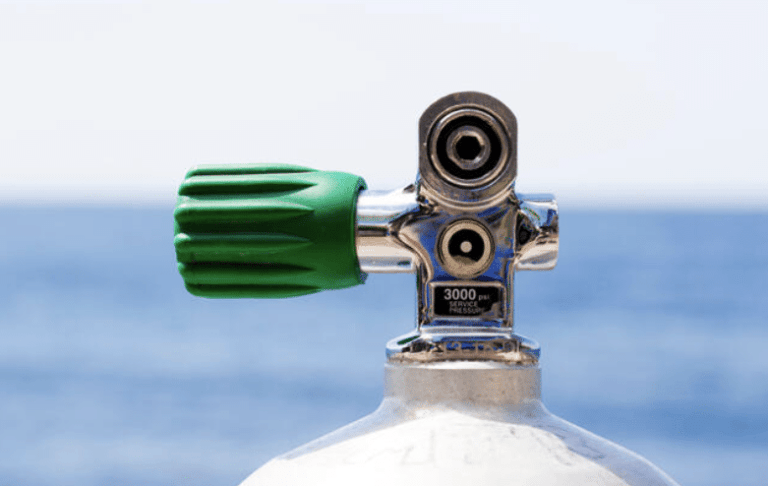
The K-valve is:
- A simple on/off valve.
- The modern standard in recreational diving.
It contains:
- No reserve mechanism.
- No internal complexity.
- A direct gas pathway.
With SPGs available:
Gas awareness became procedural.
Not mechanical.
The K-valve symbolises:
A shift from equipment-based safety to behavioural safety.
You monitor your gas.
The valve does not protect you from poor planning.
The Y-Valve and H-Valve: Redundancy in One Cylinder
Technical and professional diving introduced:
Redundancy requirements.
Enter the Y-valve and H-valve.
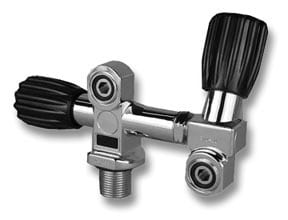
Y-Valve
- One cylinder.
- Two independent regulator outlets.
- Both share the same gas source.
H-Valve
- Similar purpose.
- Slightly different internal design.
- Often used interchangeably in terminology.
These valves allow:
- Two first stages.
- Redundant regulator systems.
- Failure isolation capability.
If one regulator fails:
The diver switches to the other.
Gas supply remains intact.
Redundancy vs True Separation
Important distinction:
Y- and H-valves provide regulator redundancy.
They do NOT provide gas redundancy.
If the cylinder fails:
Both regulators fail.
True gas redundancy requires:
- Twin cylinders with isolator manifold.
- Independent sidemount cylinders.
- Separate gas sources.
Understanding this difference is critical.
Redundancy must match risk.
Valve Orientation and Failure Points
Valve position influences:
- Hose routing.
- Access during drills.
- Shutdown capability.
In technical diving:
Valve drills are foundational.
Divers practice:
- Reaching back.
- Identifying valve.
- Closing correct post.
- Managing regulator failure.
Valve familiarity reduces panic.
Panic increases risk.
Operational Implications
In military, commercial, and public safety diving:
Valve choice depends on:
- Mission objective.
- Redundancy requirement.
- Surface support.
- Decompression exposure.
- Overhead environment presence.
A simple K-valve may suffice.
Or a manifolded twinset may be mandatory.
Valve configuration is never aesthetic.
It is risk-aligned.
Maintenance and Inspection
Valves require:
- Regular servicing.
- O-ring inspection.
- Thread integrity checks.
- Smooth operation verification.
Valve failure underwater can result in:
- Gas loss.
- Rapid ascent.
- Task overload.
- Mission abort.
Asset management includes valves.
Not just cylinders.
From Mechanical Safeguards to Professional Discipline
The evolution from J-valve to K-valve reflects:
A cultural shift.
Early diving relied on:
Mechanical reserves.
Modern diving relies on:
Gas planning.
Pressure monitoring.
Team communication.
Abort criteria.
Equipment became simpler.
Procedures became stronger.
Professional culture matured.
Why This Still Matters Today
Even today:
- Some vintage divers remember J-valves.
- Technical divers rely on manifold systems.
- Public safety divers use specialised configurations.
Understanding valve history builds:
Mechanical literacy.
Failure awareness.
Configuration discipline.
At N9BO℠, equipment education goes beyond “how to assemble.” We teach divers to understand system logic — because valves are not accessories. They are part of life support architecture.
Valves Reflect Philosophy
- J-valve = mechanical safeguard.
- K-valve = procedural responsibility.
- Y/H-valve = redundancy integration.
Each reflects a stage in diving evolution.
Diving safety advanced not by complexity alone, but by understanding.
Want to Understand Your Life Support System Properly?
Equipment knowledge reduces risk and builds confidence. Contact N9BO℠ to explore structured technical and equipment-focused training pathways.
From the N9BO℠ Knowledge Base