Understanding Surface-Supplied Diving Systems
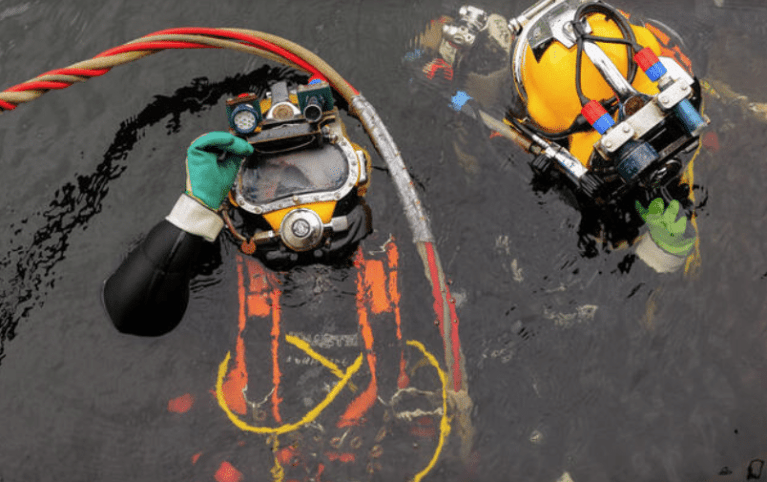
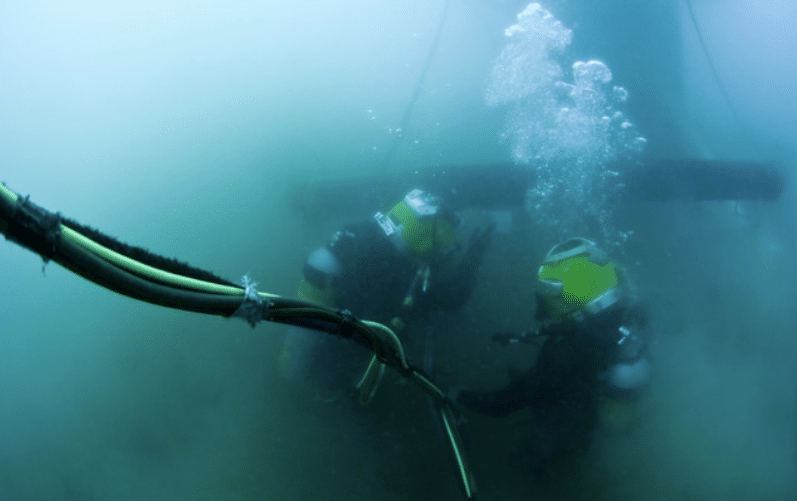
Surface-supplied diving replaces self-contained breathing systems with a continuous gas supply delivered from the surface via an umbilical. This umbilical typically includes breathing gas, communications, and often additional services such as pneumo lines or hot water supply.
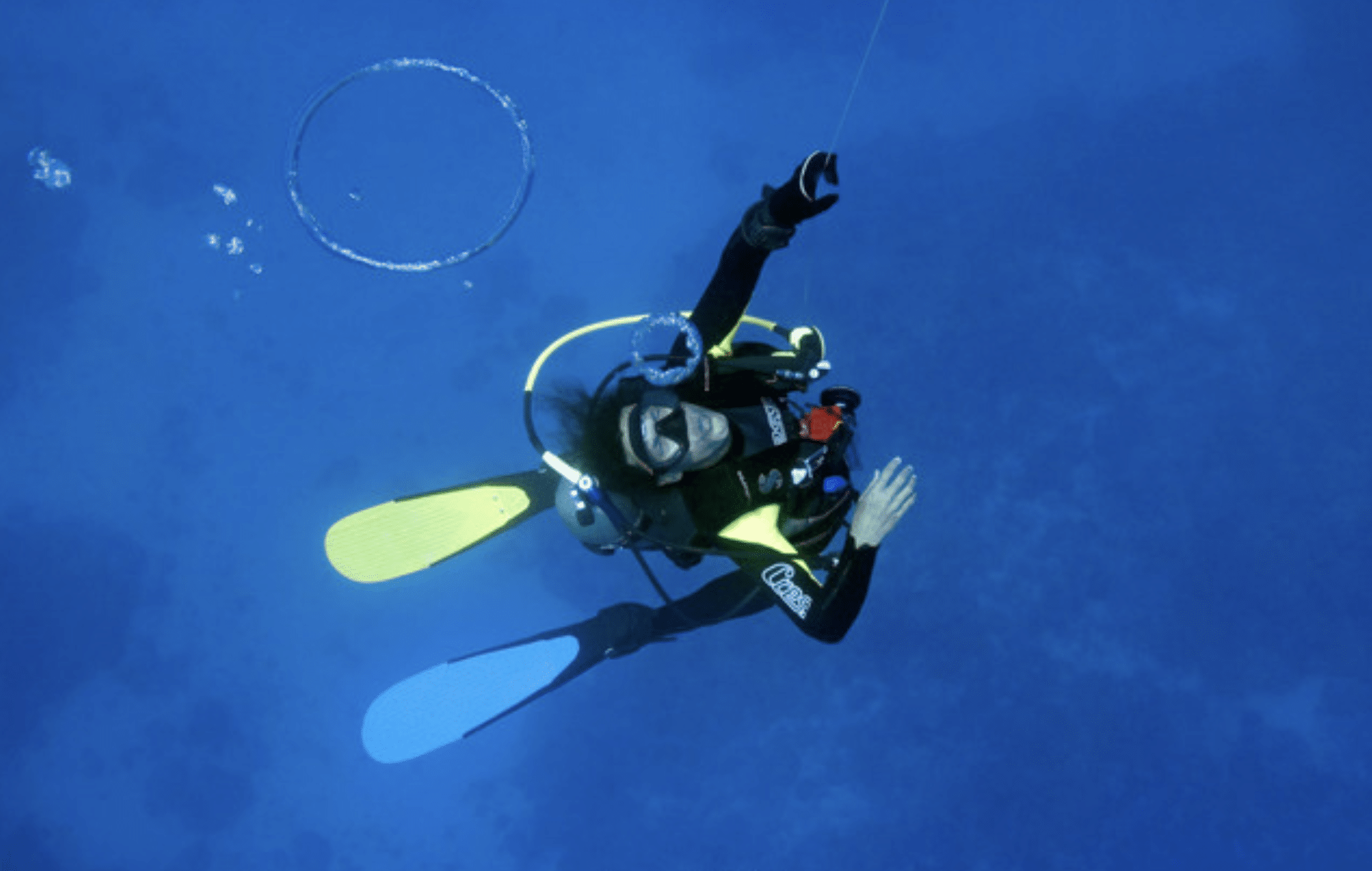
Unlike SCUBA, where the diver carries a finite gas supply, SSDS provides:
- Continuous breathing gas from a controlled source
- Direct communication between diver and surface
- Real-time monitoring of diver status
This changes the operational framework. The diver becomes part of a surface-managed system rather than an independent unit.
At N9BO℠, we treat surface-supplied diving as a system-based operation where control is centralised and continuously maintained.
When Surface Supply Becomes Necessary
Surface-supplied systems are required when the limitations of SCUBA introduce unacceptable risk. These conditions are typically linked to task complexity, environment, or duration.
SSDS is preferred or required in:
- Low or zero visibility environments
- Contaminated water operations
- Long-duration or repetitive tasks
- Complex work requiring continuous focus
- Situations requiring uninterrupted communication
In these conditions, reliance on a finite gas supply and limited communication increases operational risk.
Surface supply provides stability. The diver does not need to manage gas reserves independently and can focus on task execution.
At N9BO℠, we determine system selection based on operational requirements, not convenience.
Continuous Gas Supply and Risk Reduction
One of the primary advantages of SSDS is the continuous gas supply. This eliminates a key limitation of SCUBA—finite gas reserves.
Operational benefits include:
- Removal of gas management as a limiting factor
- Reduced risk of out-of-gas scenarios
- Ability to extend working time safely
This allows divers to maintain focus on task execution rather than monitoring remaining gas.
However, this does not eliminate risk. Gas supply systems must be redundant and monitored continuously. Surface failure affects the diver directly.
At N9BO℠, we emphasise that continuous supply increases control but requires robust system management.
Communication and Command Structure
Surface-supplied diving introduces real-time communication between diver and surface team. This fundamentally changes operational control.
Communication allows:
- Immediate reporting of conditions and issues
- Real-time instructions and adjustments
- Continuous monitoring of diver status
This creates a command structure where the surface team maintains oversight and control of the operation.
The diver is no longer operating independently. Decisions are coordinated, reducing the likelihood of individual error.
At N9BO℠, communication is treated as a primary control mechanism, not a convenience.
Task Loading and Operational Efficiency
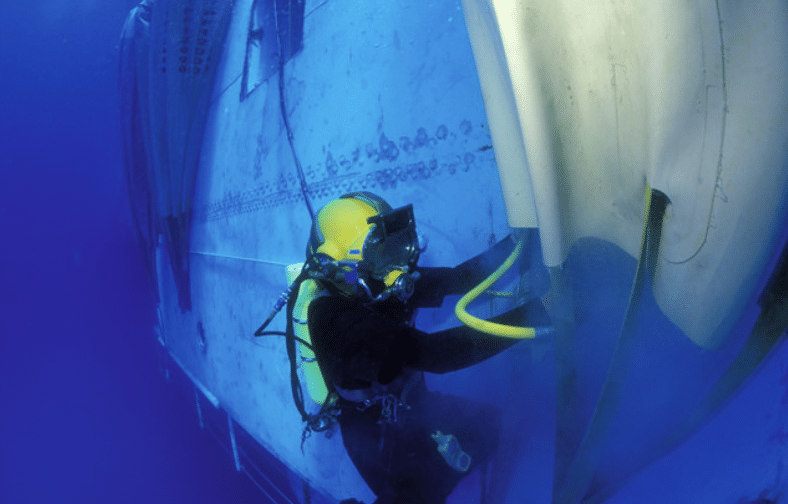
SSDS is particularly suited to tasks that involve high workload or complexity. These may include construction, inspection, recovery, or public safety operations.
Advantages in these scenarios include:
- Reduced cognitive load related to gas management
- Continuous support from the surface team
- Ability to maintain position and focus for extended periods
This increases efficiency and reduces fatigue.
However, task loading must still be managed. Continuous supply does not eliminate physical or cognitive limits.
At N9BO℠, we integrate task management into SSDS operations, ensuring that workload remains within controllable limits.
Environmental Control and Safety
Surface-supplied systems are often used in environments where control is critical. This includes hazardous or confined environments where SCUBA limitations increase risk.
Examples include:
- Contaminated water requiring full-face masks and sealed systems
- Confined spaces with limited access or visibility
- Strong current environments where stability is required
The umbilical provides both support and constraint. It must be managed to prevent entanglement while maintaining connection to the surface.
Environmental control is enhanced through:
- Continuous monitoring
- Immediate response capability
- Structured diver support
At N9BO℠, we treat environmental risk as a determining factor in system selection.

Equipment Complexity and System Integrity
Surface-supplied systems are more complex than SCUBA. They involve multiple components, including gas supply systems, communication units, umbilicals, and helmets or full-face masks.
This complexity introduces additional requirements:
- Rigorous pre-dive checks
- System redundancy for critical components
- Continuous monitoring during operation
Failure in any part of the system can affect the entire operation. System integrity must be maintained at all times.
At N9BO℠, SSDS is managed as an integrated system, where each component is critical.
Training and Team Coordination
Surface-supplied diving requires specialised training. Both divers and surface personnel must understand their roles within the system.
Key competencies include:
- Umbilical management
- Communication protocols
- Emergency procedures
- Surface team coordination
The operation depends on teamwork. The diver, tender, and supervisor must function as a coordinated unit.
Breakdown in coordination increases risk, particularly in complex environments.
At N9BO℠, we emphasise team integration and role clarity in all SSDS operations.
SCUBA vs Surface Supply: Operational Decision-Making
The choice between SCUBA and surface supply is not based on preference but on operational requirements.
SCUBA is appropriate for:
- Mobile, low-complexity dives
- Environments with manageable risk
- Short-duration tasks
Surface supply is required when:
- Continuous gas and communication are critical
- Task complexity exceeds individual capacity
- Environmental conditions increase risk
Selecting the wrong system introduces unnecessary risk.
At N9BO℠, system selection is treated as a risk management decision, not an operational default.
Operational Mindset
Surface-supplied diving represents a shift from individual operation to system-based control. The diver is part of a coordinated structure where safety and performance are managed collectively.
This requires discipline, communication, and adherence to procedure. The advantages of SSDS—continuous gas, communication, and control—are only effective when the system is properly managed.
At N9BO℠, we approach SSDS as a controlled operation. Every element, from equipment to personnel, is integrated into a structured framework.
In high-risk environments, control is not optional. Surface-supplied systems provide that control when applied correctly.
Choose the Right System for the Mission
Contact N9BO℠ to integrate surface-supplied diving systems into your operations and training, ensuring safe and effective performance in high-risk environments.
From the N9BO℠ Knowledge Base