Understanding Full-Face Mask Systems
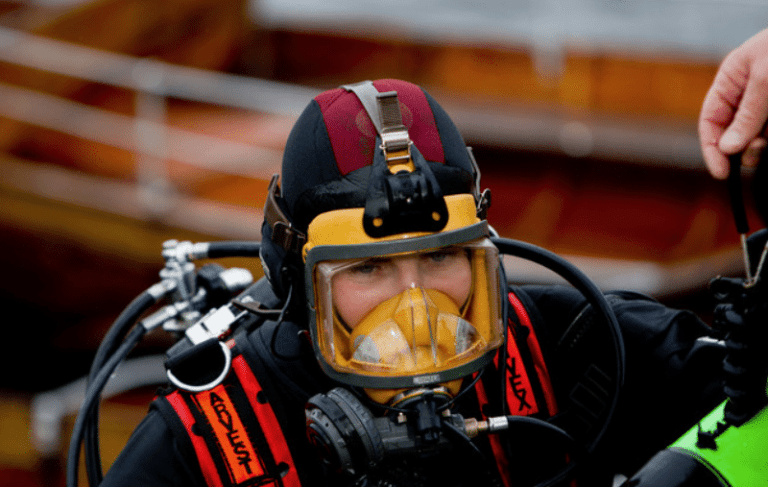
Full-face masks differ from standard regulators by enclosing the entire face, sealing around the diver’s face and delivering gas through an integrated system. This configuration allows for normal breathing through both nose and mouth, while also enabling communication systems to be integrated.
Key functional advantages include:
- Protection of airway from contaminated water
- Integrated communication capability
- Improved thermal protection in cold environments
- Reduced risk of regulator loss
These advantages make FFMs essential in specific operational contexts, particularly public safety, contaminated water, and surface-supplied diving.
At N9BO℠, we treat FFMs as specialised equipment that must be integrated into operations with clear procedures and training.
When Full-Face Masks Are Required
FFMs are not standard for all diving. Their use is driven by operational requirements where additional protection or capability is necessary.
Common applications include:
- Contaminated water operations requiring sealed breathing systems
- Public safety diving where communication is critical
- Surface-supplied diving systems
- Cold water environments requiring facial protection
In these scenarios, standard regulators do not provide sufficient protection or capability.
However, introducing FFMs increases system complexity. Their use must be justified by operational need.
At N9BO℠, we deploy FFMs based on risk assessment, not preference.
Integration with Communication Systems
One of the primary advantages of FFMs is the ability to integrate communication systems. This allows real-time voice communication between diver and surface or within the dive team.
Operational benefits include:
- Immediate reporting of conditions
- Real-time instructions and coordination
- Improved situational awareness across the team
However, communication systems introduce additional points of failure. Wiring, connectors, and microphones must be maintained and tested regularly.
Communication protocols must also be standardised. Unstructured communication increases confusion and reduces effectiveness.
At N9BO℠, communication is treated as a controlled system requiring both technical and procedural management.
Fit, Seal, and Individual Compatibility
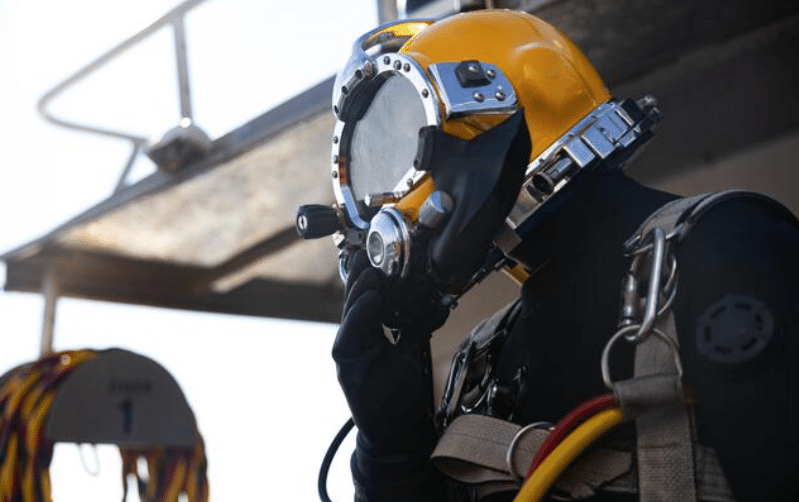
FFMs rely on a proper seal to function effectively. Poor fit compromises both safety and performance.
Key considerations include:
- Correct mask size and adjustment
- Compatibility with individual facial structure
- Ensuring no obstruction to sealing surfaces
Hair, facial features, or improper adjustment may prevent an effective seal, leading to leaks or loss of protection.
Fit testing must be conducted before operational use. Assumptions about compatibility introduce risk.
At N9BO℠, we require individual fit verification as part of equipment allocation.
Maintenance and System Integrity
FFMs require regular maintenance to ensure reliability. The increased complexity compared to standard regulators introduces additional components that must be inspected and serviced.
Maintenance requirements include:
- Inspection of seals and O-rings
- Cleaning and disinfection after use
- Verification of communication system functionality
- Checking valves and internal components
Failure to maintain FFMs results in degraded performance and increased risk of failure.
Maintenance must be structured and documented, not informal.
At N9BO℠, FFM maintenance is integrated into equipment management systems to ensure consistency.
Emergency Procedures and Redundancy
FFMs change emergency response procedures. In the event of mask failure, the diver must be able to switch to an alternative gas source.
This requires:
- Carrying a backup regulator
- Training in mask removal and bailout procedures
- Maintaining composure during transition
Emergency procedures must be practiced. The enclosed nature of FFMs can increase stress if failure occurs.
Redundancy is essential. FFMs do not eliminate the need for backup systems.
At N9BO℠, we emphasise that additional capability must be matched with additional preparedness.

Task Loading and Familiarity
FFMs introduce additional considerations for the diver, including communication management, mask control, and system awareness. This increases cognitive load.
Divers must be familiar with:
- Breathing characteristics of the mask
- Communication operation
- Emergency procedures
Lack of familiarity reduces efficiency and increases risk, particularly under stress.
Training must ensure that operation becomes routine, allowing focus to remain on the task.
At N9BO℠, we integrate FFM training into operational preparation, ensuring competence before deployment.
Operational Limitations and Considerations
While FFMs provide advantages, they also introduce limitations.
These include:
- Increased bulk and reduced field of view in some models
- More complex donning and doffing procedures
- Dependence on correct seal and system integrity
These limitations must be considered during planning. FFMs are not universally applicable.
Selecting FFMs without clear operational justification introduces unnecessary complexity.
At N9BO℠, equipment selection is aligned with operational requirements, balancing capability and simplicity.
Team Coordination and Standardisation
FFM use requires consistent procedures across the team. Differences in equipment or communication systems introduce variability.
Standardisation ensures:
- Consistent communication protocols
- Compatibility of equipment
- Predictable response in emergency situations
Teams must operate within defined procedures to maintain control.
At N9BO℠, we standardise FFM systems and procedures to ensure consistency across operations.
Operational Mindset
Full-face masks enhance capability, but they also increase complexity. Their effectiveness depends on correct integration, disciplined maintenance, and trained personnel.
Without these controls, FFMs introduce additional risk rather than reducing it.
At N9BO℠, we approach FFMs as part of a system. Equipment, training, and procedures are aligned to ensure that capability is supported by control.
In diving operations, added capability must always be matched with increased discipline.
Integrate Capability with Control
Contact N9BO℠ to integrate full-face mask systems into your dive operations and training, ensuring safe, effective, and controlled use in demanding environments.
From the N9BO℠ Knowledge Base