Diving Science, History & Theory

PADI Scuba Diver vs PADI Open Water Diver: Understanding the Difference

The Shared Foundation

Both programmes are entry-level scuba certifications designed to introduce divers to the underwater environment safely and progressively.

Each course teaches:

  • Basic diving physics and physiology
  • Equipment setup and use
  • Fundamental underwater skills
  • Safety procedures and dive planning basics

Students learn how to breathe underwater, control buoyancy, communicate underwater, and respond to common diving situations.

The overall objective is the same: to develop comfort and competence in recreational scuba diving.

However, the level of independence and operational capability differs significantly between the two certifications.

At N9BO℠, we explain the difference as one of autonomy and progression.


What Is the PADI Scuba Diver Certification?

The PADI Scuba Diver certification is a partial completion of the Open Water Diver course. It is designed for individuals who want to begin diving but may have limited time or prefer to dive only under professional supervision.

The programme covers approximately half of the full Open Water curriculum and introduces the most essential theoretical and practical components.

Upon certification, Scuba Divers may:

  • Dive to a maximum depth of 12 metres / 40 feet
  • Dive only under the direct supervision of a PADI Professional
  • Participate in guided recreational dives within training limits

This certification is often chosen by travellers, occasional divers, or individuals wanting a shorter introduction to scuba diving.

At N9BO℠, we position Scuba Diver as a supervised participation-level certification.


What Is the PADI Open Water Diver Certification?

The PADI Open Water Diver course is the full entry-level certification and is recognised globally as the standard starting point for independent recreational diving.

The course includes:

  • Complete theory development
  • Confined water skill training
  • Four open water training dives

Open Water Divers are qualified to:

  • Dive independently with a certified buddy
  • Dive to a recommended maximum depth of 18 metres / 60 feet
  • Plan and conduct recreational dives within training limits

This certification provides significantly greater flexibility and allows divers to participate in diving activities worldwide without requiring direct professional supervision.

At N9BO℠, we treat Open Water Diver as the true foundation for long-term diving development.
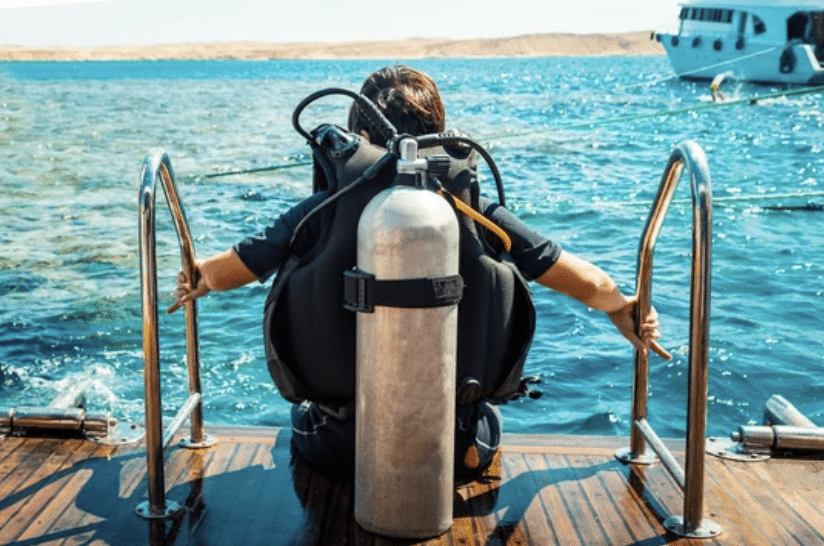
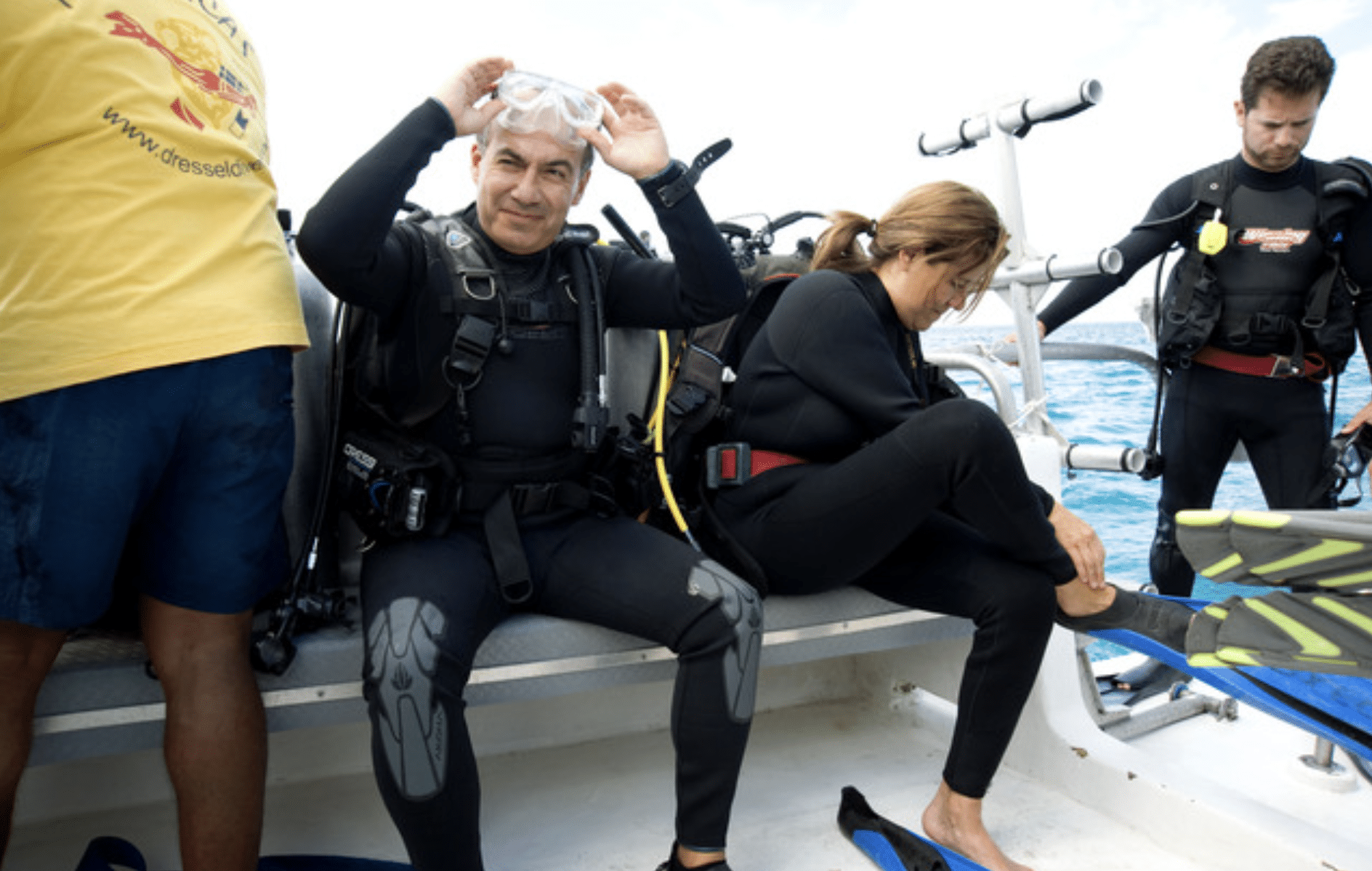
Back view of a scuba diver in full gear sitting on a boat ladder, ready to enter the clear blue water.

Training Differences

The key difference between the programmes lies in training depth and scope.

PADI Scuba Diver

The course includes:

  • A limited portion of theory development
  • Fewer confined water sessions
  • Two open water dives

The focus is on developing enough knowledge and skill to dive safely under supervision.

PADI Open Water Diver

The full course includes:

  • Comprehensive theory development
  • Full confined water skill progression
  • Four open water dives

This expanded structure allows students to develop greater confidence, problem-solving ability, and underwater awareness.

At N9BO℠, we emphasise that the additional training directly improves independence and safety.


Depth and Supervision Limits

One of the most important differences between the certifications is operational limitation.

Scuba Diver

  • Maximum depth: 12 metres / 40 feet
  • Must dive with a PADI Professional

Open Water Diver

  • Recommended maximum depth: 18 metres / 60 feet
  • May dive independently with another certified diver

This difference affects both flexibility and access to dive sites.

Scuba Divers remain dependent on professional supervision, while Open Water Divers can participate more freely in recreational diving activities worldwide.

At N9BO℠, we explain this as the difference between guided participation and independent recreational capability.


Which Course Is Right for You?

The choice depends on the diver’s objectives, schedule, and long-term plans.

Scuba Diver may suit:

  • Travellers with limited time
  • Individuals wanting only occasional guided dives
  • Those unsure about committing to the full course immediately

Open Water Diver may suit:

  • Individuals planning to dive regularly
  • Travellers seeking maximum flexibility
  • Divers wanting to continue into advanced training

For most people intending to dive more than occasionally, the Open Water course provides substantially greater value and capability.

At N9BO℠, we generally recommend Open Water Diver whenever time allows, as it creates a stronger and more complete foundation.

Three scuba divers wearing wetsuits and cylinders are floating on the clear blue water’s surface, preparing to dive. The water is bright and transparent, showing the patterns and colours of the sea below.

Progression and Upgrade Path

An important advantage of the Scuba Diver programme is that it can later be upgraded to Open Water Diver.

The diver simply completes the remaining theory modules, confined water skills, and open water dives required for the full certification.

This allows flexibility for individuals who initially lacked time but later decide to continue their training.

Once upgraded, the diver gains the same certification and privileges as any other Open Water Diver.

At N9BO℠, we position Scuba Diver as a stepping stone rather than a final destination.


Confidence, Competence, and Experience

The additional training provided in the Open Water course generally results in higher confidence and improved comfort underwater.

More confined water practice allows divers to:

  • Improve buoyancy and breathing control
  • Become more comfortable with equipment
  • Develop stronger situational awareness

This often translates into safer and more enjoyable diving experiences after certification.

While Scuba Divers can still enjoy underwater exploration safely under supervision, Open Water Divers typically have a broader skill base and greater operational freedom.

At N9BO℠, we believe confidence is built through repetition, understanding, and structured experience.


Operational Mindset

Both certifications introduce divers to the underwater world, but they serve different operational purposes.

The Scuba Diver certification provides a supervised pathway into recreational diving, while Open Water Diver develops the ability to operate independently within recreational limits.

Neither certification is “better” universally. The correct choice depends on the diver’s goals, commitment level, and intended activity.

At N9BO℠, we focus on matching training to realistic objectives rather than simply maximising certification level.

The best pathway is the one that creates confident, competent, and safe divers.
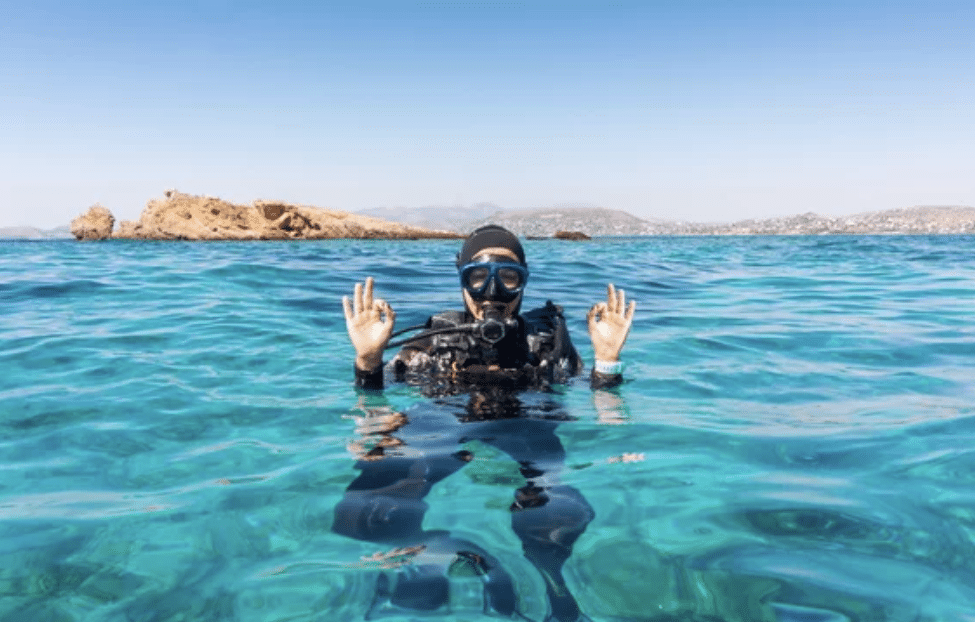
A scuba diver wearing a wetsuit, mask, and snorkel gives an “OK” hand signal while floating on the surface of bright blue water, with a rocky island and distant shoreline visible in the background.

Start Your Diving Journey the Right Way

Contact N9BO℠ to choose the training pathway that matches your goals, whether you want a supervised introduction to diving or full independent recreational certification.


From the N9BO℠ Knowledge Base


Share this

Skin Diving: Building Comfort, Confidence, and Connection with the Ocean

Understanding Skin Diving

Skin diving is one of the simplest forms of underwater exploration. Using only a mask, snorkel, fins, and breath-hold techniques, divers are able to observe and interact with the underwater environment without relying on scuba equipment.

Unlike scuba diving, skin diving focuses on simplicity and direct interaction with the water. The diver learns to move naturally, control breathing, and remain relaxed while submerged.

This simplicity is important because it removes unnecessary complexity and allows the individual to focus on fundamental water skills.

At N9BO℠, we view skin diving as the true foundation of underwater confidence.


Developing Comfort in the Water

One of the most important aspects of skin diving is learning to become comfortable in the aquatic environment. Many people initially experience tension or uncertainty when submerged, particularly when breathing through a snorkel or descending below the surface.

Skin diving develops familiarity through repetition and controlled exposure. The diver learns how the body behaves in water, how buoyancy changes during breathing, and how relaxation improves efficiency.

Comfort in the water is not achieved through force. It develops gradually through controlled practice and positive experiences.

This process builds confidence, reduces anxiety, and improves overall situational awareness.

At N9BO℠, we emphasise that relaxed divers are safer, more efficient, and more capable underwater.

Two people snorkelling underwater near a coral reef. One person in blue swimming trunks leads, while the other, wearing a bikini, follows close behind. Both are wearing masks and snorkels in clear blue water.

Breathing and Relaxation

Breathing control is central to skin diving. Because dives are conducted on a single breath, the diver must learn to breathe slowly, calmly, and efficiently at the surface.

Relaxation reduces oxygen consumption and helps the diver remain comfortable while submerged. Tension, rapid breathing, and unnecessary movement increase fatigue and reduce dive time.

The connection between breathing and mental state becomes immediately apparent in skin diving. Calm breathing supports calm thinking and controlled movement.

These principles later become highly valuable in scuba and technical diving, where stress management and breathing control directly affect safety and gas consumption.

At N9BO℠, we teach breathing as both a physical and psychological control tool.


Movement and Efficiency Underwater

Skin diving teaches divers how to move efficiently in the water using streamlined body positioning and controlled finning techniques.

Efficient movement reduces energy expenditure and allows the diver to remain underwater longer with less effort. Poor technique creates drag, increases fatigue, and disrupts buoyancy control.

Because there is no scuba equipment to compensate for inefficient movement, the diver quickly learns the importance of balance, trim, and propulsion.

This creates strong foundational skills that transfer directly into scuba diving and advanced underwater disciplines.

At N9BO℠, we emphasise efficiency because underwater performance is built on controlled movement rather than force.


Connection with the Marine Environment

Skin diving provides a unique connection with the ocean. Without bubbles, heavy equipment, or constant noise, divers often experience a more natural interaction with marine life and the environment.

The slower pace encourages observation and awareness. Divers begin noticing fish behaviour, current movement, coral structure, and the rhythm of the underwater environment.

This experience often creates a stronger appreciation for marine ecosystems and conservation.

Skin diving also promotes low-impact interaction. Proper buoyancy and controlled movement reduce disturbance to wildlife and fragile reef systems.

At N9BO℠, we encourage divers to experience the ocean with awareness and respect.

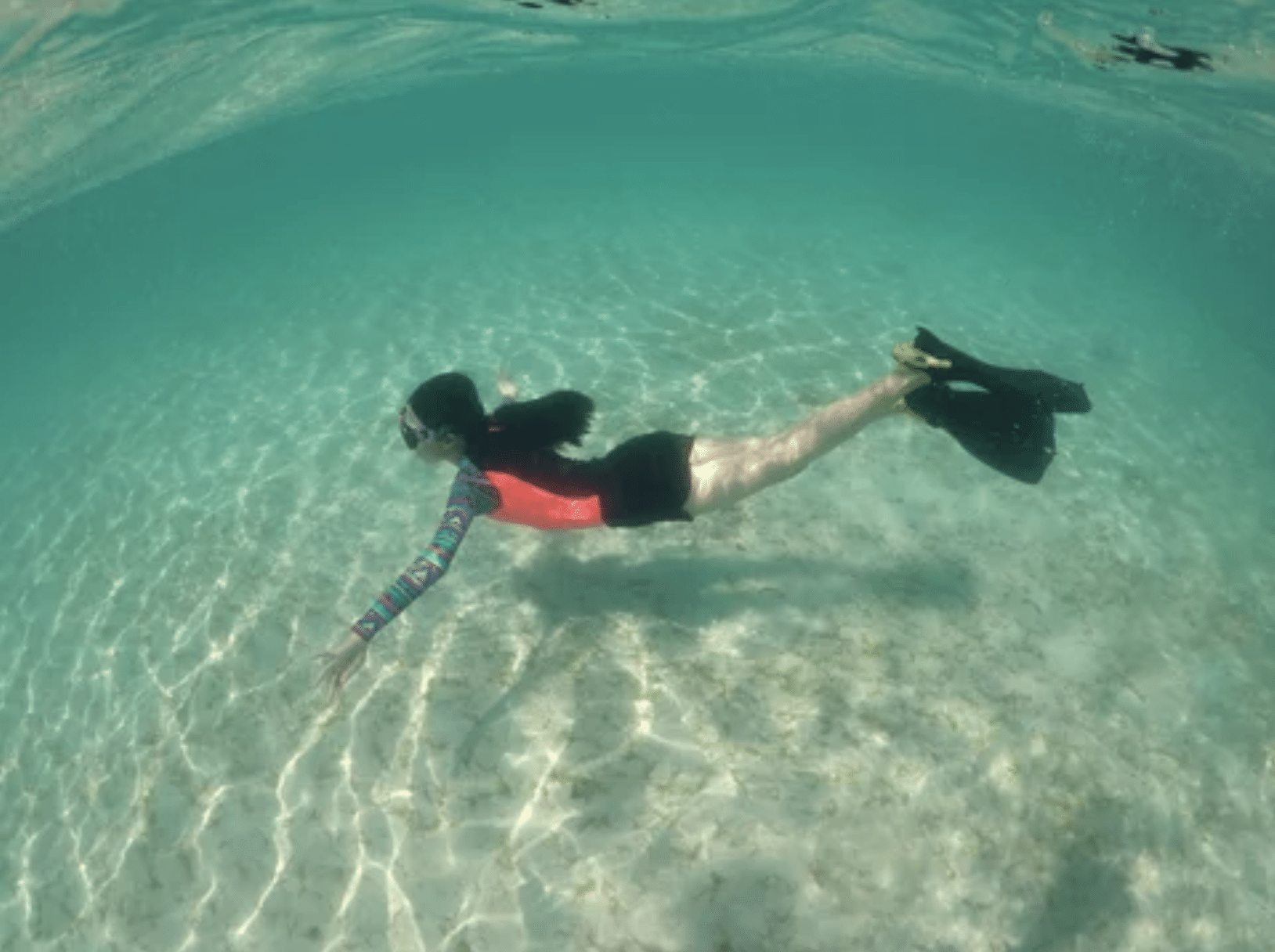
A person wearing a snorkel and fins swims underwater over a sandy seabed in clear, turquoise water. Sunlight creates patterns on the sand, and the swimmer is reaching forward with both arms.

Safety and Water Awareness

Although skin diving is simple, it still requires discipline and safety awareness. Divers must understand:

  • Breath-hold limitations
  • Equalisation techniques
  • Surface awareness and buddy procedures
  • Environmental conditions such as current and waves

One of the most important principles is avoiding overexertion. Relaxation and control are more effective than pushing physical limits.

Buddy awareness is also essential. Even shallow water activities require supervision and communication.

Developing these habits early creates safer divers at every level of training.

At N9BO℠, we teach that safety begins with awareness and self-control.


Building the Foundation for Future Diving

Many advanced divers underestimate the value of skin diving, but the skills developed during breath-hold diving form the basis for almost all underwater activity.

Key transferable skills include:

  • Water confidence
  • Buoyancy awareness
  • Equalisation
  • Efficient movement
  • Controlled breathing

Divers who are comfortable in the water generally progress more effectively into scuba, technical, and professional diving pathways.

Skin diving therefore acts as both a recreational activity and a foundational training discipline.

At N9BO℠, we believe strong divers are built from strong fundamentals.


Physical and Mental Benefits

Skin diving offers both physical and psychological benefits. Physically, it improves cardiovascular fitness, breath control, flexibility, and overall water competency.

Mentally, the activity promotes relaxation, focus, and stress reduction. The rhythm of controlled breathing and quiet underwater movement often creates a calm and highly immersive experience.

Many divers find that time spent skin diving improves confidence not only in the water, but also in stressful environments outside it.

This balance between physical activity and mental calmness is one of the reasons skin diving remains popular across all levels of experience.

At N9BO℠, we view skin diving as both skill development and personal development.


Operational Mindset

Skin diving reinforces a simple but important principle: the ocean rewards calmness, awareness, and control.

The diver learns to rely on efficient movement, breathing discipline, and environmental awareness rather than equipment.

This creates a stronger relationship with the water and develops confidence through understanding rather than dependence.

At N9BO℠, we approach skin diving as the beginning of underwater capability. It teaches the diver to become comfortable, relaxed, and aware before adding complexity.

The best divers are often the ones who first learned to simply enjoy being underwater.

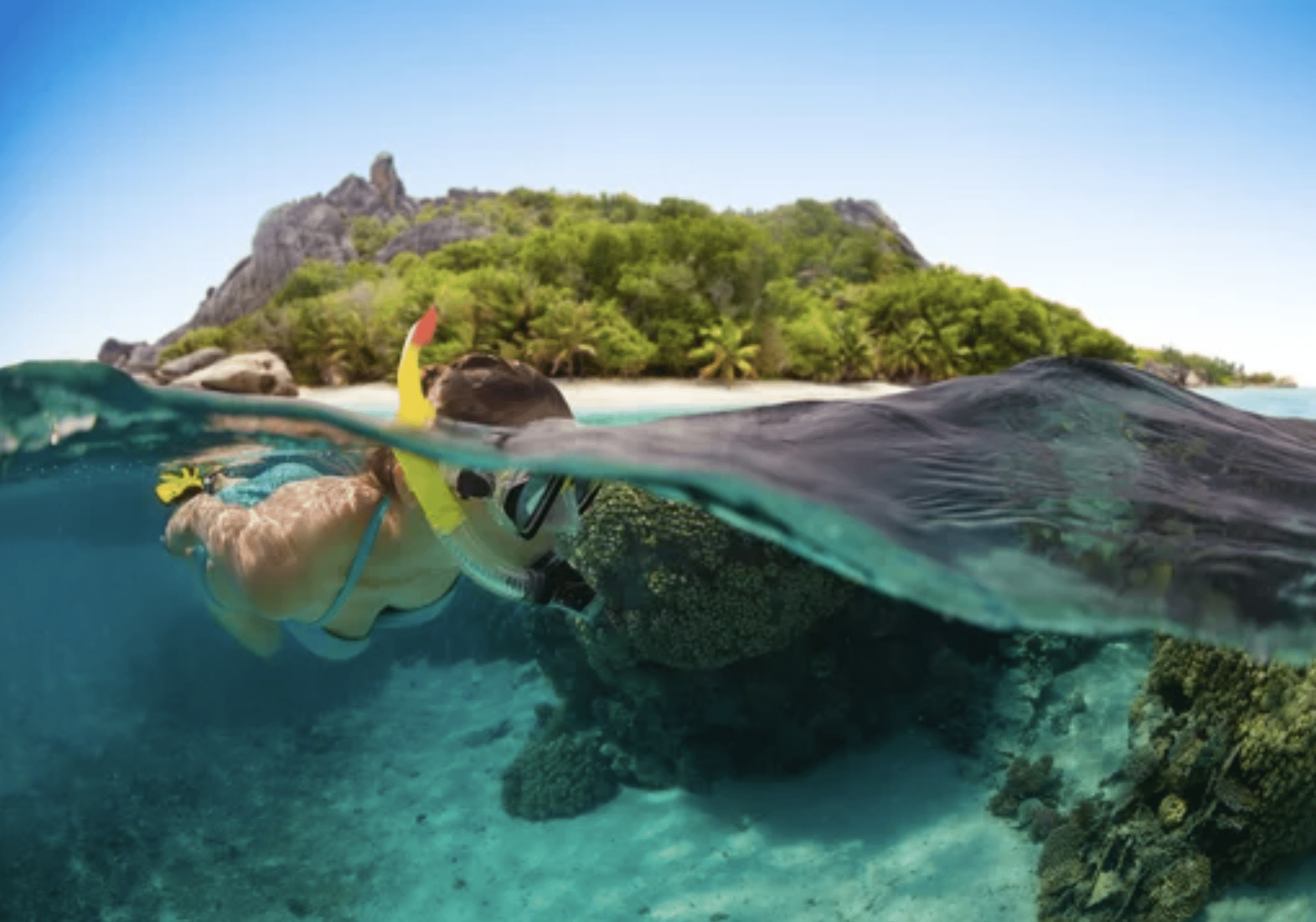
A person snorkelling near a tropical island, captured half above and half below the water. Clear water reveals coral and underwater scenery, while the lush island and blue sky are visible above the surface.

Discover the Ocean Through Simplicity

Contact N9BO℠ to begin your skin diving journey and develop the confidence, comfort, and awareness that form the foundation of all underwater exploration.


From the N9BO℠ Knowledge Base


Share this

The Evolution of Dive Tables to Algorithms: What Changed and Why

The Origin of Dive Tables

Dive tables were developed to provide structured limits for depth and time based on models of inert gas absorption and elimination. Early work by John Scott Haldane established the foundation, introducing the concept that the body absorbs and releases gas at predictable rates.

These models divided the body into theoretical “tissue compartments,” each absorbing and releasing gas at different speeds. Dive tables used these assumptions to define limits intended to reduce the risk of decompression sickness.

Tables provided:

  • Maximum allowable bottom times at specific depths
  • Required surface intervals between dives
  • Decompression schedules when limits were exceeded

They were simple, structured, and effective within their design parameters.

At N9BO℠, we emphasise that dive tables were not arbitrary—they were based on controlled experimentation and physiological modelling, forming the foundation of modern dive planning.


Limitations of Static Tables

While dive tables represented a major advancement, they introduced constraints. Tables assume a fixed dive profile—typically square profiles with a single depth and constant exposure.

In real-world diving, profiles are rarely static. Divers ascend, descend, and change depth throughout a dive. Tables cannot account for this variability without significant approximation.

Key limitations include:

  • Inability to accurately model multi-level dives
  • Conservative assumptions to account for uncertainty
  • Limited flexibility for dynamic conditions
  • Dependence on manual tracking and calculation

As diving evolved, these limitations became more apparent. Divers required tools that could adapt to changing profiles in real time.

At N9BO℠, we recognise that tables provided structure, but not flexibility.


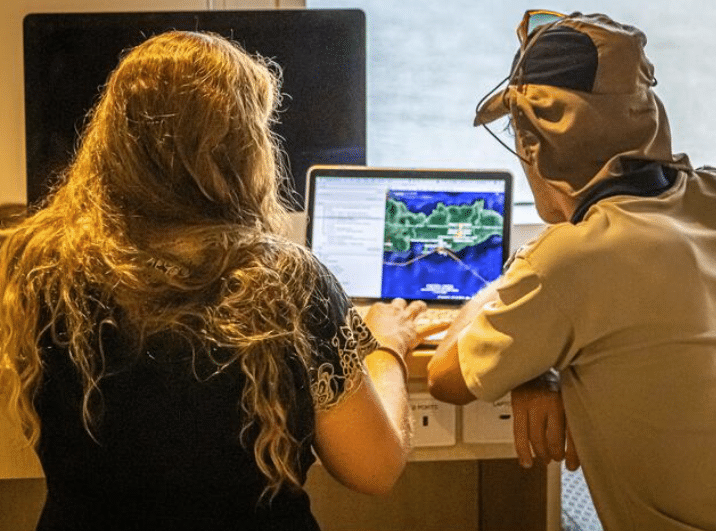
Two people sit side by side at a desk, looking at a laptop displaying a map or simulation on the screen. One person wears a light brown hat with ear flaps; both are focused on the computer.

The Shift to Algorithms

The development of dive computers introduced algorithm-based planning. Instead of relying on fixed tables, algorithms continuously calculate inert gas loading based on real-time depth and time data.

This allows for dynamic modelling of dive profiles. As depth changes, the algorithm adjusts calculations accordingly, providing more accurate and flexible guidance.

Algorithms track:

  • Continuous depth changes
  • Real-time inert gas loading
  • Ascent rates and decompression requirements
  • Repetitive dive profiles without manual input

This shift transformed dive planning from pre-dive calculation to continuous monitoring.

At N9BO℠, we emphasise that algorithms do not replace understanding—they require it.


Common Algorithm Models

Modern dive computers use variations of established decompression models. Two of the most widely used are Bühlmann-based algorithms and bubble models.

Bühlmann models focus on dissolved gas dynamics, using multiple tissue compartments with defined limits. They are widely used due to their flexibility and adaptability.

Bubble models incorporate additional considerations related to bubble formation and growth, attempting to reduce microbubble-related stress.

Each model has advantages and limitations. Differences between algorithms can result in varying decompression requirements for the same dive profile.

At N9BO℠, we train divers to understand that different algorithms may produce different outputs, and that these differences must be managed operationally.


From Conservative to Customisable

One of the key advancements in modern algorithms is adjustability. Divers can modify conservatism settings to account for personal or environmental factors.

This includes:

  • Increasing safety margins for fatigue or cold exposure
  • Adjusting gradient factors in technical diving
  • Adapting settings for repetitive or multi-day diving

However, this flexibility introduces risk. Incorrect adjustments can reduce safety margins if not properly understood.

At N9BO℠, we emphasise that customisation must be based on knowledge, not preference. Conservative settings should reflect operational conditions, not convenience.


Real-Time Feedback and Behaviour

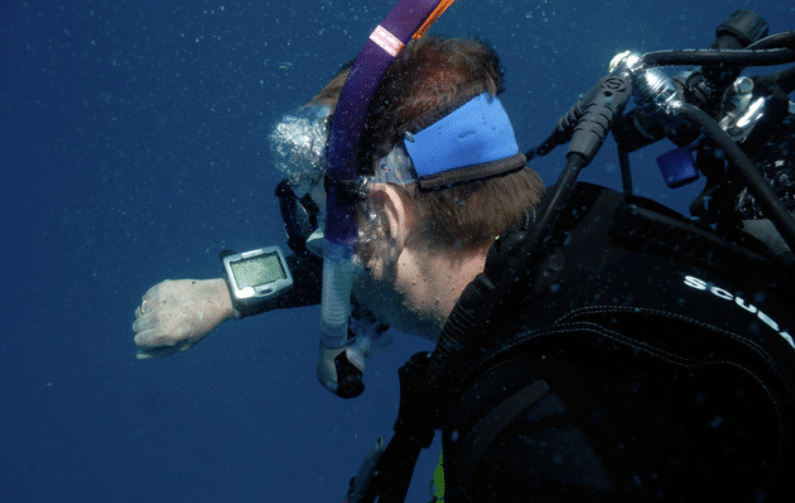
Dive computers provide continuous feedback, influencing diver behaviour during the dive. Information such as no-decompression limits, ascent rates, and stop requirements allows divers to adjust in real time.

This has operational advantages:

  • Improved situational awareness of decompression status
  • Ability to extend or shorten dives based on conditions
  • Immediate feedback on unsafe ascent rates

However, reliance on computers can lead to reduced understanding. Divers may follow instructions without understanding the underlying principles.

At N9BO℠, we emphasise that dive computers are tools, not decision-makers. The diver remains responsible for interpreting and acting on the information provided.

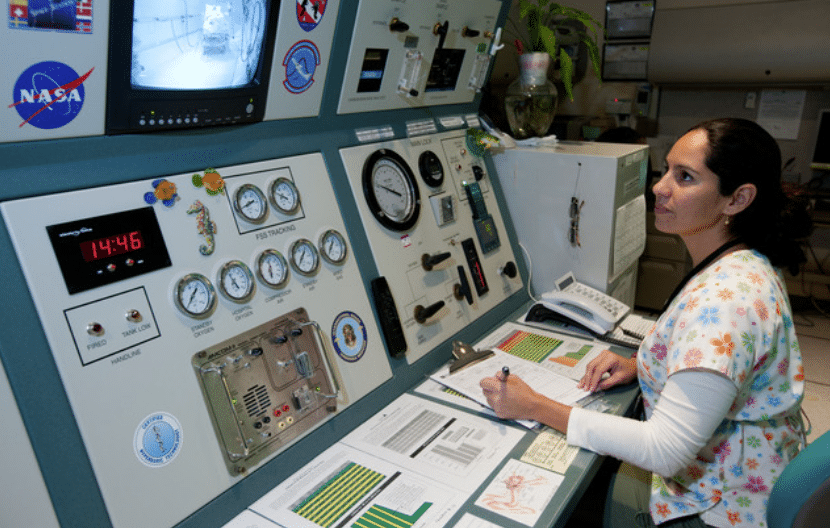
A woman sits at a control panel filled with gauges, dials, and screens, taking notes on papers. A NASA sticker is visible, and a monitor shows a room, suggesting a scientific or technical environment.

Failure Modes and Redundancy

Unlike dive tables, which are static and unaffected by equipment failure, dive computers introduce dependency on electronics. Battery failure, sensor malfunction, or software issues can result in loss of information.

This creates a new category of risk.

Effective mitigation includes:

  • Carrying backup computers or timing devices
  • Understanding basic table-based planning as a fallback
  • Maintaining awareness of the dive profile independent of the device

Divers who rely entirely on a single device without redundancy increase their vulnerability.

At N9BO℠, we integrate redundancy and failure planning into dive procedures, ensuring continuity of control.


Bridging Tables and Algorithms

Dive tables and algorithms are not opposing systems—they are part of the same continuum. Both are based on the same physiological principles, differing primarily in application.

Tables provide a structured, conservative framework. Algorithms provide dynamic, real-time adaptation. Understanding both enhances overall competence.

Divers who understand table concepts can better interpret algorithm behaviour. They recognise when limits are approaching and understand the implications of adjustments.

At N9BO℠, we train divers to operate across both systems, ensuring that technology enhances capability rather than replacing knowledge.


Operational Implications

The transition from tables to algorithms has changed how dives are planned and executed, but it has not removed the need for discipline.

Key operational considerations include:

  • Verifying algorithm compatibility within dive teams
  • Aligning conservatism settings across participants
  • Planning dives based on worst-case profiles, not best-case outputs
  • Maintaining awareness independent of device prompts

These considerations ensure that flexibility does not lead to inconsistency or increased risk.

At N9BO℠, we emphasise standardisation within teams to maintain control and predictability.


Operational Mindset

The evolution from dive tables to algorithms represents a shift in tools, not in responsibility. The fundamental objective remains unchanged: managing inert gas exposure to reduce decompression risk.

Modern technology provides greater flexibility and accuracy, but it also requires greater understanding. Without this understanding, divers may misinterpret data or rely too heavily on automated guidance.

At N9BO℠, we approach dive planning with a focus on control. Technology supports this control, but it does not replace the need for knowledge, discipline, and situational awareness.

In diving, the method has changed. The principles have not.

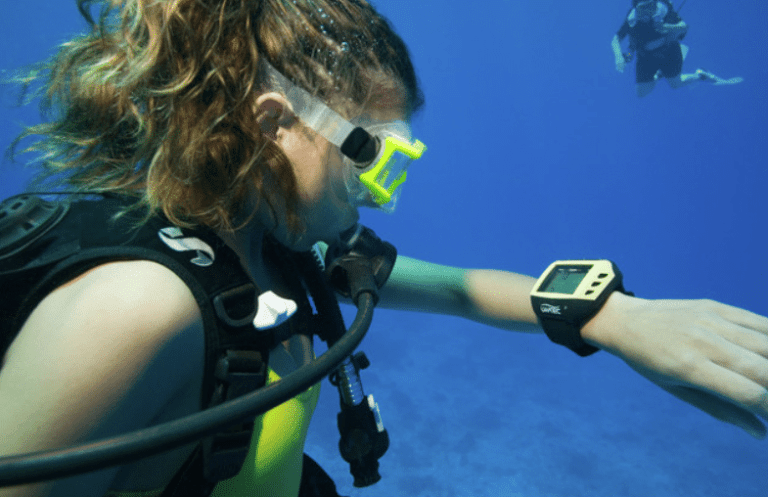
A scuba diver underwater wearing a snorkel and looking at a dive computer on their wrist, surrounded by deep blue water.


Understand the Tool, Not Just the Display


Contact N9BO℠ to integrate advanced dive planning and decompression theory into your training, ensuring your divers can use modern algorithms effectively and safely.


From the N9BO℠ Knowledge Base


Share this

Pressure, Time, and Physiology: What Really Limits Divers

Beyond Depth: The Real Limiting Factors

Diving limits are often simplified to depth ratings or certification levels. While depth is a visible parameter, it is not the primary limiting factor. The true constraints are physiological—how the body responds to increased pressure over time.

As depth increases, ambient pressure affects gas absorption, respiratory function, and neurological performance. These effects do not occur in isolation. They interact with exposure time, workload, and environmental conditions to define operational limits.

At N9BO℠, we emphasise that depth is only one variable. It is the combination of pressure and time that determines risk.


Pressure and Gas Absorption

As pressure increases, gases dissolve into body tissues at higher rates. This process is governed by well-established physiological principles, but its operational implications are often underestimated.

The deeper the dive, the faster inert gases such as nitrogen are absorbed. However, absorption is not instantaneous. It is time-dependent, meaning that duration at depth is as important as the depth itself.

This creates a critical relationship:

  • Short exposures at depth may be manageable
  • Extended exposures increase inert gas loading
  • Repetitive dives compound residual gas levels

Failure to account for this relationship leads directly to decompression stress and increased risk of decompression sickness (DCS).

At N9BO℠, we treat time at depth as a primary control variable in dive planning.


Time as a Risk Multiplier

Time is often underestimated because it is less immediately visible than depth. However, it is one of the most significant factors in diving risk.

As exposure time increases:

  • Inert gas accumulation rises
  • Decompression obligations increase
  • Physiological stress builds
  • Margin for error decreases

This applies not only to single dives but also to repetitive operations. Residual nitrogen from previous dives reduces available limits on subsequent dives, even if those dives appear conservative.

Effective time management involves not only planning bottom time but also considering:

  • Surface intervals
  • Repetitive dive profiles
  • Cumulative exposure over multiple days

At N9BO℠, we emphasise that time must be actively managed, not assumed.


Physiological Limits and Individual Variability

Physiological response to pressure and time is not identical across individuals. Factors such as fitness, hydration, fatigue, and stress influence how the body absorbs and eliminates gases.

Two divers following the same profile may experience different outcomes. This variability introduces uncertainty into dive planning.

Common influencing factors include:

  • Dehydration affecting circulation and gas elimination
  • Fatigue reducing physiological efficiency
  • Stress increasing breathing rate and gas uptake
  • Physical exertion altering blood flow distribution

These variables are not always visible, but they directly affect risk.

At N9BO℠, we treat physiological variability as an inherent factor, requiring conservative planning and continuous awareness.

A scuba diver in full kit swims underwater above colourful coral reefs, surrounded by clear blue water and marine life.

Gas Density and Respiratory Limitation

As depth increases, gas density rises, increasing the work of breathing. This directly affects the diver’s ability to ventilate effectively.

Higher breathing resistance leads to:

  • Increased carbon dioxide retention
  • Reduced gas exchange efficiency
  • Elevated stress and breathing rate

This creates a feedback loop. As breathing becomes more difficult, CO₂ levels rise, increasing the urge to breathe and further elevating workload.

Gas density therefore becomes a limiting factor independent of decompression considerations. Even if a dive is within decompression limits, it may still be physiologically demanding due to breathing resistance.

At N9BO℠, we integrate gas density considerations into planning, recognising its role in limiting diver performance.


Neurological Effects at Depth

Increased pressure also affects neurological function. Nitrogen narcosis is the most well-known example, but it is not the only factor.

At depth, divers may experience:

  • Impaired judgement and decision-making
  • Reduced situational awareness
  • Slower reaction times
  • Difficulty performing complex tasks

These effects are influenced by both depth and exposure time. Prolonged exposure increases the likelihood of cognitive degradation.

This creates an operational constraint. Even if a diver is physically capable of remaining at depth, cognitive performance may not support safe decision-making.

At N9BO℠, we treat cognitive function as a limiting factor equal to physical capability.


Decompression and Controlled Ascent

Decompression is the process of safely eliminating absorbed gases during ascent. It is directly linked to both pressure and time.

As exposure increases, decompression requirements become more complex:

  • Longer ascent times
  • Mandatory decompression stops
  • Increased reliance on accurate execution

Failure to manage decompression correctly leads to DCS, which can have severe or fatal consequences.

Decompression is not optional once limits are exceeded. It becomes a fixed requirement that must be executed precisely.

At N9BO℠, we emphasise that decompression is not a recovery phase—it is part of the dive that must be planned and managed with the same discipline as the descent.

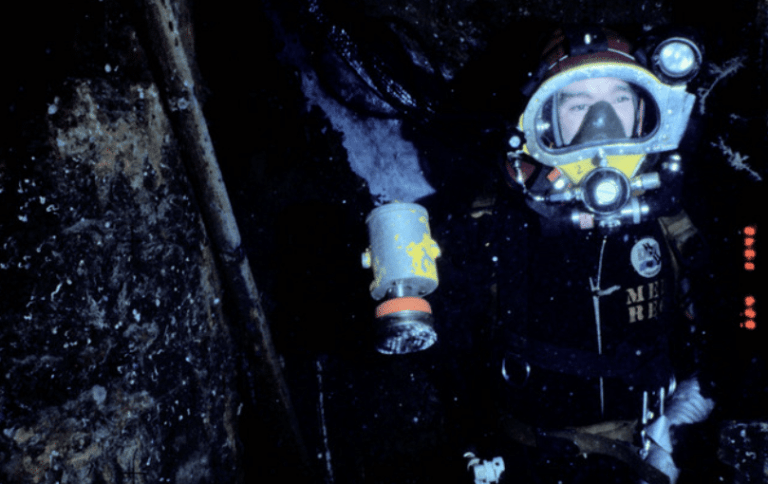
A person underwater wears a yellow and black commercial diving helmet with a clear visor, metal fittings, and a blue suit, surrounded by a blue-green aquatic environment.

Operational Limits vs Theoretical Limits

Dive tables and algorithms provide theoretical limits based on models of gas absorption and elimination. However, these models cannot account for all real-world variables.

Environmental conditions, diver behaviour, and physiological variability all influence outcomes. Operating at the edge of theoretical limits reduces margin for error.

Effective diving requires operating within practical limits, which are more conservative than theoretical maximums.

At N9BO℠, we train divers to plan within controlled margins, ensuring that variability and uncertainty are accounted for.


Balancing Depth, Time, and Workload

Safe diving requires balancing multiple variables simultaneously. Depth, time, gas selection, workload, and environmental conditions all interact to define the operational envelope.

Effective planning considers:

  • Depth relative to gas mix and density
  • Time relative to decompression and cumulative exposure
  • Workload relative to breathing demand and stress
  • Environmental factors such as temperature and current

No single factor defines the limit. It is the combination that determines safety.

At N9BO℠, we approach dive planning as an integrated process, ensuring that all variables are considered together rather than in isolation.


Operational Mindset

Diving limits are not fixed numbers. They are dynamic boundaries defined by physiology, environment, and behaviour. Understanding these limits requires more than memorising tables or following algorithms.

It requires awareness of how pressure and time interact, how the body responds, and how conditions influence performance.

At N9BO℠, we emphasise disciplined planning, conservative decision-making, and continuous assessment. These principles ensure that divers operate within manageable limits, maintaining both safety and performance.

In diving, exceeding limits rarely occurs suddenly. It develops gradually through small decisions, extended exposure, and reduced margins.

Understanding what truly limits divers is what prevents those boundaries from being crossed.

A scuba diver underwater makes a heart shape with their hands above a coral reef, with other divers visible in the background and marine life swimming nearby.


Know Your Limits Before You Reach Them


Contact N9BO℠ to integrate advanced dive planning and physiology into your training, ensuring your divers operate safely within their true limits.


From the N9BO℠ Knowledge Base

Share this

Nitrogen Narcosis Revisited: What We Still Misunderstand

Reframing Nitrogen Narcosis

Nitrogen narcosis is a physiological effect caused by increased partial pressure of nitrogen at depth. As pressure increases, nitrogen dissolves into neural tissues, altering signal transmission in the central nervous system. The result is a spectrum of cognitive and behavioural impairment.

Despite being widely taught, narcosis is often underestimated. It is frequently treated as predictable, gradual, and manageable. In reality, its effects vary significantly between individuals, environments, and dive conditions.

At N9BO℠, we treat nitrogen narcosis as a performance-limiting factor that directly affects judgement, awareness, and control—not as a benign or predictable condition.


Variability and Unpredictability

One of the most misunderstood aspects of nitrogen narcosis is its variability. There is no fixed depth at which narcosis begins, nor a consistent progression of symptoms.

Factors influencing susceptibility include:

  • Individual physiology and tolerance
  • Fatigue and stress levels
  • Environmental conditions such as visibility and temperature
  • Workload and task complexity

Two divers at the same depth may experience significantly different levels of impairment. Even the same diver may experience different effects on different dives.

This variability creates risk. Divers may rely on previous experience to assess current conditions, assuming that tolerance remains constant. This assumption is unreliable.

At N9BO℠, we emphasise that narcosis must be treated as a variable condition, not a fixed threshold.


Cognitive Impairment and Decision-Making

The most critical impact of nitrogen narcosis is cognitive impairment. This affects the ability to process information, make decisions, and respond appropriately to changing conditions.

Common effects include:

  • Slowed reaction time
  • Reduced attention and situational awareness
  • Impaired judgement and risk assessment
  • Difficulty performing complex tasks

These effects directly influence safety. A diver may recognise a problem but fail to respond effectively, or may fail to recognise the problem entirely.

Narcosis also reduces the ability to self-assess. Divers may feel comfortable or confident while their performance is degraded. This false confidence is a significant hazard.

At N9BO℠, we focus on the impact of narcosis on decision-making, recognising that most incidents are linked to impaired judgement rather than physical limitation.

A person in protective gear performs underwater welding against a metal surface, visible through a window or glass pane.

The Illusion of Control

A common misconception is that experienced divers are less affected by narcosis. While familiarity with depth may reduce anxiety, it does not eliminate physiological effects.

Experience can create an illusion of control. Divers may believe they are functioning normally because they are comfortable in the environment. However, comfort does not equate to cognitive clarity.

This is particularly relevant in repetitive operations. Divers who frequently operate at depth may normalise the effects of narcosis, failing to recognise subtle impairment.

Indicators of this illusion include:

  • Overconfidence in decision-making
  • Reduced adherence to procedures
  • Acceptance of degraded performance as normal

At N9BO℠, we emphasise that experience does not remove narcosis—it often masks it.


Depth, Gas, and Risk Management

Nitrogen narcosis is directly related to the partial pressure of nitrogen. As depth increases, so does the narcotic effect. Managing narcosis therefore involves controlling nitrogen exposure.

This is achieved through:

  • Limiting depth when using air
  • Reducing nitrogen fraction through gas selection
  • Using helium-based mixes to lower narcotic load

Trimix diving is specifically designed to reduce narcosis by replacing a portion of nitrogen with helium, which has significantly lower narcotic potential.

However, gas selection must be aligned with dive objectives and training. Simply reducing narcosis without considering other factors, such as decompression or oxygen exposure, introduces additional risk.

At N9BO℠, gas planning is treated as an integrated process, balancing narcosis, density, and decompression requirements.


Task Loading and Environmental Influence

Narcosis does not occur in isolation. Its effects are amplified by task loading and environmental conditions.

Factors that increase operational risk include:

  • Complex tasks requiring precision or coordination
  • Low visibility environments
  • Strong currents or challenging conditions
  • High cognitive demand from multiple simultaneous tasks

As task load increases, the impact of narcosis becomes more pronounced. Tasks that are manageable at shallow depth may become difficult or unsafe at depth.

Managing task load is therefore critical. Simplifying procedures, reducing unnecessary complexity, and maintaining clear task priorities all contribute to safer operations.

At N9BO℠, we integrate task management into dive planning, recognising its direct interaction with narcosis.

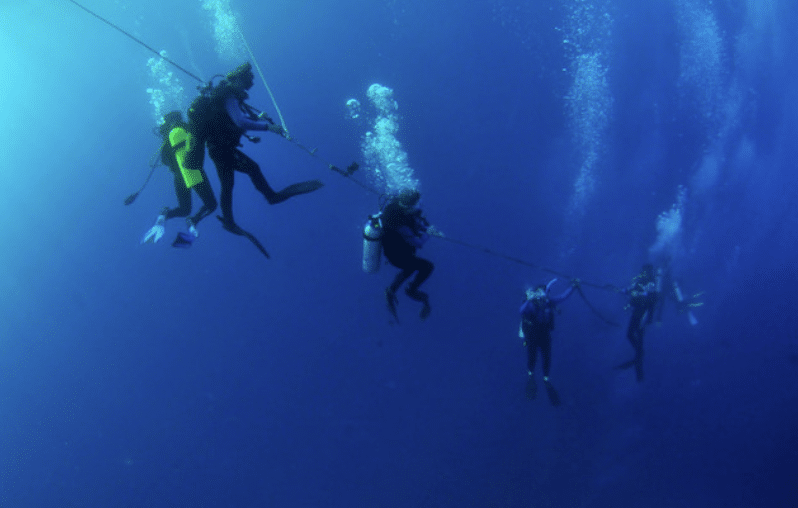
Six scuba divers descend underwater, holding onto a horizontal rope with bubbles rising to the surface against a deep blue ocean background.

Recognition and Self-Monitoring

Recognising narcosis is inherently difficult because it affects the ability to self-assess. Divers may not be aware that their performance is degraded.

Common indicators include:

  • Difficulty concentrating or completing simple tasks
  • Delayed responses to signals or instructions
  • Unusual confidence or inappropriate decision-making
  • Changes in communication clarity

Team awareness plays a critical role. Divers must monitor each other for behavioural changes and intervene when necessary.

Effective response to narcosis is straightforward:

  • Ascend to a shallower depth
  • Reduce task load
  • Stabilise and reassess

At N9BO℠, we train divers to recognise both personal and team indicators, ensuring early intervention.


Beyond the “Drunk Diver” Concept

The common comparison of narcosis to alcohol intoxication is misleading. While it may help explain the concept, it oversimplifies the operational risk.

Narcosis does not present uniformly. It does not always produce obvious symptoms, and it does not guarantee that a diver will recognise impairment.

More importantly, it affects critical functions—judgement, awareness, and decision-making—rather than just behaviour.

At N9BO℠, we move beyond simplified explanations and focus on operational impact, ensuring that divers understand the real consequences.


Operational Mindset

Nitrogen narcosis is not an abstract concept. It is a predictable physiological response with variable presentation and significant operational consequences.

Managing it requires awareness, planning, and discipline. Divers must recognise that impairment can occur without warning and that confidence is not an indicator of performance.

Effective control involves limiting exposure, managing task load, and maintaining team awareness. Without these controls, narcosis becomes a contributing factor in decision-making failure.

At N9BO℠, we treat narcosis as a controllable risk factor. It cannot be eliminated entirely, but it can be managed through structured planning and operational discipline.

In diving, clarity of thought is as critical as physical capability. Narcosis directly affects that clarity.

Two scuba divers underwater wearing masks and wetsuits, making the OK hand signal towards the camera with bubbles rising around them in clear blue water.


Reduce Impairment, Maintain Control


Contact N9BO℠ to integrate advanced diving physiology and risk management into your training, ensuring your divers can recognise and manage narcosis effectively.


From the N9BO℠ Knowledge Base


Share this

Gas Density and Work of Breathing: Why It Matters in Deep Diving

Understanding Gas Density in Diving

Gas density is a fundamental factor in diving physiology and equipment performance. As ambient pressure increases with depth, the density of the breathing gas increases proportionally. This means that at depth, each breath contains more mass, making it harder to move gas through the airways and the regulator.

This increase is not gradual in its effect. While divers may not notice significant changes in shallow depths, the impact becomes pronounced as depth increases, particularly beyond recreational limits and into technical diving ranges.

At N9BO℠, we treat gas density as a primary operational parameter in deep diving, not a theoretical concept. It directly influences breathing effort, carbon dioxide retention, and overall diver safety.


Work of Breathing and Its Consequences

Work of breathing (WOB) refers to the effort required to inhale and exhale. As gas density increases, this effort rises. Regulators must deliver denser gas, and the diver must overcome greater resistance in both the equipment and their own respiratory system.

The consequences are not limited to discomfort. Increased work of breathing leads to elevated carbon dioxide (CO₂) levels due to inefficient ventilation. This is a critical factor, as CO₂ retention is a primary contributor to multiple diving incidents.

Elevated CO₂ can result in:

  • Increased breathing rate and perceived air hunger
  • Reduced cognitive performance and impaired decision-making
  • Heightened susceptibility to nitrogen narcosis
  • Increased risk of panic and loss of control

These effects compound quickly. What begins as slightly increased effort can escalate into a critical situation if not managed early.

At N9BO℠, we emphasise that CO₂ management is central to safe deep diving, and gas density is a key driver of that risk.


Depth, Pressure, and Density Relationship

The relationship between depth and gas density is directly linked to ambient pressure. As pressure increases, gas molecules are compressed into a smaller volume, increasing density.

This means that:

  • At 30 metres, gas density is approximately four times that at the surface
  • At 60 metres, it is approximately seven times greater
  • At 100 metres, the increase becomes operationally critical

This exponential effect explains why gas that feels manageable at shallow depths becomes difficult to breathe at greater depths. The regulator may still function correctly, but the physical effort required increases significantly.

At N9BO℠, we ensure that divers understand this relationship in practical terms, not just theoretical values.

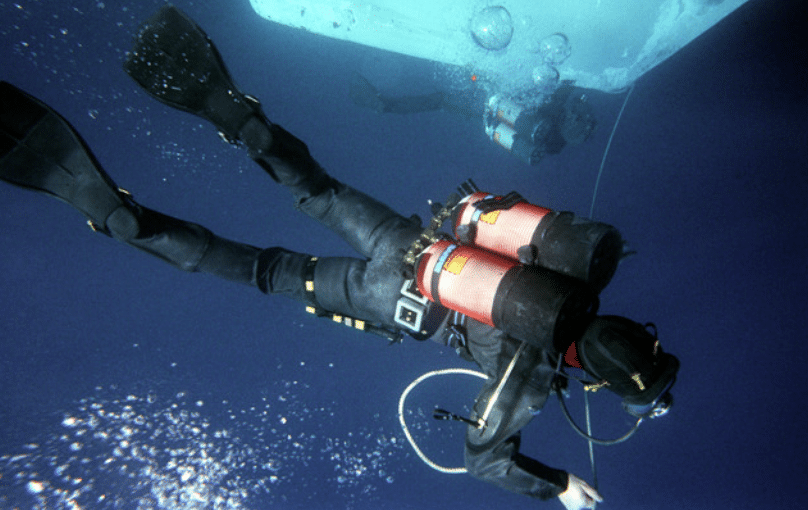
A scuba diver in a wetsuit and fins swims underwater near a large object, holding a rope. Bubbles rise towards the surface, and another diver is visible in the background.

Gas Selection and Density Management

Managing gas density is primarily achieved through gas selection. Different gases have different molecular weights, which directly influence density.

Air, composed largely of nitrogen and oxygen, becomes increasingly dense at depth. To reduce density, lighter gases such as helium are introduced into the breathing mix. This is the basis of trimix diving.

The objective is to maintain gas density within manageable limits to reduce work of breathing and CO₂ retention.

Operational considerations include:

  • Selecting gas mixes appropriate for planned depth
  • Avoiding excessive nitrogen fractions at depth
  • Incorporating helium to reduce overall density

At N9BO℠, gas planning is approached as a risk management process. Density limits are considered alongside oxygen exposure and decompression requirements.


Operational Limits and Industry Guidance

There are accepted operational thresholds for gas density. While exact values may vary depending on training agency and context, general guidance suggests that gas density should remain below approximately 6 g/L for working portions of the dive, with lower values preferred.

Exceeding these limits increases the likelihood of:

  • Elevated work of breathing
  • CO₂ retention
  • Reduced diver performance
  • Increased incident probability

These limits are not theoretical recommendations. They are based on physiological response and incident analysis.

At N9BO℠, we incorporate conservative density limits into dive planning to ensure that divers operate within manageable physiological boundaries.


Equipment Considerations

While gas density is primarily a function of depth and gas composition, equipment performance also plays a role. Regulators must deliver gas efficiently under increased demand and pressure.

Poorly maintained or inappropriate equipment increases resistance, compounding the effects of high gas density. This further elevates work of breathing and accelerates CO₂ buildup.

Key equipment considerations include:

  • High-performance regulators rated for deep or technical diving
  • Proper maintenance and servicing
  • Hose routing and configuration that minimises resistance

However, equipment cannot compensate for excessive gas density. It can only reduce additional resistance.

At N9BO℠, we emphasise that equipment supports performance, but gas selection determines physiological limits.

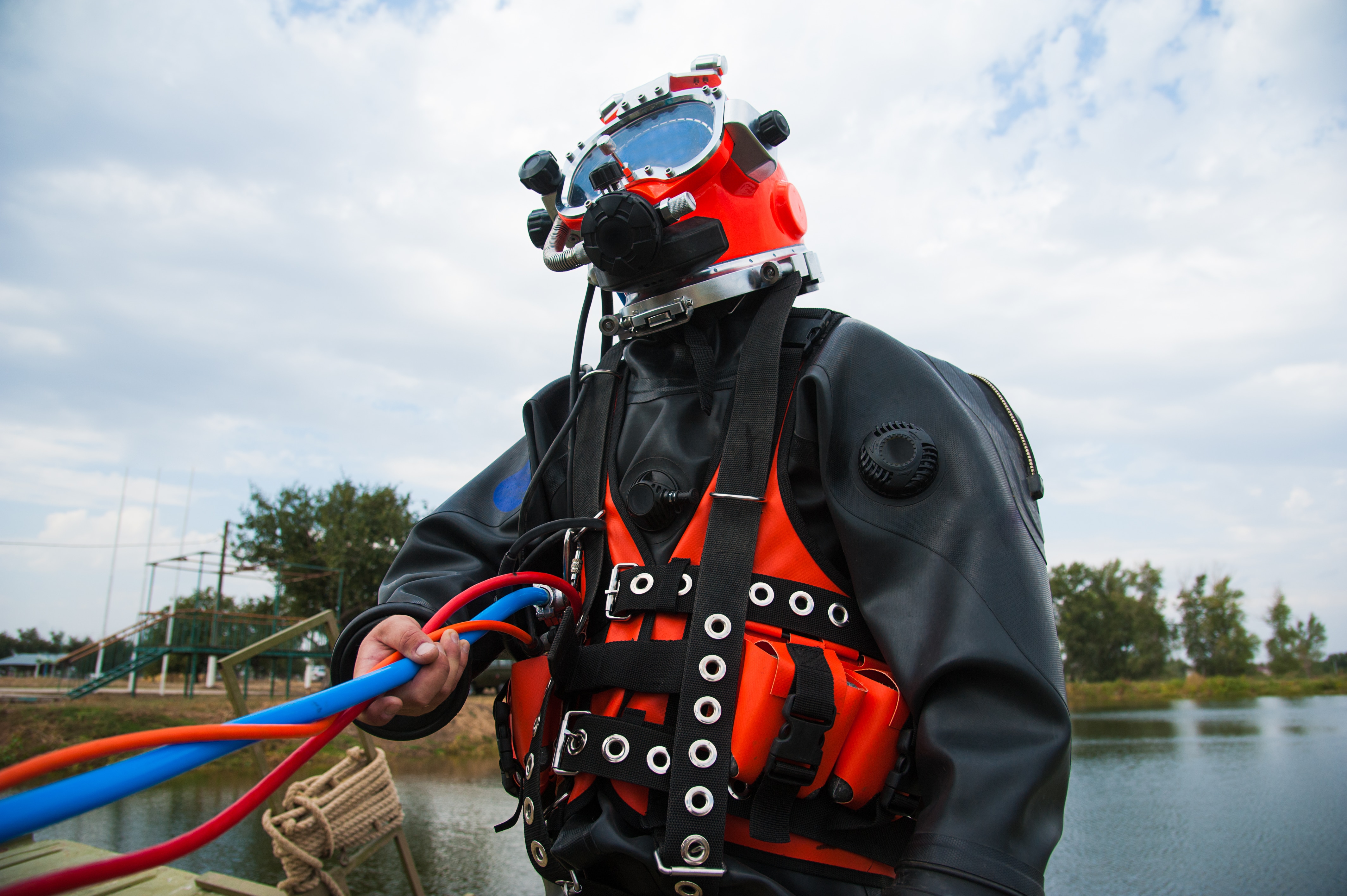
A person wearing a red diving helmet and black wetsuit holds colourful hoses beside a body of water, with trees and a cloudy sky in the background.

Workload and Environmental Factors

Work of breathing is not determined by gas density alone. Physical workload and environmental conditions significantly influence respiratory demand.

Factors that increase breathing demand include:

  • Current or surge requiring physical effort
  • Task loading, such as carrying equipment or performing work
  • Stress and anxiety increasing breathing rate
  • Poor trim or inefficient movement

When combined with high gas density, these factors can rapidly lead to CO₂ retention and loss of control.

Managing workload is therefore a critical component of deep diving safety. Reducing unnecessary exertion, maintaining efficient movement, and controlling stress all contribute to maintaining manageable breathing effort.

At N9BO℠, we integrate workload management into dive planning, recognising its direct impact on respiratory physiology.


Recognition and Early Intervention

One of the challenges with increased work of breathing is that it can develop gradually. Divers may not immediately recognise the onset of CO₂ retention or increased respiratory effort.

Early indicators include:

  • Unusual shortness of breath
  • Increased breathing rate without corresponding workload
  • Difficulty maintaining calm, controlled breathing
  • Reduced clarity of thought

Ignoring these signs allows the situation to escalate. Early intervention is essential.

Appropriate responses may include:

  • Reducing workload immediately
  • Ascending to a shallower depth
  • Signalling the team and stabilising the situation

At N9BO℠, we train divers to recognise these indicators early and respond before escalation occurs.


Operational Mindset

Gas density and work of breathing are often underestimated because they are not immediately visible. However, they are critical factors in deep diving safety and performance.

Understanding the relationship between depth, gas composition, and physiological response allows divers to plan effectively and operate within safe limits. Without this understanding, risk increases significantly, particularly in deeper or more demanding environments.

At N9BO℠, we approach deep diving with a focus on controllable variables. Gas selection, workload management, and awareness of physiological limits are treated as core safety factors.

In deep diving, the ability to breathe efficiently is not guaranteed. It must be planned, managed, and continuously monitored.

A scuba diving kit, including fins, a diving mask with a regulator, pressure gauges, and a black waistcoat, is laid out on a wooden floor.


Plan Your Gas, Control Your Dive


Contact N9BO℠ to integrate advanced gas planning and deep diving physiology into your training, ensuring your divers operate safely within their limits.


From the N9BO℠ Knowledge Base


Share this

Tides, Currents, and Waves: Understanding the Water Before You Enter It

Tides, Currents, and Waves:

Water Is Never Static

Many divers focus on:

  • Depth.
  • Gas planning.
  • Equipment configuration.

Yet the water itself is:

Moving.
Shifting.
Reacting to celestial forces and weather systems.

Understanding water movement means understanding:

  • Tides (vertical movement).
  • Currents (horizontal flow).
  • Waves (surface energy transfer).

These forces combine.

And they change.


Tides: The Vertical Shift

Tides are caused primarily by:

  • Gravitational pull of the moon.
  • Gravitational influence of the sun.
  • Earth’s rotation.

They create:

  • Rising water (flood tide).
  • Falling water (ebb tide).
  • Slack water (minimal movement).

Slack tide often provides:

Calmer diving conditions.

But slack windows are brief.

Professional planning includes:

Knowing tidal charts.
Predicting shift timing.
Understanding local anomalies.

Not all locations follow textbook models.


Currents: The Horizontal Force

Currents result from:

  • Tidal flow.
  • Wind-driven surface movement.
  • Thermohaline circulation.
  • River outflow.
  • Geographic constriction.

Currents can:

  • Increase gas consumption.
  • Separate teams.
  • Shift search patterns.
  • Alter descent lines.
  • Increase task loading.

A current that appears mild at surface may intensify at depth.

Professional divers evaluate:

Direction.
Strength.
Consistency.
Change over time.


Waves: Surface Energy Transfer

Waves are primarily:

Wind-generated.

They affect:

  • Entry timing.
  • Exit strategy.
  • Boat stability.
  • Diver fatigue.

Large waves do not necessarily indicate strong current.

But wave height increases:

  • Surface instability.
  • Re-boarding difficulty.
  • Risk of head impact.
  • Propeller hazards in small craft.

Wave period matters as much as wave height.

Short, choppy seas increase risk more than long swells.

Waves crash against a rocky shore, with white foam swirling over dark, wet stones in the foreground and choppy grey water extending into the distance.

The Interaction Effect

Tides, currents, and waves interact.

Example:

  • Strong ebb tide opposing wind direction.
  • Creates steep, chaotic surface conditions.
  • Increases boat handling difficulty.
  • Alters underwater flow unpredictably.

Environmental forces rarely operate in isolation.

Professionals assess the full system.


Planning for Tidal Windows

Certain dive sites:

  • Wreck penetrations.
  • Narrow channels.
  • Coastal pinnacles.
  • Cave entrances.

Are safe only at:

Specific tidal windows.

Entering outside optimal window may result in:

  • Increased exertion.
  • Limited exit options.
  • Elevated stress.
  • Aborted dive.

Timing is safety.


Current Management Underwater

In current, divers must:

  • Streamline body position.
  • Maintain tight team formation.
  • Reduce drag.
  • Use natural structures for shelter.
  • Avoid overexertion.

Overexertion increases:

CO₂ retention.
Breathing rate.
Panic susceptibility.

Gas planning must account for:

Increased workload.

Currents amplify small mistakes.


Surface Drift Considerations

Drift diving requires:

  • Surface marker deployment.
  • Boat coordination.
  • Visual contact maintenance.
  • Exit discipline.

Improper planning leads to:

Extended surface separation.
Search operations.
Operational embarrassment.

Drift management is procedural.

Not reactive.


Waves and Small Boat Operations

For small boat teams:

  • Waves affect trim.
  • Load shift becomes critical.
  • Boarding becomes hazardous.
  • Equipment staging must be secure.

Professional seamanship includes:

Reading wave sets.
Timing movement.
Maintaining low centre of gravity.

Boat discipline is part of diving safety.


Human Factors and Water Movement

Environmental instability increases:

Cognitive load.
Anxiety.
Fatigue.

Professionals must:

Slow decisions.
Increase communication.
Reinforce team discipline.

Water movement amplifies stress.

Training must prepare divers to remain calm within it.

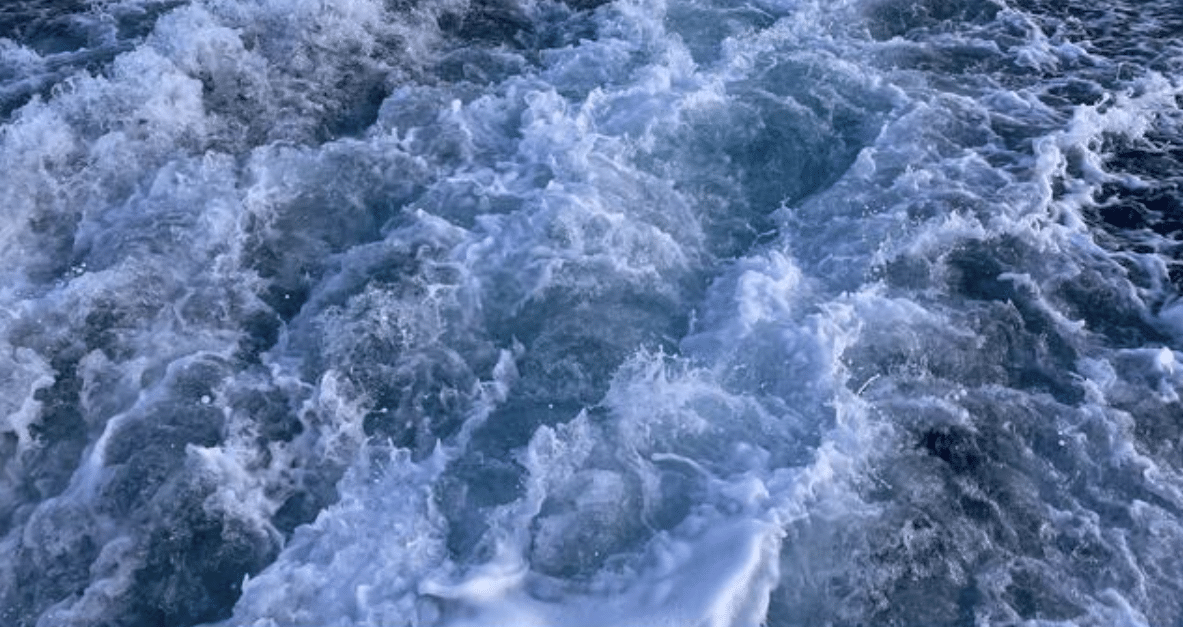
Churning ocean water creates foamy white waves and swirling patterns, likely from the wake of a boat moving through deep blue water.

Search and Rescue Context

In public safety diving:

Currents affect:

  • Body drift patterns.
  • Evidence location.
  • Search grid integrity.
  • Recovery planning.

Understanding hydrodynamics improves:

Search accuracy.

Surface observation informs subsurface prediction.

At N9BO℠, environmental literacy is integrated into both technical and operational training — because professionals do not react to water; they interpret it.


Environmental Respect

Ignoring tides and currents leads to:

  • Overexertion.
  • Rapid gas depletion.
  • Unplanned ascents.
  • Team separation.
  • Increased incident probability.

Respecting water dynamics:

Reduces surprise.

Reduces fatigue.

Reduces risk.


Training Implications

Divers should practise in:

  • Mild current.
  • Moderate drift.
  • Controlled surge environments.

Exposure builds:

Confidence.
Adaptability.
Realistic judgement.

Comfort in static conditions does not equal competence in dynamic water.


Final Perspective

Tides move vertically.

Currents move horizontally.

Waves transfer energy.

Together, they define:

Operational context.

Professional divers:

Study water before entering it.

Because the most dangerous assumption underwater is:

That conditions will remain the same.

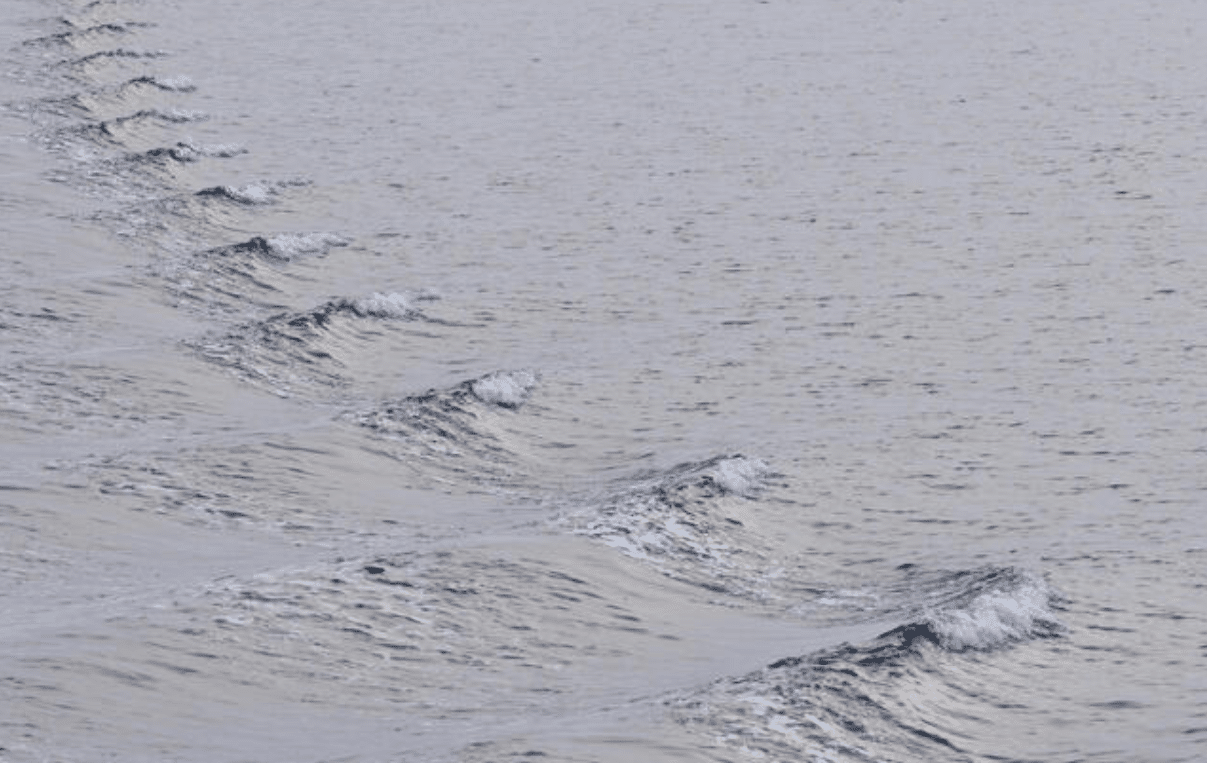
Rows of small, evenly spaced waves ripple across a calm, light-grey body of water, creating a pattern that stretches diagonally into the distance under a soft, cloudy sky.


Want to Improve Your Environmental Awareness Underwater?


Understanding tides, currents, and waves strengthens safety and decision-making. Contact N9BO℠ to develop real-world environmental competence.


From the N9BO℠ Knowledge Base


Share this

Collar BCDs and the Fenzy: When Buoyancy Control Began to Evolve

Before the Modern BCD

In the early days of scuba diving:

Divers had:

  • A tank.
  • A regulator.
  • A mask.
  • Fins.

What they did not have was:

True underwater buoyancy control.

Weight systems were basic.

Flotation was minimal.

As diving expanded, the need for surface flotation and limited buoyancy adjustment became clear.

Enter the collar BCD.


What Was a Collar BCD?

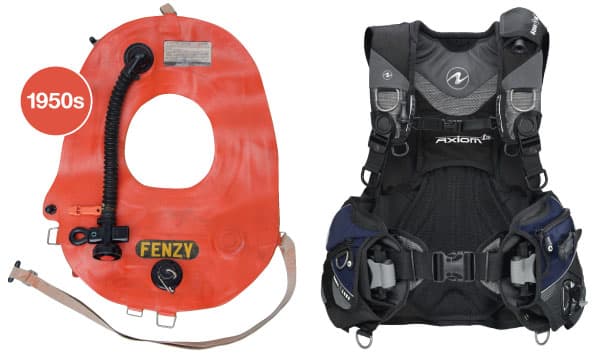
A collar BCD — such as the Fenzy — was:

  • An inflatable ring worn around the neck and chest.
  • Designed primarily for surface flotation.
  • Inflated manually via low-pressure hose or oral inflator.

It looked similar to:

A life jacket collar.

When inflated:

  • It lifted the diver’s head above water.
  • Provided surface stability.
  • Offered some buoyancy compensation underwater.

It was a significant step forward.

But it had limitations.


The Fenzy System

The Fenzy brand became synonymous with collar BCDs.

Its popularity in the 1960s and 1970s marked:

A transition from no buoyancy system to basic adjustable flotation.

The Fenzy allowed divers to:

  • Add buoyancy during ascent.
  • Improve surface comfort.
  • Compensate for suit compression.

However:

Buoyancy distribution was uneven.

Inflation occurred high on the body.

This affected trim and stability.

Side-by-side comparison of a vintage orange Fenzy buoyancy compensator from the 1950s and a modern black Axiom scuba buoyancy control device with shoulder straps and multiple features.

Buoyancy Distribution Challenges

Collar BCDs created buoyancy around:

  • The neck.
  • Upper chest.

Underwater, this often caused:

  • Head-up positioning.
  • Vertical instability.
  • Difficulty achieving horizontal trim.

Divers had less control compared to modern systems.

Underwater buoyancy became reactive rather than precise.

Control was possible — but limited.


Surface Flotation: The Primary Strength

At the surface, collar BCDs were effective.

They:

  • Kept the diver upright.
  • Supported the head above water.
  • Reduced fatigue while waiting for pickup.

In the early era of diving:

Surface flotation was the primary need.

Underwater precision had not yet become standardised training philosophy.

Safety at the surface was prioritised.

Trim underwater was secondary.


The Evolution Toward Jacket and Wing Systems

As diving progressed:

Training standards emphasised:

  • Neutral buoyancy.
  • Horizontal trim.
  • Propulsion efficiency.
  • Environmental awareness.

Collar BCDs could not provide:

  • Even buoyancy distribution.
  • Stable horizontal position.
  • Precise gas placement control.

The industry shifted toward:

  • Jacket-style BCDs (wraparound air cells).
  • Back-inflation systems.
  • Wing-style technical systems.

Buoyancy control became refined.

Trim became intentional.

Underwater movement improved.


What Collar BCDs Taught the Industry

Early systems demonstrated:

  1. Divers need adjustable buoyancy.
  2. Surface safety matters.
  3. Equipment affects posture and stability.
  4. Design influences performance.

Even with limitations, the Fenzy era advanced safety culture.

It introduced the idea that buoyancy should be adjustable.

That concept remains central today.


Lessons for Modern Divers

Understanding equipment history builds perspective.

Modern divers benefit from:

  • Distributed buoyancy systems.
  • Balanced trim.
  • Controlled ascent management.
  • Efficient propulsion.

These features did not emerge automatically.

They evolved from early experimentation.

Every modern wing or jacket BCD reflects lessons learned from collar systems.

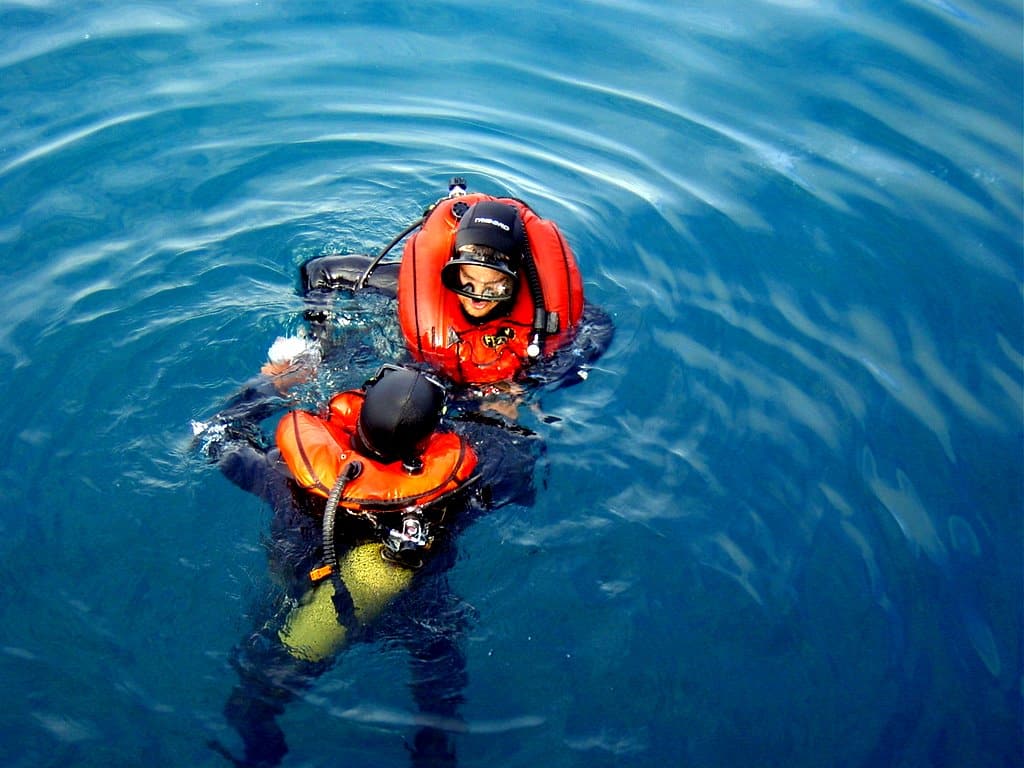
Two people wearing diving gear and orange life jackets float in deep blue water. One appears to be assisting the other, who is on their back facing upward. The water around them is calm with gentle ripples.

Buoyancy Control as Foundational Skill

Today, buoyancy is taught as:

  • Core skill.
  • Safety requirement.
  • Environmental responsibility.

Modern systems allow:

  • Fine-tuned gas management.
  • Stable horizontal posture.
  • Reduced effort swimming.

This was not possible with collar BCDs.

Innovation refined control.

Control increased safety.


From Survival to Performance

Collar BCDs were primarily about:

Surface survival.

Modern BCDs are about:

Underwater performance.

The shift reflects:

  • Increased training standards.
  • Technical diving progression.
  • Environmental awareness.
  • Professional safety culture.

Equipment evolution mirrors mindset evolution.


Why This History Matters

At N9BO℠, we emphasise understanding:

Why equipment evolved.

When divers understand:

  • Buoyancy distribution.
  • Trim mechanics.
  • Gas placement logic.

They make better configuration choices.

Modern wings, backplates, and technical systems did not replace collar BCDs for style.

They replaced them for performance and safety.

Innovation followed necessity.


Appreciating the Fenzy Legacy

The Fenzy collar BCD represents:

  • Early adaptation.
  • Practical safety improvement.
  • Transitional engineering.

It paved the way for modern buoyancy control.

Without it, today’s systems might look very different.

History informs progress.

Progress improves margin.

Five brightly coloured buoyancy control devices hang on a wall, alongside diving masks, hoses, and other scuba equipment, all organised neatly for easy access.


Want to Master Modern Buoyancy Control?


Buoyancy evolution shows why configuration and trim matter. Contact N9BO℠ to refine your buoyancy skills through structured, safety-focused training.


From the N9BO℠ Knowledge Base

Share this

The Cressi Pinocchio Mask: A Small Innovation That Changed Diving Forever

Before the Nose Pocket

Early diving masks were simple glass lenses with rubber skirts.

They allowed vision underwater.

They did not allow easy equalisation.

Divers had to:

  • Break the seal.
  • Use awkward techniques.
  • Struggle with descent control.

Equalising middle ear pressure was more difficult and less precise.

Descents were slower.

Depth progression was limited.

Discomfort was common.

Then came a simple idea.


The Innovation of the Pinocchio

In 1952, Cressi introduced the Pinocchio mask.

Its defining feature:

A protruding nose pocket.

This allowed divers to:

  • Pinch their nose directly.
  • Perform Valsalva manoeuvre easily.
  • Equalise efficiently.
  • Descend smoothly.

The change seems obvious today.

At the time, it was revolutionary.

Control of internal pressure became accessible.

Comfort improved.

Depth became manageable.


Why Equalisation Matters

When a diver descends:

  • Ambient pressure increases.
  • Air spaces compress.
  • Middle ear pressure must be equalised.

Failure to equalise leads to:

  • Pain.
  • Barotrauma.
  • Eardrum rupture.
  • Abort of dive.

The nose pocket allows:

  • Direct control.
  • Precise equalisation timing.
  • Small incremental adjustments.

Good equalisation reduces stress.

Reduced stress improves performance.

Performance improves safety.

A black diving mask with clear toughened glass lenses and an adjustable strap, designed for underwater activities such as snorkelling or scuba diving.

The Mask as a Pressure Space

The mask itself is an air space.

As depth increases:

  • Mask volume compresses.
  • Skirt pushes against face.
  • “Mask squeeze” may occur.

Divers must exhale gently into the mask to equalise it.

The Pinocchio design made this easier.

Mask management became intuitive.

Small innovation.

Large effect.


How a Mask Shaped Modern Training

Today, equalisation is taught from:

  • First pool session.
  • Confined water drills.
  • Open water descents.

Students learn:

  • Equalise early.
  • Equalise often.
  • Never force equalisation.

This training philosophy is possible because:

The mask allows direct nose access.

Without the nose pocket, equalisation would remain awkward.

A small design shift influenced decades of training standards.


Impact on Professional Diving

The Pinocchio mask influenced:

  • Recreational diving expansion.
  • Military diver training.
  • Commercial diver comfort.
  • Scientific exploration.

Ease of equalisation enabled:

  • Controlled descent rates.
  • Greater depth confidence.
  • Reduced ear injury incidence.

Design improved safety indirectly.

Engineering shapes physiology management.


Human Factors and Comfort

Comfort reduces:

  • Anxiety.
  • Task loading.
  • Breathing irregularity.

When equalisation is smooth:

  • Divers relax.
  • Gas consumption stabilises.
  • Situational awareness improves.

A poorly fitting mask increases stress.

A well-designed mask supports performance.

The mask is not cosmetic.

It is functional life-support equipment.

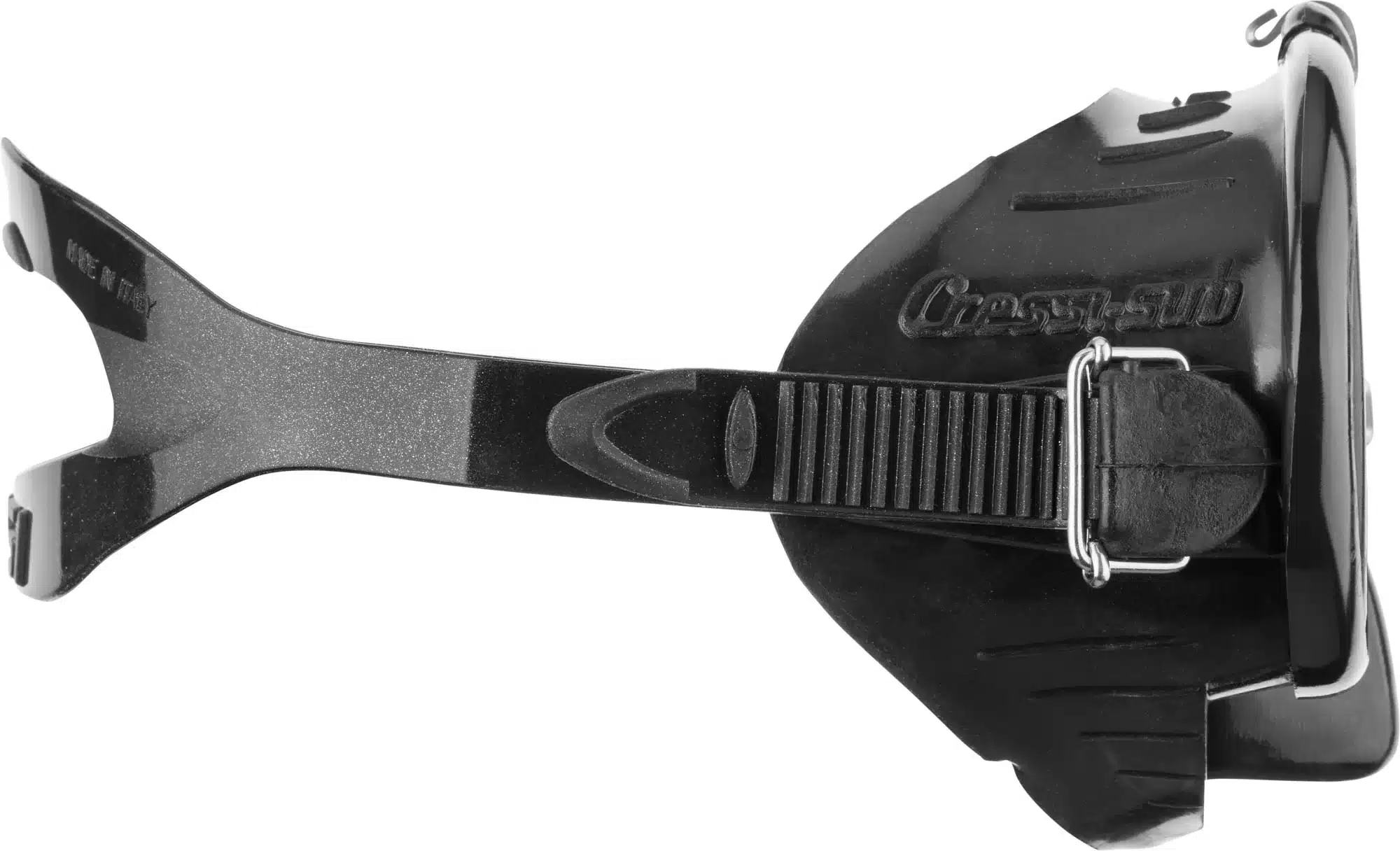
A black Cressi-Sub diving mask shown from the side, displaying the adjustable strap and buckle system.

Why This Still Matters Today

Modern masks differ in:

  • Low-volume design.
  • Tempered glass strength.
  • Silicone skirt flexibility.
  • Field-of-view enhancement.

Yet the fundamental concept introduced by the Pinocchio remains standard.

Every modern dive mask:

Includes a nose pocket.

Innovation becomes invisible once normalised.

The best designs fade into assumed necessity.


The Link Between Equipment and Evolution

Diving history shows:

Small changes enable large progress.

  • The regulator enabled autonomy.
  • The BCD enabled buoyancy control.
  • The nose pocket enabled pressure management.

Equipment evolution supports:

  • Safer training.
  • Deeper exploration.
  • Broader access.

Technology and training evolve together.


Respecting Foundational Innovation

The Cressi Pinocchio mask reminds us:

Not all breakthroughs are dramatic.

Sometimes safety improves because:

A simple mechanical solution solves a physiological problem.

Design matters.

Understanding equipment history improves appreciation of modern safety culture.

At N9BO℠, we emphasise that even fundamental gear choices influence diver comfort, stress levels, and long-term progression.

Small details matter underwater.


From Simplicity to Standard

Today, divers rarely think about:

Why masks have nose pockets.

They simply equalise.

Descend.

Continue their dive.

But the ability to descend comfortably is foundational.

Without it, diving would remain limited.

Innovation unlocked possibility.

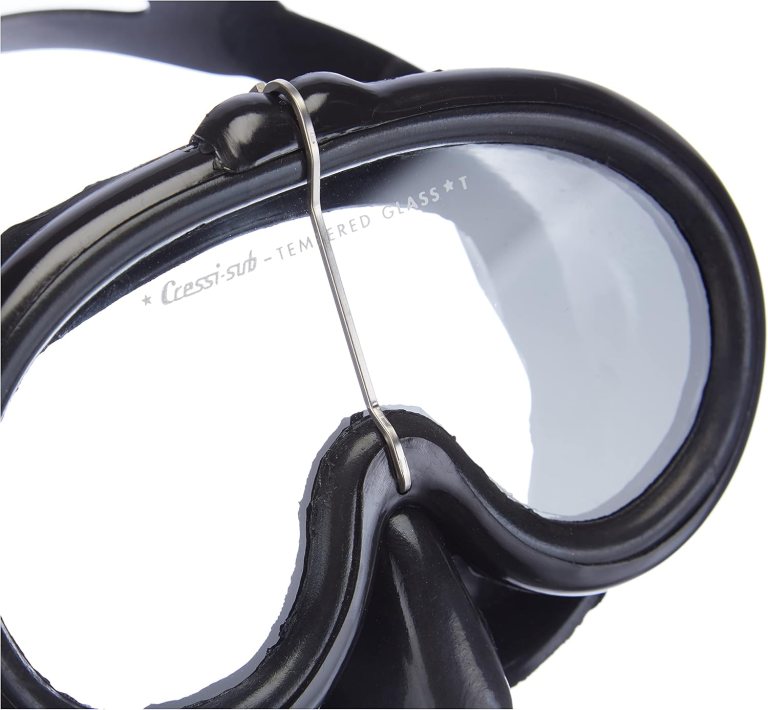
Close-up of a black diving mask with the words Cressi-sub - Toughened Glass printed on the lens. A thin wire is attached to the mask, resting between the lenses.


Want to Build Strong Diving Fundamentals?


Equipment understanding begins with the basics. Contact N9BO℠ to start or refine your diving journey with structured, safety-focused training.


From the N9BO℠ Knowledge Base

Share this

The Ideal Gas Law: The Formula That Governs Every Dive

Physics Does Not Care About Experience

The ocean does not adapt to divers.

Gas obeys physical laws regardless of certification level, confidence, or intent. The Ideal Gas Law governs every breath you take underwater, whether you acknowledge it or not.


The Ideal Gas Law Explained

The Ideal Gas Law is expressed as:

PV = nRT

Where:

  • P = Pressure
  • V = Volume
  • n = Amount of gas (moles)
  • R = Gas constant
  • T = Temperature (Kelvin)

This single equation links all gas behaviour relevant to diving.


Pressure and Volume: Why Buoyancy Changes

As pressure increases with depth, gas volume decreases.

This explains:

  • BCD compression
  • Wetsuit squeeze
  • Lung volume reduction

Ignoring this relationship leads to uncontrolled ascents or descents.


Gas Consumption and Depth

Gas density increases with pressure.

At depth:

  • Each breath contains more molecules
  • Gas is consumed faster
  • Work of breathing increases

This is not a regulator issue—it is physics.

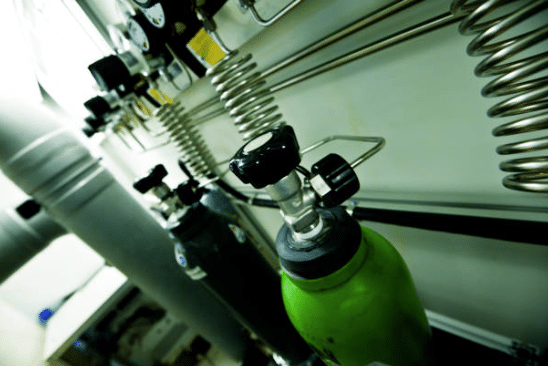
Close-up of gas cylinders connected to a wall-mounted system with coiled metal tubes, valves, and gauges in a laboratory or industrial setting. The focus is on a green cylinder in the foreground.

Instructor Perspective: Memorisation vs Understanding

Many divers memorise “rules of thumb” without understanding why they work.

At N9BO℠, physics is taught conceptually so divers can adapt when conditions change—rather than relying on fixed numbers.


Temperature Matters More Than You Think

Temperature affects pressure and volume.

Cold gas contracts, hot gas expands. This impacts:

  • Cylinder pressure readings
  • Compressor operations
  • Oxygen handling safety

Ignoring temperature introduces dangerous assumptions.


Gas Density and Narcosis

Increased gas density contributes to:

  • CO₂ retention
  • Increased work of breathing
  • Cognitive impairment

Understanding gas behaviour informs safer gas choices at depth.


Decompression and Gas Loading

While decompression models are complex, they rely on simple principles:

  • Gas dissolves under pressure
  • Gas comes out of solution during ascent

The Ideal Gas Law is part of this foundational framework.

Two scuba diving air cylinders with yellow mesh covers are surrounded by colourful red, yellow, and blue coiled cables against a blue background.

Equipment Design and Function

Regulators, cylinders, and valves are engineered around gas laws.

Failures often occur when divers misuse equipment without understanding these constraints.


Why Technical Divers Must Know This

Technical diving magnifies gas effects:

  • Higher pressures
  • Mixed gases
  • Longer exposures

Physics becomes operational, not theoretical.


The Professional Lesson

Divers who understand gas behaviour:

  • Plan more accurately
  • Respond better to anomalies
  • Avoid compounding errors

Knowledge reduces task loading under stress.


The Bottom Line

Every safe dive begins with physics.

The Ideal Gas Law is not academic—it is operational reality. At N9BO℠, gas physics is taught as a practical survival tool, ensuring divers understand why systems behave as they do under pressure.

Several scuba diving air cylinders, both black and white, are secured in a metal rack with hoses and gauges attached, ready for use.

Want to Understand the Physics Behind Diving?

A clear understanding of gas behaviour improves planning, safety, and decision-making underwater. Contact us to discuss training programmes that integrate theory with real diving practice.


From the N9BO℠ Knowledge Base

Share this
Facebook
Instagram
X (Twitter)
TikTok
Youtube
Whatsapp