Thinking Underwater Is a Physiological Act
Decision-making underwater does not happen in a vacuum. It is directly influenced by breathing, workload, buoyancy, and gas exchange.
When physiology degrades, cognition follows. Technical diving training recognises that poor decisions are often physiological failures long before they are cognitive ones.
Breathing Patterns and Cognitive Clarity
Rapid, shallow breathing increases carbon dioxide retention. Elevated CO₂ levels cause:
- Anxiety
- Tunnel vision
- Reduced problem-solving capacity
- Impaired judgement
Divers may feel “stressed” without realising the physiological cause. Advanced technical diving progression teaches controlled breathing as a cognitive stabiliser—not merely a comfort technique.
CO₂ Retention: The Invisible Saboteur
CO₂ is one of the most underestimated hazards in diving. Increased work of breathing, tight equipment, poor trim, or overexertion all contribute.
CO₂ narcosis mimics panic and poor judgement. Technical diving training teaches divers to recognise early symptoms and correct physiology before decision quality collapses.
Buoyancy as a Cognitive Load Multiplier
Poor buoyancy consumes attention. When divers constantly fight position, they have less mental capacity for awareness, communication, and problem-solving.
Advanced technical diving progression treats buoyancy control as a cognitive efficiency skill—not just a physical one.
The Feedback Loop Between Stress and Physiology
Stress increases breathing rate, which increases CO₂, which increases stress. This loop can escalate rapidly.
Breaking the loop requires deliberate physiological control. Technical diving training integrates breathing, trim, and pacing to interrupt this cycle early.
Why “Just Calm Down” Doesn’t Work
Instructors and teammates sometimes tell stressed divers to “relax.” This advice is ineffective without physiological intervention.
Calmness follows controlled breathing—not the other way around. Advanced technical diving progression teaches divers to fix physiology first, cognition second.
Instructor Perspective: Teaching Physiology Explicitly
Instructors often observe students making poor decisions while believing they are calm.
At N9BO℠, instructors diagnose physiology before judgment—adjusting workload, trim, and breathing patterns to restore clarity.
Physiological Drift Over Long Dives
Long exposures increase fatigue, CO₂ retention, and dehydration. These effects accumulate quietly.
Technical diving training teaches divers to monitor their physiological state continuously—not just equipment and environment.

Professional Parallels
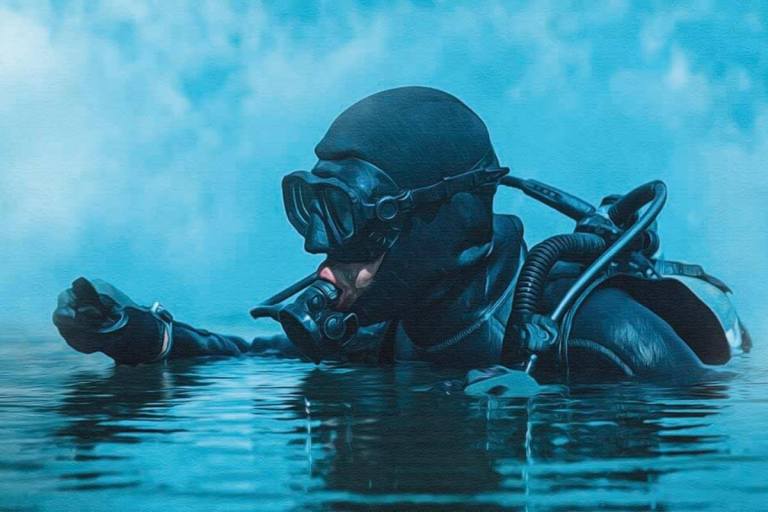
Pilots, special operations personnel, and emergency responders are trained to regulate breathing under stress because physiology dictates performance.
Technical diving adopts this same understanding. Control the body, and the mind follows.
Training Physiology Deliberately
Physiological control must be trained under load, not assumed. This includes:
- Breathing drills
- Trim and propulsion efficiency
- Stress exposure scenarios
Advanced technical diving progression embeds physiology into performance training.
The Bottom Line
You don’t think clearly because you’re calm.
You’re calm because your physiology is under control.
In technical diving, the quality of your decisions is inseparable from how you breathe and move. The most capable divers manage their bodies as carefully as their plans.
At N9BO℠, physiology is treated as a decision-making system.
Want Better Control and Clearer Thinking Underwater?
Physiology directly affects awareness and decision-making. Contact us to discuss training that improves breathing, control, and performance underwater.
From the N9BO℠ Knowledge Base