The Origin of Dive Tables
Dive tables were developed to provide structured limits for depth and time based on models of inert gas absorption and elimination. Early work by John Scott Haldane established the foundation, introducing the concept that the body absorbs and releases gas at predictable rates.
These models divided the body into theoretical “tissue compartments,” each absorbing and releasing gas at different speeds. Dive tables used these assumptions to define limits intended to reduce the risk of decompression sickness.
Tables provided:
- Maximum allowable bottom times at specific depths
- Required surface intervals between dives
- Decompression schedules when limits were exceeded
They were simple, structured, and effective within their design parameters.
At N9BO℠, we emphasise that dive tables were not arbitrary—they were based on controlled experimentation and physiological modelling, forming the foundation of modern dive planning.
Limitations of Static Tables
While dive tables represented a major advancement, they introduced constraints. Tables assume a fixed dive profile—typically square profiles with a single depth and constant exposure.
In real-world diving, profiles are rarely static. Divers ascend, descend, and change depth throughout a dive. Tables cannot account for this variability without significant approximation.
Key limitations include:
- Inability to accurately model multi-level dives
- Conservative assumptions to account for uncertainty
- Limited flexibility for dynamic conditions
- Dependence on manual tracking and calculation
As diving evolved, these limitations became more apparent. Divers required tools that could adapt to changing profiles in real time.
At N9BO℠, we recognise that tables provided structure, but not flexibility.
The Shift to Algorithms
The development of dive computers introduced algorithm-based planning. Instead of relying on fixed tables, algorithms continuously calculate inert gas loading based on real-time depth and time data.
This allows for dynamic modelling of dive profiles. As depth changes, the algorithm adjusts calculations accordingly, providing more accurate and flexible guidance.
Algorithms track:
- Continuous depth changes
- Real-time inert gas loading
- Ascent rates and decompression requirements
- Repetitive dive profiles without manual input
This shift transformed dive planning from pre-dive calculation to continuous monitoring.
At N9BO℠, we emphasise that algorithms do not replace understanding—they require it.
Common Algorithm Models
Modern dive computers use variations of established decompression models. Two of the most widely used are Bühlmann-based algorithms and bubble models.
Bühlmann models focus on dissolved gas dynamics, using multiple tissue compartments with defined limits. They are widely used due to their flexibility and adaptability.
Bubble models incorporate additional considerations related to bubble formation and growth, attempting to reduce microbubble-related stress.
Each model has advantages and limitations. Differences between algorithms can result in varying decompression requirements for the same dive profile.
At N9BO℠, we train divers to understand that different algorithms may produce different outputs, and that these differences must be managed operationally.
From Conservative to Customisable
One of the key advancements in modern algorithms is adjustability. Divers can modify conservatism settings to account for personal or environmental factors.
This includes:
- Increasing safety margins for fatigue or cold exposure
- Adjusting gradient factors in technical diving
- Adapting settings for repetitive or multi-day diving
However, this flexibility introduces risk. Incorrect adjustments can reduce safety margins if not properly understood.
At N9BO℠, we emphasise that customisation must be based on knowledge, not preference. Conservative settings should reflect operational conditions, not convenience.
Real-Time Feedback and Behaviour
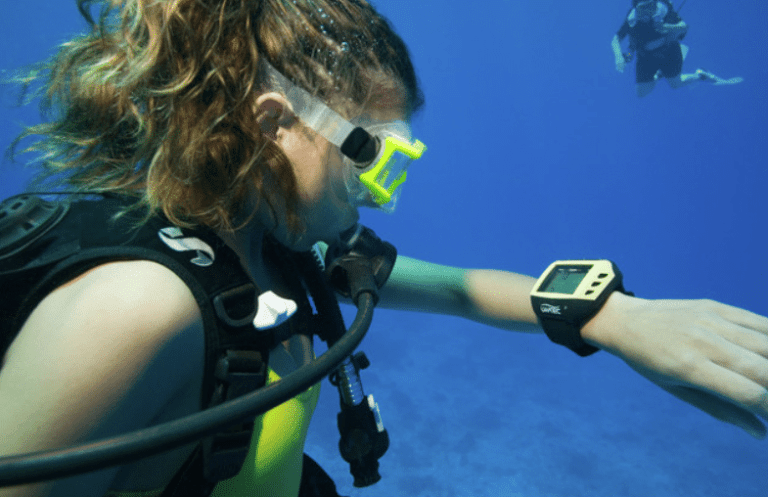
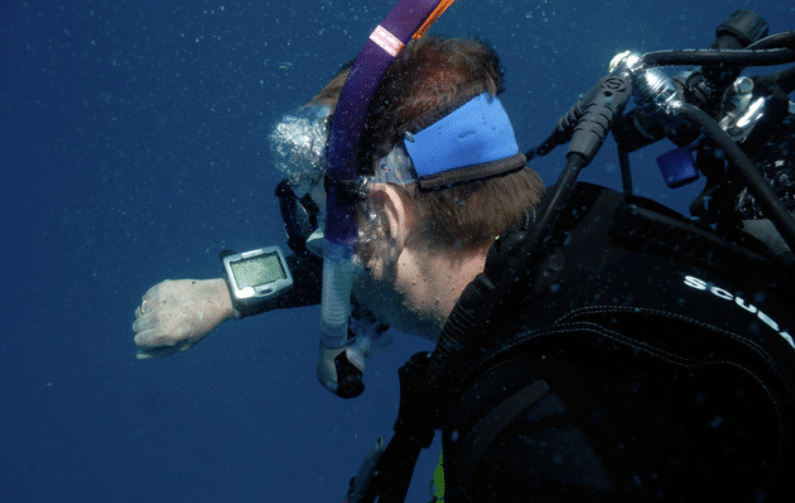
Dive computers provide continuous feedback, influencing diver behaviour during the dive. Information such as no-decompression limits, ascent rates, and stop requirements allows divers to adjust in real time.
This has operational advantages:
- Improved situational awareness of decompression status
- Ability to extend or shorten dives based on conditions
- Immediate feedback on unsafe ascent rates
However, reliance on computers can lead to reduced understanding. Divers may follow instructions without understanding the underlying principles.
At N9BO℠, we emphasise that dive computers are tools, not decision-makers. The diver remains responsible for interpreting and acting on the information provided.
Failure Modes and Redundancy
Unlike dive tables, which are static and unaffected by equipment failure, dive computers introduce dependency on electronics. Battery failure, sensor malfunction, or software issues can result in loss of information.
This creates a new category of risk.
Effective mitigation includes:
- Carrying backup computers or timing devices
- Understanding basic table-based planning as a fallback
- Maintaining awareness of the dive profile independent of the device
Divers who rely entirely on a single device without redundancy increase their vulnerability.
At N9BO℠, we integrate redundancy and failure planning into dive procedures, ensuring continuity of control.
Bridging Tables and Algorithms
Dive tables and algorithms are not opposing systems—they are part of the same continuum. Both are based on the same physiological principles, differing primarily in application.
Tables provide a structured, conservative framework. Algorithms provide dynamic, real-time adaptation. Understanding both enhances overall competence.
Divers who understand table concepts can better interpret algorithm behaviour. They recognise when limits are approaching and understand the implications of adjustments.
At N9BO℠, we train divers to operate across both systems, ensuring that technology enhances capability rather than replacing knowledge.
Operational Implications
The transition from tables to algorithms has changed how dives are planned and executed, but it has not removed the need for discipline.
Key operational considerations include:
- Verifying algorithm compatibility within dive teams
- Aligning conservatism settings across participants
- Planning dives based on worst-case profiles, not best-case outputs
- Maintaining awareness independent of device prompts
These considerations ensure that flexibility does not lead to inconsistency or increased risk.
At N9BO℠, we emphasise standardisation within teams to maintain control and predictability.
Operational Mindset
The evolution from dive tables to algorithms represents a shift in tools, not in responsibility. The fundamental objective remains unchanged: managing inert gas exposure to reduce decompression risk.
Modern technology provides greater flexibility and accuracy, but it also requires greater understanding. Without this understanding, divers may misinterpret data or rely too heavily on automated guidance.
At N9BO℠, we approach dive planning with a focus on control. Technology supports this control, but it does not replace the need for knowledge, discipline, and situational awareness.
In diving, the method has changed. The principles have not.
Understand the Tool, Not Just the Display
Contact N9BO℠ to integrate advanced dive planning and decompression theory into your training, ensuring your divers can use modern algorithms effectively and safely.
From the N9BO℠ Knowledge Base