Why the DSMB Is Not Optional
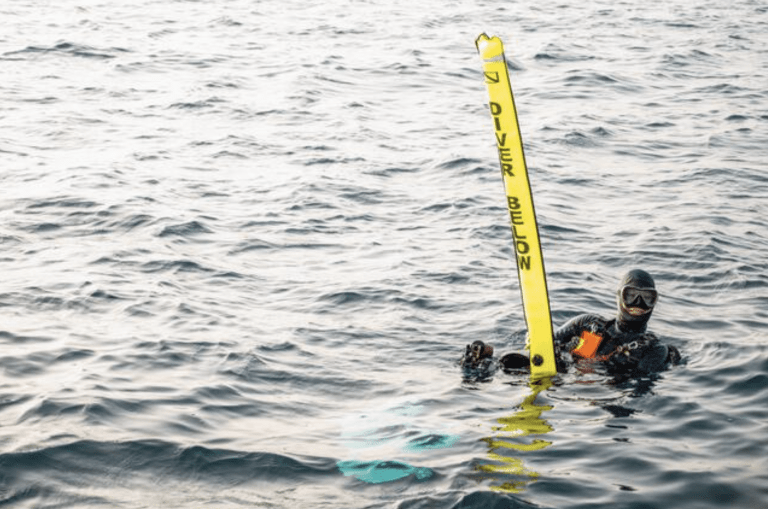
For professionals, the DSMB serves multiple functions:
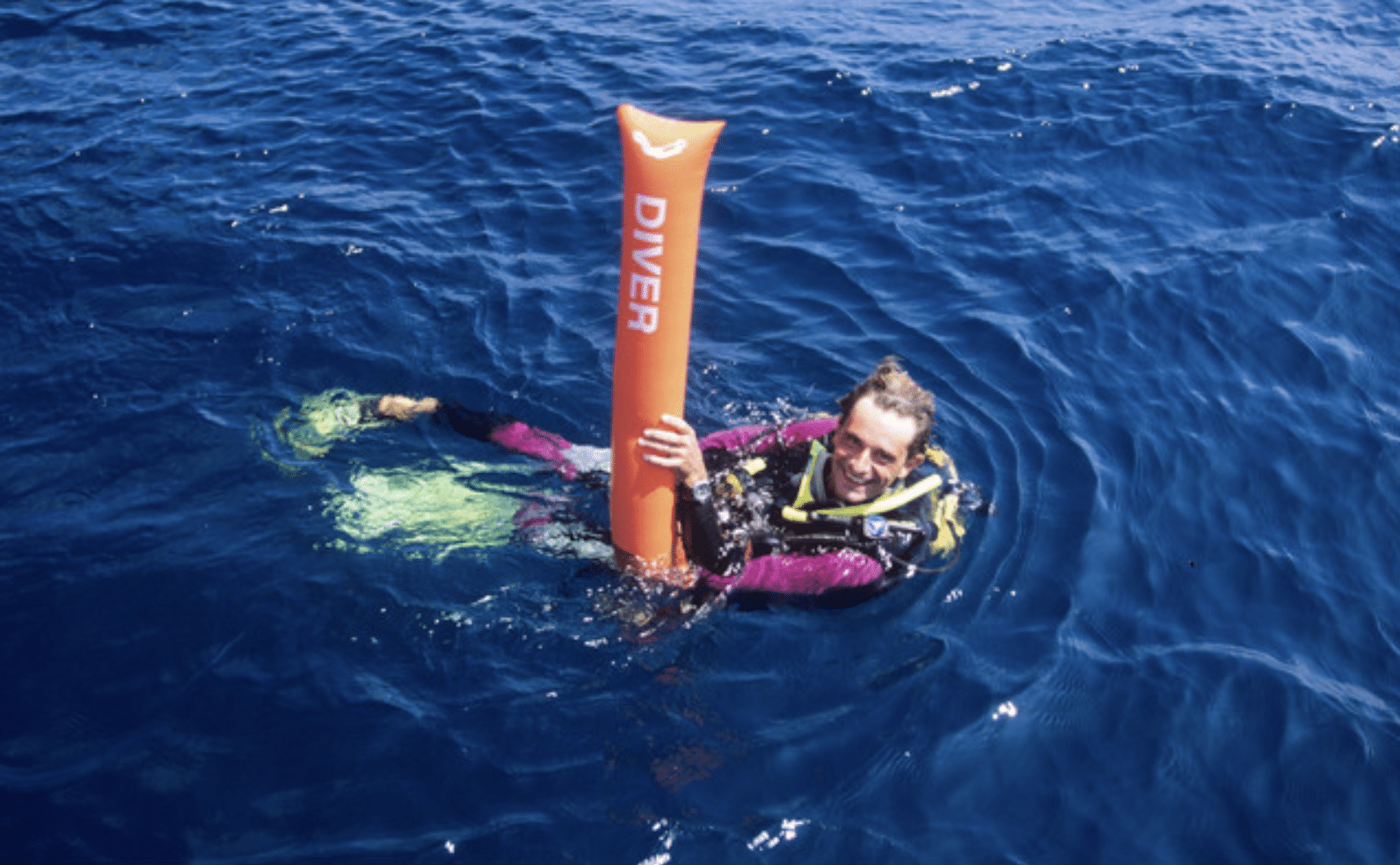
- Surface signalling device.
- Boat traffic warning.
- Position marker during drift dives.
- Mandatory decompression reference.
- Emergency signalling tool.
In offshore environments, not deploying a DSMB when required is:
Operational negligence.
Boat strikes remain one of the most preventable diving accidents.
Visibility at the surface is never guaranteed.
A DSMB creates visibility where none existed.
The Difference Between “Can Deploy” and “Can Control”
Many divers can:
- Inflate a DSMB.
- Let it rise.
- Hold a spool.
Few can:
- Deploy while maintaining neutral buoyancy.
- Manage entanglement risk.
- Control ascent speed.
- Stabilise mid-water during decompression.
The distinction matters.
DSMB deployment increases task loading.
Loss of buoyancy control during deployment is common.
Professional competence means:
Deploying without disrupting depth control.
Buoyancy Control During Deployment
The most frequent error:
Uncontrolled ascent during inflation.
Why?
Because:
- Expanding gas pulls upward.
- Line tension creates lift.
- Divers fixate on the buoy, not depth.
Correct procedure includes:
- Establish neutral buoyancy first.
- Maintain horizontal trim.
- Deploy from stable position.
- Vent gas proactively during inflation.
A DSMB should rise.
The diver should not.
Inflation Methods and Risk Management
DSMBs can be inflated using:
- Low-pressure inflator hose.
- Exhaust gas from regulator.
- Oral inflation.
Each method has risk considerations.
Using LP inflator hose:
- Quick and controlled.
- Risk of hose entanglement.
- Must disconnect immediately after inflation.
Using second-stage purge:
- Requires gas control.
- Risk of over-inflation.
- Requires fine motor control.
Oral inflation:
- Slower.
- Useful when conserving gas.
- Requires stability and calm.
Professionals must be proficient in all methods.
Entanglement: The Hidden Hazard
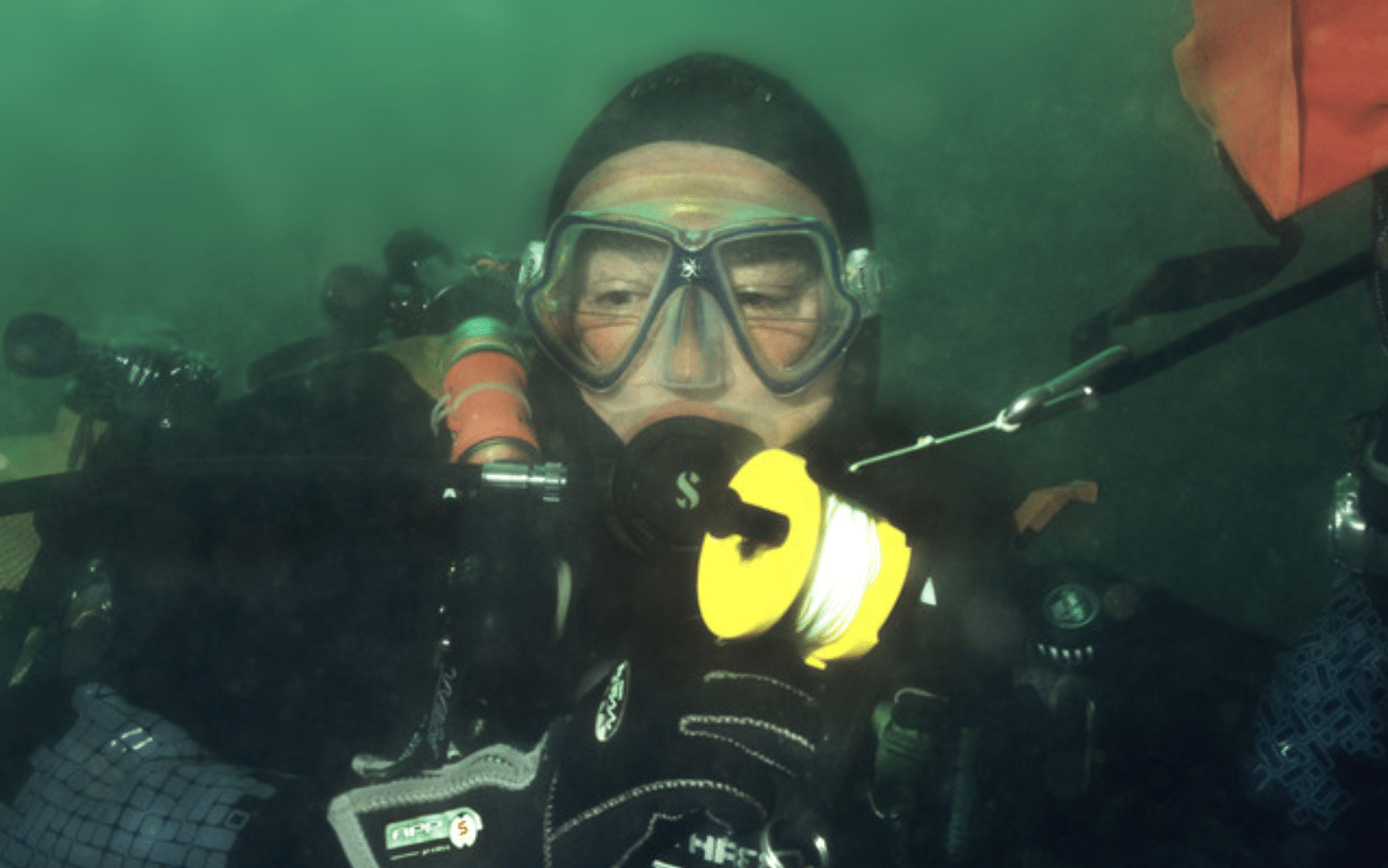
Reel and spool line can:
- Wrap around fins.
- Catch on equipment.
- Loop around wrists.
- Snag on stage bottles.
Line management is critical.
Best practice includes:
- Holding spool correctly.
- Keeping tension controlled.
- Avoiding loose coils.
- Maintaining clear visual awareness.
Never wrap line around fingers.
Never rush deployment.
Entanglement at 6 meters during decompression is avoidable — but only with discipline.
DSMB in Drift Diving
In drift environments:
- The team may surface far from entry point.
- Currents can separate divers.
- Boat support may have limited visual reference.
Early DSMB deployment:
- Increases surface awareness.
- Reduces search time.
- Minimises separation risk.
Professionals deploy proactively.
Not reactively.
Decompression and DSMB Integration
For decompression divers:
The DSMB often becomes:
The vertical reference.
Line tension must be:
- Managed gently.
- Maintained stable.
- Not used as anchor.
Over-tensioning line:
- Increases ascent risk.
- Alters buoyancy balance.
A DSMB is a signalling device.
Not a mooring line.
Stress and Deployment Under Task Loading
DSMB deployment may occur during:
- Mid-water decompression.
- Reduced visibility.
- Cold conditions.
- Elevated heart rate.
Professionals must practise deployment in:
- Mid-water.
- Simulated current.
- Low visibility conditions.
- During staged ascents.
Skill must withstand stress.
Emergency Use of DSMB
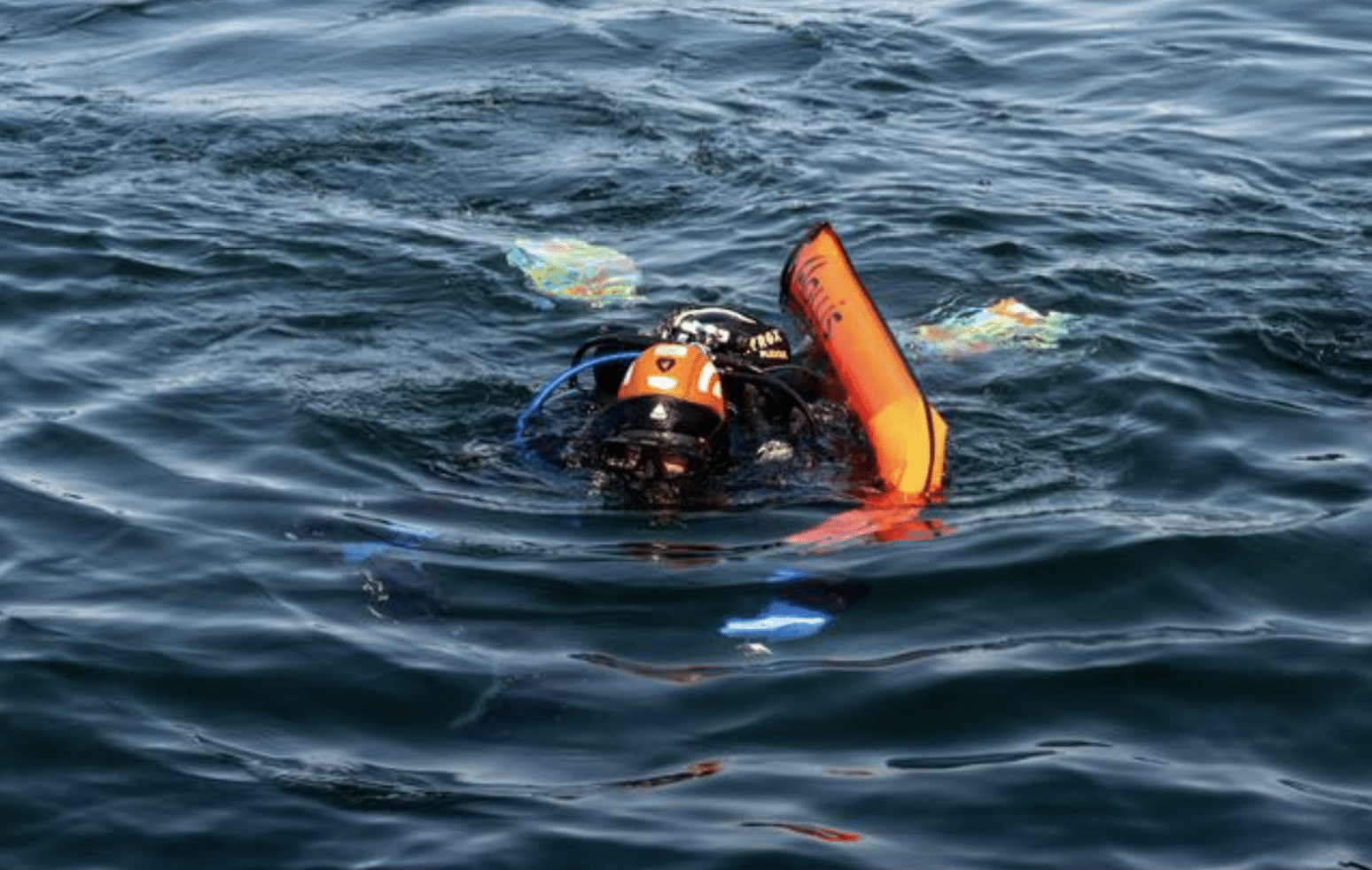
In emergencies, DSMB can:
- Signal distress.
- Indicate injured diver below.
- Provide surface position when separated.
Carrying:
- Audible signalling device.
- Reflective strip on buoy.
- High-visibility colour.
Enhances effectiveness.
Preparation increases survivability.
Common Mistakes
- Deploying without stabilising buoyancy.
- Overfilling buoy.
- Letting spool free-run uncontrolled.
- Wrapping line around wrist.
- Losing depth awareness during inflation.
Each mistake reflects:
Task fixation.
Professional training teaches:
Process awareness over object fixation.
Professional Standard
At N9BO℠, DSMB deployment is treated as a professional skill — not a casual add-on. We require divers to demonstrate:
- Mid-water deployment.
- Controlled ascent management.
- Line discipline.
- Stable trim throughout.
Because in operational environments, the DSMB is not decoration.
It is protection.
Why Every Dive Professional Must Master This
Dive leaders:
- Set deployment example.
- Protect students from boat traffic.
- Manage surface coordination.
- Control decompression stops.
Failure to master DSMB deployment increases:
Operational liability.
Professionalism includes:
Surface awareness.
Final Perspective
DSMB deployment seems simple.
It is not.
It integrates:
- Buoyancy control.
- Line management.
- Gas awareness.
- Environmental awareness.
- Composure under task loading.
A professional diver does not deploy casually.
They deploy deliberately.
Controlled.
Calm.
Predictable.
Want to Perfect Your DSMB Deployment?
Professional-level DSMB control requires structured practice beyond basic instruction. Contact N9BO℠ to refine deployment skills under realistic conditions.
From the N9BO℠ Knowledge Base