Purpose of the Helitrox Course
The TDI Helitrox course is designed to train divers to plan and conduct staged decompression dives to a maximum depth of 45 metres / 150 feet using a blend of oxygen, nitrogen, and a limited amount of helium.
This makes it a direct progression from the TDI programmes Decompression Procedures and Extended Range, but with one critical addition: helium. Unlike deep air diving, where narcosis becomes a limiting factor, Helitrox introduces a controlled percentage of helium to reduce its impact.
The course maintains the same structured approach to decompression but improves diver performance by reducing physiological constraints.
At N9BO℠, we position Helitrox as the point where gas selection becomes a performance tool, not just a requirement.
Why Introduce Helium
Helium is introduced to address two key limitations of air at depth: narcosis and gas density. As depth increases, nitrogen becomes increasingly narcotic, affecting judgment, reaction time, and awareness.
By replacing part of the nitrogen with helium, the diver reduces these effects. The result is clearer thinking, improved task execution, and more stable performance under pressure.
Helitrox mixes are limited, typically containing no more than 35% helium. This ensures that the course remains accessible while still providing measurable benefits.
The introduction of helium does not remove risk—it redistributes it. The diver must now manage gas complexity alongside decompression.
At N9BO℠, we emphasise that helium is not about going deeper. It is about operating more effectively at depth.
Integration of Decompression and Mixed Gas
Helitrox combines decompression procedures with mixed gas diving. The diver must plan and execute staged decompression while also managing multiple gas types.
This creates a layered operational environment. The diver is responsible for depth control, decompression timing, gas switching, and maintaining awareness of gas composition.
The presence of helium improves cognitive performance, but it does not reduce the need for discipline. Procedures must still be followed exactly, and execution must remain precise.
Decompression remains an obligation. The addition of helium simply improves the diver’s ability to meet that obligation effectively.
At N9BO℠, we treat Helitrox as a refinement of decompression diving, not a simplification.
Gas Management and Switching
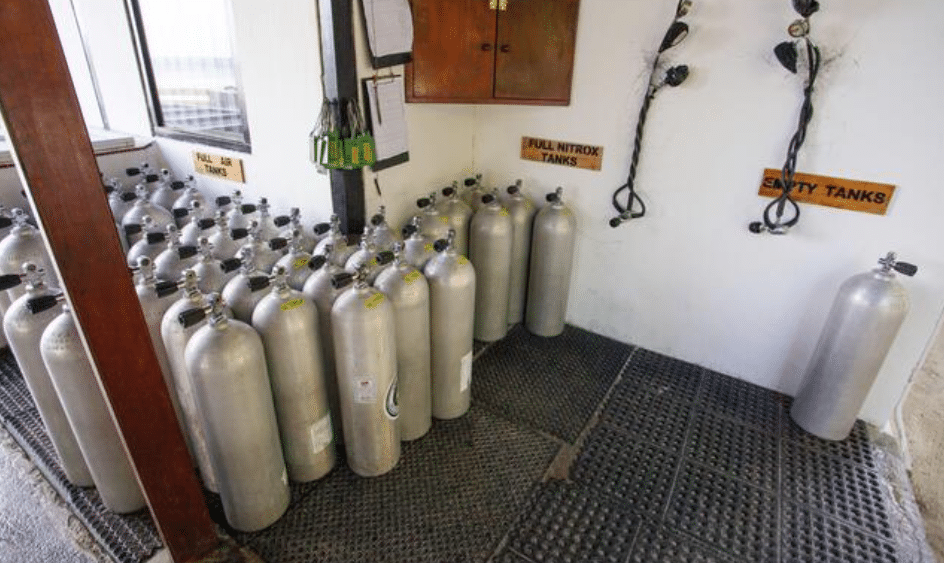
Helitrox introduces additional complexity in gas management. Divers must handle bottom gas containing helium, as well as decompression gases such as nitrox or oxygen.
Each gas has a defined role and must be used at the correct depth. Switching procedures must be structured, verified, and executed without error.
Mistakes in gas switching—such as breathing the wrong mix at the wrong depth—can have immediate consequences. This risk increases with the number of gases carried.
Gas awareness must therefore remain continuous throughout the dive. The diver must always know what gas is being used, what is coming next, and how it aligns with the plan.
At N9BO℠, we enforce disciplined gas management as a core control measure.
Equipment Configuration and Operational Clarity
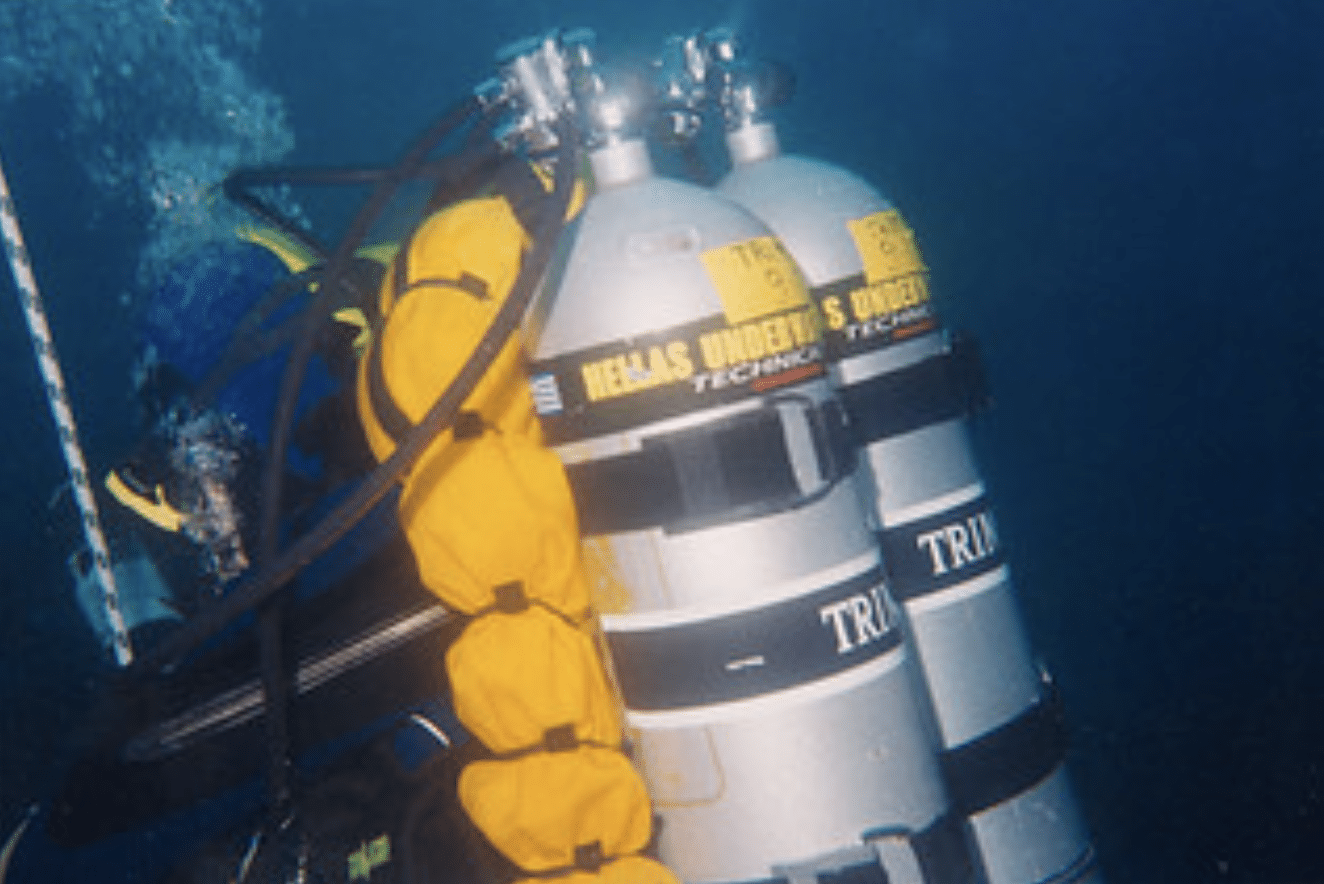
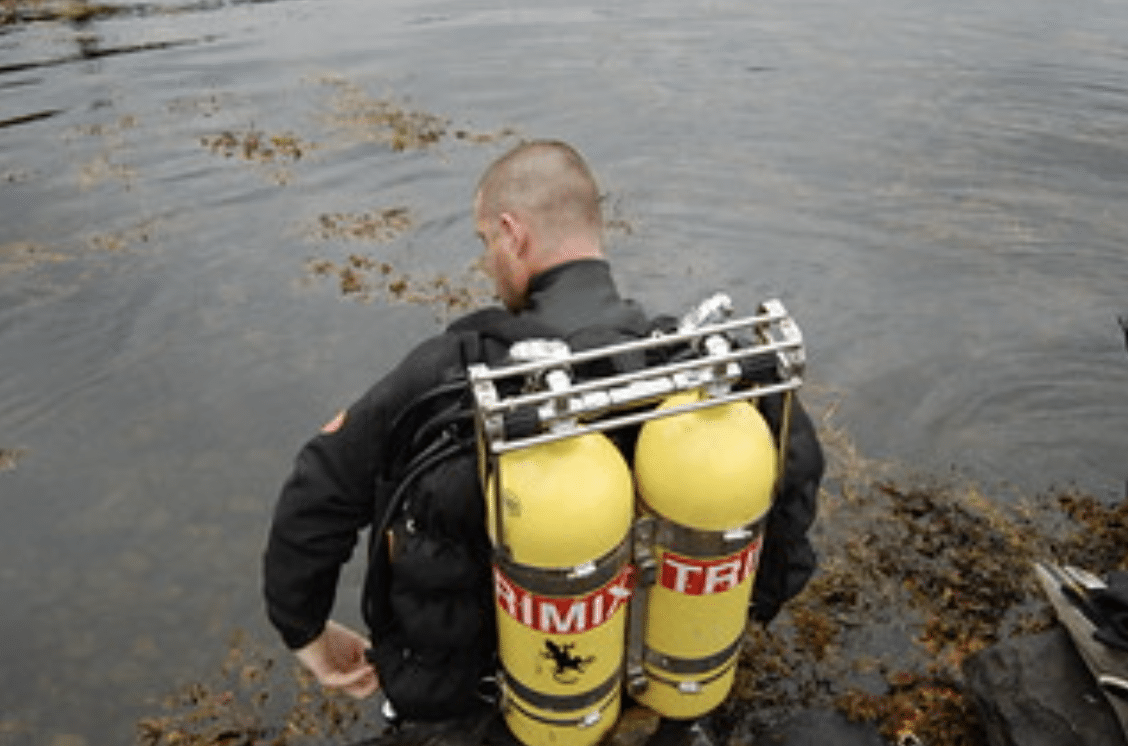
The use of multiple gases requires a structured equipment configuration. Divers typically use doubles or sidemount systems, supported by stage cylinders for decompression.
Configuration must ensure clarity. Cylinders must be clearly marked, regulators must be accessible, and all equipment must support efficient switching procedures.
Poor configuration increases task load and introduces ambiguity. At this level, ambiguity leads directly to risk.
Equipment must also provide redundancy. In a decompression environment, failures must be managed in-water without direct ascent.
At N9BO℠, we treat equipment as part of the operational system, ensuring it supports both function and failure management.

Task Load and Performance at Depth
Helitrox reduces narcosis, but task load remains high. The diver must manage multiple variables while maintaining control and awareness.
This includes depth, time, gas, decompression status, and team coordination. Even with improved clarity, the environment remains demanding.
The key difference is that helium allows the diver to process information more effectively. This improves decision-making and reduces the likelihood of error.
However, this benefit is only realised if the diver maintains discipline. Structure and procedure remain essential.
At N9BO℠, we emphasise that improved gas does not replace control—it enhances it.
Position Within the Technical Pathway
The Helitrox course sits between air-based decompression diving and full trimix training. It introduces helium in a controlled and limited way, allowing divers to experience its benefits without the complexity of full mixed gas planning.
It is often considered a transition course. Divers move from managing decompression alone to managing both decompression and gas selection.
Beyond this level, trimix becomes necessary to further reduce narcosis and gas density at greater depths.
At N9BO℠, we position Helitrox as a strategic step that prepares divers for more advanced mixed gas diving.
Operational Mindset
The TDI Helitrox course reinforces a key principle: performance at depth is influenced as much by gas selection as by skill.
By introducing helium, the diver reduces cognitive impairment and improves operational control. However, this advantage must be supported by disciplined planning and execution.
The dive remains structured. Decompression remains mandatory. Gas management becomes more complex.
At N9BO℠, we approach Helitrox as an optimisation tool within a controlled system. It allows divers to operate more effectively, but only when integrated with precision and discipline.
In technical diving, capability is not defined by the gases you carry, but by how effectively you use them.
Improve Performance Where It Matters Most
Contact N9BO℠ to integrate TDI Helitrox training into your development pathway, enhancing your control, clarity, and performance in decompression diving.
From the N9BO℠ Knowledge Base