Gas Is Not Air — It Is Time Underwater
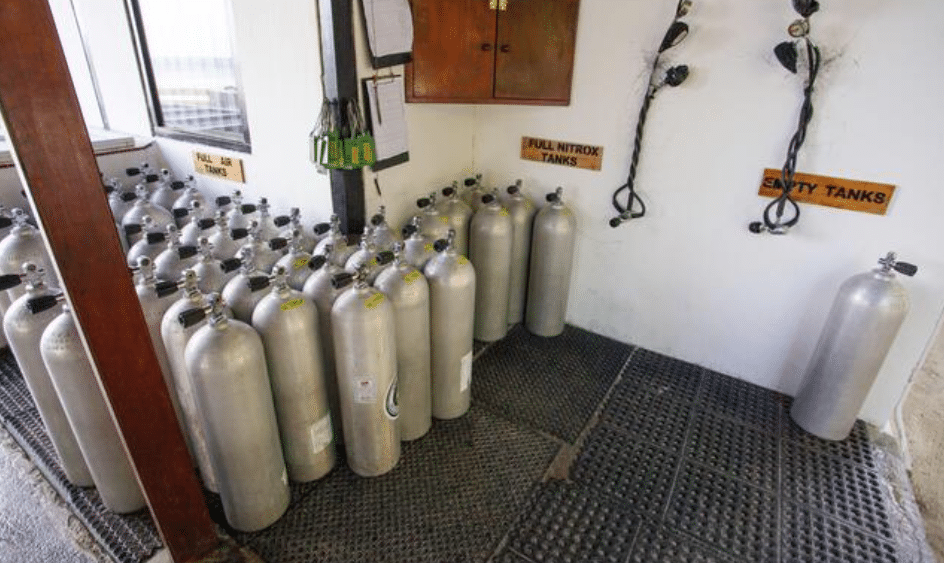
Divers often speak about “having enough gas” as if it were a static quantity. In reality, gas represents time—time to think, time to solve problems, time to exit.
Misjudging gas means misjudging time. Technical diving training reframes gas planning as time management, not arithmetic.
Why Divers Consistently Underestimate Consumption
Most divers base gas expectations on calm, ideal conditions. Under stress, breathing rates increase—sometimes dramatically.
Factors that increase consumption include:
- Task loading
- Stress and urgency
- Cold exposure
- Increased work of breathing
Advanced technical diving progression teaches divers to plan for worst-case consumption, not average performance.
The Fallacy of “Normal” SAC Rates
Surface Air Consumption (SAC) rates are often treated as fixed personal traits. In reality, they are situational.
A diver’s SAC during a relaxed reef dive has little relevance during a failure under stress. Technical diving training treats SAC as variable, not a constant.
Gas Planning as a Living Process
Gas planning does not end at the briefing. It continues throughout the dive.
Professional divers:
- Monitor trends, not just pressures
- Recalculate mentally as conditions change
- Adjust objectives based on remaining time
Advanced technical diving progression trains divers to think in time remaining, not bar remaining.
Why “Plenty of Gas” Is a Dangerous Phrase
“Plenty of gas” is vague. It hides assumptions and discourages verification.
Professional divers speak precisely: “We have X minutes at this depth.” Technical diving training reinforces precision as a safety tool.
Gas Reserves Are for Problems, Not Comfort
Reserves exist to absorb error and delay—not to extend dives. Using reserve gas for exploration erodes safety margins.
Advanced technical diving progression teaches divers to protect reserves aggressively, even when dives feel easy.
Instructor Perspective: Teaching Time Awareness
Instructors often observe students focusing on pressure gauges without understanding what those numbers mean operationally.
At N9BO℠, instructors challenge students to verbalise remaining time, forcing translation from volume to consequence.
Gas Management and Team Safety
In team diving, gas belongs to the team. One diver’s miscalculation affects everyone.
Technical diving training emphasises team-based gas planning, ensuring all members understand collective time limits.
Professional Parallels
In aviation, fuel is planned as endurance, not volume. Pilots think in minutes remaining—not litres.
Technical diving adopts this same professional mindset. Gas equals time, and time equals options.
Why Gas Misjudgement Still Kills
Despite better equipment and training, gas-related incidents persist because divers overestimate their performance under stress.
Advanced technical diving progression addresses this by making conservative gas planning non-negotiable.
The Bottom Line
Gas is not just what you breathe.
It is how long you can think.
In technical diving, understanding gas as time transforms planning, execution, and survival. The safest divers are those who protect their time margins relentlessly.
At N9BO℠, gas planning is taught as life management.
Unsure About Your Real Gas Consumption?
Accurate gas awareness is fundamental to safe diving. Contact us to discuss practical gas planning and consumption management.
From the N9BO℠ Knowledge Base