Purpose of the Trimix Diver Course
The TDI Trimix Diver course is designed to train divers to plan and execute staged decompression dives using trimix—a blend of oxygen, nitrogen, and helium—to a maximum depth of 60 metres / 200 feet.
This course builds directly on Decompression Procedures and Extended Range. It does not introduce new concepts in isolation, but integrates them into a more demanding operational framework where depth, decompression, and gas selection must all be managed simultaneously.
The defining objective is control at depth. The diver must be able to maintain awareness, execute procedures, and manage decompression while operating in an environment where physiological stress is significantly increased.
At N9BO℠, we position Trimix as the point where depth is no longer limited by training—but by how effectively the diver manages it.
Why Trimix Becomes Necessary
As depth increases, air becomes increasingly unsuitable due to narcosis and gas density. Nitrogen narcosis impairs judgement and reaction time, while dense gas increases breathing effort and fatigue.
Trimix addresses these limitations by replacing part of the nitrogen with helium. This reduces narcotic effects and improves the diver’s ability to think and act clearly under pressure.
The result is not simply increased depth capability, but improved performance at depth. Tasks that would be compromised on air can be executed with greater precision.
However, this benefit introduces complexity. The diver must now manage a custom gas mixture, ensuring it is appropriate for depth, oxygen exposure, and decompression requirements.
At N9BO℠, we emphasise that trimix is not about going deeper—it is about maintaining control where air no longer allows it.
Integration of Depth, Decompression, and Gas
Trimix diving combines multiple layers of complexity. The diver must manage deep exposure, staged decompression, and multiple gas mixtures within a single dive.
Each element is interdependent. Depth influences gas selection, gas selection affects decompression, and decompression dictates the ascent profile.
This creates a fully integrated system where planning must be precise and execution must match the plan exactly. There is no tolerance for approximation.
The diver is committed to the dive from the moment of descent. Once decompression obligation is incurred, ascent must follow the defined schedule.
At N9BO℠, we treat Trimix diving as a system of aligned variables, not separate tasks.
Gas Planning and Management
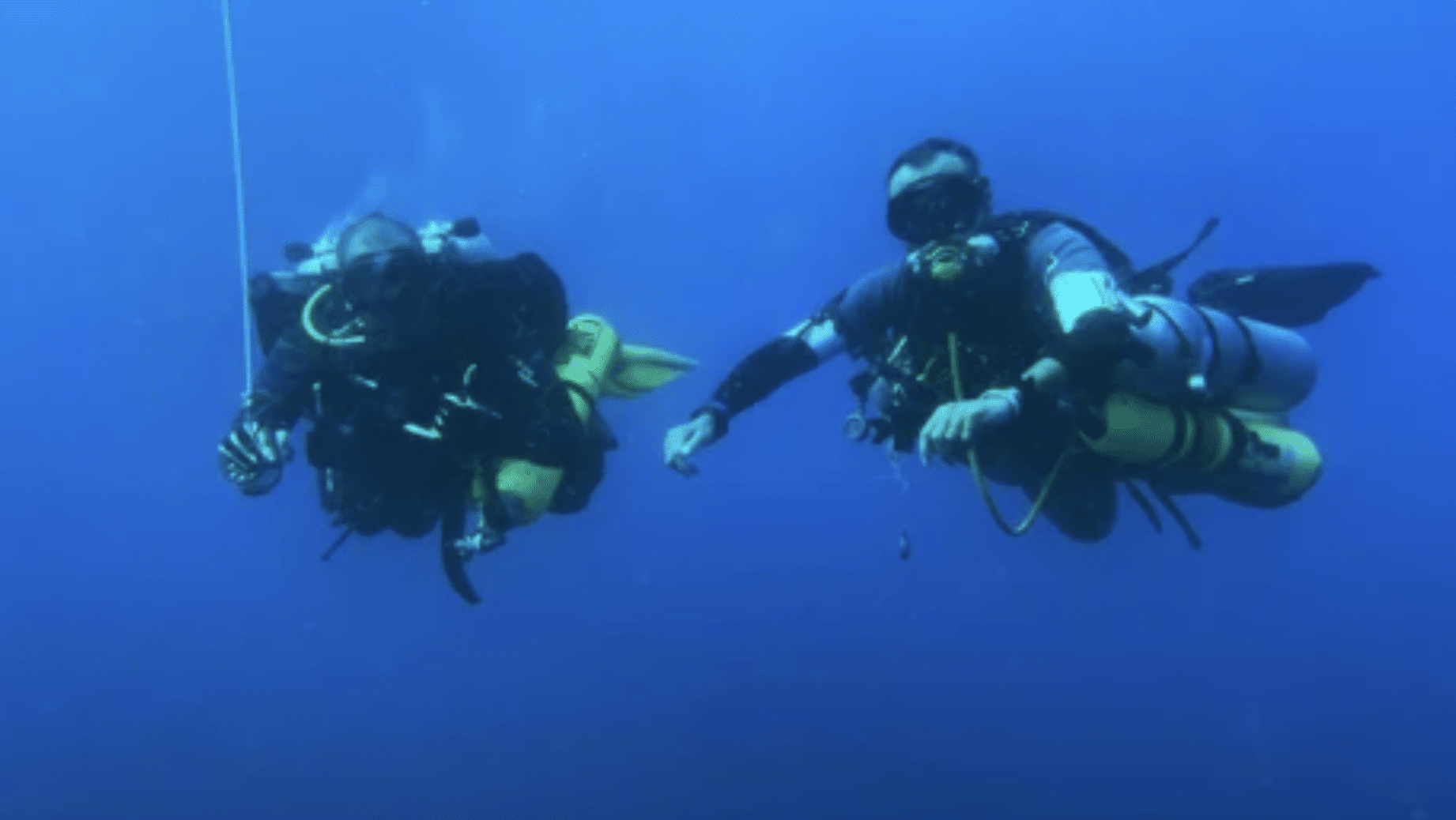
Gas planning becomes significantly more complex at this level. The diver must plan bottom gas, travel gas if required, and decompression gases, each with defined roles.
Trimix blends must balance:
- Oxygen levels to avoid toxicity
- Helium content to reduce narcosis
- Nitrogen content to maintain manageable decompression
These factors must align with depth and duration.
During the dive, gas management is continuous. The diver must monitor consumption, confirm gas switches, and maintain awareness of remaining reserves.
Errors in gas planning or execution are not easily corrected underwater. They must be prevented through precision and discipline.
At N9BO℠, we emphasise that gas planning is the central control mechanism in Trimix diving.
Equipment Configuration and Redundancy
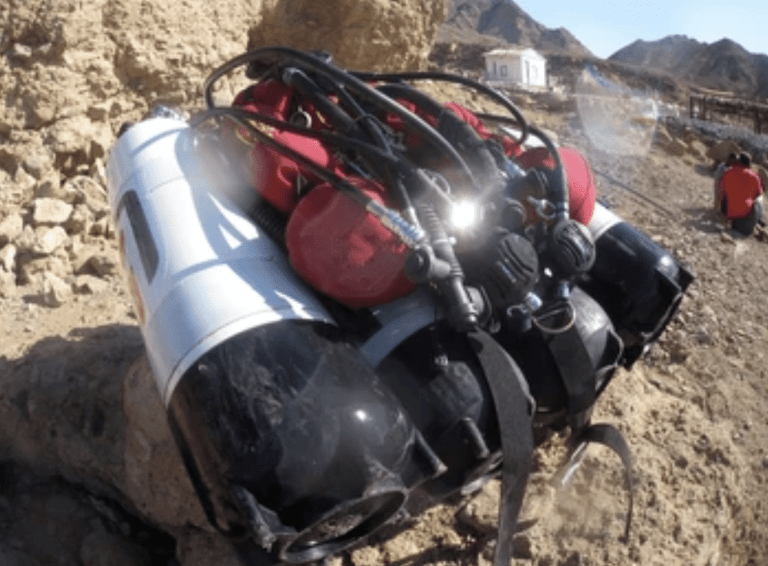
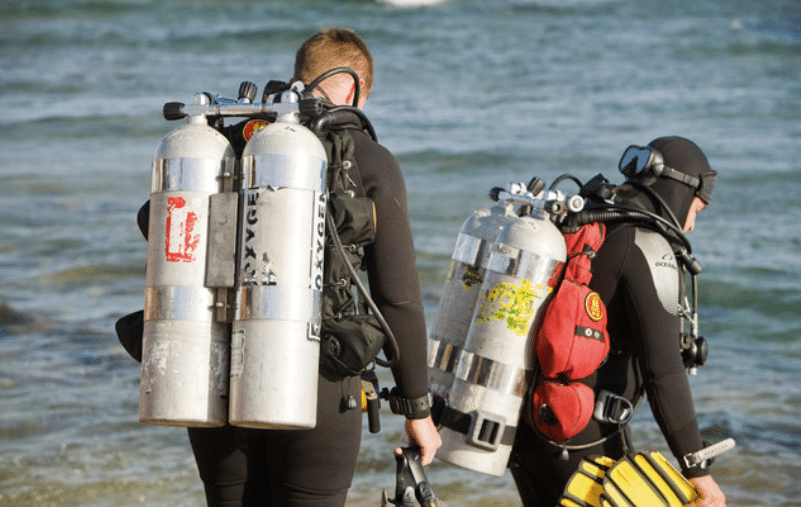
Trimix diving requires a fully redundant equipment system. Divers typically use doubles or sidemount configurations, supported by multiple stage cylinders.
This configuration must allow the diver to manage both normal operations and potential failures without direct ascent.
Equipment must be:
- Clearly marked and identifiable
- Accessible under all conditions
- Configured to support efficient gas switching
Redundancy is essential because failures must be managed at depth, often with decompression obligation already in place.
At N9BO℠, we treat equipment as a critical part of risk management, ensuring that it supports both performance and failure response.
Task Load and Cognitive Performance
Even with reduced narcosis, Trimix diving involves high task load. The diver must manage depth, time, gas, decompression, positioning, and team coordination simultaneously.
The advantage of helium is that it preserves cognitive function, allowing the diver to process information more effectively than on air.
However, this does not reduce the need for discipline. Structure and procedure remain essential. Without them, increased capability leads to increased risk.
The diver must maintain awareness across all variables, avoiding fixation and ensuring continuous control.
At N9BO℠, we train divers to operate within structured systems that maintain performance under complexity.
Team Coordination and Standardisation
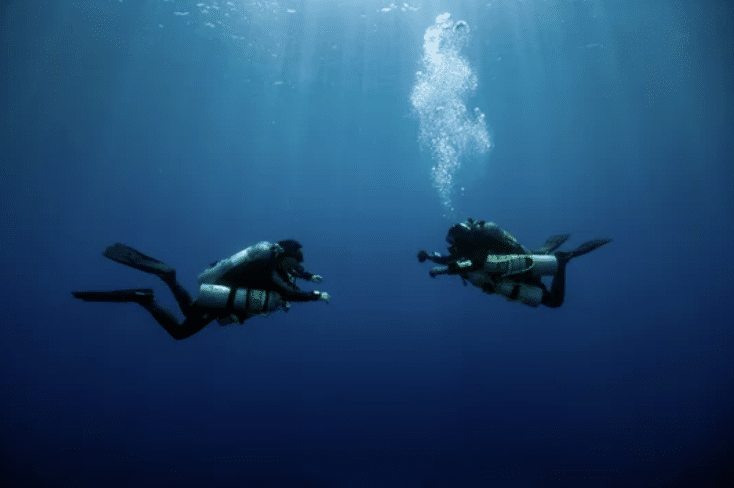
Trimix diving is conducted within a team framework. Each diver must operate in alignment with others, particularly during ascent and decompression.
Procedures must be standardised. Gas switches, ascent rates, and stop durations must be synchronised to ensure consistency.
Communication must remain clear and structured, even in limited conditions. Each diver must understand the plan and execute it without deviation.
Coordination reduces variability and ensures that the team functions as a single operational unit.
At N9BO℠, we emphasise that Trimix diving is a team-controlled environment.
Position Within the Technical Pathway
The Trimix Diver course represents a major progression in technical diving. It expands depth capability while introducing gas selection as a primary tool for managing risk.
Beyond this level, further training introduces hypoxic mixes and greater depths, increasing both complexity and exposure.
Trimix marks the point where the diver moves beyond air-based limitations and begins to operate within a fully mixed-gas framework.
At N9BO℠, we position Trimix as a defining step in technical development.
Operational Mindset
The TDI Trimix Diver course reinforces a core principle: depth is not the challenge—control at depth is.
The diver must manage physiological, technical, and operational factors simultaneously. Success depends on precision, discipline, and continuous awareness.
There is no tolerance for improvisation. Every element of the dive must be planned, verified, and executed exactly as intended.
At N9BO℠, we approach Trimix diving as a controlled system where gas selection, equipment, and procedures work together to manage risk.
In technical diving, the ability to go deeper is secondary. The ability to maintain control at depth is what defines competence.
Control Depth Through Knowledge and Discipline
Contact N9BO℠ to integrate TDI Trimix training into your development pathway, building the precision, awareness, and control required for advanced technical diving.
From the N9BO℠ Knowledge Base