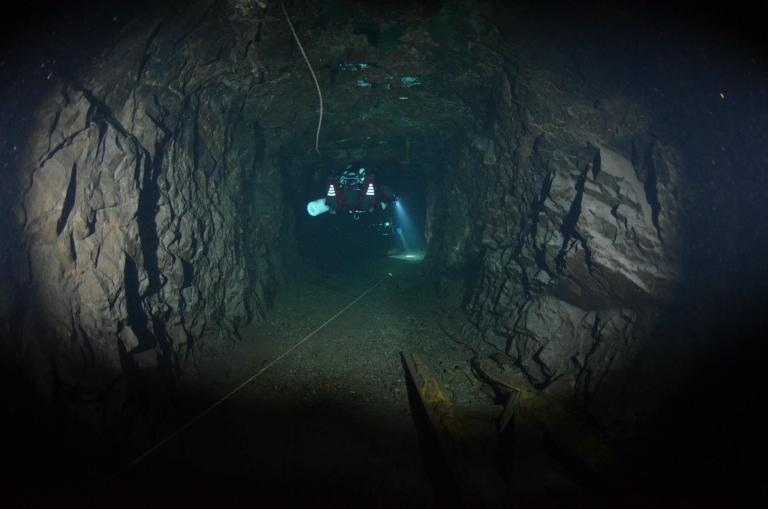
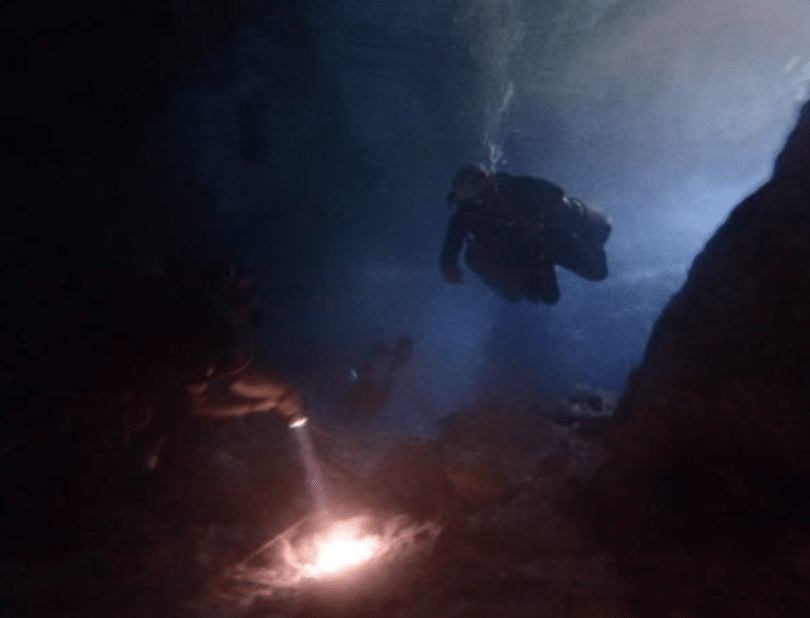
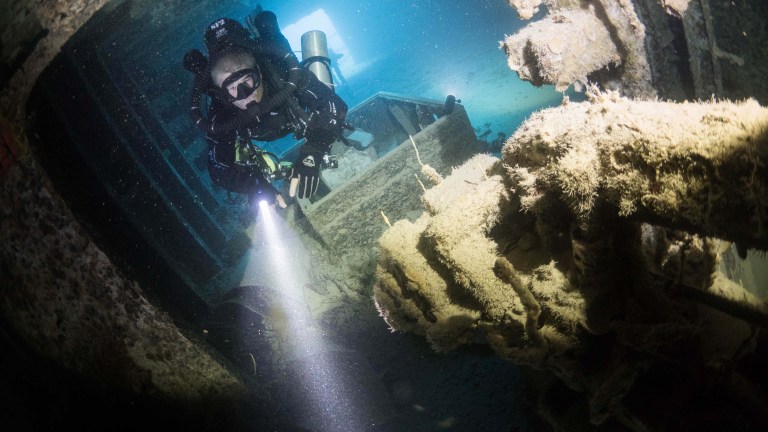
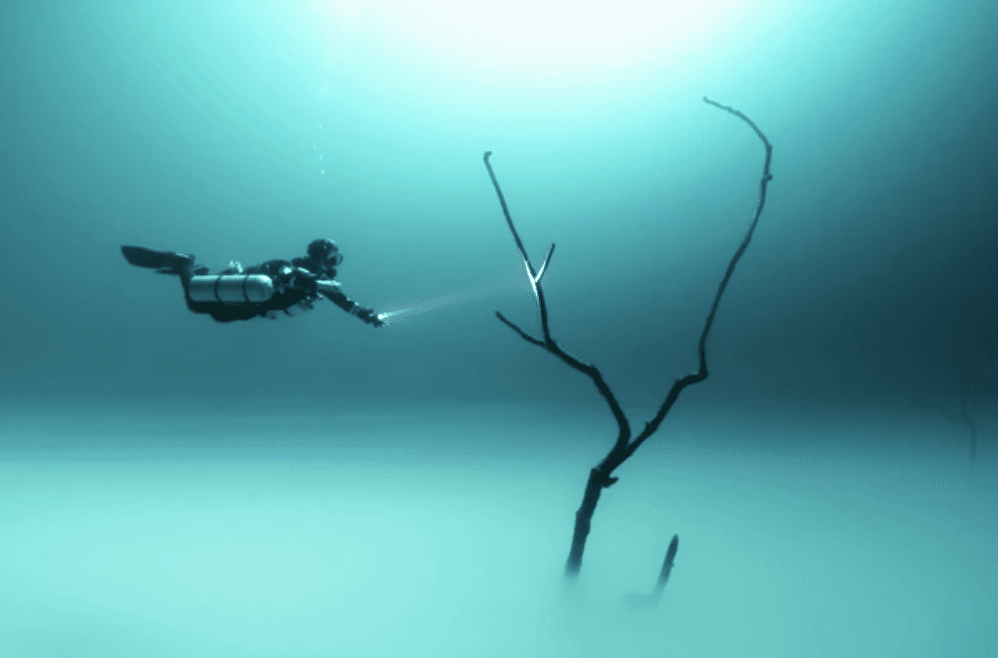
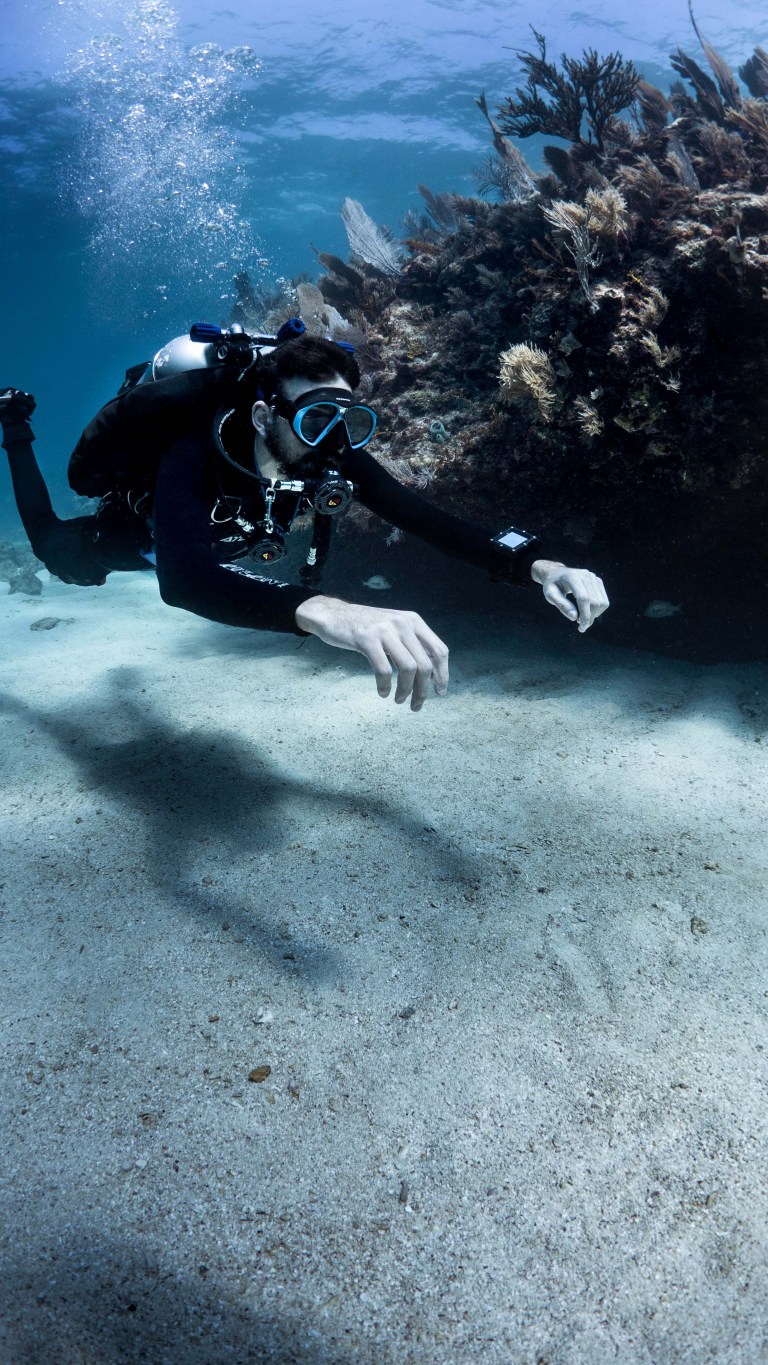
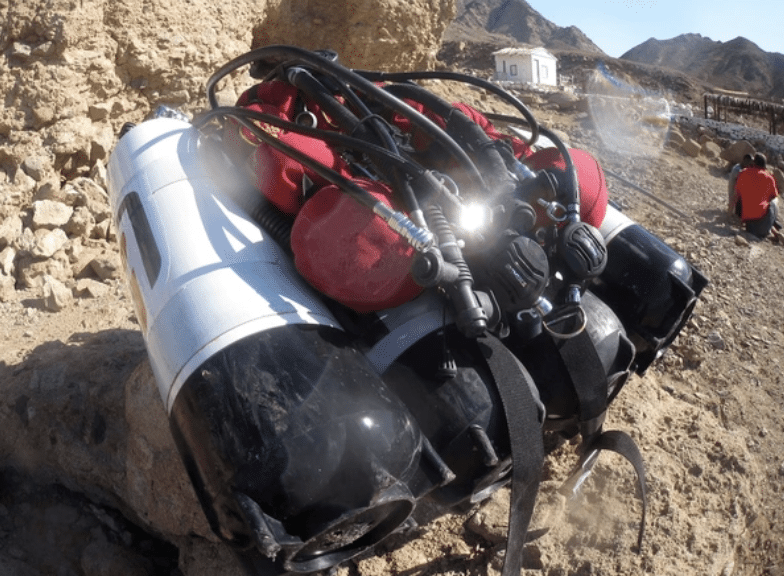
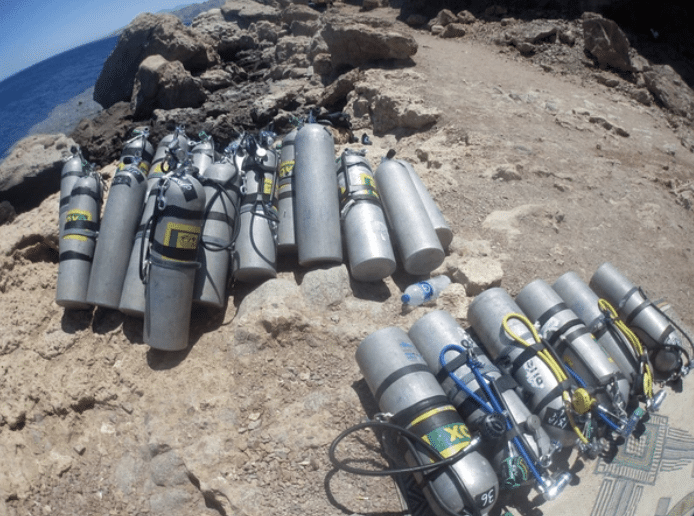
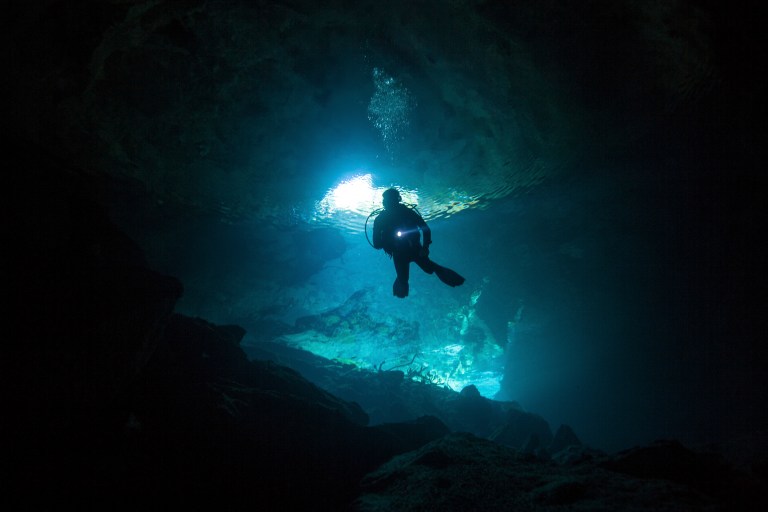
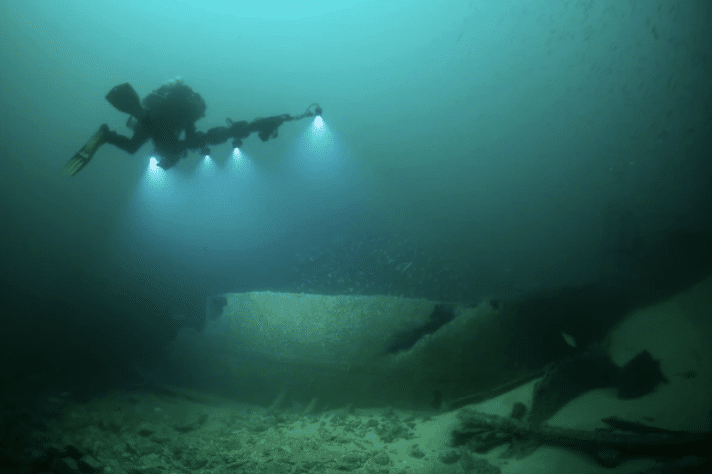
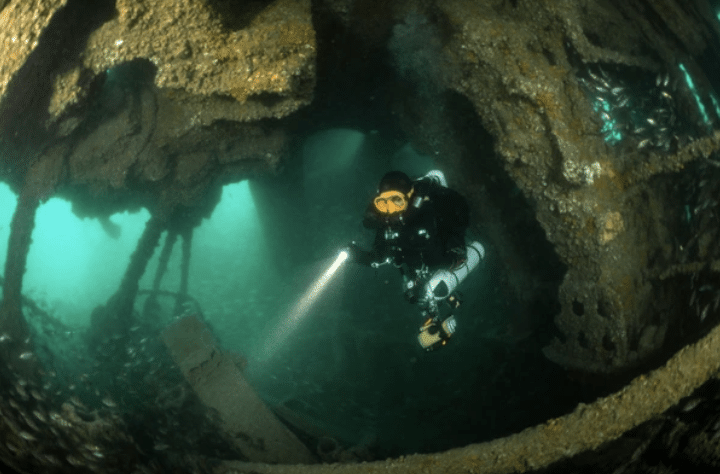
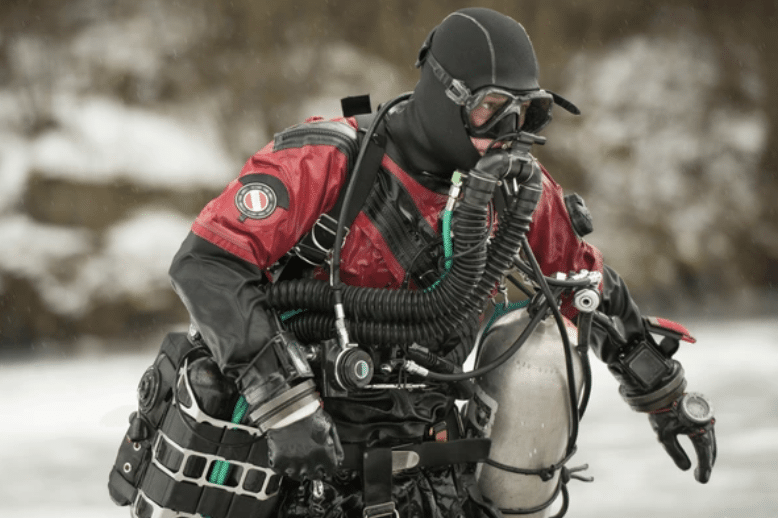
From a distance, caves and mines appear similar: no direct ascent, complex navigation, and zero tolerance for mistakes.
In practice, they represent two very different risk profiles. Treating them as interchangeable environments is a common—and dangerous—error in overhead diving.
Natural Caves: Dynamic and Living Systems
Caves are shaped by water, geology, and time.
They feature:
Irregular passages
Variable flow and silt
Fragile formations
Biological ecosystems
Cave environments continue to evolve, often unpredictably. Cave training focuses heavily on environmental awareness and adaptation.
Flooded Mines: Static but Deceptive
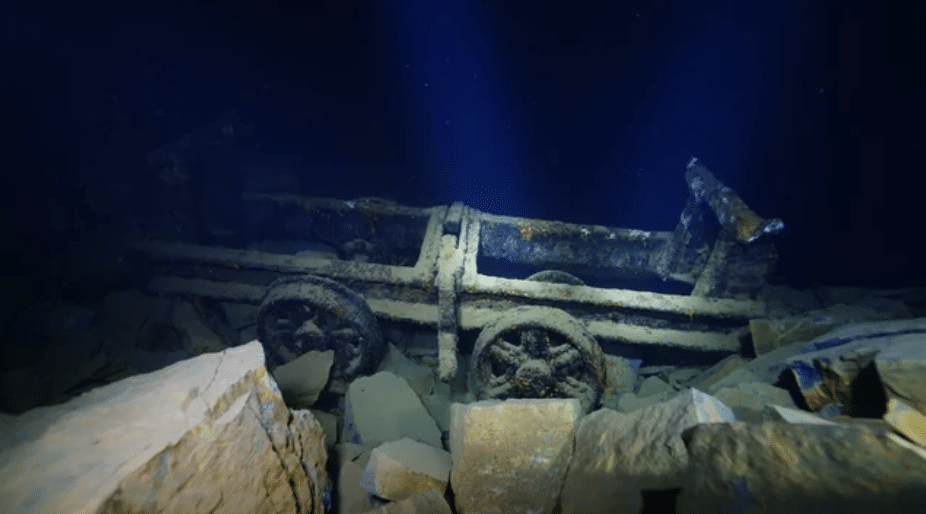
Mines are human-made structures.
They often include:
Sharp edges and metal hazards
Collapsing timbers
Rusted machinery
Explosive residues
Multiple levels and vertical shafts
While mines may appear stable, their hazards are hidden and cumulative.
Structural Failure Risk
Cave collapses tend to be geological and rare but catastrophic.
Mine collapses can be progressive, triggered by corrosion, vibration, or contact. Mine diving training must address induced instability, not just navigation.
Navigation Complexity Differs
Caves follow natural passage logic—flow, sediment patterns, and geomorphology.
Mines follow industrial logic—levels, adits, shafts, and crosscuts. Without proper mine-specific training, divers misinterpret layouts dangerously.
At N9BO℠, overhead training emphasises environment-specific thinking—what works in caves may fail catastrophically in mines.
Gas and Equipment Considerations
Mine diving often involves:
Confined vertical transitions
Abrupt depth changes
Sharp contact risks
Equipment protection and gas planning must be adapted accordingly. Overhead discipline alone is insufficient without contextual adjustment.
Contamination and Visibility
Mines frequently contain:
Fine industrial silt
Chemical residues
Oil and metal particulates
Visibility loss can be immediate and absolute. Mine training emphasises conservative penetration and rapid exit capability.
Psychological Load
Mines feel unnatural—rectilinear, claustrophobic, and disorienting.
Stress responses differ significantly from natural caves. Professional training addresses psychological adaptation explicitly.
Legal and Ethical Considerations
Many mines are privately owned, unstable, or historically significant.
Access carries legal and ethical implications that must be respected. Professional overhead training includes access responsibility.
The Bottom Line
Caves and mines share the overhead constraint—but little else.
Safe diving in either environment requires dedicated, environment-specific training. Assumptions are the enemy of survival.
At N9BO℠, overhead education respects the fundamental differences between caves and mines—because experience in one does not guarantee safety in the other.
Interested in Overhead Environment Training?
Cave and mine environments require specialised procedures and disciplined training progression. Contact us to discuss appropriate overhead training pathways.
Cave diving is often misunderstood as an extension of technical depth progression.
In reality, caves impose constraints that fundamentally change risk: overhead environments, limited visibility, zero direct ascent, and complex navigation. These factors demand a different training philosophy, not simply more equipment.
Why a Distinctive Specialty Was Necessary
Standard recreational pathways do not adequately prepare divers for overhead environments, while full technical cave programmes may assume prior exposure that many divers do not yet have.
The PADI Intro to Cave and Full Cave Distinctive Specialty was authored to:
Bridge this training gap
Introduce overhead discipline progressively
Emphasise judgment before penetration
Establish procedural foundations early
This is about sequencing learning correctly.
Intro to Cave: Learning to Stop, Not Push
Intro-level cave training focuses on restraint.
Divers learn:
Line awareness and discipline
Gas management fundamentals
Zero-visibility protocols
Team communication in overheads
Crucially, they also learn where to stop. This boundary-setting is foundational.
Full Cave: Complexity With Control
Full Cave training builds complexity only after discipline is proven.
Navigation, multi-line scenarios, and emergency procedures are introduced incrementally. The emphasis remains on predictability, not exploration for its own sake.
Instructor Perspective: Teaching Respect for the Environment
Caves are unforgiving teachers.
At N9BO℠, cave instruction prioritises respect—both for the environment and for personal limits. Instructors actively discourage “achievement-driven” cave diving.
Why Overhead Training Must Be Conservative
Cave incidents often result from:
Overconfidence
Inadequate planning
Task overload
Progressive penetration without skill consolidation
This Distinctive Specialty was designed to counter exactly these tendencies.
Line, Gas, and Team Discipline
Cave diving strips away margin.
Gas rules, continuous guideline usage, and team awareness are non-negotiable. Intro and Full Cave training establishes these habits before complexity increases.
Cave Training Is About Thinking Differently
The biggest transformation in cave training is mental.
Divers learn to think backwards from exits, failures, and worst-case scenarios. This mindset carries into all forms of technical and professional diving.
Environmental Stewardship
Caves are fragile.
Proper cave training includes environmental protection, minimal impact techniques, and ethical access. Responsible cave education preserves sites for future exploration.
Professional Parallels
Overhead environments in caves, wrecks, and mines share common risk structures.
Cave training often becomes a foundation for broader overhead competence. This Distinctive Specialty reflects that reality.
The Bottom Line
Cave diving is not about going farther—it is about going only where you are prepared to return from.
The PADI Intro to Cave and Full Cave Distinctive Specialty exists to instil discipline, judgement, and respect before ambition. At N9BO℠, cave training is built on restraint, not bravado.
Interested in Cave Training Progression with PADI?
Cave diving requires structured progression, discipline, and specialised training beyond recreational limits. Contact us to discuss appropriate cave training pathways.
Many divers learn buoyancy as a mechanical task: add gas, vent gas, hold depth. While this description is technically accurate, it misses the deeper implication.
Buoyancy determines how much attention a diver has available. Technical diving training treats buoyancy as a cognitive enabler—not just a physical competency.
The Hidden Cost of Poor Buoyancy
Divers with unstable buoyancy are constantly correcting. These micro-adjustments consume attention continuously.
Each correction may seem minor, but collectively they:
Increase task loading
Reduce situational awareness
Delay decision-making
Increase stress
Advanced technical diving progression teaches that poor buoyancy quietly taxes the brain.
Buoyancy and Cognitive Bandwidth
Cognitive bandwidth is finite. When buoyancy requires constant attention, there is less capacity for:
Monitoring teammates
Interpreting environmental change
Anticipating problems
Stable buoyancy frees the mind. Technical diving training explicitly links buoyancy mastery to mental clarity.
This creates a feedback loop: instability increases stress, which further degrades buoyancy. Advanced technical diving progression teaches divers to stabilise depth first to stabilise thinking.
Why Buoyancy Fails in Emergencies
Many emergency skills are practised in isolation, without buoyancy demand. Under stress, divers may complete the action but lose depth control.
Professional training integrates buoyancy into every skill. Technical diving training requires that emergency responses maintain stable depth—not sacrifice it.
Buoyancy and Team Predictability
Teams rely on predictable vertical positioning. Inconsistent depth control disrupts spacing, communication, and coordinated movement.
In aviation, stable flight frees pilots to manage systems and decisions. In diving, stable buoyancy does the same.
Control creates capacity.
The Bottom Line
Buoyancy is not about depth.
It is about thinking.
In technical diving, precise buoyancy control frees cognitive bandwidth for awareness, communication, and decision-making. The most capable divers are those whose depth never competes with their thoughts.
At N9BO℠, buoyancy is trained as mental freedom.
Want More Control and Less Mental Load Underwater?
Stable buoyancy reduces workload and allows better awareness and decision-making. Contact us to discuss improving buoyancy and control in demanding dives.
Many divers believe that trim only matters for photos, video, or personal style. As long as they are roughly horizontal, they assume performance is unaffected.
This assumption is wrong.
Technical diving training treats trim as a core operational skill because body position governs efficiency, stability, and cognitive workload.
Trim Determines Workload
Poor trim increases drag. Increased drag requires more effort. More effort increases breathing rate, CO₂ retention, and fatigue.
This cascade begins with body position. Advanced technical diving progression teaches divers that trim is the first link in a chain that affects physiology and decision quality.
Buoyancy Control Starts With Trim
Buoyancy adjustments are easier and more precise when trim is stable. Vertical or unstable body positions force divers to constantly correct depth.
This constant correction consumes attention. Technical diving training frames trim as a prerequisite for effective buoyancy—not the other way around.
Trim and Situational Awareness
Divers fighting their position focus inward. Divers in stable trim can focus outward—on team, environment, and mission.
Awareness degrades when posture demands attention. Advanced technical diving progression teaches trim as an awareness amplifier.
Emergency Response Depends on Body Position
In emergencies, trim determines how easily a diver can:
Reach valves
Maintain position while assisting teammates
Deploy backup systems
Control ascent or exit
Poor trim turns simple actions into complex ones. Technical diving training insists that emergency skills must be executable from stable trim.
Trim and Team Predictability
Teams rely on predictable body orientation. When everyone is trimmed similarly, spacing, signalling, and movement become intuitive.
Inconsistent trim introduces confusion and collision risk. Advanced technical diving progression treats trim as a team standard, not an individual choice.
Why Experience Doesn’t Fix Trim Automatically
Some divers assume trim improves naturally with experience. In reality, habits often solidify.
Without feedback, poor trim becomes normal. Technical diving training uses deliberate correction and visual feedback to reset posture.
Instructor Perspective: Teaching Trim Early and Relentlessly
Instructors often spend more time on trim than students expect. This focus is intentional.
At N9BO℠, trim is corrected early because it underpins everything that follows. Later skills depend on it.
Advanced technical diving progression ensures trim holds under stress, not just in calm conditions.
Professional Parallels
In aviation and vehicle control, posture and alignment directly affect control input and situational awareness.
Technical diving reflects this reality. Control begins with position.
Trim Is Not About Perfection
Professional trim is not about looking perfect—it is about being predictable, efficient, and stable.
Technical diving training teaches trim as a functional tool, not an aesthetic goal.
The Bottom Line
Trim is not how you look.
It is how you function.
In technical diving, body position governs efficiency, awareness, and safety. The most capable divers treat trim as a core skill—not an optional refinement.
At N9BO℠, trim is trained as control.
Want Better Control and Efficiency Underwater?
Proper trim improves safety, reduces workload, and increases efficiency. Contact us to discuss training focused on control and precise movement underwater.
Most divers think of risk in terms of depth, gas, or equipment. Far fewer consider movement as a risk factor. Yet how a diver moves through the water influences almost every other aspect of the dive: buoyancy stability, gas consumption, situational awareness, and team coordination.
Poor movement rarely causes immediate failure. Instead, it creates inefficiency, fatigue, and distraction, which quietly erode safety margins.
Trim: The Platform for Everything Else
Trim refers to a diver’s orientation in the water column. Stable, horizontal trim minimises drag, preserves energy, and allows predictable interaction with the environment.
Poor trim affects:
Gas consumption
Ability to hold stops
Valve access
Task performance
Environmental disturbance
Advanced technical diving progression makes it clear that without stable trim, advanced skills become unstable as well. Trim is not something to “fix later”—it must be addressed early and continuously.
Propulsion Is Not About Speed
Many divers associate propulsion with speed or power. In technical diving, propulsion is about control.
Effective propulsion techniques allow divers to:
Move without disturbing the environment
Adjust position precisely
Stop instantly without sculling
Maintain awareness while moving
TDI technical diving courses prioritise efficiency over force. A diver who moves smoothly uses less gas, generates less task load, and maintains better awareness.
Why Inefficient Propulsion Increases Risk
Inefficient finning creates drag and turbulence. This increases workload, which in turn increases breathing rate and carbon dioxide retention. Elevated CO₂ degrades cognitive performance and increases anxiety.
The link between propulsion inefficiency and cognitive impairment is often overlooked. Technical diving training addresses this explicitly, recognising propulsion as a physiological factor—not just a mechanical one.
Environmental Consequences of Poor Movement
In overhead or low-visibility environments, poor propulsion can eliminate visibility entirely. Silt disturbance, fin wash, and uncontrolled movement turn manageable environments into high-risk ones.
Advanced technical diving progression emphasises propulsion techniques that minimise environmental impact, preserving visibility for the entire team.
Environmental control is team safety.
Propulsion and Task Loading
Movement and task execution are inseparable. A diver who must constantly adjust position has less attention available for other tasks.
Technical training integrates propulsion with task loading deliberately. Divers practise drills while maintaining stable position, reinforcing that movement control must be automatic.
At N9BO℠, propulsion is trained as a background skill—always present, never dominant.
Common Propulsion Errors
Instructors frequently observe propulsion-related issues such as:
Bicycle kicking
Excessive sculling
Over-finishing movements
Inconsistent kick timing
These habits may go unnoticed in recreational diving but become problematic in technical environments. Technical diving training identifies and corrects them early.
Why Good Movement Looks Effortless
Expert technical divers often appear to move very little. This is not because they lack energy, but because their movements are efficient and purposeful.
Minimal movement reduces fatigue and preserves awareness. Advanced technical diving progression frames efficiency as professionalism rather than laziness.
Trim, Propulsion, and Team Cohesion
Teams move as systems. When one diver’s movement is inefficient, it disrupts spacing, communication, and positioning.
Consistent trim and propulsion allow teams to:
Maintain formation
Communicate non-verbally
Respond quickly to changes
TDI technical diving courses reinforce that movement consistency is a team responsibility, not an individual preference.
This process can be frustrating, particularly for experienced divers. Advanced technical diving progression normalises this discomfort, framing it as refinement rather than regression.
The Professional Perspective
In professional diving disciplines, movement control is assumed. Commercial, military, and public safety divers rely on precise positioning to perform tasks safely.
Technical diving inherits this expectation. At N9BO℠, trim and propulsion are treated as enablers of everything else, not optional enhancements.
The Bottom Line
How you move determines how much capacity you have left.
Trim and propulsion do not merely make dives look cleaner—they make them safer, calmer, and more predictable. In technical diving, movement is not background noise. It is a primary control system.
Want to Improve Efficiency and Control Underwater?
Efficient propulsion and stable trim reduce stress, gas consumption, and task loading. If you want to refine how you move underwater, get in touch.
Few topics in technical diving generate as much emotional debate as equipment configuration. Backmount versus sidemount discussions often resemble ideological arguments rather than technical evaluations. Divers align themselves with one system, defend it vigorously, and sometimes dismiss alternatives outright.
This mindset is understandable. Equipment choices are highly personal, require significant investment, and become intertwined with training history. However, treating configuration as an identity rather than a tool is a conceptual error—one that technical diving training actively works to correct.
Backmount and sidemount exist to solve different problems. Neither was designed to be universally superior.
Backmount: Stability, Standardisation, and Team Integration
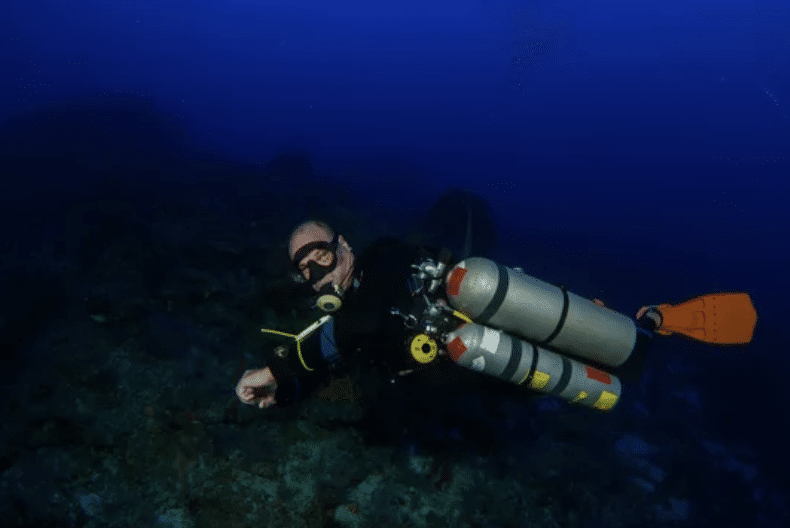
Backmount configurations—typically twin cylinders with an isolator manifold—remain the dominant system for many technical environments. Their strengths lie in stability, familiarity, and team standardisation.
Backmount systems offer:
Predictable trim characteristics
Centralised gas access
Straightforward gas sharing protocols
Strong compatibility with standard team procedures
These characteristics make backmount particularly effective for open-water technical diving, wreck diving with moderate penetration, and instructional environments. TDI technical diving courses often begin with backmount because it provides a stable platform for learning failure management and team coordination.
Backmount’s structure also supports clear, standardised responses under stress—an important factor in mixed-experience teams.
Sidemount: Flexibility, Access, and Constraint Management
Sidemount systems were developed to address specific challenges: restricted environments, long penetrations, equipment transport limitations, and access to valves in tight spaces. Their advantages are undeniable in the right context.
Equipment needs to be transported over difficult terrain
Redundancy must remain accessible at all times
However, sidemount demands higher discipline. Cylinder management, trim stability, and gas tracking are more complex, especially early in training. This is why advanced technical diving progression often introduces sidemount after foundational skills are solid.
Trim, Balance, and Reality
One of the most persistent myths is that one configuration automatically produces better trim. In reality, trim quality reflects diver skill far more than equipment choice.
Poorly adjusted backmount divers struggle with head-up posture. Poorly managed sidemount divers struggle with imbalance and drag. Technical diving training makes it clear that no configuration compensates for weak fundamentals.
The real question is not “which trims better?” but “which configuration supports stable trim for this diver, in this environment, with this objective?”
Gas Management and Cognitive Load
Configuration directly influences how divers perceive and manage gas. Backmount centralises gas, simplifying monitoring but reducing immediate redundancy access without valve drills. Sidemount decentralises gas, increasing accessibility but also increasing tracking complexity.
Neither approach is inherently safer. Safety emerges from familiarity, rehearsal, and procedural discipline—all core elements of TDI technical diving courses.
Divers transitioning between configurations often underestimate the cognitive load of relearning gas awareness. Technical training addresses this through gradual exposure rather than abrupt switching.
Team Compatibility and Standard Operating Procedures
In team diving, configuration compatibility matters. Gas sharing, positioning, and emergency responses are influenced by how equipment is worn. Mixed configurations are possible, but they require deliberate planning and mutual understanding.
This is why technical diving training emphasises configuration discussions during dive planning. Teams must understand not just their own equipment, but how teammates’ systems affect response options.
Configuration choice should support the team, not complicate it.
Logistics, Travel, and Operational Reality
Outside of idealised training environments, logistics matter. Travel restrictions, equipment availability, and transport challenges often influence configuration decisions more than theory.
Sidemount offers advantages for remote locations or airline travel. Backmount may be more practical where infrastructure supports twinsets and fills. Advanced technical diving progression encourages divers to adapt pragmatically rather than cling to a single solution.
Professional divers learn to choose tools that fit the operation—not the other way around.
Training Pathways and Configuration Bias
Some training environments introduce configuration bias early, presenting one system as “the right way.” While consistency is important during initial learning, this bias can limit adaptability if not addressed later.
Well-rounded technical divers understand multiple configurations and their trade-offs. Technical diving training at higher levels focuses on decision-making, not dogma.
At N9BO℠, configuration is taught as a contextual choice grounded in environment, objective, and team structure.
Choosing the Right Tool
The correct configuration is the one that:
Supports stable buoyancy and trim
Minimises cognitive load
Integrates cleanly with the team
Matches environmental constraints
Is thoroughly practised and understood
Anything else is secondary.
Backmount and sidemount are not rivals. They are tools in a technical diver’s toolkit. Mature divers choose deliberately—and change when conditions demand it.
The Professional Perspective
Professional technical divers are rarely dogmatic about configuration. They are pragmatic, conservative, and adaptable. They understand that environments change, objectives evolve, and equipment must follow.
At N9BO℠, divers are taught that identity does not keep you safe—judgement does.
Neither system compensates for poor planning or weak fundamentals. Both require rigorous training and repetition, addressed in TDI technical diving courses and related programmes.
At N9BO℠, configuration choice is framed as a practical decision, not a philosophical one. The right system is the one that supports safety, efficiency, and mission objectives.
Unsure Which Configuration Fits Your Diving?
Equipment configuration should support the environment and objective, not personal identity. Contact us to discuss configuration choices based on your diving goals.
Beyond Depth: Reframing the Meaning of Technical Diving
Technical diving is frequently described in terms of numbers: depths beyond 40 metres, mandatory decompression stops, helium-based breathing gases, or overhead environments. While these elements are often present, they are descriptors, not definitions. They describe where technical diving occurs, not what it is.
At its core, technical diving is a structured approach to risk management in constrained environments. These are environments where a diver cannot simply ascend directly to the surface without consequence. The constraint may be physiological (decompression obligation), physical (caves, wrecks, ice), logistical (distance from exit), or operational (task-driven objectives). What unites them is the requirement for deliberate planning and controlled execution.
This is why technical diving cannot be reduced to depth alone. A shallow cave dive may be more technically demanding than a deep open-water descent. Likewise, a modest decompression dive conducted poorly may carry more risk than a deeper dive executed conservatively. Technical diving training exists to teach divers how to recognise and manage these nuances rather than relying on superficial metrics.
The Fundamental Shift from Recreational Thinking
Recreational diving is built around a forgiving assumption: that a diver can always ascend directly to the surface if something goes wrong. This assumption underpins recreational gas planning, emergency procedures, and buddy systems. Technical diving deliberately removes that assumption.
Once a diver accepts that immediate ascent is no longer an option, everything changes. Gas planning must account for worst-case scenarios rather than average consumption. Equipment must be redundant, not merely reliable. Ascent strategies must be planned in advance, not improvised. Team coordination becomes central rather than optional.
This conceptual shift is one of the most challenging aspects for divers transitioning into technical environments. Many capable recreational divers struggle initially, not because they lack skill, but because they continue to think in recreational terms. TDI technical diving courses and PADI Tec training programmes are structured to dismantle these assumptions progressively and replace them with technical logic.
Planning as a Primary Skill, Not an Afterthought
In technical diving, the dive is effectively completed before the diver enters the water. Planning is not administrative overhead; it is the primary safety mechanism. A well-planned dive reduces uncertainty, limits exposure, and defines clear decision points.
Technical dive planning encompasses far more than depth and time. It includes: • Detailed gas calculations based on realistic consumption rates • Explicit contingency plans for equipment and team failures • Clearly defined abort criteria • Environmental and logistical considerations • Surface support and emergency response alignment
Through advanced technical diving progression, divers learn that planning is not static. It must be adaptable, conservative, and continuously re-evaluated as conditions change. This planning discipline is what allows technical divers to operate safely in environments that would otherwise be unforgiving.
Redundancy Is a System, Not Extra Equipment
One of the most visible differences between recreational and technical divers is equipment configuration. Twin cylinders, stage bottles, redundant regulators, and backup computers are common. However, redundancy is frequently misunderstood as “having more gear.”
True redundancy is systemic, not additive. Redundant equipment must be independent, accessible, and usable under stress. Carrying additional equipment without understanding how it integrates into failure scenarios can increase risk rather than reduce it.
This is why technical diving training emphasises equipment configuration as a system. Divers learn how failures propagate, how isolation prevents escalation, and how to maintain control while managing malfunctions. Equipment becomes a tool that supports decision-making, not a substitute for it.
Team Diving as the Default Model
Although technical divers are often described as highly self-reliant, technical diving is fundamentally a team activity. Teams provide redundancy, perspective, and problem-solving capacity that no individual can replicate alone.
This is why technical diving training emphasises equipment configuration as a system. Divers learn how failures propagate, how isolation prevents escalation, and how to maintain control while managing malfunctions. Equipment becomes a tool that supports decision-making, not a substitute for it.
Team protocols define how gas is shared, how failures are managed, how navigation decisions are made, and how ascent strategies are executed. These protocols are standardised, rehearsed, and refined through repetition. Advanced technical diving progression relies heavily on team cohesion because individual brilliance cannot compensate for systemic breakdowns.
This team-centric model also influences how divers communicate and position themselves underwater. Spacing, signalling, and pacing are deliberate. They exist to preserve shared situational awareness and reduce cognitive load when it matters most.
What Technical Diving Is Not
Clarifying what technical diving is not is just as important as defining what it is.
Technical diving is not about pushing limits for their own sake. Divers who pursue depth or complexity without justification are operating outside the discipline, not within it. Technical training actively discourages unnecessary exposure and promotes conservative objectives.
It is also not defined by equipment ownership. Purchasing technical gear does not confer technical competence. Capability is demonstrated through consistency, judgement, and restraint—qualities developed through training and experience, not transactions.
Finally, technical diving is not a shortcut to expertise or status. Instructors and experienced technical divers are often characterised by humility rather than bravado. They understand that the environments they operate in are indifferent to ego.
Why This Distinction Matters
Misunderstanding technical diving has consequences. Divers who approach it with recreational assumptions may underestimate risk, overestimate preparedness, or progress too quickly. This is why structured technical diving training exists: to replace assumptions with analysis and intuition with procedure.
At N9BO℠, technical diving is taught as a professional discipline grounded in realism, conservatism, and accountability. Whether divers pursue TDI technical diving courses, PADI Tec training programmes, or other advanced pathways, the objective remains the same: to produce divers who can think clearly, act deliberately, and exit complex dives safely—every time.
Technical diving is not defined by how far a diver goes. It is defined by how well they plan, how calmly they respond, and how consistently they return.
Considering Technical Diving?
Technical diving is not about depth alone, but about mindset, preparation, and discipline. If you’d like to discuss whether technical training is right for you, get in touch..