Mines Are Not Caves — and Not Wrecks
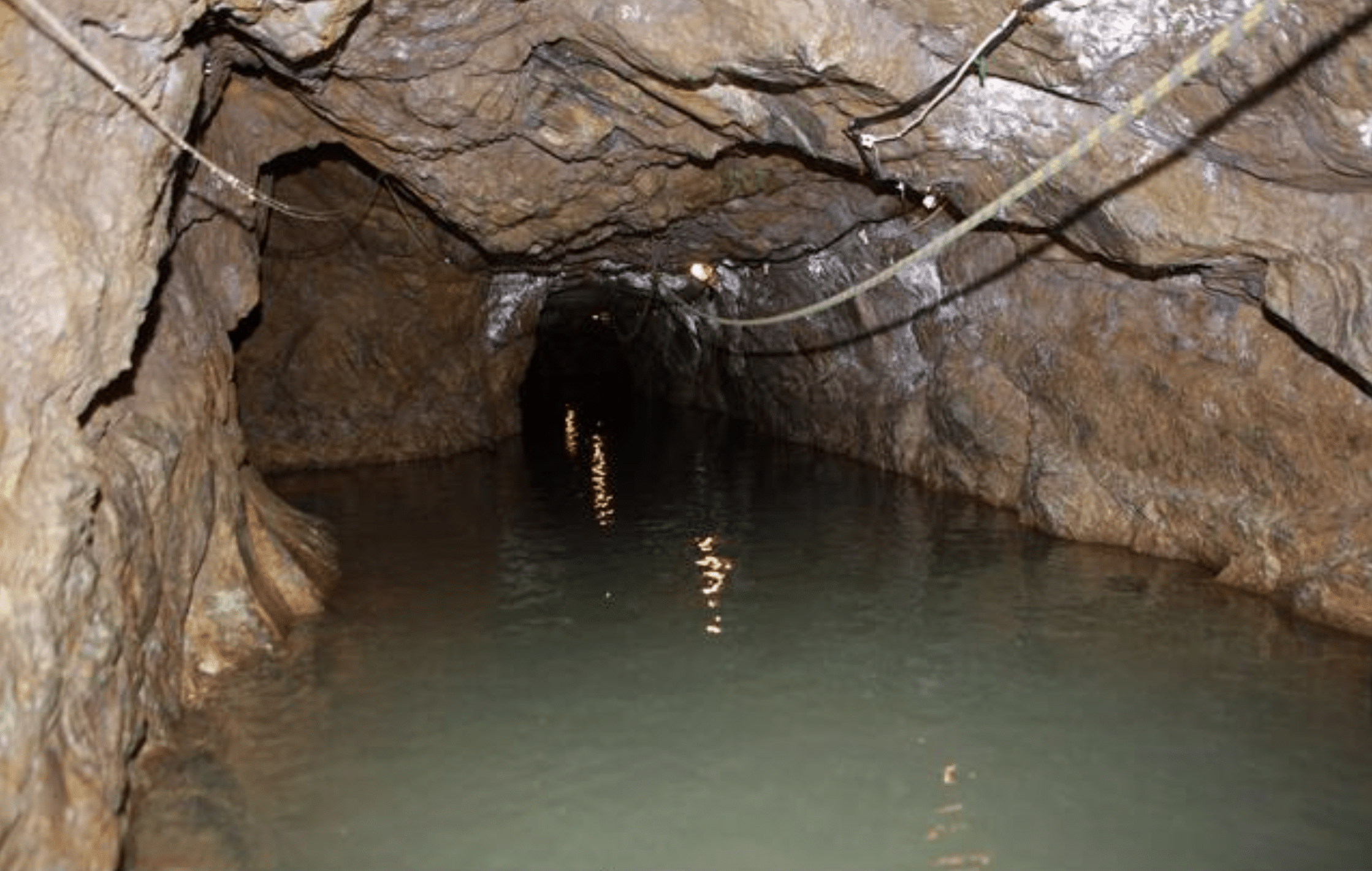
Flooded mines are often mistaken for either caves or wrecks.
They are neither.
Mines are:
- Engineered excavation networks.
- Built with timber supports and steel reinforcements.
- Designed for extraction, not underwater exploration.
Unlike caves, they are not naturally stable.
Unlike wrecks, they were never designed to withstand submersion.
They are artificial environments undergoing decay.
That distinction matters.
Structural Instability Is Constant
Mines deteriorate over time.
Timber supports rot.
Steel corrodes.
Ceilings collapse without warning.
Vertical shafts may drop into darkness below.
Loose debris accumulates on floors.
Unlike caves — where geology tends toward structural equilibrium — mines degrade unpredictably.
Divers must assume:
- Instability.
- Shifting debris.
- Fragile overhead.
Contact is not neutral.
Contact can trigger collapse.
Vertical Complexity and Multi-Level Architecture
Many flooded mines include:
- Multiple horizontal tunnels.
- Vertical winze shafts.
- Inclined ramps.
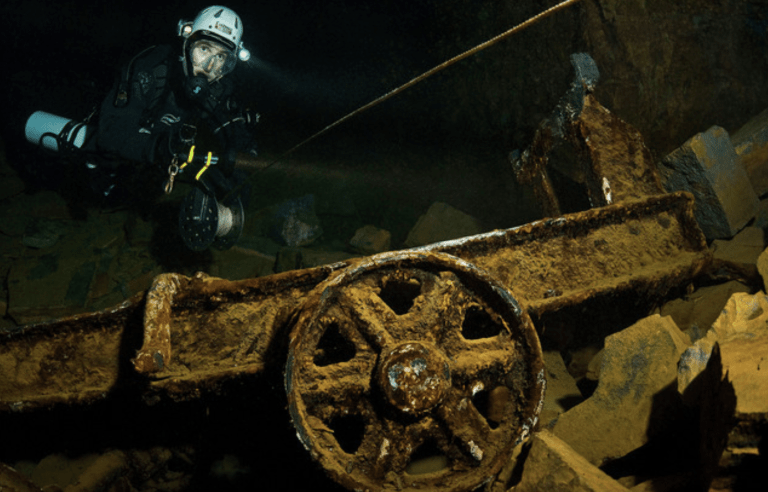
- Machinery chambers.
- Rail tracks and cart systems.
Navigation is three-dimensional.
A diver may move:
- Forward.
- Downward.
- Through ladders or shaft entries.
Line management must account for vertical transitions.
Gas planning must consider:
- Increased workload.
- Slower ascent.
- Multi-level exit routes.
Mines introduce depth and structure simultaneously.
Visibility and Silt Characteristics
Mine environments often contain:
- Fine mineral sediment.
- Oxidised particulate matter.
- Rust flakes.
- Organic decay.
Propulsion errors create immediate zero visibility.
Silt-outs in mines can be more severe than in caves due to:
- Powder-like sediment.
- Tight passageways.
- Vertical debris accumulation.
Proper propulsion techniques are non-negotiable.
At N9BO℠, overhead training emphasises trim precision and controlled movement before exposure increases.
Poor finning destroys orientation.

Contamination and Environmental Exposure
Some mines contain:
- Heavy metals.
- Chemical residues.
- Industrial by-products.
- Acidic water.
Water chemistry may affect:
- Equipment integrity.
- Exposure suits.
- Diver safety.
Pre-dive research is essential.
Mine diving is not casual exploration.
It requires environmental assessment.
Gas Planning for Architectural Overhead
Gas planning in mines must assume:
- Extended penetration.
- Complex navigation.
- Vertical transitions.
- Potential entrapment delays.
Minimum rule-of-thirds often becomes insufficient in deep or vertical systems.
Divers must plan:
- Conservative turn pressures.
- Team gas dependency.
- Stress-increased consumption rates.
Gas is time.
Time determines survivability.
Line Discipline in Artificial Structures
Mine passageways include:
- Sharp metal edges.
- Rail lines.
- Timber protrusions.
- Narrow beams.
Guidelines must be:
- Securely tied off.
- Protected from abrasion.
- Routed carefully around structural hazards.
Line damage in mines is more likely than in caves.
A compromised line removes primary exit reference.
Redundancy becomes critical.
Psychological Demands
Mine diving introduces:
- Claustrophobic architecture.
- Mechanical silence.
- Industrial remnants.
- Historical isolation.
Divers may encounter:
- Machinery.
- Tools.
- Abandoned equipment.
The environment can feel unnatural.
Psychological composure must remain stable.
Overhead competence is mental before physical.
Mine Diving vs Cave Diving
Caves:
- Follow geological logic.
- Have natural contour.
- Feature limestone stability (in many systems).
Mines:
- Follow human engineering.
- Include abrupt turns.
- May include vertical hazards.
- Decay structurally.
Mine diving often requires:
- More structural awareness.
- More entanglement avoidance.
- Greater caution around supports.
Artificial environments age differently than natural ones.
Training Requirements
Mine diving requires:
- Full cave-level competence (minimum).
- Advanced line protocols.
- Multi-level navigation training.
- Stage bottle management.
- Conservative decompression planning.
Mine diving is not an introductory overhead course.
It is advanced exposure.
Competence must exceed curiosity.
Respecting Industrial History
Flooded mines are:
- Historical sites.
- Industrial archives.
- Engineering relics.
Divers must avoid:
- Disturbing structures.
- Damaging remnants.
- Removing artefacts.
Professional conduct includes preservation.
Overhead diving includes stewardship.
Why Conservative Culture Matters Most
At N9BO℠, overhead training philosophy emphasises:
- Conservative margins.
- Slow progression.
- Honest readiness evaluation.
- Strict procedural discipline.
Mine diving amplifies consequence.
Margin must be protected.
Experience without discipline becomes liability.
Architecture Changes the Risk Model
Mine diving is:
- Complex.
- Vertical.
- Structurally unstable.
- Environmentally unpredictable.
It is not dramatic exploration.
It is methodical execution.
The most competent mine divers:
- Turn early.
- Move slowly.
- Protect line integrity.
- Guard gas margin.
Artificial overhead punishes improvisation.
Structure demands structure.
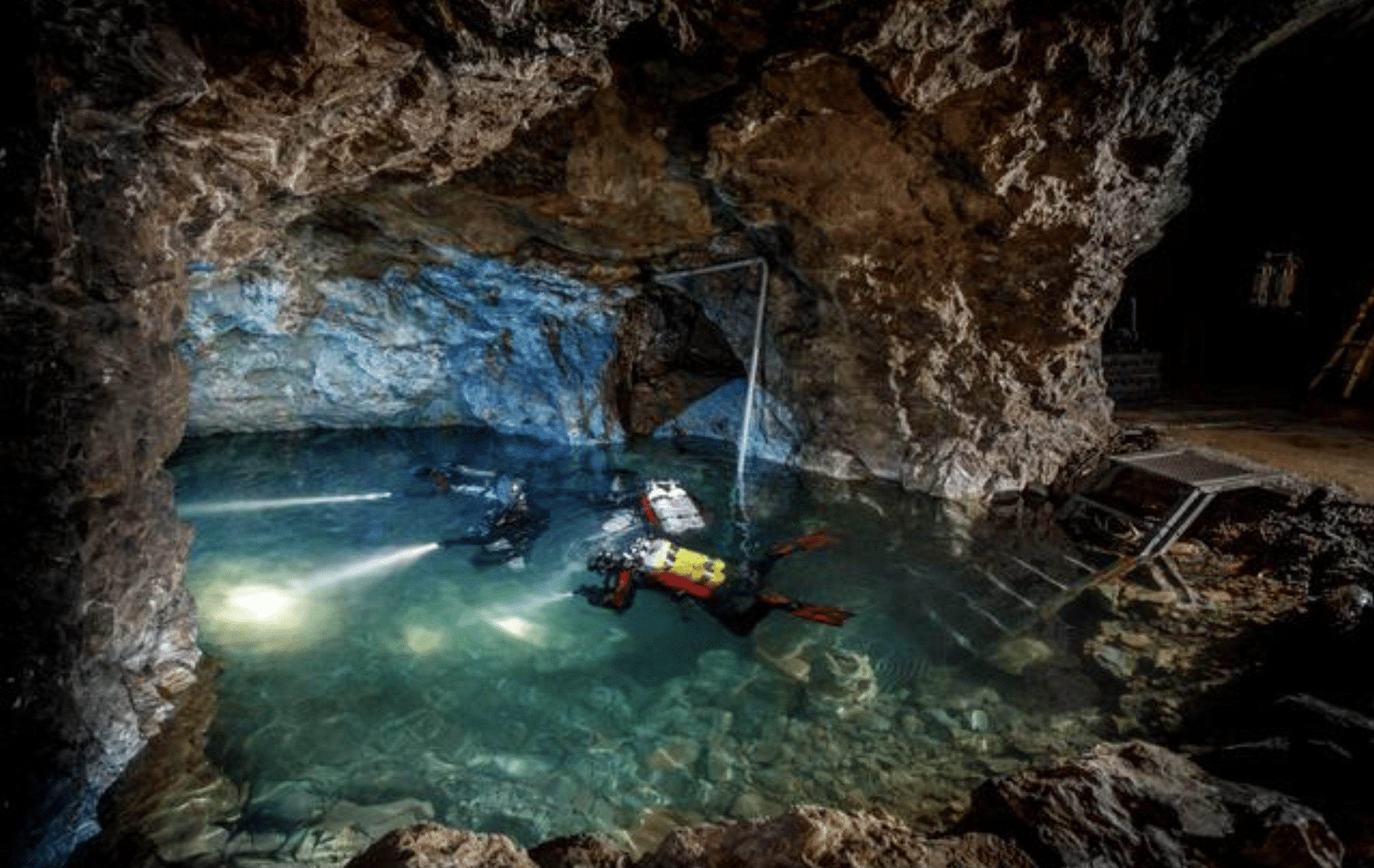
Considering Mine Diving Training?
Artificial overhead environments demand disciplined progression and advanced structural awareness. Contact N9BO℠ to discuss conservative overhead training pathways.
From the N9BO℠ Knowledge Base