What Is Cavern Diving?
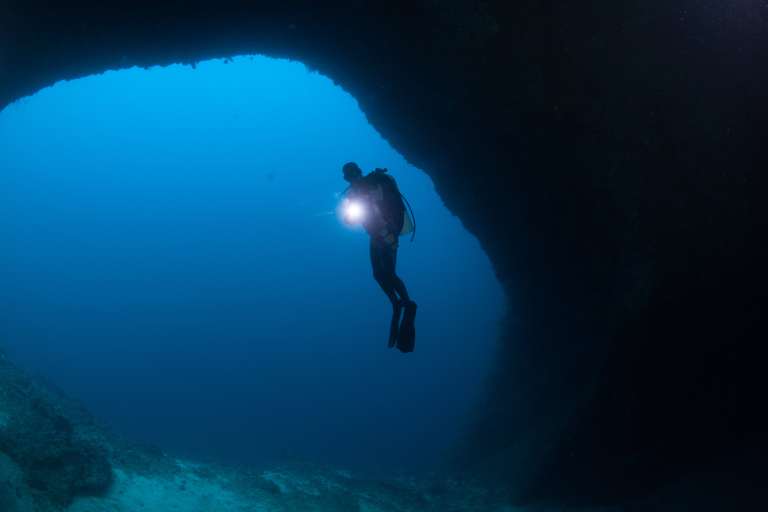
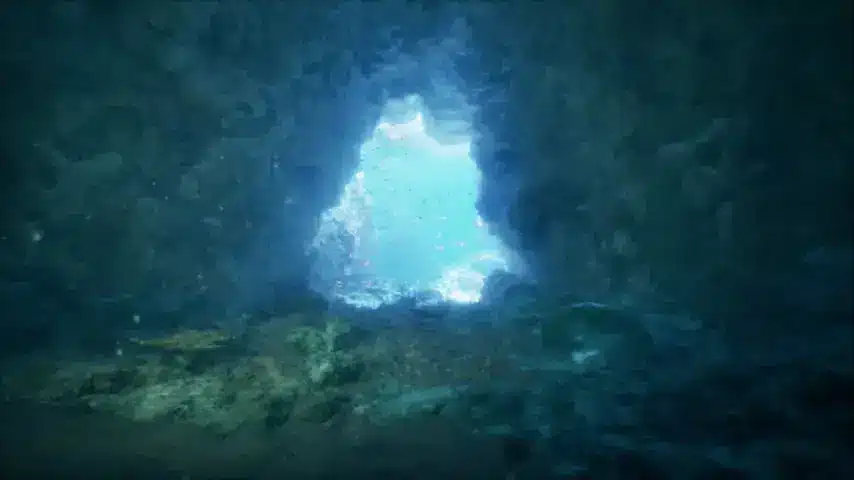
Cavern diving takes place inside natural overhead environments while remaining within the daylight zone and within sight of the entrance.
Unlike open water diving, cavern environments introduce:
- Overhead ceilings
- Confined spaces
- Limited direct access to the surface
- Increased navigation requirements
However, cavern diving remains distinct from full cave diving. Divers do not enter areas where natural light disappears completely, and penetration distances remain limited.
The objective is controlled introduction to overhead environment procedures rather than advanced cave exploration.
At N9BO℠, we describe cavern diving as the transition between open water and full cave environments.
Purpose of the Cavern Diver Course
The course is designed to introduce divers to the environmental, psychological, and procedural differences associated with overhead environments.
The programme develops:
- Cavern awareness and hazard recognition
- Guideline use and navigation procedures
- Buoyancy and propulsion control
- Gas management discipline
- Team positioning and communication
The emphasis is not exploration alone. It is controlled operation within environments that remove some of the freedoms associated with open water diving.
At N9BO℠, we teach cavern diving as an introduction to overhead environment discipline rather than adventure tourism.
The Importance of the Overhead Environment
The defining feature of cavern diving is the overhead environment itself.
In open water, divers can normally ascend directly to the surface during a problem. Inside a cavern, this may not be possible due to ceilings, restrictions, or distance from the entrance.
This changes:
- Emergency planning
- Gas management
- Team coordination
- Navigation priorities
The diver must maintain continuous awareness of:
- Exit direction
- Distance to open water
- Available gas reserves
- Environmental conditions
This creates a fundamentally different operational mindset.
At N9BO℠, we emphasise that overhead environments remove options and therefore demand discipline.

Light Zone Limitations
A key limitation of cavern diving is remaining within the natural light zone.
Divers must:
- Maintain visibility of natural daylight
- Stay within limited penetration distances
- Avoid entering fully dark cave environments
These restrictions significantly reduce complexity and risk compared to cave diving while still allowing divers to experience overhead environments safely.
The course reinforces strict operational boundaries and conservative procedures.
Crossing beyond the cavern zone without additional cave training introduces substantial risk.
At N9BO℠, we teach strict respect for environmental limits and training boundaries.
Buoyancy, Trim, and Propulsion Control
Cavern environments require significantly greater control than most recreational open water dives.
Poor buoyancy or propulsion technique can:
- Disturb silt and reduce visibility
- Damage fragile formations
- Disorient the team
- Increase stress and task loading
The course therefore places heavy emphasis on:
- Neutral buoyancy
- Horizontal trim
- Controlled finning techniques
- Precision movement underwater
Divers quickly learn that small movements have major consequences in confined environments.
At N9BO℠, we treat buoyancy and propulsion as primary safety systems in overhead diving.
Guidelines and Navigation Procedures
Guidelines are one of the most important safety tools in cavern diving.
Divers learn how to:
- Follow permanent guidelines
- Maintain line awareness
- Navigate using visual and tactile references
- Avoid entanglement and disorientation
The guideline provides the direct route back to the exit and becomes especially critical if visibility deteriorates.
Maintaining awareness of the line at all times is a fundamental overhead environment principle.
At N9BO℠, we reinforce that the guideline is the lifeline in cavern and cave environments.
Gas Management and the Rule of Thirds
Gas management becomes more structured in overhead environments because direct ascent may not be immediately possible.
The course introduces conservative gas planning methods such as the Rule of Thirds:
- One third of gas for penetration
- One third for exit
- One third reserved for emergencies
This approach ensures that divers maintain sufficient reserves to exit safely even if problems occur.
Gas planning is conducted at the team level rather than individually.
At N9BO℠, we emphasise that disciplined gas management is central to all overhead environment diving.
Psychological Adaptation and Stress Management
Many divers experience increased psychological stress during their first overhead environment dives.
Reduced space, ceiling restrictions, and environmental darkness can increase:
- Anxiety
- Breathing rate
- Task loading
- Situational stress
The course helps divers adapt gradually through controlled exposure and structured progression.
Calmness becomes critical. Stress management directly affects breathing efficiency, awareness, and decision-making.
Divers learn that mental control is just as important as technical skill.
At N9BO℠, we teach that overhead environments reward calmness and punish impulsive behaviour.
Environmental Awareness and Conservation
Cavern systems are highly sensitive environments that can be damaged easily by poor diving practices.
Divers are taught to minimise environmental impact by:
- Maintaining stable buoyancy
- Avoiding contact with formations
- Preventing silt disturbance
- Following established guidelines and routes
Many cavern systems contain geological formations that required thousands of years to develop.
Responsible cavern diving therefore combines exploration with environmental stewardship.
At N9BO℠, we emphasise that technical capability must always be matched by environmental responsibility.
Position Within the Overhead Environment Pathway
The Cavern Diver course is considered the entry point into overhead environment training.
It provides the foundational skills and awareness required before progressing toward:
- Intro to Cave Diver
- Full Cave Diver
- Advanced cave or technical overhead programmes
The course is not designed to create cave divers immediately. Instead, it introduces the discipline and operational mindset required for future progression.
At N9BO℠, we position cavern diving as foundational overhead environment education.
Operational Mindset
The Cavern Diver course reinforces a critical principle: overhead environments require discipline, planning, and control beyond normal recreational diving.
The diver must operate with:
- Constant situational awareness
- Structured gas planning
- Controlled movement
- Respect for environmental limitations
Success in cavern diving is not measured by penetration distance or exploration alone. It is measured by precision, calmness, and safe return.
At N9BO℠, we approach cavern diving as the beginning of overhead environment professionalism.
The cave does not adapt to the diver. The diver must adapt to the cave.

Begin Your Overhead Environment Journey
Contact N9BO℠ to begin your PADI Cavern Diver training and develop the awareness, buoyancy control, and procedural discipline required for safe overhead environment diving.
From the N9BO℠ Knowledge Base