Rescue Changes When Surfacing Is Not an Option
Most recreational rescue training assumes a simple premise: get to the surface.
In technical diving, this assumption collapses. Decompression obligations, overhead environments, depth, and gas constraints fundamentally alter how emergencies must be managed.
Why Technical Rescue Exists
Technical diving introduces risks that conventional rescue frameworks cannot address:
- Mandatory decompression
- Gas switching failures
- Loss of buoyancy at depth
- Entanglement in overhead environments
- Incapacitated divers who cannot be surfaced
TDI Technical Rescue exists to address these realities directly.
Instructor Perspective: Rescue Without Context Is Dangerous
Instructors frequently observe technically trained divers relying on recreational rescue instincts.
At N9BO℠, the Technical Rescue programme retrains response behaviour to match technical constraints, not emotional impulse.
What TDI Technical Rescue Focuses On
The course emphasises:
- Rescue decision-making under decompression obligation
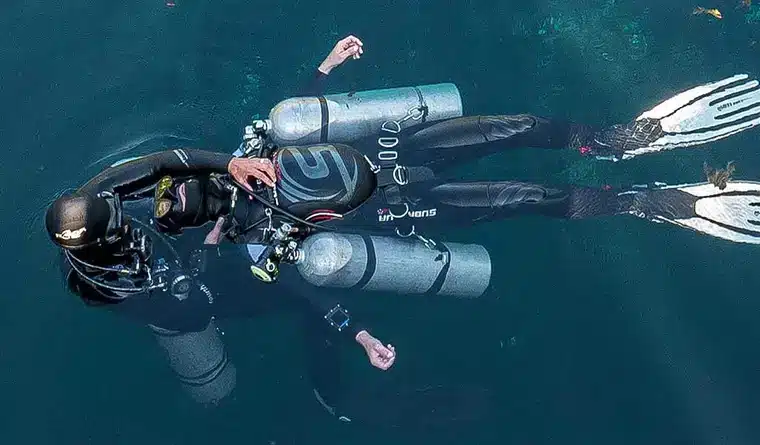
- Managing an incapacitated diver at depth
- Gas sharing and bailout under stress
- Controlled ascents with an injured diver
- Rescue in overhead and limited-access environments
This is rescue as risk management, not heroics.
Team-Based Rescue Philosophy
Technical rescue is never a solo problem.
Training reinforces:
- Clear role allocation
- Communication under task loading
- Maintaining team integrity during emergencies
Rescue actions must not create additional casualties.
Gas Is the Primary Constraint
Rescue planning revolves around gas availability.
Students learn to:
- Recalculate gas needs dynamically
- Prioritise breathable gas over speed
- Avoid catastrophic depletion during rescue
Physics and physiology dictate the pace.

Psychological Control Under Pressure
Technical rescue scenarios generate extreme stress.
Training deliberately introduces:
- Time pressure
- Equipment complications
- Cognitive overload
The objective is controlled, repeatable response, not improvisation.
Rescue vs Recovery
One of the most difficult lessons is recognising when rescue is no longer viable.
Technical rescue training addresses ethical decision-making, team safety, and professional judgement—topics often avoided elsewhere.
Integration With Other Disciplines
TDI Technical Rescue integrates seamlessly with:
- Technical diver training
- Cave and wreck programmes
- Public safety methodologies
It forms a bridge between exploration and emergency response.
Who Should Take This Course
This programme is essential for:
- Technical divers
- Cave and wreck divers
- Technical instructors
- Expedition team members
Anyone operating where surfacing is not immediate.
The Bottom Line
Technical diving emergencies demand technical rescue skills.
TDI Technical Rescue equips divers to respond rationally, safely, and professionally when the margin for error disappears. At N9BO℠, this course is taught beyond minimum standards, reflecting real-world operational expectations—not theoretical ideals.
Preparing for Advanced Rescue Scenarios?
Technical rescue training prepares divers to respond effectively when complexity increases beyond recreational limits. Contact us to discuss technical rescue training options.
From the N9BO℠ Knowledge Base