Configuration Is a Tool, Not an Identity
In technical diving communities, equipment configuration can become personal. Divers often defend backmount or sidemount as superior systems.
This perspective is flawed.
Neither system is inherently better. Each is a tool designed for specific operational parameters. The environment, dive objective, and team protocol should dictate configuration — not preference.
In overhead environments such as caves, mines, and complex wrecks, the configuration must support:
- Streamlined movement
- Gas redundancy
- Valve accessibility
- Restriction negotiation
- Predictable failure response
The correct choice depends on which system best supports these requirements in a given context.
Backmount in Structured Overhead Diving
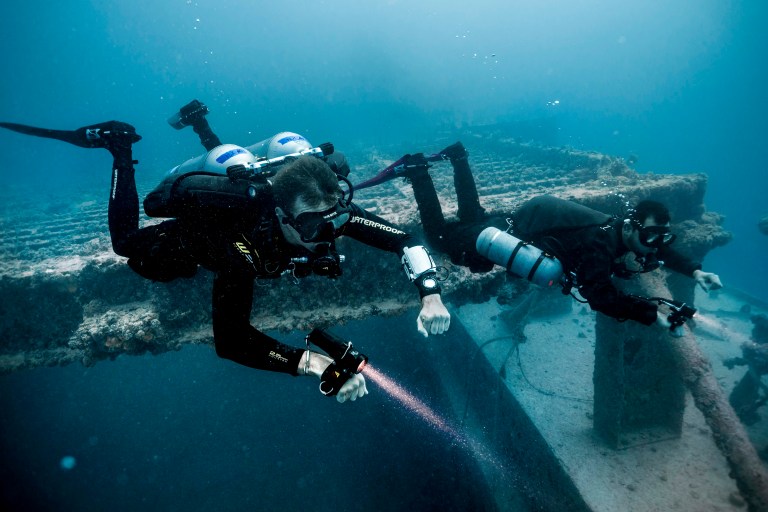
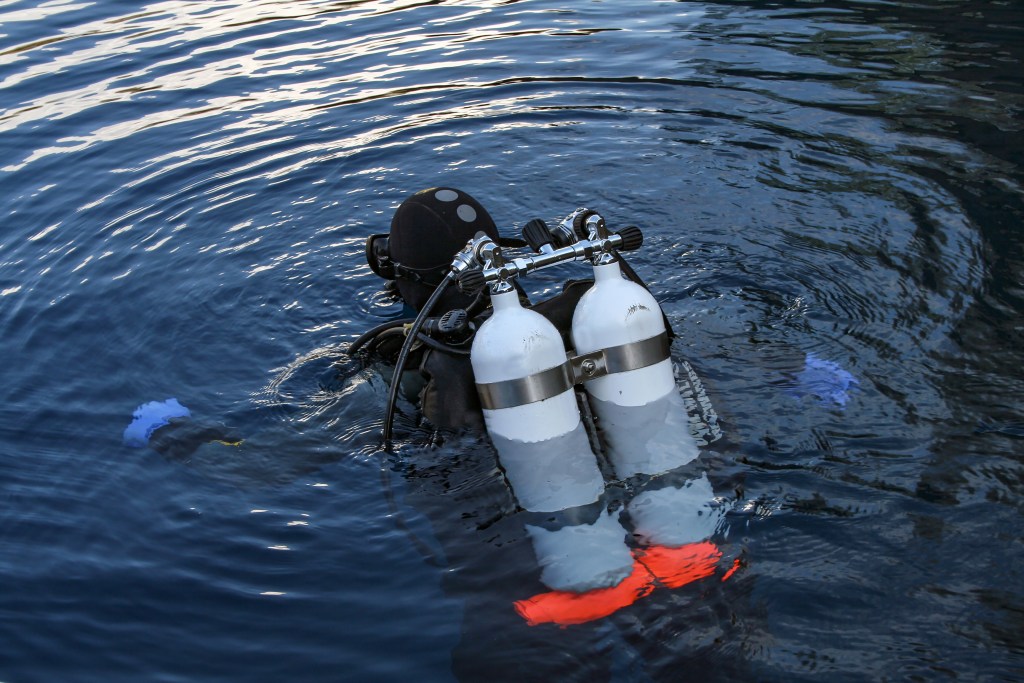
Backmount — typically twin cylinders with isolation manifold — remains the dominant configuration in many technical training pathways.
Its strengths include:
- Symmetrical gas distribution
- Centralised mass
- Simplified gas switching
- Standardised team protocols
Backmount systems are stable and predictable. For wide passages, open wreck interiors, and environments without severe restrictions, they provide streamlined efficiency and reduced complexity.
The isolator manifold offers integrated redundancy: if one regulator fails, gas can be shared internally within the twinset.
However, limitations appear in tight restrictions. The rigid twinset cannot be easily removed or repositioned. Valve access depends on flexibility and physical mobility. In extreme constraints, backmount can become restrictive rather than adaptable.
Sidemount in Restricted Environments
Sidemount was developed to address physical restrictions in cave diving. Cylinders mounted at the sides can be unclipped, repositioned, or pushed ahead of the diver in narrow passages.
Its advantages in overhead environments include:
- Modularity
- Improved valve access
- Streamlined profile in narrow restrictions
- Independent gas redundancy
In severe restrictions, sidemount becomes a practical necessity.
However, sidemount introduces operational demands:
- Alternating regulators
- Active gas balancing
- Harness precision
- Consistent clipping procedures
If not disciplined, sidemount can increase task loading rather than reduce it.
Failure Management Considerations
Failure response differs between systems.
In backmount:
- A failed regulator may require isolation procedures
- Gas is internally shared through the manifold
- Shutdowns demand flexibility
In sidemount:
- Each cylinder is independent
- Shutdowns are typically more accessible
- Gas loss is isolated to one cylinder immediately
Neither system eliminates failure risk. They simply distribute it differently.
Divers must train for failure within their chosen configuration — not assume one is inherently safer.
Team Standardisation Matters More Than Configuration
One of the most overlooked variables is team alignment.
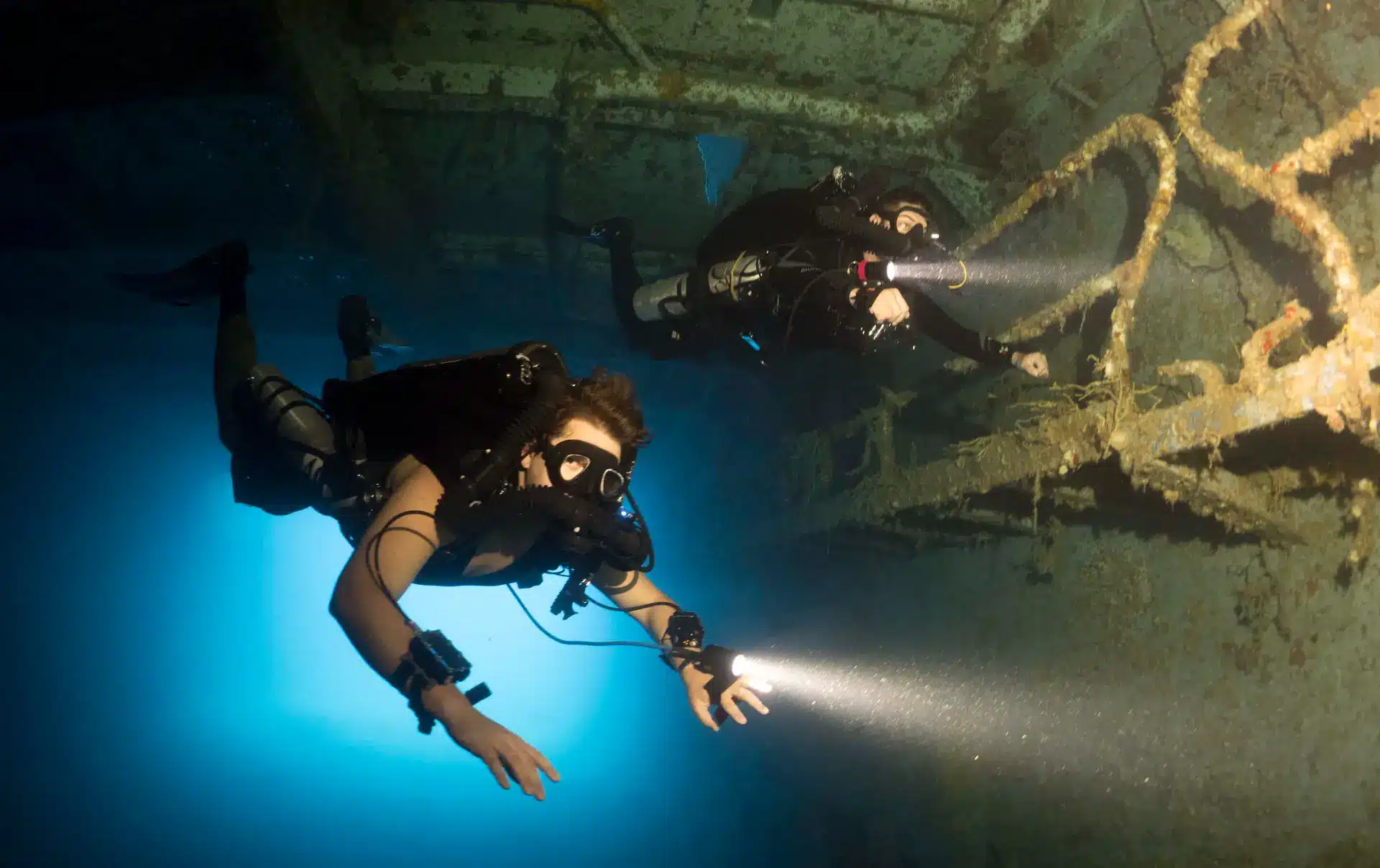
In overhead environments, mixed configurations within a team can complicate gas sharing protocols, hose routing compatibility, and emergency response procedures.
Standardisation improves predictability.
If a team chooses sidemount, all members should train consistently within that system. If a team operates in backmount, procedures must reflect that structure.
Operational cohesion outweighs personal comfort.
Task Loading and Cognitive Bandwidth
Both configurations influence mental workload.
Backmount simplifies gas management but may complicate restriction navigation.
Sidemount improves restriction mobility but increases active gas monitoring requirements.
Divers must evaluate:
- Environmental width
- Depth profile
- Duration
- Complexity of navigation
- Team experience
Configuration choice should reduce task loading, not increase it.
At N9BO℠, we emphasise that configuration must align with the operational objective. Equipment decisions are strategic, not aesthetic.
Training Pathways and Progression
Many divers are introduced to technical diving through backmount, then later transition to sidemount for cave or advanced wreck penetration.
This progression is logical when structured properly.
What is dangerous is switching configurations without retraining. Muscle memory, hose routing familiarity, and failure response procedures change significantly between systems.
Competence in one configuration does not automatically translate to another.
Training must be deliberate, progressive, and scenario-based.
Mission Alignment Over Preference
The central question is not “Which configuration do you prefer?”
It is:
“What does this dive require?”
Wide open wreck? Backmount may be optimal.
Complex restriction cave? Sidemount likely offers advantage.
Mixed environment? Team structure and redundancy planning must guide the decision.
Professional divers detach identity from equipment. They choose tools that maximise safety margin for the mission.
Configuration is never about ego.
It is about operational suitability, redundancy strategy, and disciplined execution.

Unsure Which Configuration Fits Your Diving Goals?
Backmount and sidemount each demand structured training and disciplined execution. Contact N9BO℠ to discuss configuration progression and overhead training pathways.
From the N9BO℠ Knowledge Base