Water Changes Everything About Crime Scenes
Water destroys assumptions.
Visibility, buoyancy, current, contamination, and time fundamentally alter how evidence behaves underwater. What would be trivial on land becomes complex and fragile below the surface.
Why Underwater Crime Scene Investigation Exists
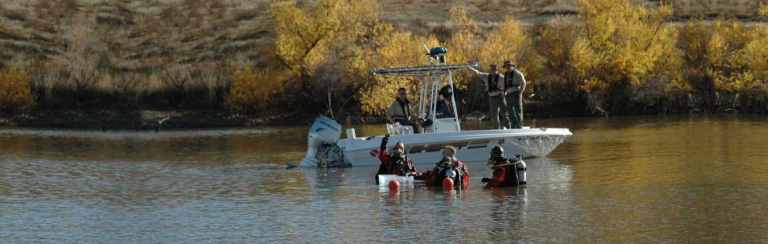
Public safety divers are often first on scene for:
- Homicides involving bodies of water
- Weapon disposal
- Vehicle submersion
- Evidence dumping
Without specialised training, well-intentioned recovery can destroy evidentiary value.
Instructor Perspective: Recovery Is Not Investigation
Instructors routinely observe divers equating “finding” with “solving.”
At N9BO℠, ERDI Underwater Crime Scene Investigator training reinforces a critical distinction: recovery without methodology can compromise justice.
Core Objectives of the Programme
This ERDI programme focuses on:
- Scene recognition and assessment
- Evidence preservation underwater
- Documentation before disturbance
- Chain of custody integrity
- Coordination with law enforcement and forensic teams
The diver becomes part of the investigative process—not a liability.

Scene Control in an Uncontrollable Environment
Unlike land scenes, underwater scenes cannot be secured traditionally.
Training addresses:
- Perimeter management using lines and markers
- Diver movement discipline
- Avoiding fin wash and sediment disturbance
Control is procedural, not physical.
Documentation Before Recovery
Photography, video, sketches, and measurements must occur before evidence is moved.
Divers learn to:
- Work methodically
- Maintain spatial references
- Communicate findings accurately to surface teams
Once disturbed, the original scene is gone forever.
Evidence Handling and Packaging
Waterlogged evidence behaves differently.
Training includes:
- Proper containment underwater
- Avoiding contamination
- Labelling and transfer protocols
Every step must withstand courtroom scrutiny.

Chain of Custody Underwater
Chain of custody does not pause because evidence is wet.
Divers are trained to:
- Log handovers precisely
- Maintain documentation accuracy
- Interface professionally with investigators
Errors here invalidate entire cases.
Legal Awareness for Divers
Divers are not investigators—but they operate within legal frameworks.
Training ensures divers understand:
- Their role boundaries
- Documentation requirements
- Testimony implications
Professional awareness protects both the case and the diver.
Integration With Forensic Teams
ERDI training emphasises coordination.
Divers must work seamlessly with:
- Law enforcement
- Forensic technicians
- Prosecutors
The underwater component must support the broader investigation.
The Bottom Line
Underwater crime scenes are fragile, complex, and legally sensitive.
ERDI Underwater Crime Scene Investigator training transforms divers from simple recovery assets into disciplined professionals who protect evidence, support justice, and operate with methodological integrity. At N9BO℠, this training is delivered with real-world realism and strict procedural discipline.
Working in Law Enforcement or Public Safety Diving?
Underwater evidence recovery requires specialised procedures and training to preserve investigative integrity. Contact us to discuss ERDI forensic and operational training programmes.
From the N9BO℠ Knowledge Base