Understanding Multi-Agency Operational Complexity
Public safety incidents involving water operations rarely involve a single agency. Fire services, law enforcement, and SAR units each bring different mandates, capabilities, and command structures.
This creates a layered operational environment where:
- Objectives may differ between agencies
- Command authority may shift depending on the phase of operation
- Procedures and terminology may not align
Without coordination, these differences result in confusion, duplication of effort, and increased risk.
At N9BO℠, we treat multi-agency operations as integrated systems requiring defined structure and communication.
Establishing Command and Control
Clear command structure is the foundation of effective coordination. Without defined authority, decision-making becomes fragmented.
Typically, a unified command structure is established, where:
- Overall incident command is defined
- Agency roles are assigned based on expertise
- Communication channels are standardised
This ensures that all actions align with a single operational objective.
Command must remain clear throughout the operation. Changes in leadership or unclear authority introduce delays and increase risk.
At N9BO℠, we emphasise early establishment of command structure as a critical control measure.
Defining Roles and Responsibilities
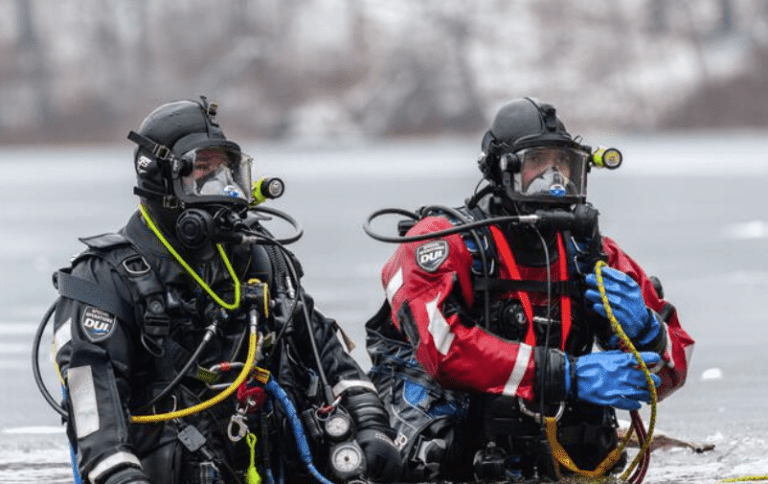
Each agency involved in a dive operation has specific responsibilities. Clarity in these roles prevents overlap and ensures efficient use of resources.
Typical roles may include:
- Fire services managing rescue and safety operations
- Police overseeing evidence handling and investigation
- SAR coordinating search patterns and recovery efforts
Dive teams must understand not only their own role but also how it integrates with others.
Unclear responsibilities lead to:
- Conflicting actions
- Gaps in coverage
- Reduced operational efficiency
At N9BO℠, role definition is established before operations begin, ensuring alignment across all teams.
Communication and Terminology Alignment
Communication is one of the most common failure points in multi-agency operations. Differences in terminology, procedures, and communication protocols create confusion.
Effective communication requires:
- Standardised terminology
- Defined communication channels
- Clear reporting structure
Radio communication must be structured to avoid overlap and misinterpretation.
Pre-incident planning should establish communication protocols that are understood by all agencies involved.
At N9BO℠, we treat communication as a controlled system, not an informal exchange.
Operational Planning and Briefing
Joint planning is essential to align objectives and procedures. Each agency must understand the operational plan before deployment.
Briefings should include:
- Incident overview and objectives
- Assigned roles and responsibilities
- Communication protocols
- Safety considerations and contingencies
This ensures that all personnel operate with the same understanding.
Without a unified briefing, teams may act independently, reducing coordination and increasing risk.
At N9BO℠, we integrate joint planning into all multi-agency operations.
Safety Integration Across Agencies
Safety procedures must be consistent across all agencies. Differences in safety standards or practices introduce risk.
Key considerations include:
- Alignment of diving procedures and limits
- Consistent use of safety divers and backup systems
- Shared understanding of emergency protocols
Safety cannot be managed independently by each agency. It must be integrated into a unified framework.
At N9BO℠, we ensure that safety standards are aligned across all participating teams.
Resource Management and Allocation
Multi-agency operations involve multiple resources, including personnel, equipment, and support systems. Effective allocation ensures that resources are used efficiently.
This includes:
- Assigning tasks based on capability
- Avoiding duplication of effort
- Ensuring availability of critical resources
Over-allocation or under-utilisation reduces effectiveness and may create operational gaps.
Resource management must be coordinated centrally to maintain control.
At N9BO℠, we treat resource allocation as part of command responsibility.
Managing Operational Phases
Dive operations often progress through multiple phases, including search, recovery, and investigation. Each phase may shift operational control between agencies.
For example:
- SAR may lead search operations
- Dive teams conduct recovery
- Police take control during evidence handling
Transitions between phases must be managed carefully. Clear handover procedures ensure continuity.
Uncontrolled transitions lead to confusion and potential loss of information.
At N9BO℠, we emphasise structured phase management to maintain operational clarity.
Training and Interoperability
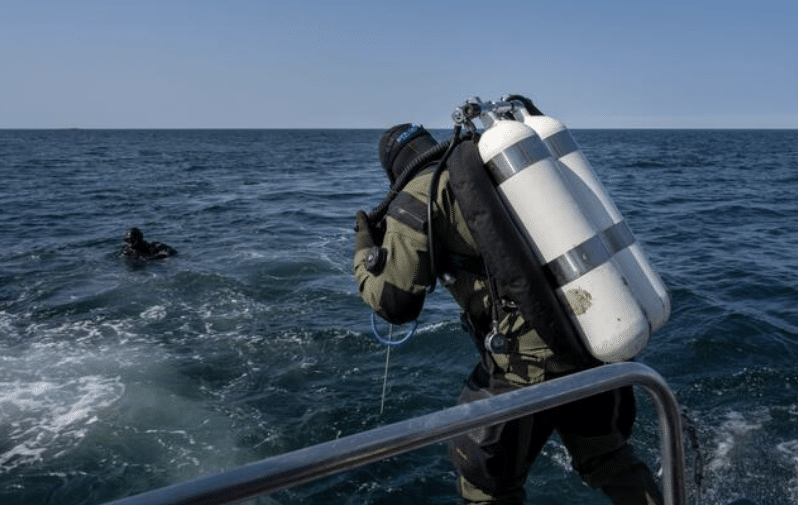
Effective multi-agency coordination cannot be improvised during an incident. It requires prior training and familiarisation.
Joint training exercises improve:
- Understanding of roles and procedures
- Communication effectiveness
- Operational coordination
Interoperability is achieved through repeated exposure and practice.
Without joint training, agencies operate in parallel rather than as a unified system.
At N9BO℠, we integrate multi-agency scenarios into training programmes to build coordination capability.
Common Coordination Failures
Failures in multi-agency operations are typically procedural rather than technical. Common issues include:
- Unclear command structure
- Inconsistent communication
- Overlapping responsibilities
- Lack of joint planning
These failures reduce efficiency and increase risk.
Addressing them requires structured procedures and disciplined execution.
At N9BO℠, we focus on eliminating these failure points through planning and training.
Operational Mindset
Multi-agency dive operations require a shift from independent action to coordinated execution. Success depends on structure, communication, and alignment of objectives.
Each agency contributes specific capabilities, but effectiveness depends on integration. Without this, the operation becomes fragmented.
At N9BO℠, we approach multi-agency operations as unified systems. Command, communication, and coordination are managed to ensure that all elements function together.
In complex environments, coordination is not an advantage—it is a requirement.

Coordinate Effectively Across Agencies
Contact N9BO℠ to integrate multi-agency coordination and public safety dive procedures into your training, ensuring efficient, safe, and unified operations.
From the N9BO℠ Knowledge Base