Technical & Overhead Environment Diving

PADI Tec 40 Course: Entering Decompression Diving with Controlled Limits

Purpose of the Tec 40 Course

The Tec 40 course is designed to move divers from no-decompression diving into an environment where decompression becomes part of the dive plan. This transition is deliberate and controlled, ensuring that divers are exposed to obligation without being overwhelmed by complexity.

Rather than increasing depth or duration significantly, the course focuses on introducing structure. Divers must begin to plan dives in detail, execute those plans precisely, and understand that ascent is no longer immediate but dependent on defined stop requirements.

At N9BO℠, we treat Tec 40 as the point where diving changes from flexible activity to controlled operation.


Introduction to Limited Decompression

The concept of limited decompression is central to Tec 40. Divers are introduced to short, planned decompression stops that must be completed before surfacing, creating a controlled form of obligation.

This exposure is intentionally restricted. It allows divers to experience the operational implications of decompression while still remaining within manageable limits. The emphasis is not on extending decompression time, but on executing it correctly.

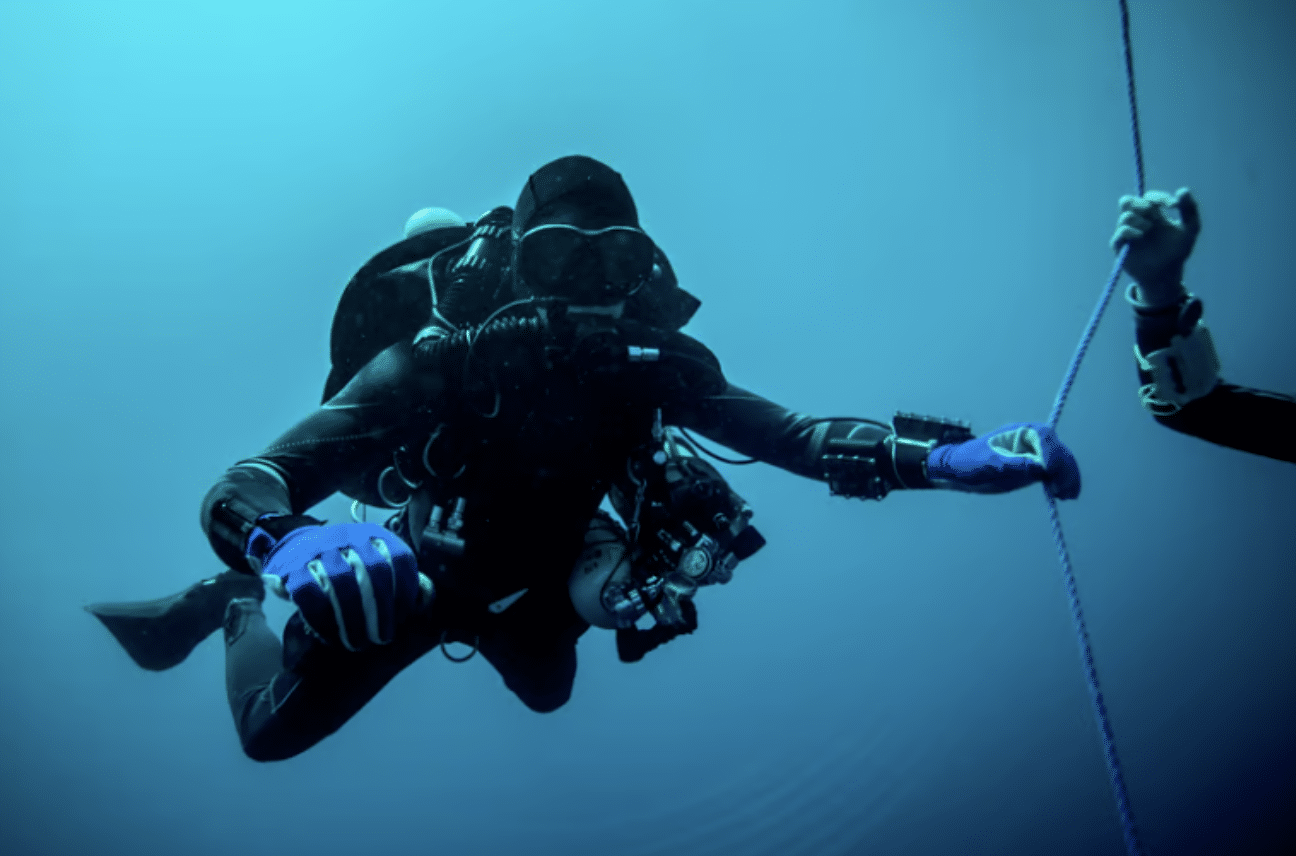
Maintaining depth during stops becomes a key requirement. Even minor deviations can affect decompression efficiency, which reinforces the need for precise buoyancy control and awareness.

At N9BO℠, we use limited decompression as a training tool to establish discipline before increasing exposure.


Depth Limits and Gas Selection

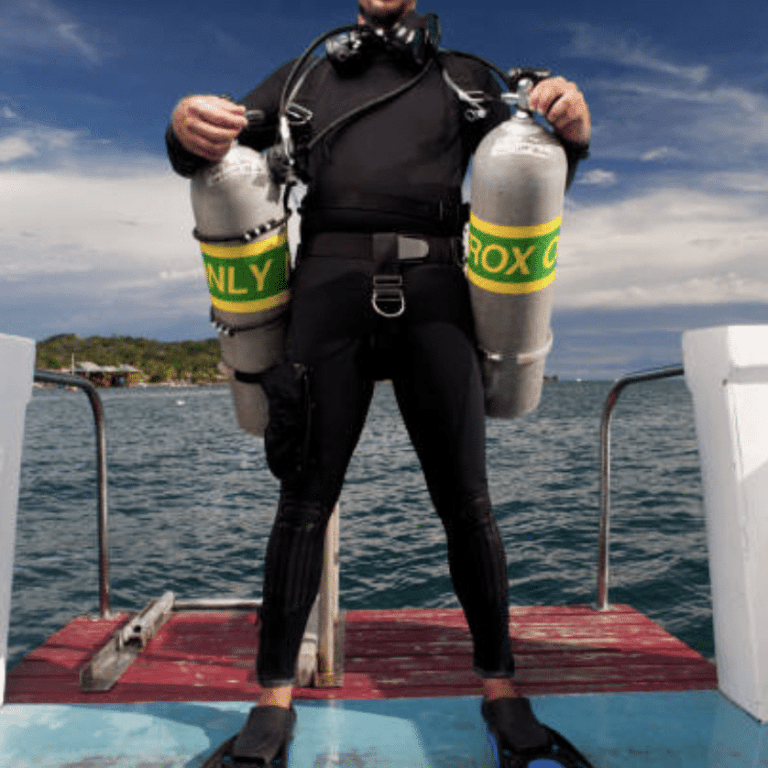
The Tec 40 course operates within defined depth limits, typically up to 40 metres, using air or enriched air as bottom gas. These limits are not restrictive by accident; they are designed to maintain control over narcosis, gas density, and overall complexity.

Gas selection remains relatively simple compared to higher technical levels, but it is no longer casual. Divers must understand how oxygen percentages affect maximum operating depth and how those limits influence planning.

This creates an early link between gas and depth. Divers begin to see that gas choice is not just a preference, but a defining factor in how the dive can be conducted.

At N9BO℠, we emphasise that respecting gas limits is one of the first indicators of technical discipline.

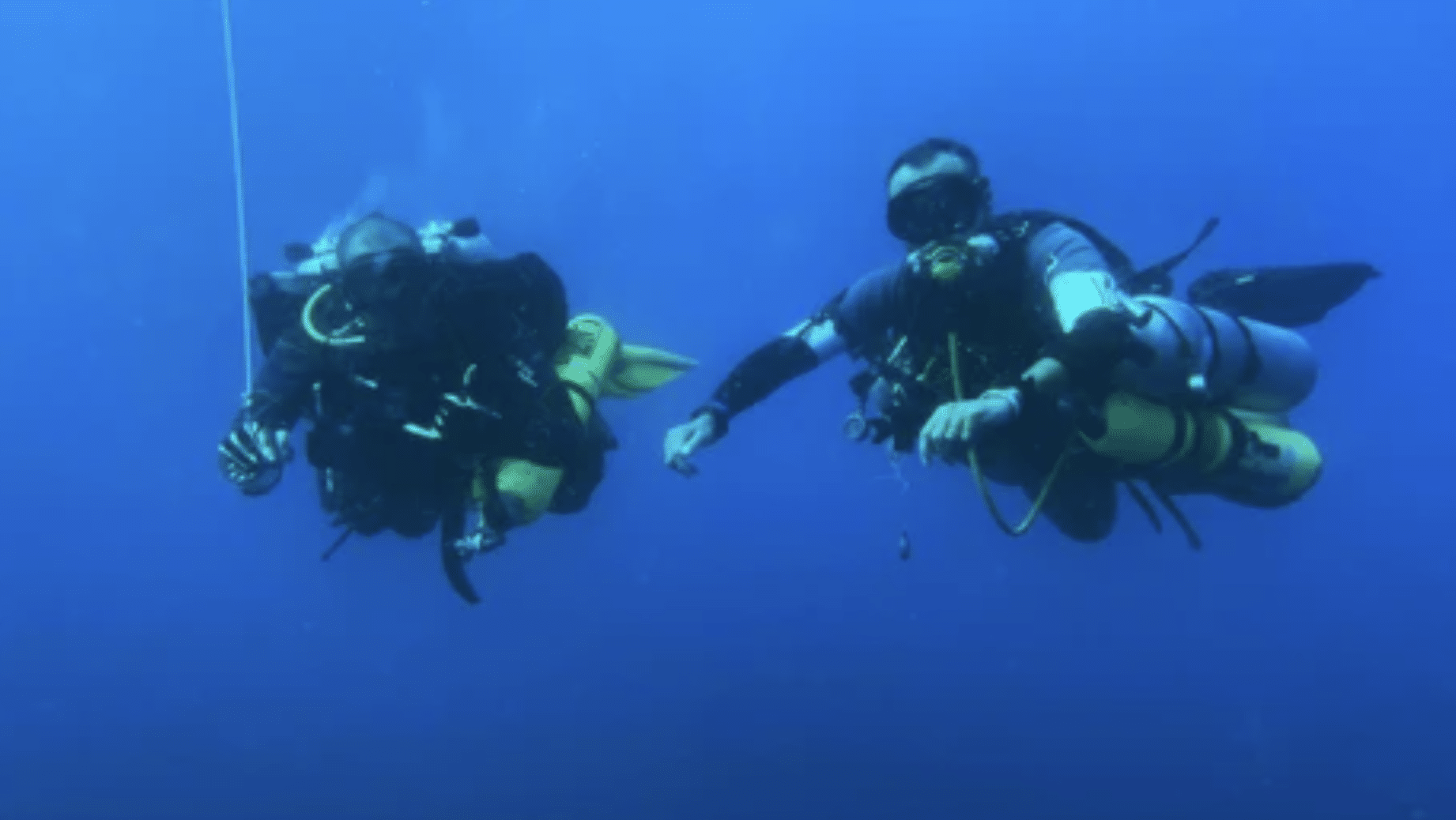
Two scuba divers in full kit are underwater in deep blue water, holding hands and facing the camera, with bubbles rising above them.

Equipment Configuration and Redundancy

Tec 40 introduces a transition in equipment philosophy. Divers move from recreational setups to technical configurations that include redundancy and structured layout.

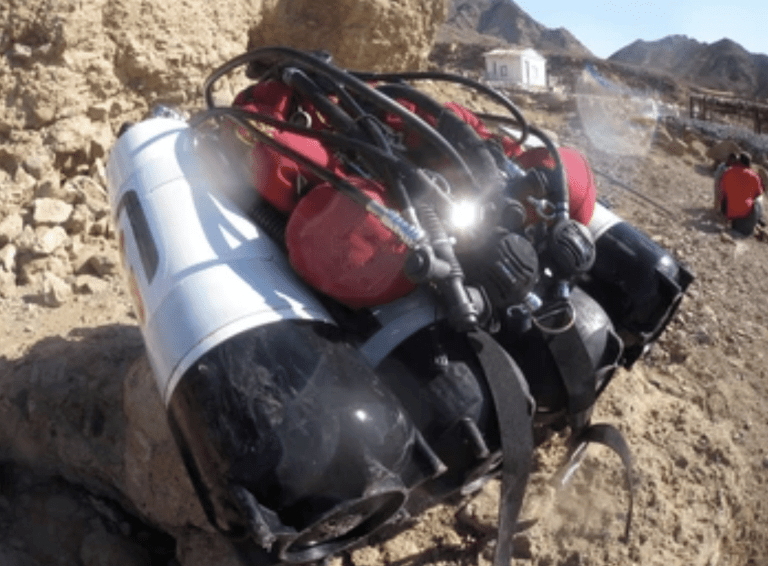
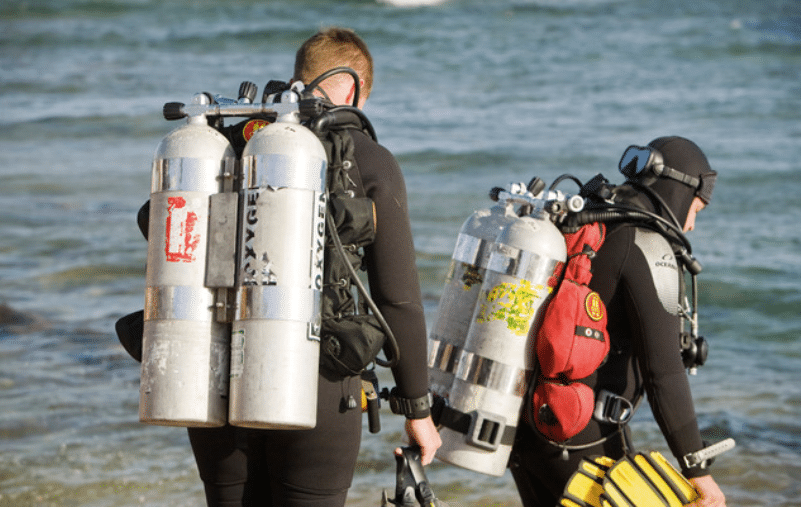
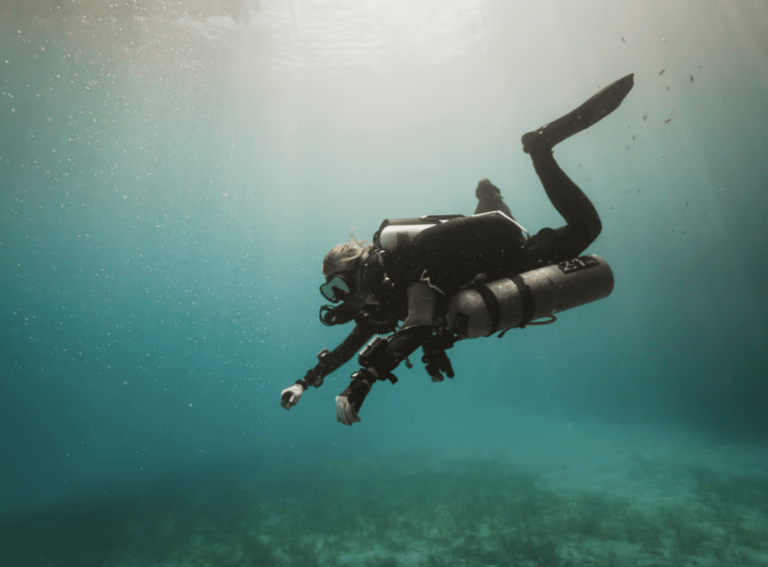
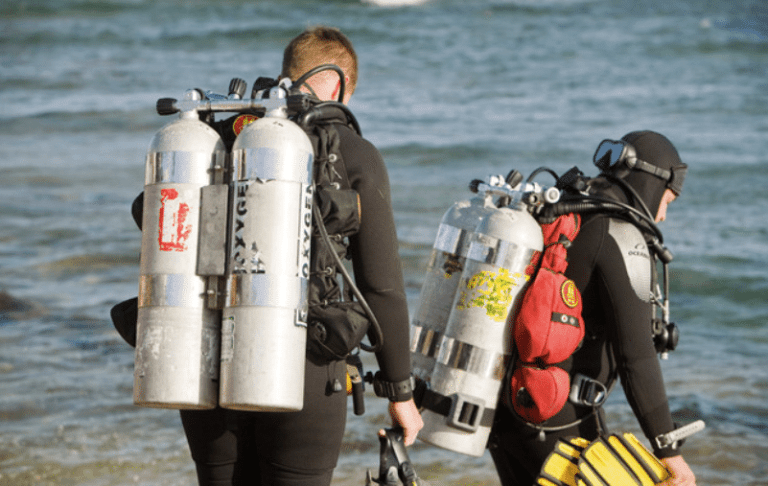
This may involve back-mounted doubles or sidemount systems, supported by additional cylinders for decompression gas. The configuration must be clear, accessible, and consistent, allowing the diver to manage both normal operations and potential failures.

Redundancy becomes essential because the diver can no longer rely on immediate ascent as a solution. Equipment must support in-water problem management without compromising the dive plan.

At N9BO℠, we treat equipment configuration as part of the operational system, ensuring it supports both execution and contingency.


Gas Switching and Decompression Procedures

Gas switching is introduced as a controlled and deliberate procedure. Divers begin to use a dedicated decompression gas, typically enriched air or oxygen, to improve off-gassing efficiency.

Each switch must be executed at the correct depth and verified before breathing. This introduces a level of procedural discipline that is new to many divers, as there is no tolerance for assumption or error.

At the same time, decompression stops must be held accurately. Depth control becomes critical, as even small changes can affect the outcome of the decompression schedule.

The diver must integrate gas switching and decompression into a single, continuous process rather than treating them as separate tasks.

At N9BO℠, we emphasise that these procedures must be repeatable and consistent under all conditions.


Managing Task Load and Maintaining Awareness

Tec 40 introduces a noticeable increase in task load. Divers must manage multiple variables simultaneously, including depth, time, gas supply, decompression status, and team positioning.

This creates a requirement for structured awareness. The diver must monitor all relevant parameters continuously while executing tasks without losing control of the overall situation.

One of the key challenges at this level is avoiding fixation. Focusing too heavily on a single task, such as a gas switch or timing, can lead to loss of awareness in other areas.

Developing the ability to balance execution and awareness is a central outcome of the course.

At N9BO℠, we train divers to maintain control across all variables, not just the task immediately in front of them.
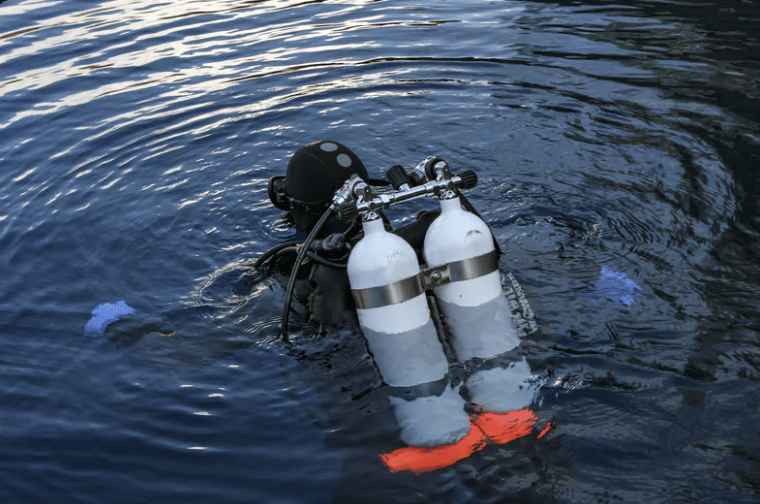
A scuba diver wearing a black wetsuit and twin air cylinders is partly submerged in calm, dark blue water, creating circular ripples around them. The diver’s gloves and a hint of orange kit are visible.

Team-Based Diving and Coordination

Tec 40 reinforces the transition from individual diving to team-based operation. Divers must work within a shared plan, maintaining alignment throughout the dive.

This includes synchronised descents, coordinated gas switches, and consistent decompression stops. Each diver must understand not only their own role, but how their actions affect the rest of the team.

Communication becomes more structured, even when limited. Positioning must be maintained, and awareness of team members must remain continuous.

This shift in approach reduces variability and increases safety.

At N9BO℠, we emphasise that technical diving is always executed as a coordinated system.


Upgrade Path to Tec 40 Trimix

The Tec 40 certification can be upgraded to Tec 40 Trimix, introducing the use of helium-based breathing gases within the same controlled depth range. This upgrade does not extend depth limits but improves diver performance by reducing narcosis and gas density, allowing clearer thinking and more efficient task execution at depth.

This pathway provides a direct progression for divers who want to improve performance before increasing exposure. It reinforces the principle that gas selection is a tool for control, not just a requirement for deeper diving.

At N9BO℠, we recommend this upgrade as a strategic step for divers aiming to build capability through improved performance rather than increased risk.


Position Within the Technical Pathway

Tec 40 is the first level in the PADI TecRec pathway where decompression is introduced in a controlled manner. It establishes the baseline for further progression into courses such as Tec 45 and Tec 50, where both depth and complexity increase.

The course is not intended to create advanced technical divers. It is designed to ensure that divers can manage obligation, equipment, and procedures before exposure increases.

Progression depends on demonstrating control at this level. Without it, additional depth or complexity only increases risk.

At N9BO℠, we position Tec 40 as a critical threshold in technical training.


Operational Mindset

The PADI Tec 40 course introduces the defining characteristic of technical diving: commitment to the dive plan. Once decompression obligation exists, the diver must complete the ascent as planned.

This requires a shift in mindset from flexibility to discipline. Every action must be deliberate, and every procedure must be executed consistently.

Awareness must remain continuous, and deviation from the plan must be recognised and managed immediately.

At N9BO℠, we approach Tec 40 as the point where diving becomes a controlled system. Planning, equipment, and execution must align to manage risk effectively.

In technical diving, capability is not defined by how deep you go, but by how precisely you manage the dive.
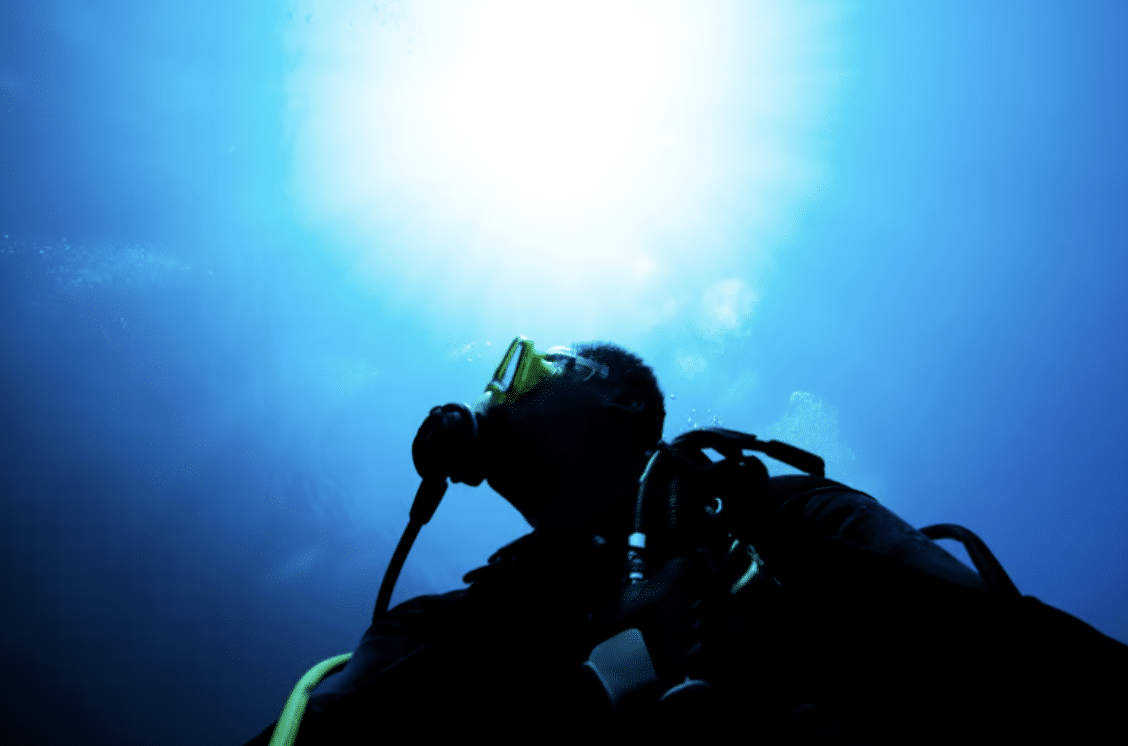
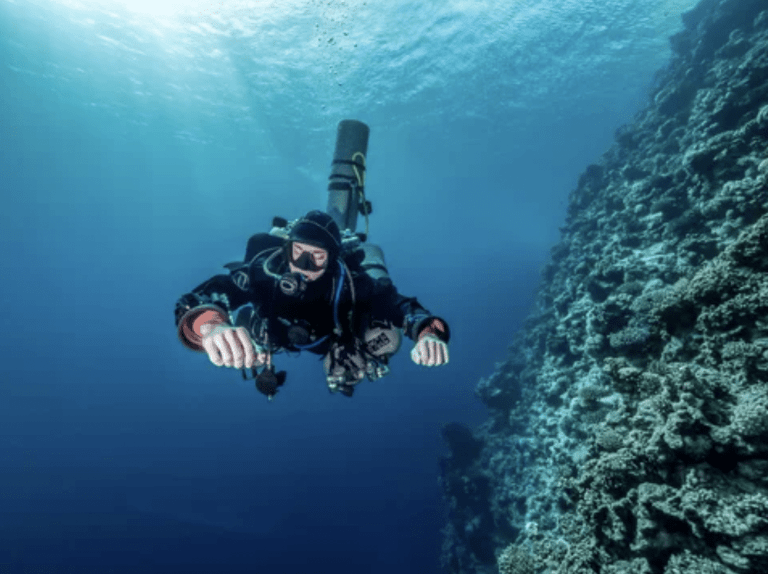
A scuba diver underwater is silhouetted against bright sunlight filtering through the blue water above, wearing a mask and breathing apparatus.


Enter Technical Diving with Control


Contact N9BO℠ to integrate PADI Tec 40 training into your development pathway, building the discipline and control required for safe decompression diving.


From the N9BO℠ Knowledge Base


Share this

PADI Tec Advanced EANx Diver [Distinctive]: Extending Capability Through Oxygen Management

Understanding PADI Distinctive Specialities

A PADI Distinctive Speciality is a course created by an individual instructor or training organisation, then reviewed and approved by PADI. Unlike standard PADI courses, which follow globally fixed curricula, distinctive specialities allow adaptation to specific operational needs, environments, or expertise.

This means the course structure, exercises, and emphasis can be tailored while still operating within PADI’s quality assurance framework. It allows training providers to integrate external standards, industry practices, or specialised knowledge into a recognised certification.

In the case of Tec Advanced EANx Diver [Distinctive], the programme aligns its depth limits, gas ratios, and operational scope with established Advanced Nitrox standards, while being delivered under a PADI framework.

At N9BO℠, we use distinctive specialities to bridge agency systems and deliver training that reflects real operational requirements.


Purpose of the Tec Advanced EANx Distinctive

The Tec Advanced EANx Diver [Distinctive] course mirrors the functional scope of Advanced Nitrox-level training. Divers are trained to use enriched air mixtures up to 100% oxygen for decompression, while operating within depth limits consistent with air or normoxic bottom gas profiles.

The objective is not to extend depth, but to refine decompression efficiency and control. Oxygen becomes a tool for managing exposure rather than simply an additional gas.

This course introduces a more structured approach to gas planning, where oxygen use is integrated into the dive profile from the outset. Divers must understand how oxygen affects both physiology and execution.

At N9BO℠, we position this programme as a precision course, focused on control rather than expansion.


Oxygen Exposure and Operational Limits

High oxygen concentrations introduce strict exposure limits that must be managed continuously. Partial pressure thresholds define maximum operating depths, and these limits must be respected without exception.

Divers must calculate these limits during planning and apply them accurately during execution. Gas switches must occur exactly at the correct depth, with no tolerance for approximation.

Exposure is cumulative, requiring continuous monitoring throughout the dive. The diver must remain aware of both current and total oxygen exposure.

This creates a dynamic control requirement. Oxygen management is not completed before the dive: it is maintained throughout.

At N9BO℠, we treat oxygen exposure as a live operational parameter.


Decompression Optimisation Through Oxygen Use

The use of high-oxygen gases allows for more efficient decompression by accelerating inert gas elimination. When integrated correctly, this reduces overall decompression time and improves safety margins.

However, this efficiency depends entirely on precision. Decompression stops must be held accurately, and gas switches must be executed at the correct depth.

The diver must integrate oxygen use into a structured ascent profile, ensuring that timing, depth, and gas selection remain aligned.

Oxygen does not simplify decompression—it increases its effectiveness when managed correctly.

At N9BO℠, we emphasise that optimisation requires discipline, not approximation.

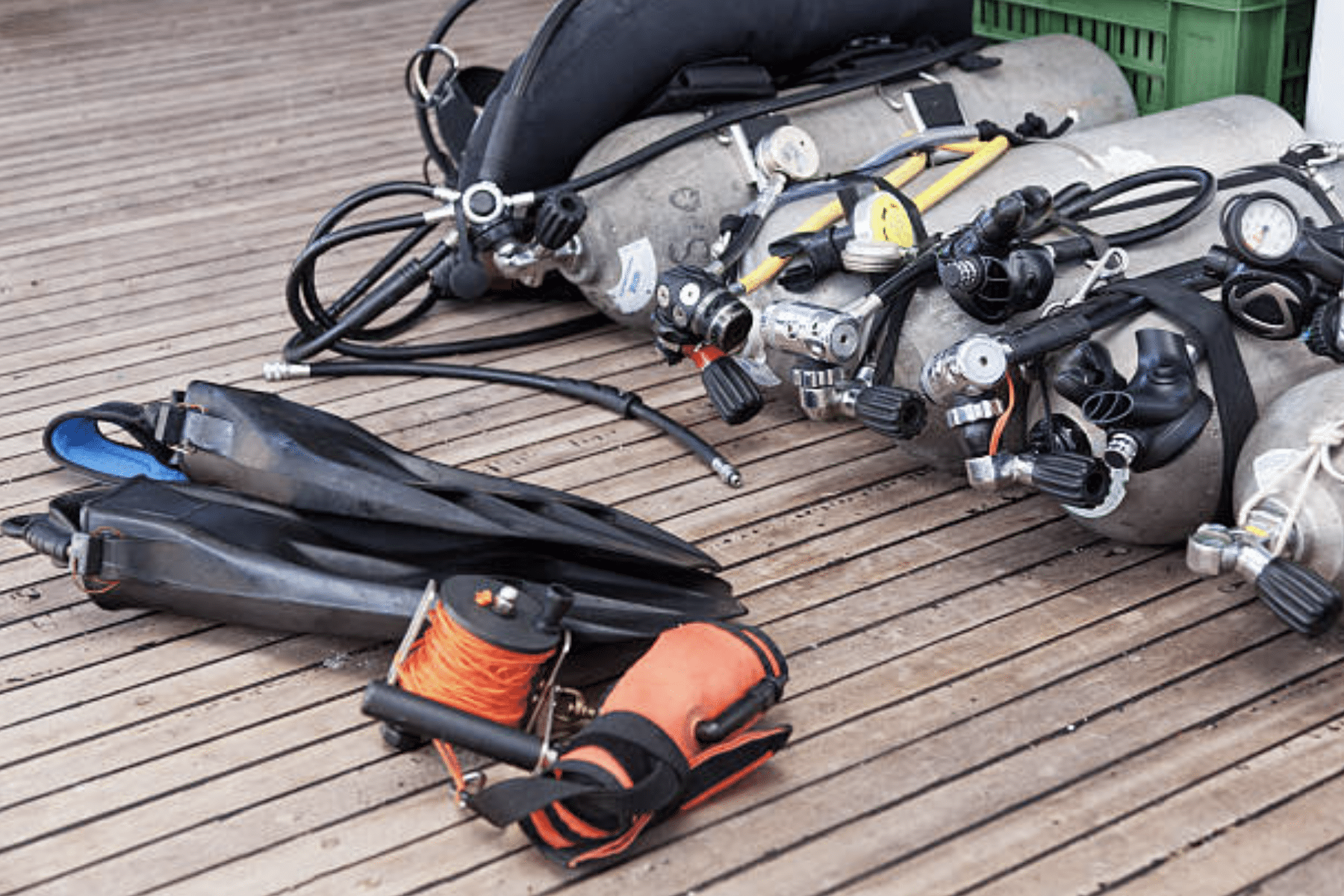
Several scuba diving cylinders with attached regulators lie on a wooden deck beside pairs of fins and an orange dive reel. The equipment appears organised and ready for use.

Gas Switching and Procedural Discipline

Gas switching is one of the most critical procedures in this course. Divers must transition between gases without error, using a structured and repeatable process.

Each switch must be verified before execution and confirmed immediately after. This removes reliance on assumption and reduces the likelihood of error.

Mistakes at this stage have immediate consequences, particularly when high-oxygen gases are involved at depth.

Procedural discipline ensures that switching remains controlled, even under increased task load.

At N9BO℠, we enforce consistent switching protocols as a primary safety control.


Equipment Configuration and Operational Clarity

Managing multiple gases requires a clear and standardised equipment configuration. Cylinders must be correctly labelled, regulators must be identifiable, and access must be immediate.

Configuration must support the diver’s procedures. It must reduce task load and eliminate ambiguity during critical phases of the dive.

Redundancy is also essential. The diver must be able to manage equipment failures without compromising decompression obligations.

Poor configuration introduces hesitation and increases risk.

At N9BO℠, we treat equipment as an integrated system that supports both execution and contingency.

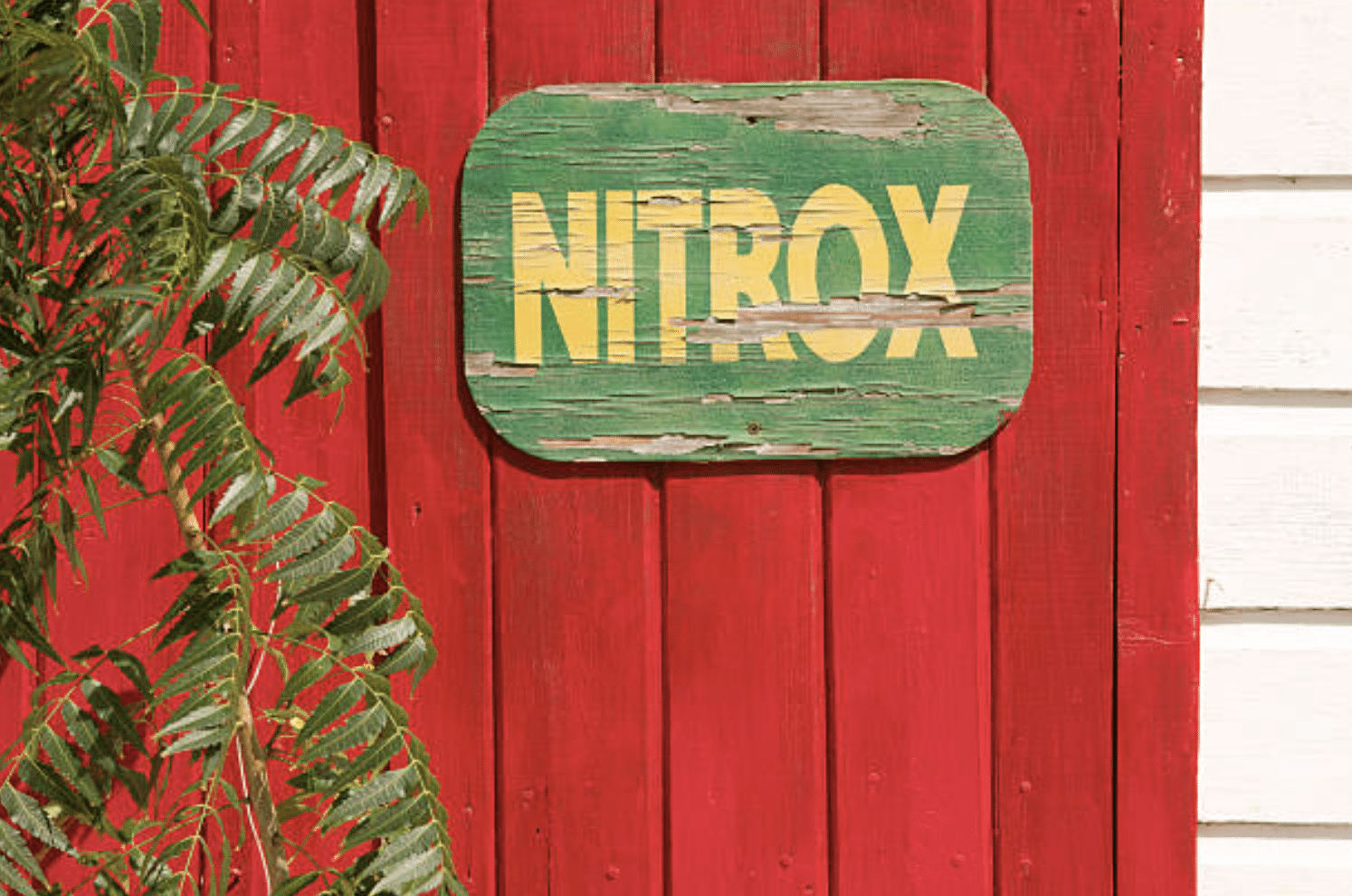
A weathered green sign with yellow NITROX text hangs on a red wooden wall, with green leafy branches partially visible on the left side.

Task Load and Awareness Management

The addition of multiple gases increases task load. Divers must manage depth, time, decompression status, and gas selection simultaneously.

Maintaining awareness becomes critical. The diver must monitor all variables continuously while executing procedures without disruption.

Fixation on a single task can lead to loss of control in other areas. Structured awareness ensures that no element is neglected.

This level of control is developed through repetition and discipline.

At N9BO℠, we train divers to maintain full situational awareness under increased complexity.


Integration Within the Technical Pathway

The Tec Advanced EANx Diver [Distinctive] course aligns with Advanced Nitrox-level capability and prepares divers for decompression procedures and deeper technical training.

It introduces the core requirement of technical diving: managing obligation through structured gas use.

This course forms part of a progression where oxygen management, decompression, and depth must eventually be combined into a single operational system.

Divers must demonstrate control at this level before increasing complexity.

At N9BO℠, we position this course as a critical step in building disciplined technical capability.


Operational Mindset

The Tec Advanced EANx Diver [Distinctive] course reinforces that technical diving is defined by precision and control. Oxygen is a powerful tool, but it must be managed within strict limits.

Planning must be exact, execution must be consistent, and awareness must be continuous. There is no tolerance for deviation.

At N9BO℠, we approach oxygen management as part of a controlled system. Gas selection, procedures, and equipment must align to reduce risk.

In technical diving, capability is not defined by the gases you carry, but by how precisely you use them.

Two large scuba cylinders, a smaller cylinder, black fins, and a diving mask rest on sandy beach near the shoreline, with the sea and blue sky visible in the background.


Master Oxygen Before Increasing Complexity


Contact N9BO℠ to integrate Tec Advanced EANx Diver training into your development pathway, ensuring precise gas management and disciplined decompression execution.


From the N9BO℠ Knowledge Base


Share this

PADI Tec Basics Course: Refining Control Before Technical Progression

Purpose of the Tec Basics Course

The PADI Tec Basics course is a multi-use programme focused on developing foundational technical diving skills while introducing divers to technical configurations. It is intentionally positioned as an optional level, allowing divers to refine their abilities before progressing to courses such as Tec 40.  

The course bridges the gap between recreational diving and technical diving, not by increasing depth or exposure, but by improving how the diver operates underwater. It introduces structure, discipline, and consistency, where recreational diving often allows flexibility.

At N9BO℠, we treat Tec Basics as a performance correction phase, ensuring divers meet technical standards before adding complexity.


Course Structure and Training Approach

Tec Basics follows a simple but focused structure: knowledge development, practical application, and two no-decompression dives.  

The emphasis is not on volume of dives, but on quality of execution. Each component is designed to reinforce control, awareness, and repeatability.

The training environment allows divers to isolate specific skills and refine them without the added pressure of decompression or depth. This creates a controlled setting where weaknesses can be identified and corrected early.

At N9BO℠, we emphasise that controlled environments produce measurable improvements in performance.


Equipment Configuration and Familiarisation

A central element of Tec Basics is exposure to technical equipment configurations. Divers may use single cylinders with redundancy, back-mounted doubles, or sidemount systems depending on their pathway.

The objective is not simply to introduce new equipment, but to demonstrate how configuration affects performance. Equipment must be streamlined, accessible, and predictable.

Divers learn that technical equipment is configured to support procedures, not comfort. Every hose routing, attachment point, and cylinder position has a defined purpose.

At N9BO℠, we treat equipment configuration as a system that reduces task load and increases operational clarity.


Control of Buoyancy, Trim, and Propulsion

Tec Basics places strong emphasis on buoyancy, trim, and propulsion techniques. These are not treated as secondary skills, but as the foundation of all technical diving.

Divers must maintain a stable horizontal position while executing tasks. Movement must be controlled and efficient, minimising unnecessary effort and environmental impact.

This level of control reduces cognitive load and improves awareness. It allows the diver to focus on planning and execution rather than constant correction.

At N9BO℠, we define technical readiness by the ability to maintain control under all conditions.

Scuba diving equipment and a lobster pot sit on a stone pier beside thick ropes, with a red boat floating on the water in the background.

Development of Core Technical Skills

The course introduces essential technical skills that form the basis of further training. These include gas shutdown procedures, regulator exchanges, team-based drills, and controlled ascents.

These skills are performed within a structured framework. Sequence and consistency are critical, as they form the basis for handling failures and managing risk.

Divers also begin to understand how task loading increases when multiple elements must be managed simultaneously.

This exposure highlights the importance of discipline and repetition.

At N9BO℠, we emphasise that skills must be repeatable, not situational.


Team Diving and Communication

Tec Basics introduces the concept of team-based diving. Unlike recreational diving, where divers may operate independently, technical diving requires coordination.

Divers learn to maintain positioning, communicate effectively, and operate within a shared plan. This includes gas sharing, ascent procedures, and awareness of team members.

Team structure reduces variability and ensures that all divers operate within defined limits.

This shift from individual to team-based operation is fundamental to technical diving.

At N9BO℠, we reinforce that technical diving is always executed as a coordinated system.

A scuba diver wearing a black suit and carrying twin air cylinders swims underwater near the surface, holding a line. Another diver is visible above near a white platform, with bubbles rising in the blue water.

Operational Value and Progression

Tec Basics serves multiple roles within the technical pathway. It prepares new divers for technical training, but also acts as a refinement tool for experienced divers adjusting to new configurations.

It is particularly valuable for:

  • Divers transitioning to doubles or sidemount
  • Divers preparing for Tec 40
  • Professionals seeking to standardise performance

The course does not introduce decompression or extended limits, but it ensures that divers are capable of managing those elements when they are introduced later.

At N9BO℠, we recommend Tec Basics as a preparatory standard rather than an optional extra.


Mindset Shift Toward Technical Diving

One of the most important outcomes of Tec Basics is the shift in mindset. Divers move from flexible execution to structured control.

Every action must be deliberate. Every procedure must be repeatable. Every dive must follow a defined plan.

This mindset prepares the diver for the increased demands of technical diving, where deviation introduces risk.

Confidence becomes based on consistency rather than comfort.

At N9BO℠, we emphasise that mindset is the first step in technical progression.


Operational Mindset

The PADI Tec Basics course establishes the foundation for technical diving by focusing on control, discipline, and standardisation.

It does not extend limits, but it defines how those limits will be managed in the future. Divers who complete the course operate with greater precision, reduced variability, and improved awareness.

At N9BO℠, we treat Tec Basics as a baseline requirement. It ensures that divers are prepared to handle the complexity of technical environments before those environments are introduced.

In technical diving, progression without control increases risk. Tec Basics ensures that control comes first.

A scuba diver in full kit is underwater, surrounded by deep blue water, with bubbles rising above their head as they swim horizontally.


Build Precision Before You Progress


Contact N9BO℠ to integrate PADI Tec Basics training into your development pathway and build the control, awareness, and discipline required for technical diving.


From the N9BO℠ Knowledge Base


Share this

PADI Discover Tec: First Exposure to Technical Diving Systems

Purpose of the Discover Tec Experience

Discover Tec is designed as an experience programme that introduces divers to the technical diving environment without committing them to full training. It allows participants to use technical configurations and perform basic skills under direct supervision, within confined water and no-decompression limits.  

The objective is exposure, not progression. Divers are not trained to operate independently at a technical level, but to understand the structure, discipline, and equipment involved.

This distinction is critical. Discover Tec is not about learning to dive technically—it is about understanding what technical diving demands.

At N9BO℠, we position Discover Tec as a controlled introduction that removes assumptions and replaces them with direct experience.


Understanding the Gap Between Recreational and Technical Diving

One of the key roles of Discover Tec is to demonstrate the difference between recreational and technical diving. Technical diving is defined by increased complexity, additional equipment, and reduced margins for error.

Even within shallow depths, participants experience how technical diving requires:

  • Structured procedures
  • Team-based execution
  • Continuous awareness of equipment and positioning

These elements are introduced early to highlight that technical diving is not simply “deeper diving,” but a different operational model.

The experience allows divers to recognise whether they are prepared to commit to that model.

At N9BO℠, we use Discover Tec to align expectations with reality before training begins.


Introduction to Technical Equipment

Participants are introduced to technical configurations such as back-mounted doubles or sidemount systems, along with long hose regulators and redundant gas setups.  

This exposure highlights how equipment in technical diving is configured for function, not convenience. Each component has a defined purpose and must be used consistently.

Divers quickly realise that equipment familiarity is essential. Unlike recreational setups, technical configurations require deliberate handling and awareness at all times.

The experience also introduces the concept of redundancy, where critical systems are duplicated to allow in-water problem management.

At N9BO℠, we emphasise that equipment is part of the operational system, not just a support tool.

Close-up of three diving reels with wound lines; one reel has white line, another has bright orange line, and the third has a white line, all hanging side by side on a metal rack.

Basic Technical Skills and Control

During the experience dive, participants perform selected technical skills in shallow water. These may include regulator switching, propulsion techniques, buoyancy control, and basic valve manipulation.  

The objective is not mastery, but exposure to how these skills are performed within a structured environment. Even simple tasks become more demanding when combined with technical equipment and positioning requirements.

Participants are encouraged to maintain horizontal trim and neutral buoyancy while executing tasks. This introduces the concept of control as a baseline requirement.

The experience often reveals that technical diving demands a higher level of precision than expected.

At N9BO℠, we use these exercises to demonstrate that control is the foundation of all technical progression.


Team-Based Diving Approach

Unlike recreational diving, where divers may operate with a degree of independence, technical diving is structured around team coordination.

Discover Tec introduces this concept by requiring participants to remain close to the instructor and operate within a controlled team structure.  

Even at shallow depth, this highlights how communication, positioning, and shared awareness become critical.

Participants begin to understand that technical diving is not an individual activity. Each diver’s actions affect the safety and efficiency of the entire team.

This shift in perspective is often one of the most important outcomes of the experience.

At N9BO℠, we emphasise that technical diving is always a coordinated operation.

Two scuba divers in full gear swim underwater, connected by lines, amid deep blue water.

Controlled Environment and Strict Limits

Discover Tec is conducted in confined water, with a maximum depth of 10 metres and no decompression obligation.  

These limits ensure that participants can focus on equipment and skills without the added risk of depth or decompression.

The environment is deliberately controlled. Conditions must allow participants to stand if needed, and supervision remains direct at all times.

This creates a safe platform for introduction while maintaining the structure of technical diving.

At N9BO℠, we treat controlled exposure as essential for building understanding without increasing risk.


Pathway Into Technical Training

Discover Tec can be credited toward further training, such as Tec Basics or Tec 40, provided that participants meet prerequisites and complete required elements.  

This creates a structured progression. Divers can move from experience to formal training without repeating initial steps.

However, progression is not automatic. The experience is intended to help divers decide whether they are ready to commit to the discipline required.

Technical diving demands time, training, and a shift in mindset. Discover Tec provides the information needed to make that decision.

At N9BO℠, we treat Discover Tec as an evaluation phase, both for the diver and the instructor.


Operational Mindset

PADI Discover Tec reinforces a key principle: technical diving requires discipline, structure, and control beyond recreational standards.  

Even within a controlled environment, participants experience the increased task load, equipment complexity, and need for coordination.

The programme does not attempt to simplify technical diving. It presents it in its operational form, allowing divers to understand the requirements before committing to training.

At N9BO℠, we approach Discover Tec as a reality check. It ensures that divers enter technical training with a clear understanding of what is required.

In technical diving, exposure without understanding creates risk. Controlled introduction builds capability.

A scuba diver underwater in full kit holds onto a rope and looks at their wrist, possibly checking a dive computer or watch, with another diver visible in the background.


Experience Technical Diving the Right Way


Contact N9BO℠ to book your Discover Tec experience and take the first step into technical diving with structured guidance and professional supervision.


From the N9BO℠ Knowledge Base


Share this

TDI Trimix Diver Course: Controlling Depth Through Gas Selection

Purpose of the Trimix Diver Course

The TDI Trimix Diver course is designed to train divers to plan and execute staged decompression dives using trimix—a blend of oxygen, nitrogen, and helium—to a maximum depth of 60 metres / 200 feet. 

This course builds directly on Decompression Procedures and Extended Range. It does not introduce new concepts in isolation, but integrates them into a more demanding operational framework where depth, decompression, and gas selection must all be managed simultaneously.

The defining objective is control at depth. The diver must be able to maintain awareness, execute procedures, and manage decompression while operating in an environment where physiological stress is significantly increased.

At N9BO℠, we position Trimix as the point where depth is no longer limited by training—but by how effectively the diver manages it.


Why Trimix Becomes Necessary

As depth increases, air becomes increasingly unsuitable due to narcosis and gas density. Nitrogen narcosis impairs judgement and reaction time, while dense gas increases breathing effort and fatigue.

Trimix addresses these limitations by replacing part of the nitrogen with helium. This reduces narcotic effects and improves the diver’s ability to think and act clearly under pressure. 

The result is not simply increased depth capability, but improved performance at depth. Tasks that would be compromised on air can be executed with greater precision.

However, this benefit introduces complexity. The diver must now manage a custom gas mixture, ensuring it is appropriate for depth, oxygen exposure, and decompression requirements.

At N9BO℠, we emphasise that trimix is not about going deeper—it is about maintaining control where air no longer allows it.


Integration of Depth, Decompression, and Gas

Trimix diving combines multiple layers of complexity. The diver must manage deep exposure, staged decompression, and multiple gas mixtures within a single dive.

Each element is interdependent. Depth influences gas selection, gas selection affects decompression, and decompression dictates the ascent profile.

This creates a fully integrated system where planning must be precise and execution must match the plan exactly. There is no tolerance for approximation.

The diver is committed to the dive from the moment of descent. Once decompression obligation is incurred, ascent must follow the defined schedule.

At N9BO℠, we treat Trimix diving as a system of aligned variables, not separate tasks.

Two scuba divers in full kit are underwater in clear blue water, each holding onto equipment and surrounded by bubbles, floating side by side.

Gas Planning and Management

Gas planning becomes significantly more complex at this level. The diver must plan bottom gas, travel gas if required, and decompression gases, each with defined roles.

Trimix blends must balance:

  • Oxygen levels to avoid toxicity
  • Helium content to reduce narcosis
  • Nitrogen content to maintain manageable decompression

These factors must align with depth and duration.

During the dive, gas management is continuous. The diver must monitor consumption, confirm gas switches, and maintain awareness of remaining reserves.

Errors in gas planning or execution are not easily corrected underwater. They must be prevented through precision and discipline.

At N9BO℠, we emphasise that gas planning is the central control mechanism in Trimix diving.


Equipment Configuration and Redundancy

Trimix diving requires a fully redundant equipment system. Divers typically use doubles or sidemount configurations, supported by multiple stage cylinders.

This configuration must allow the diver to manage both normal operations and potential failures without direct ascent.

Equipment must be:

  • Clearly marked and identifiable
  • Accessible under all conditions
  • Configured to support efficient gas switching

Redundancy is essential because failures must be managed at depth, often with decompression obligation already in place.

At N9BO℠, we treat equipment as a critical part of risk management, ensuring that it supports both performance and failure response.


Task Load and Cognitive Performance

Even with reduced narcosis, Trimix diving involves high task load. The diver must manage depth, time, gas, decompression, positioning, and team coordination simultaneously.

The advantage of helium is that it preserves cognitive function, allowing the diver to process information more effectively than on air.

However, this does not reduce the need for discipline. Structure and procedure remain essential. Without them, increased capability leads to increased risk.

The diver must maintain awareness across all variables, avoiding fixation and ensuring continuous control.

At N9BO℠, we train divers to operate within structured systems that maintain performance under complexity.

Two scuba divers in wetsuits, carrying large oxygen cylinders on their backs, walk towards the water from the shore. The sea appears calm, and the weather looks clear.

Team Coordination and Standardisation

Trimix diving is conducted within a team framework. Each diver must operate in alignment with others, particularly during ascent and decompression.

Procedures must be standardised. Gas switches, ascent rates, and stop durations must be synchronised to ensure consistency.

Communication must remain clear and structured, even in limited conditions. Each diver must understand the plan and execute it without deviation.

Coordination reduces variability and ensures that the team functions as a single operational unit.

At N9BO℠, we emphasise that Trimix diving is a team-controlled environment.


Position Within the Technical Pathway

The Trimix Diver course represents a major progression in technical diving. It expands depth capability while introducing gas selection as a primary tool for managing risk.

Beyond this level, further training introduces hypoxic mixes and greater depths, increasing both complexity and exposure.

Trimix marks the point where the diver moves beyond air-based limitations and begins to operate within a fully mixed-gas framework.

At N9BO℠, we position Trimix as a defining step in technical development.


Operational Mindset

The TDI Trimix Diver course reinforces a core principle: depth is not the challenge—control at depth is.

The diver must manage physiological, technical, and operational factors simultaneously. Success depends on precision, discipline, and continuous awareness.

There is no tolerance for improvisation. Every element of the dive must be planned, verified, and executed exactly as intended.

At N9BO℠, we approach Trimix diving as a controlled system where gas selection, equipment, and procedures work together to manage risk.

In technical diving, the ability to go deeper is secondary. The ability to maintain control at depth is what defines competence.

Two scuba divers in full kit face each other underwater, surrounded by deep blue sea with sunlight streaming down from above. Bubbles rise from one diver as they interact.


Control Depth Through Knowledge and Discipline


Contact N9BO℠ to integrate TDI Trimix training into your development pathway, building the precision, awareness, and control required for advanced technical diving.


From the N9BO℠ Knowledge Base


Share this

TDI Helitrox Diver Course: Introducing Helium to Reduce Risk

Purpose of the Helitrox Course

The TDI Helitrox course is designed to train divers to plan and conduct staged decompression dives to a maximum depth of 45 metres / 150 feet using a blend of oxygen, nitrogen, and a limited amount of helium. 

This makes it a direct progression from the TDI programmes Decompression Procedures and Extended Range, but with one critical addition: helium. Unlike deep air diving, where narcosis becomes a limiting factor, Helitrox introduces a controlled percentage of helium to reduce its impact.

The course maintains the same structured approach to decompression but improves diver performance by reducing physiological constraints.

At N9BO℠, we position Helitrox as the point where gas selection becomes a performance tool, not just a requirement.


Why Introduce Helium

Helium is introduced to address two key limitations of air at depth: narcosis and gas density. As depth increases, nitrogen becomes increasingly narcotic, affecting judgment, reaction time, and awareness.

By replacing part of the nitrogen with helium, the diver reduces these effects. The result is clearer thinking, improved task execution, and more stable performance under pressure.

Helitrox mixes are limited, typically containing no more than 35% helium. This ensures that the course remains accessible while still providing measurable benefits.

The introduction of helium does not remove risk—it redistributes it. The diver must now manage gas complexity alongside decompression.

At N9BO℠, we emphasise that helium is not about going deeper. It is about operating more effectively at depth.


Integration of Decompression and Mixed Gas

Helitrox combines decompression procedures with mixed gas diving. The diver must plan and execute staged decompression while also managing multiple gas types.

This creates a layered operational environment. The diver is responsible for depth control, decompression timing, gas switching, and maintaining awareness of gas composition.

The presence of helium improves cognitive performance, but it does not reduce the need for discipline. Procedures must still be followed exactly, and execution must remain precise.

Decompression remains an obligation. The addition of helium simply improves the diver’s ability to meet that obligation effectively.

At N9BO℠, we treat Helitrox as a refinement of decompression diving, not a simplification.

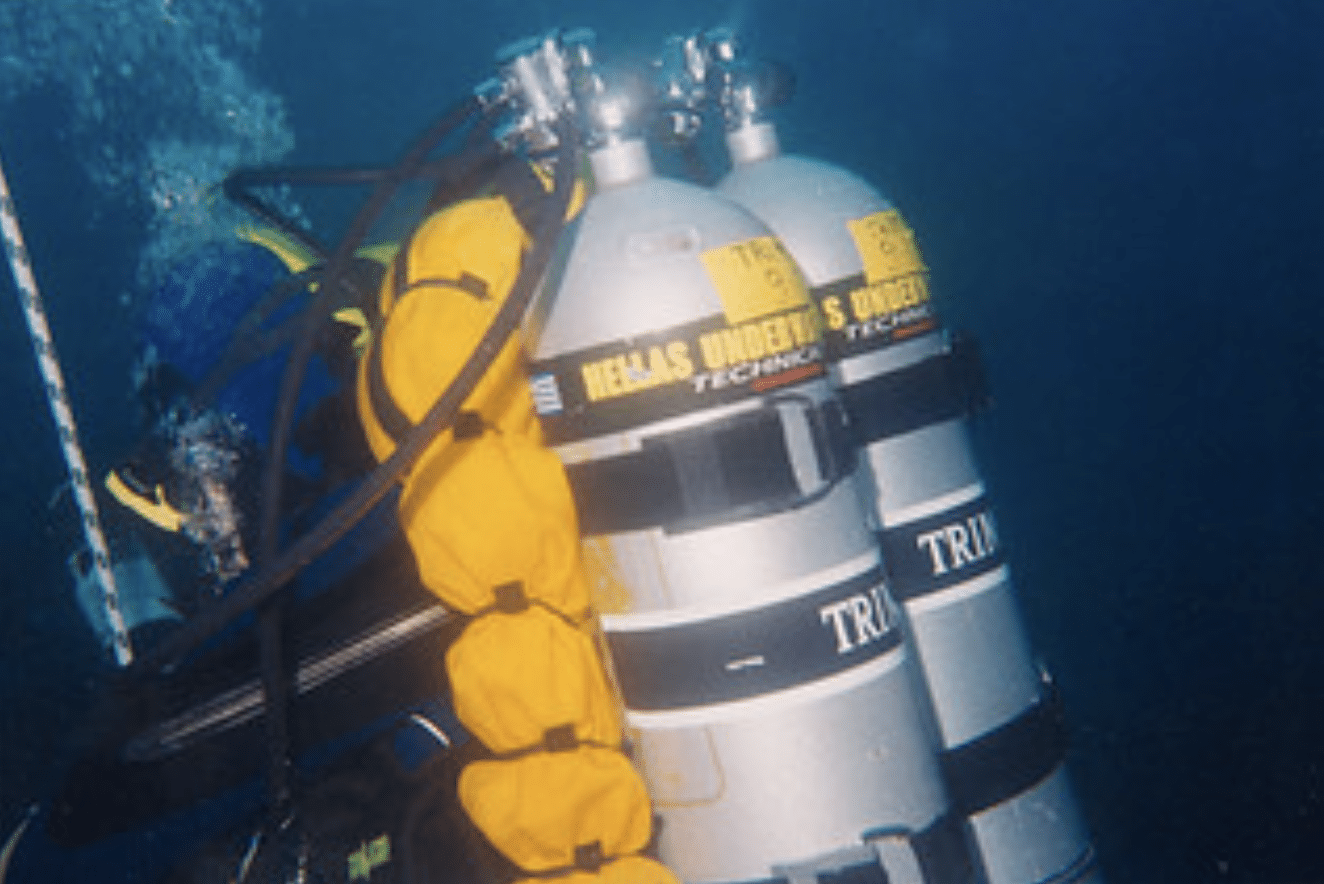
A scuba diver underwater is carrying large oxygen cylinders labelled “TRIMIX” and “HELLAS UNDERWATER TECHNICAL,” with yellow equipment attached to the cylinders by hoses.

Gas Management and Switching

Helitrox introduces additional complexity in gas management. Divers must handle bottom gas containing helium, as well as decompression gases such as nitrox or oxygen.

Each gas has a defined role and must be used at the correct depth. Switching procedures must be structured, verified, and executed without error.

Mistakes in gas switching—such as breathing the wrong mix at the wrong depth—can have immediate consequences. This risk increases with the number of gases carried.

Gas awareness must therefore remain continuous throughout the dive. The diver must always know what gas is being used, what is coming next, and how it aligns with the plan.

At N9BO℠, we enforce disciplined gas management as a core control measure.


Equipment Configuration and Operational Clarity

The use of multiple gases requires a structured equipment configuration. Divers typically use doubles or sidemount systems, supported by stage cylinders for decompression.

Configuration must ensure clarity. Cylinders must be clearly marked, regulators must be accessible, and all equipment must support efficient switching procedures.

Poor configuration increases task load and introduces ambiguity. At this level, ambiguity leads directly to risk.

Equipment must also provide redundancy. In a decompression environment, failures must be managed in-water without direct ascent.

At N9BO℠, we treat equipment as part of the operational system, ensuring it supports both function and failure management.

Three scuba divers swim underwater near large rocks, wearing full diving kit and releasing bubbles as they explore a clear, sunlit marine environment.

Task Load and Performance at Depth

Helitrox reduces narcosis, but task load remains high. The diver must manage multiple variables while maintaining control and awareness.

This includes depth, time, gas, decompression status, and team coordination. Even with improved clarity, the environment remains demanding.

The key difference is that helium allows the diver to process information more effectively. This improves decision-making and reduces the likelihood of error.

However, this benefit is only realised if the diver maintains discipline. Structure and procedure remain essential.

At N9BO℠, we emphasise that improved gas does not replace control—it enhances it.


Position Within the Technical Pathway

The Helitrox course sits between air-based decompression diving and full trimix training. It introduces helium in a controlled and limited way, allowing divers to experience its benefits without the complexity of full mixed gas planning.

It is often considered a transition course. Divers move from managing decompression alone to managing both decompression and gas selection.

Beyond this level, trimix becomes necessary to further reduce narcosis and gas density at greater depths.

At N9BO℠, we position Helitrox as a strategic step that prepares divers for more advanced mixed gas diving.


Operational Mindset

The TDI Helitrox course reinforces a key principle: performance at depth is influenced as much by gas selection as by skill.

By introducing helium, the diver reduces cognitive impairment and improves operational control. However, this advantage must be supported by disciplined planning and execution.

The dive remains structured. Decompression remains mandatory. Gas management becomes more complex.

At N9BO℠, we approach Helitrox as an optimisation tool within a controlled system. It allows divers to operate more effectively, but only when integrated with precision and discipline.

In technical diving, capability is not defined by the gases you carry, but by how effectively you use them.

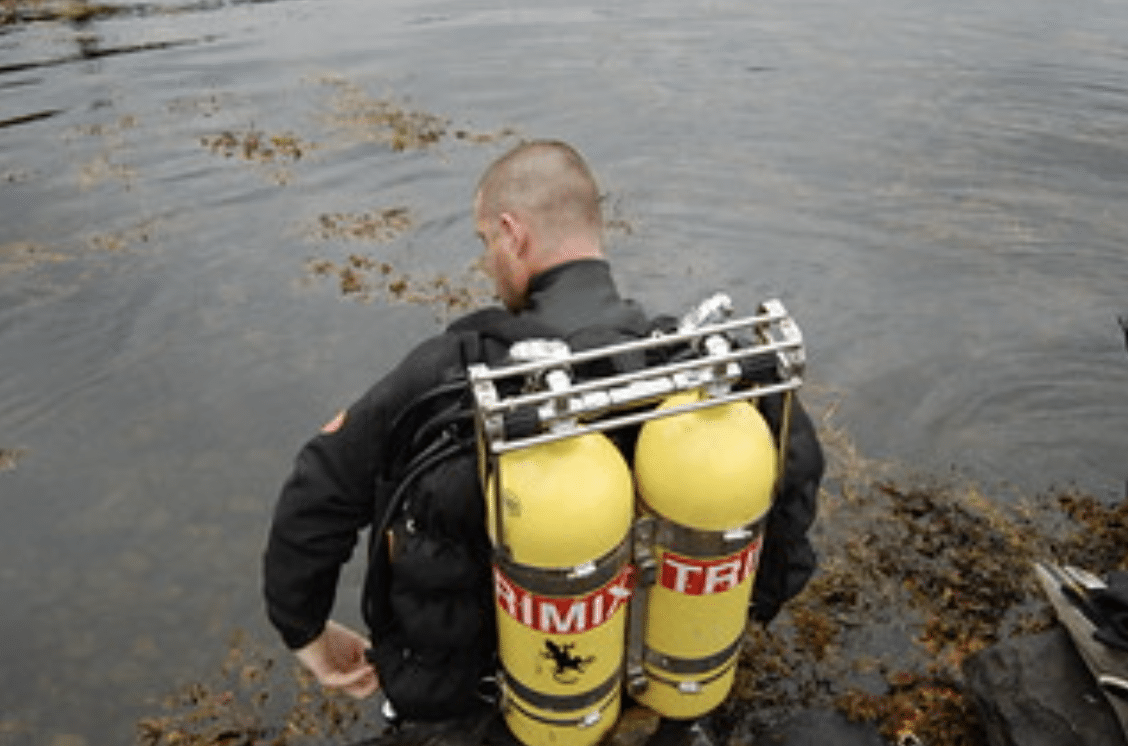
A scuba diver wearing a black wetsuit and carrying two large yellow oxygen cylinders on their back is entering the water, surrounded by seaweed and shallow rocks.


Improve Performance Where It Matters Most


Contact N9BO℠ to integrate TDI Helitrox training into your development pathway, enhancing your control, clarity, and performance in decompression diving.


From the N9BO℠ Knowledge Base


Share this

TDI Extended Range Course: Managing Depth Without Helium

Purpose of the Extended Range Course

The TDI Extended Range course is designed to train divers to safely conduct dives beyond traditional technical limits without the use of helium. It allows divers to plan and execute dives to a maximum depth of 55 metres / 180 feet using air as the primary breathing gas, supported by decompression gases such as nitrox or oxygen. 

This makes it a unique course within the technical pathway. It extends exposure while maintaining reliance on air, which introduces both accessibility and additional risk.

The objective is not simply to go deeper. It is to manage the consequences of depth—particularly narcosis and gas density—while maintaining control throughout the dive.

At N9BO℠, we position Extended Range as a course in managing limitation, not just extending capability.


Deep Air Diving and Its Constraints

Extended Range is fundamentally a deep air course. Unlike Trimix-based training, helium is not used to reduce narcosis or gas density.

This introduces a critical factor: the diver must operate under increased narcotic effect while maintaining full control of procedures and awareness. Nitrogen narcosis becomes a constant operational consideration, not an occasional effect.

At these depths, decision-making, reaction time, and situational awareness can degrade. The diver must recognise this and compensate through discipline, structure, and strict adherence to the plan.

This is what defines the course. It is not simply about reaching depth, but about maintaining performance under physiological constraint.

At N9BO℠, we emphasise that deep air diving is not forgiving. It requires precision to counter reduced cognitive capacity.


Integration of Decompression and Depth

Extended Range builds directly on Advanced Nitrox and Decompression Procedures. It combines depth with decompression obligation, creating a significantly more complex operational environment.

Dives at this level require staged decompression using additional gases, and the diver must manage both depth exposure and decompression requirements simultaneously. 

This creates a compounded risk profile. The diver is exposed to:

  • Increased inert gas loading
  • Extended decompression obligations
  • Reduced margin for error

Execution must therefore be exact. The ascent profile, gas switches, and stop durations must all align precisely with the plan.

At N9BO℠, we treat Extended Range as the point where complexity becomes layered, not sequential.

A scuba diver underwater shines a torch on a coral-covered rock, illuminating the dark, deep blue sea floor with steep slopes around them.

Gas Management Under Increased Demand

Gas management becomes more critical at depth. Consumption increases, reserves must account for longer decompression, and contingency planning must be robust.

Divers must plan for:

  • Bottom gas sufficient for depth and duration
  • Decompression gas to accelerate off-gassing
  • Emergency scenarios including gas loss

At this level, gas is not simply monitored—it is actively managed as a primary operational parameter.

Any miscalculation or deviation can have immediate consequences, particularly when direct ascent is not an option.

At N9BO℠, we emphasise that gas planning is the backbone of Extended Range diving.


Equipment Configuration and Redundancy

The equipment used in Extended Range must support both depth and decompression. This typically includes doubles or sidemount systems, along with multiple stage cylinders.

Configuration must allow:

  • Clear identification of gases
  • Efficient and controlled gas switching
  • Redundancy in critical systems

Failures must be manageable in-water. At this level, the diver cannot rely on rapid ascent as a solution.

Equipment must therefore be configured not only for function, but for failure management.

At N9BO℠, we treat equipment as part of a survival system, not simply a toolset.


Task Load and Cognitive Management

Extended Range significantly increases task load. The diver must manage depth, gas, decompression, positioning, and team coordination simultaneously.

This is compounded by narcosis. The diver is operating with reduced cognitive efficiency while managing increased complexity.

Control is maintained through structure. Procedures must be followed exactly, and tasks must be prioritised correctly.

Loss of awareness at this level has immediate consequences. There is no margin for distraction or improvisation.

At N9BO℠, we train divers to operate within structured systems that compensate for cognitive limitations.

Three scuba divers swim above large, rocky formations on the sea floor in clear blue water, with bubbles rising behind them.

Team Coordination at Depth

At Extended Range level, diving is inherently team-based. Individual actions directly affect the safety of others, particularly during decompression.

Procedures must be standardised. Gas switches, ascent rates, and decompression stops must be synchronised.

Communication, even when limited, must remain clear and consistent. Each diver must understand the plan and execute it without deviation.

Coordination reduces variability and ensures that all divers remain within safe parameters.

At N9BO℠, we emphasise that Extended Range diving is not an individual activity. It is a controlled team operation.


Position Within the Technical Pathway

The Extended Range course sits at the upper limit of air-based diving. It represents the maximum depth at which air can be used as a primary gas within structured technical limits.

Beyond this point, the introduction of helium becomes necessary to manage narcosis and gas density effectively.

This makes Extended Range both a progression and a boundary. It demonstrates what is possible with air, while also highlighting its limitations.

At N9BO℠, we use Extended Range to reinforce why gas selection matters as depth increases.


Operational Mindset

The TDI Extended Range course is defined by constraint. Depth is increased, but margin is reduced. The diver must operate within tighter limits while managing greater exposure.

Success depends on discipline, precision, and continuous awareness. There is no tolerance for deviation, and no reliance on improvisation.

At N9BO℠, we approach Extended Range as a test of control. It requires the diver to manage physiological, technical, and operational challenges simultaneously.

In technical diving, the ability to go deeper is not the objective. The ability to maintain control at depth is what defines capability.

A scuba diver with twin air cylinders and green fins swims underwater in deep blue sea, with air bubbles rising and large shadows visible in the distance.


Train for Depth with Discipline


Contact N9BO℠ to integrate TDI Extended Range training into your development pathway, building the control, planning discipline, and operational capability required for deep technical diving.


From the N9BO℠ Knowledge Base

Share this

TDI Decompression Procedures Course: Managing Obligation Through Discipline

Purpose of the Decompression Procedures Course

The TDI Decompression Procedures course is designed to teach divers how to plan and execute dives that require mandatory decompression stops. Unlike no-decompression diving, ascent is no longer flexible—time must be spent at specific depths to allow safe elimination of inert gas. 

This marks a fundamental shift in diving. The diver is no longer free to ascend at will. The dive now includes a decompression obligation that must be completed regardless of conditions.

The course is often taught alongside Advanced Nitrox because the two together form the operational foundation of technical diving. 

At N9BO℠, we define this course as the point where diving becomes a commitment rather than an option.


Understanding Decompression as an Obligation

In recreational diving, limits are designed to avoid decompression requirements. In this course, those limits are intentionally exceeded, and decompression becomes a planned phase of the dive.

This obligation exists because inert gas accumulates in body tissues under pressure and must be released in a controlled manner during ascent. If this process is not managed correctly, the risk of decompression sickness increases significantly. 

Divers must therefore understand not only how to calculate decompression, but also why it is required. The depth and duration of stops are not arbitrary—they are determined by exposure and must be followed precisely.

At N9BO℠, we emphasise that decompression is not a guideline. It is a requirement that defines the dive.


Planning Decompression Dives

Decompression diving begins with planning. Divers must define the entire dive profile before entering the water, including depth, bottom time, ascent rate, and decompression schedule.

This planning process introduces a higher level of structure. Divers must consider gas requirements, contingency scenarios, and how environmental factors may affect execution.

The dive plan must account for:

  • Required decompression stops and durations
  • Gas consumption for both bottom and decompression phases
  • Team alignment and contingency reserves

Once in the water, the diver is committed to that plan. Adjustments are limited and must remain within safe parameters.

At N9BO℠, we treat planning as the primary control mechanism in decompression diving.

Two scuba divers with twin cylinders swim underwater near a coral reef, surrounded by clear blue water and patches of sand and rock on the seabed.


Execution of Staged Decompression

Staged decompression requires the diver to ascend in a controlled manner, stopping at predefined depths for specific durations. These stops allow inert gas to be released safely from the body.

The process is structured and continuous. The diver must maintain accurate depth control and adhere strictly to timing.

Any deviation—ascending too quickly, missing a stop, or shortening its duration—can significantly increase risk. The ascent itself becomes a critical phase of the dive, not simply a return to the surface.

Maintaining position during stops requires precise buoyancy control and awareness of environmental conditions such as current or surge.

At N9BO℠, we emphasise that ascent is the most controlled phase of a decompression dive.


Gas Management and Multiple Cylinders

Decompression Procedures introduces the use of multiple gas sources. Divers may carry additional cylinders to support both bottom gas and decompression phases.

Managing these gases requires planning, awareness, and discipline. Each gas has a defined purpose, and switching between them must be executed at the correct depth.

Gas switching introduces complexity. It requires verification, confirmation, and controlled execution to avoid errors such as breathing the wrong gas or switching at the wrong depth.

The diver must maintain continuous awareness of gas status and consumption, ensuring that reserves are sufficient for both planned and contingency scenarios.

At N9BO℠, we treat gas management as a continuous task, not an intermittent check.


Equipment Configuration and Redundancy

Decompression diving requires a more advanced equipment configuration. Divers typically use doubles or sidemount systems, along with stage or decompression cylinders.

This configuration must support redundancy. In a decompression environment, a direct ascent is not an option, so failures must be managed in-water.

Equipment must be:

  • Reliable and properly maintained
  • Configured for easy access and operation
  • Standardised to reduce confusion during critical tasks

The system must allow the diver to respond to failures without compromising the decompression obligation.

At N9BO℠, we treat equipment as part of a risk management system, not simply as tools.

A scuba diver in full kit, including gloves and mask, swims underwater while reaching towards a rope held by another diver, with a blue background indicating deep water.

Task Load and Operational Control

Decompression diving significantly increases task load. The diver must manage multiple variables simultaneously, including depth, time, gas, and team coordination.

This creates a risk of overload. Divers must maintain awareness while executing tasks, ensuring that no element is neglected.

To manage this, divers must:

  • Prioritise critical parameters such as depth and time
  • Maintain continuous monitoring of gas and decompression status
  • Avoid fixation on single tasks

Loss of awareness during decompression can lead to missed stops or incorrect execution.

At N9BO℠, we integrate human factors into training to ensure control is maintained under increased workload.


Team Coordination and Discipline

Decompression diving is typically conducted in teams. Each diver’s actions affect the entire group, particularly during ascent and decompression stops.

Procedures must be standardised across the team. Gas switches, ascent rates, and stop durations must be aligned to ensure consistency.

Communication, even when limited, must be clear and structured. Each diver must understand the plan and execute it without deviation.

Coordination reduces variability and ensures that all team members remain within safe parameters.

At N9BO℠, we emphasise that decompression is a team-controlled process, not an individual activity.


Operational Mindset

The TDI Decompression Procedures course represents a fundamental shift in diving. The diver moves from optional limits to mandatory obligations, where every phase of the dive is controlled and defined.

Success depends on precision, discipline, and continuous awareness. There is no tolerance for improvisation or deviation from the plan.

At N9BO℠, we approach decompression diving as a system of control. Planning, equipment, procedures, and mindset must align to manage risk effectively.

In technical diving, freedom is replaced by responsibility. The diver is committed to the dive until the decompression obligation is complete.

A scuba diver with multiple cylinders swims near the sea floor in deep blue water, surrounded by an open, empty underwater environment.


Train for Obligation, Not Just Exposure


Contact N9BO℠ to integrate TDI Decompression Procedures training into your development pathway, building the discipline and control required for safe technical diving.


From the N9BO℠ Knowledge Base


Share this

TDI Tech Trim Course: Precision Before Progression

Purpose of the Tech Trim Course

The TDI Tech Trim course was originally developed as an entry-level programme to prepare divers for technical training. It focused on improving underwater position, control, and efficiency while introducing divers to technical configurations and procedures. 

The course remained strictly within no-decompression limits, ensuring that divers could develop skills without the added complexity of decompression or advanced gas management. Its role was to prepare, not to extend.

At its core, Tech Trim addressed a fundamental issue: many divers attempt to progress into technical diving without first mastering control. This course was designed to correct that gap.

At N9BO℠, we view Tech Trim as a skill refinement platform that prioritises control before exposure.


Skill Development as the Primary Objective

The central focus of Tech Trim is the development of precise in-water control. Divers are required to maintain stable buoyancy and consistent horizontal trim while performing a range of tasks.

This is not simply about appearance or efficiency. Poor trim and buoyancy increase workload, disturb the environment, and reduce situational awareness. Over time, these inefficiencies compound and become operational risks.

The course requires divers to demonstrate control while executing drills such as regulator exchanges, mask removal, and SMB deployment, all without losing position in the water column. 

This reinforces a key principle: skills must be performed without compromising stability.

At N9BO℠, we emphasise that control is the foundation upon which all technical skills are built.


Introduction to Technical Equipment and Configuration

Tech Trim introduces divers to technical equipment configurations, including doubles or sidemount systems, and emphasises streamlining and proper equipment placement. 

The objective is not simply to familiarise divers with new equipment, but to demonstrate how configuration directly affects performance. Equipment must be accessible, predictable, and aligned with the diver’s procedures.

Improper configuration increases task load and creates uncertainty during critical moments. A diver who must adjust or search for equipment is already behind the operational requirement.

This course begins the process of standardisation, ensuring that equipment supports the diver rather than complicates the dive.

At N9BO℠, we treat configuration as a functional system, not a personal preference.

Silhouette of a scuba diver underwater, surrounded by blue light with the sun shining above and bubbles rising towards the surface.

Procedural Awareness and Dive Planning

Although limited to no-decompression diving, Tech Trim introduces a more structured approach to planning and execution. Divers are required to consider gas consumption, environmental conditions, and team alignment before entering the water. 

Planning becomes deliberate. It is no longer sufficient to follow a general profile; the dive must be defined and understood before execution.

In-water, this translates into controlled ascent and descent strategies, clear entry and exit procedures, and consistent adherence to the plan.

This early exposure to structured planning prepares divers for the increased demands of technical courses.

At N9BO℠, we emphasise that planning is a control mechanism, not an administrative step.


Why Tech Trim Was Replaced by Intro to Tech

While Tech Trim remains available, it has largely been replaced by the TDI Intro to Tech course. The reason is not that Tech Trim is obsolete, but that Intro to Tech integrates its objectives into a broader and more structured framework.

Intro to Tech retains the same emphasis on:

  • Buoyancy, trim, and propulsion
  • Equipment configuration and streamlining
  • Procedural discipline

However, it expands further by incorporating:

  • Stronger integration of team-based diving concepts
  • More structured task loading and awareness development
  • A clearer transition toward technical mindset and planning discipline

The result is a course that not only refines skills, but also prepares divers more effectively for subsequent programmes such as Advanced Nitrox and Decompression Procedures.

At N9BO℠, we recommend Intro to Tech as the primary entry point, while recognising Tech Trim as a valuable standalone refinement course.

Three scuba divers underwater hold onto a rope, wearing wetsuits, masks, and oxygen cylinders, surrounded by blue water and bubbles rising towards the surface.

Operational Value of Tech Trim Today

Despite being replaced in many pathways, Tech Trim remains highly relevant. It is particularly effective for divers who need to correct foundational weaknesses before progressing.

The course is still suitable for:

  • Divers transitioning from recreational to technical configurations
  • Professionals seeking to improve in-water control
  • Teams requiring standardisation of movement and positioning

Because it isolates skill development without adding complexity, it provides a focused environment for improvement.

This makes it a practical tool for remediation as well as preparation.

At N9BO℠, we use Tech Trim principles to reinforce control where needed, even within more advanced training programmes.


Operational Mindset

The TDI Tech Trim course reinforces a critical principle: technical diving is not defined by depth, gas, or equipment—it is defined by control. 

Before a diver can safely manage decompression or multiple gases, they must first demonstrate stability, awareness, and consistency in the water. Tech Trim isolates these elements and develops them to a higher standard.

The evolution toward Intro to Tech reflects a broader approach, but the foundation remains the same. Without control, progression increases risk rather than capability.

At N9BO℠, we treat these foundational skills as non-negotiable. They define how a diver operates, regardless of environment or complexity.

A scuba diver swims underwater above a sandy seabed with patches of seaweed, surrounded by clear blue water and sunlight streaming from the surface.


Refine Your Skills Before Advancing


Contact N9BO℠ to integrate TDI Tech Trim or Intro to Tech training into your development pathway, ensuring your skills, configuration, and control meet the standards required for technical diving.


From the N9BO℠ Knowledge Base

Share this

TDI Intro to Tech Course: Building the Foundation for Technical Diving

Purpose of the Intro to Tech Course

The TDI Intro to Tech course is designed to bridge the gap between recreational and technical diving by introducing structure where flexibility previously existed. While dives remain within no-decompression limits, the way they are planned and executed changes significantly.

The course removes tolerance for inconsistency. Every dive must follow a defined plan, and every action must align with that plan. This establishes control early, before additional risk factors are introduced.

At N9BO℠, we treat Intro to Tech as a performance standard, not a progression in exposure.


From Recreational Flexibility to Technical Discipline

Recreational diving allows adaptation. Technical diving requires consistency. Intro to Tech introduces this distinction by tightening acceptable performance margins.

Divers are expected to maintain stable buoyancy, consistent trim, and controlled movement at all times. Small inefficiencies that were previously manageable become visible and must be corrected.

This is where most divers experience the real shift. The course is not about doing more—it is about doing everything better.

At N9BO℠, we emphasise that technical diving begins when variability is removed.


Equipment Configuration as an Operational System

Equipment configuration is introduced as a structured system. Whether using doubles or sidemount, the objective is predictability and clarity.

Each component must have a defined position and function. This ensures that equipment can be accessed and used without hesitation, even under increased task load.

Poor configuration creates unnecessary complexity. It forces the diver to think about equipment instead of focusing on the dive.

At N9BO℠, we treat configuration as part of the dive plan. It must support execution, not interfere with it.

A scuba diver swims near the remains of a sunken shipwreck under deep blue water, surrounded by bubbles and scattered metal debris.

Control of Buoyancy, Trim, and Movement

The core of the course is control. Divers must demonstrate the ability to hold position in the water while performing tasks.

Buoyancy must remain stable without constant correction. Trim must be horizontal and consistent. Movement must be deliberate and efficient.

This level of control reduces workload and improves awareness. It allows the diver to operate without unnecessary adjustment or distraction.

At N9BO℠, we define control as the ability to remain stable while the environment changes around you.


Structured Planning and Gas Awareness

Dive planning becomes more deliberate. Even within no-decompression limits, gas is managed with a technical mindset.

Divers must consider consumption, reserves, and team alignment. Gas is no longer treated as an individual resource, but as part of a shared operational framework.

During the dive, gas awareness must be continuous. It is not checked occasionally—it is monitored as part of overall situational awareness.

At N9BO℠, we emphasise that planning continues throughout execution.


Procedural Discipline and Repetition

Technical diving relies on repeatable procedures. Intro to Tech introduces this through structured drills performed consistently.

Tasks such as gas sharing and problem-solving must follow defined sequences. There is no reliance on improvisation.

Consistency builds reliability. Reliability reduces risk, particularly under stress.

At N9BO℠, we reinforce that discipline is not situational. It must be applied every time.

Two scuba divers are silhouetted underwater, swimming near each other with sunlight shining down from above, illuminating the blue water and creating a bright glow behind them.

Managing Task Load and Awareness

As structure increases, so does task load. Divers must manage multiple elements while maintaining awareness.

This includes depth, time, gas, positioning, and team status. At the same time, tasks must be executed without loss of control.

To manage this, divers must:

  • Prioritise critical information
  • Avoid fixation on single tasks
  • Maintain continuous awareness of the environment

Loss of awareness is one of the primary risks in technical diving. It must be addressed early.

At N9BO℠, we integrate awareness into every action.


Developing the Technical Diving Mindset

The most important outcome of the course is the shift in mindset. Divers move from reactive behaviour to controlled execution.

Every dive must be planned precisely, executed consistently, and monitored continuously. There is reduced tolerance for deviation.

Confidence becomes based on process rather than comfort. The diver understands not only what to do, but why it must be done that way.

At N9BO℠, we emphasise that mindset defines progression.


Operational Mindset

The TDI Intro to Tech course establishes how a diver must operate before complexity increases. It creates a baseline where precision, discipline, and awareness are standard.

Divers who complete the course do not simply improve skills. They change how they approach diving as a system.

At N9BO℠, we treat Intro to Tech as a foundation. It ensures that divers are prepared to operate within reduced margins before those margins are introduced.

In technical diving, control is the requirement that defines capability.

A scuba diver with twin cylinders and fins swims underwater near a large, sunken shipwreck, with bubbles rising to the water’s surface.


Build Control Before You Build Complexity


Contact N9BO℠ to integrate TDI Intro to Tech training into your development pathway, ensuring your foundation is aligned with the demands of technical diving.


From the N9BO℠ Knowledge Base


Share this
Facebook
Instagram
X (Twitter)
TikTok
Youtube
Whatsapp