Purpose of the Tec 50 Course
The Tec 50 course is designed to take divers from structured technical training into full operational capability. It builds on Tec 45 by increasing depth, expanding decompression requirements, and introducing multi-gas management as a standard practice.
Divers are trained to conduct dives to a maximum depth of 50 metres / 165 feet, with multiple decompression stops and the use of two decompression gases.
This is not an incremental step. It represents a transition from supervised technical training to the ability to plan and execute dives independently within defined limits.
At N9BO℠, we position Tec 50 as the point where a diver becomes operationally complete at entry-level technical diving.
From Structured Training to Full Decompression Diving
Tec 50 moves beyond controlled exposure and into full decompression diving. There is no longer a practical limit on decompression time within the training framework, and divers must manage extended obligations as part of normal operations.
This introduces a higher level of commitment. The diver must plan the entire dive in detail, including bottom phase, ascent profile, gas switches, and contingency scenarios.
Decompression is no longer an isolated phase. It becomes a prolonged operational period requiring stability, awareness, and strict adherence to the plan.
At N9BO℠, we emphasise that decompression at this level is not a procedure—it is a sustained operational phase.
Depth, Exposure, and Physiological Load
At 50 metres, physiological stress becomes a dominant factor. Narcosis, gas density, and increased consumption all affect performance and decision-making.
Divers must maintain control under these conditions, ensuring that awareness and execution remain consistent despite increased cognitive and physical load. This is where training transitions from skill-based to performance-based.
The diver must rely on structured procedures rather than intuition. Every action must follow a defined sequence, ensuring that performance remains stable under pressure.
At N9BO℠, we treat depth as a compounding factor that requires proportional increases in discipline and control.
Multi-Gas Decompression and Planning Complexity
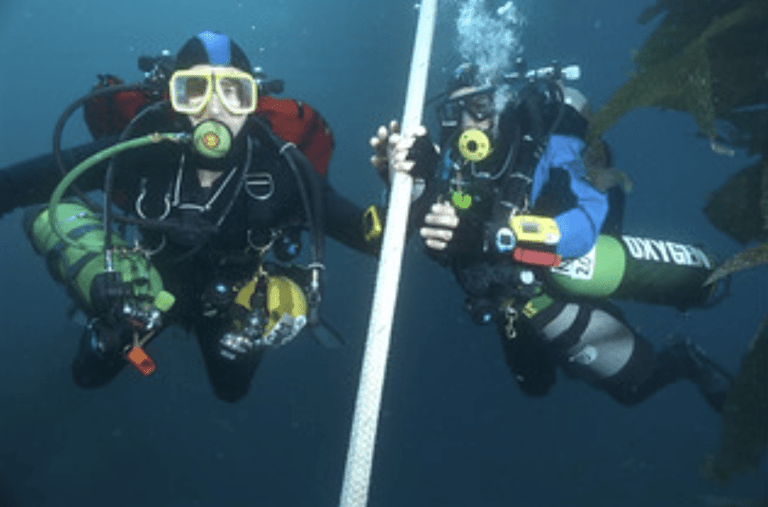
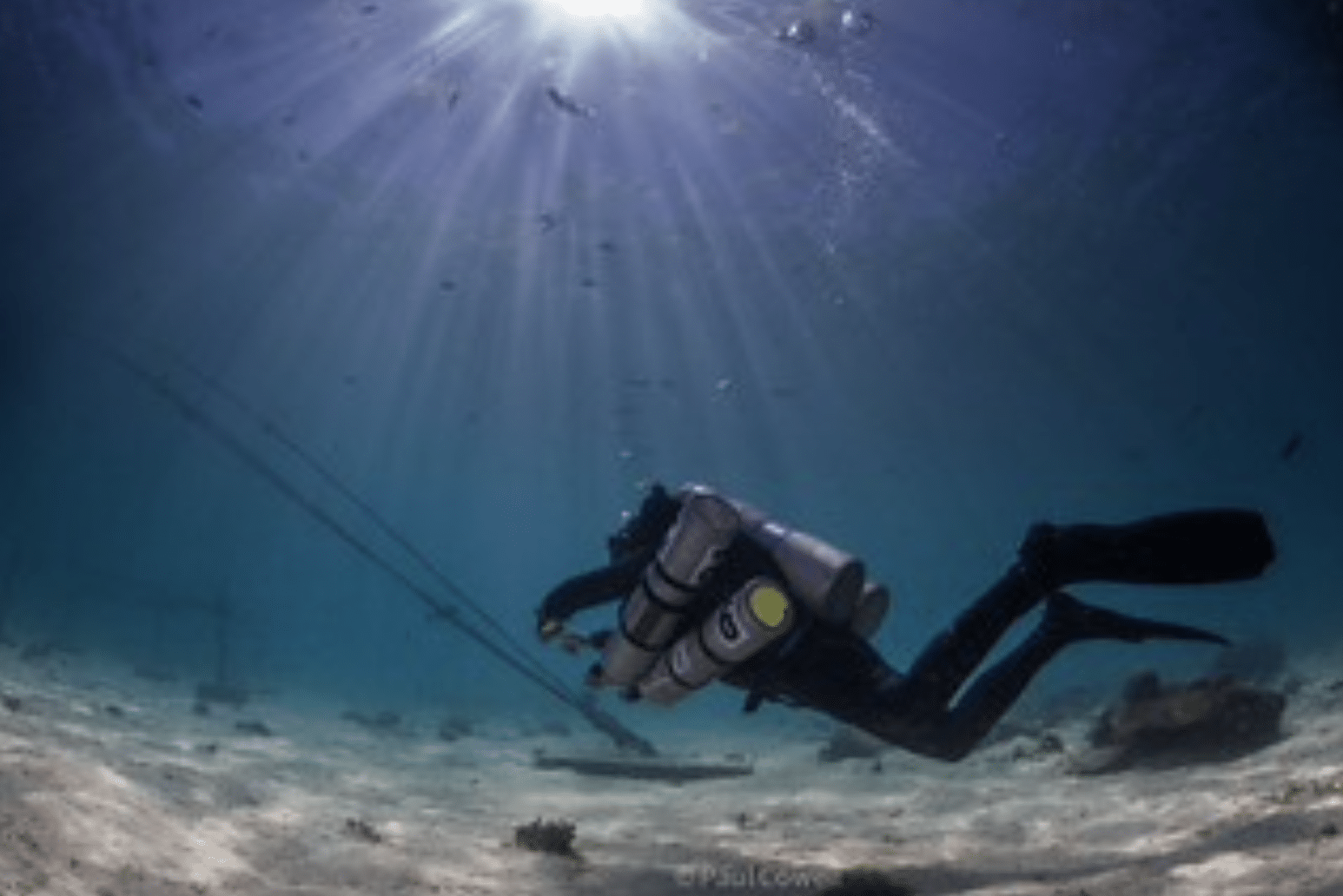
Tec 50 introduces the routine use of two decompression gases, typically enriched air and oxygen, to accelerate decompression and manage exposure more effectively.
This significantly increases planning complexity. The diver must integrate multiple gases into a single coherent dive plan, ensuring that each gas is used at the correct depth and for the correct duration.
Gas planning must account for:
- Bottom gas requirements at depth
- Decompression gas volumes and switching points
- Contingency reserves for failure scenarios
Execution must match the plan exactly. Any deviation can affect decompression efficiency and overall safety.
At N9BO℠, we emphasise that multi-gas diving requires absolute clarity in both planning and execution.
Equipment Configuration and Redundancy Systems
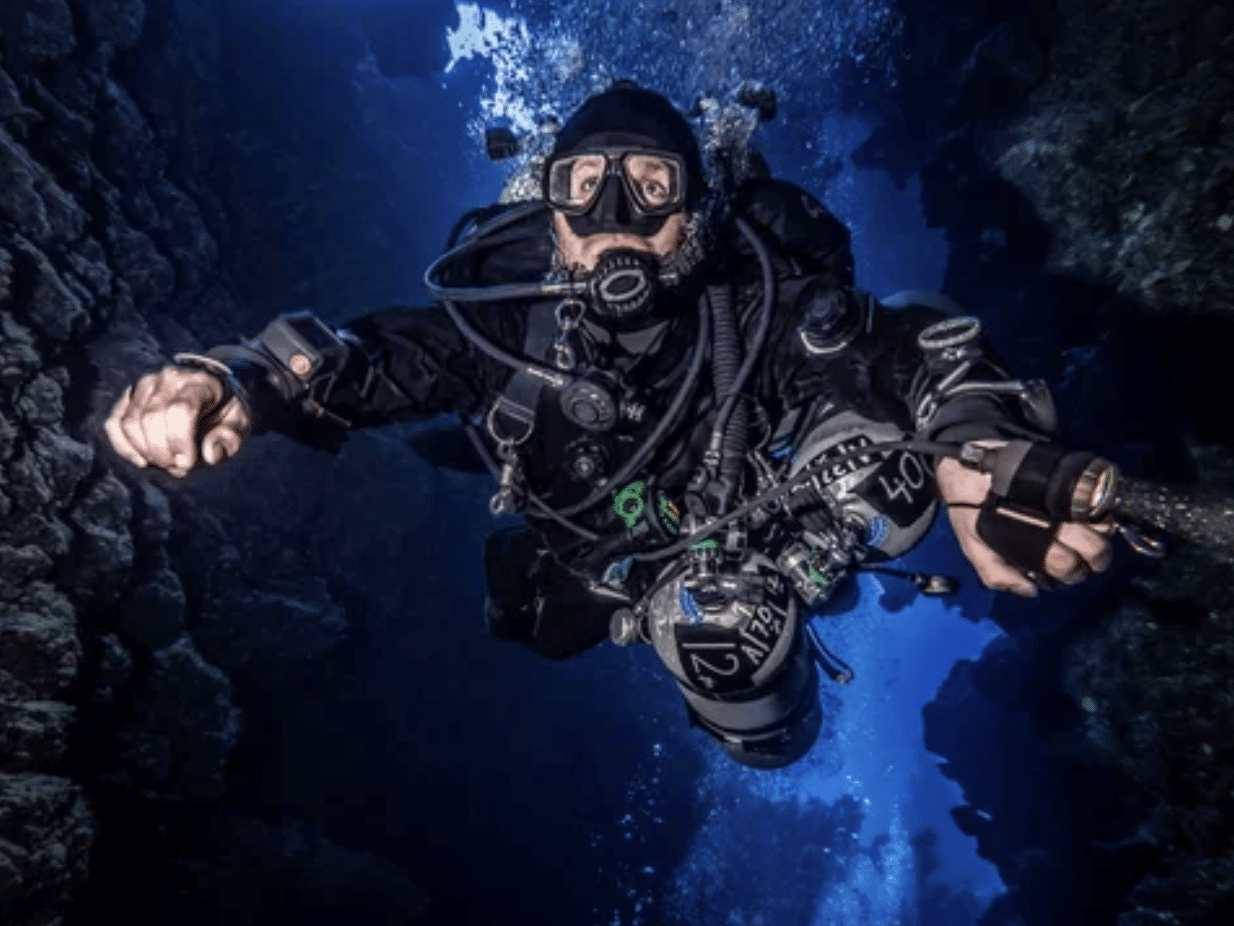
At this level, full technical configuration is mandatory. Divers operate with doubles or sidemount systems, supported by multiple stage cylinders.
This configuration must support both performance and failure management. Redundancy is no longer a precaution—it is a requirement, as direct ascent is not an option once decompression obligation exists.
All equipment must be standardised and clearly organised. Gas identification, regulator access, and hose routing must support efficient and error-free operation under increased task load.
At N9BO℠, we treat equipment as an integrated system designed to manage both execution and contingency.
Task Load, Awareness, and Decision-Making
Tec 50 significantly increases task load. Divers must manage depth, time, multiple gases, decompression schedules, equipment status, and team coordination simultaneously.
This creates a high-demand environment where awareness must be continuous. The diver must monitor all variables without becoming fixated on any single element.
Decision-making must remain structured. The diver must recognise deviations early and respond according to established procedures rather than improvisation.
At N9BO℠, we train divers to operate within controlled frameworks that maintain stability under complexity.

Team Coordination and Operational Alignment
At Tec 50 level, diving is fully team-based. Each diver must operate within a shared plan, maintaining alignment across all phases of the dive.
Gas switches, ascent rates, and decompression stops must be synchronised. Each diver must be aware of team status and capable of supporting others if required.
Coordination reduces variability and ensures that all divers remain within defined operational limits.
This is where team discipline becomes critical. Individual deviation introduces risk to the entire group.
At N9BO℠, we emphasise that technical diving is executed as a coordinated system.
Upgrade Path to Tec 50 Trimix
The Tec 50 certification can be upgraded to Tec 50 Trimix, introducing helium into the breathing gas while maintaining the same depth range. This improves diver performance by reducing narcosis and gas density, allowing clearer thinking and more efficient execution at depth.
This upgrade does not extend depth limits, but it significantly enhances control and safety margins. It also prepares divers for further progression into deeper trimix courses such as Tec Trimix 65.
At N9BO℠, we recommend this upgrade as a strategic step for divers aiming to improve performance before increasing exposure.
Position Within the Technical Pathway
Tec 50 is the final course in the core PADI TecRec entry-level technical pathway. It represents the completion of foundational technical diver training and qualifies divers to conduct independent decompression dives within defined limits.
Beyond this level, progression moves into trimix-based training, where depth increases further and gas complexity expands significantly.
Tec 50 therefore acts as both a culmination and a gateway. It confirms competence while preparing the diver for more advanced environments.
At N9BO℠, we position Tec 50 as the threshold where technical competence must be fully established.
Operational Mindset
The Tec 50 course defines technical diving as a system of control. The diver must plan precisely, execute without deviation, and maintain continuous awareness throughout the dive.
There is no flexibility once decompression obligation exists. Every phase of the dive must be managed according to the plan, and every action must support that plan.
As complexity increases, tolerance for error decreases. Success depends on discipline, structure, and the ability to operate consistently under pressure.
At N9BO℠, we approach Tec 50 as the point where technical diving becomes fully operational. It is no longer about learning individual skills, but about integrating them into a controlled system.
In technical diving, capability is defined not by how deep you go, but by how precisely you manage the dive from start to finish.
Achieve Full Technical Diving Capability
Contact N9BO℠ to integrate PADI Tec 50 training into your development pathway, building the discipline, precision, and operational control required for independent technical diving.
From the N9BO℠ Knowledge Base