Diving Science, History & Theory

SDI Rescue Diver: Learning to Prevent Problems Before They Become Emergencies

What Is the SDI Rescue Diver Course?

Most diver training focuses primarily on personal skills and self-management. Divers learn how to plan dives, control buoyancy, manage equipment, and safely explore the underwater environment.

The Rescue Diver course introduces a different perspective.

Instead of focusing solely on the individual diver, students learn how to recognise developing problems, assist other divers, manage emergencies, and contribute positively to overall dive safety.

The course combines practical rescue techniques with prevention strategies, helping divers understand that the best rescue is often the one that never becomes necessary.

At N9BO℠, we often describe Rescue Diver as the course that transforms divers from participants into active contributors to dive safety.


The Importance of Prevention

One of the most valuable lessons taught during rescue training is that emergencies rarely occur without warning.

Many incidents begin as small issues:

  • Poor buoyancy control
  • Equipment problems
  • Stress or anxiety
  • Inadequate planning
  • Environmental changes
  • Fatigue or overexertion

Divers who learn to recognise these early warning signs can often intervene before a situation escalates.

The course therefore places significant emphasis on observation, awareness, and proactive decision-making.

Students quickly discover that preventing an emergency is usually easier than managing one.

At N9BO℠, we teach that effective rescue divers spend most of their time preventing problems rather than responding to them.


Developing Situational Awareness

Rescue training changes the way divers observe the underwater environment.

Rather than focusing exclusively on marine life, photography, or personal dive objectives, Rescue Divers learn to maintain broader situational awareness.

This includes monitoring:

  • Buddy behaviour
  • Team positioning
  • Environmental conditions
  • Equipment issues
  • Signs of stress or fatigue
  • Potential hazards

As awareness improves, divers become more capable of recognising subtle changes that may indicate a developing problem.

This skill often improves every aspect of diving, not just rescue situations.

At N9BO℠, we believe situational awareness is one of the most valuable skills any diver can develop.


Managing Diver Stress

Many diving incidents involve stress as a contributing factor.

Stress affects breathing, decision-making, communication, and overall performance. A diver who becomes anxious or overwhelmed can quickly find themselves struggling to manage otherwise simple situations.

The Rescue Diver course teaches students how to:

  • Recognise signs of stress
  • Communicate effectively
  • Provide reassurance and assistance
  • Manage escalating situations calmly

Understanding human behaviour becomes just as important as understanding diving procedures.

Students learn that effective rescue often begins with good communication and calm leadership.

At N9BO℠, we teach that managing people is frequently more important than managing equipment.
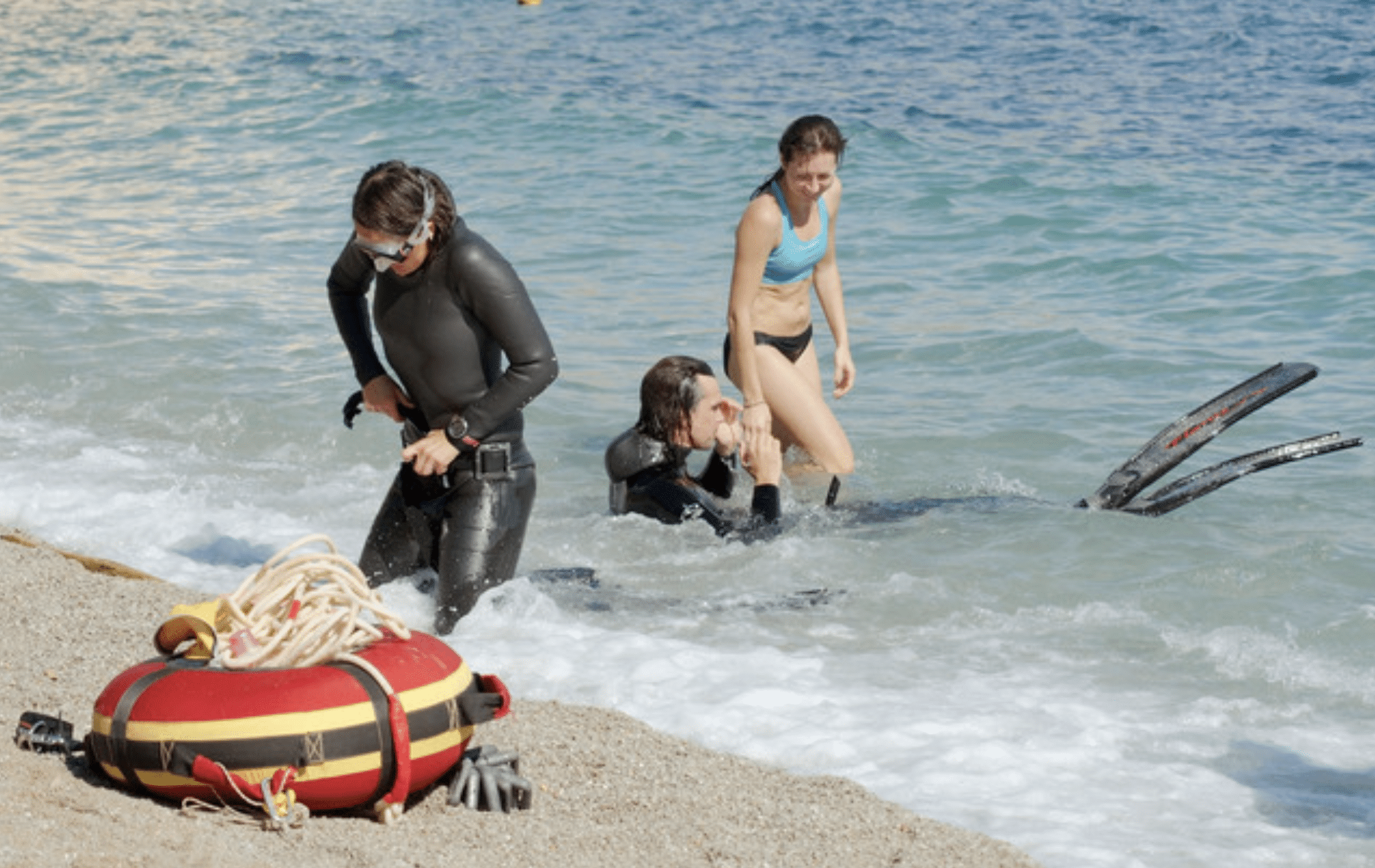
Three people are at the shore; two in black wetsuits, one with fins and snorkel, and one woman in a blue bikini, with a red and yellow flotation ring and diving gear on the sandy beach nearby.

Practical Rescue Skills

The course includes a wide range of practical rescue techniques designed to address common diving emergencies.

Students learn how to:

  • Assist tired divers
  • Respond to panicked divers
  • Conduct surface rescues
  • Manage unresponsive divers
  • Perform underwater assistance procedures
  • Coordinate emergency responses

These exercises are realistic, physically demanding, and often highly rewarding.

While the skills themselves are important, the course also emphasises judgement and decision-making. Knowing when and how to intervene can be just as important as the rescue techniques themselves.

At N9BO℠, we focus on creating divers who can think clearly under pressure.


Emergency Planning and Response

Rescue operations do not begin when an incident occurs. They begin during dive planning.

Students learn how to:

  • Assess environmental conditions
  • Identify potential hazards
  • Develop emergency action plans
  • Coordinate with surface support
  • Manage resources effectively

This planning mindset helps divers understand that safety is a continuous process rather than a reaction to emergencies.

The course reinforces the importance of preparation, communication, and organisation.

At N9BO℠, we teach that good planning often prevents the need for rescue altogether.


Building Confidence Through Competence

Many divers find the Rescue Diver course challenging, but also incredibly rewarding.

As students practise rescue scenarios and problem-solving exercises, they begin to develop confidence in their ability to handle unexpected situations.

This confidence comes from:

  • Knowledge
  • Repetition
  • Experience
  • Structured training

Divers often discover that they become calmer and more relaxed during normal dives because they understand how to respond if something goes wrong.

The course therefore improves both capability and peace of mind.

At N9BO℠, we believe confidence is strongest when it is built on competence rather than assumption.

A scuba diver supports another diver floating on their back in a swimming pool, practising rescue or safety techniques. Both are wearing wetsuits and scuba equipment.

A Turning Point in Diver Development

Many experienced divers consider Rescue Diver to be one of the most valuable courses they have ever completed.

Unlike courses that focus primarily on new environments or equipment, Rescue Diver changes the way people think about diving itself.

Students begin viewing dives through a broader lens, considering:

  • Team safety
  • Risk management
  • Emergency preparedness
  • Environmental conditions
  • Human factors

This shift in perspective often marks a significant step in a diver’s development.

At N9BO℠, we frequently see Rescue Diver graduates become more thoughtful, more aware, and more capable underwater.


Preparing for Leadership and Professional Training

The Rescue Diver certification is also an important prerequisite for many advanced and professional programmes.

Divers who later pursue:

  • SDI Divemaster
  • Assistant Instructor
  • Instructor
  • Public Safety Diving
  • Technical Diving

often benefit greatly from the awareness and judgement developed during rescue training.

The course provides a strong foundation for future leadership roles because it encourages responsibility, teamwork, and proactive thinking.

At N9BO℠, we view Rescue Diver as one of the most important milestones in a diver’s educational pathway.


Operational Mindset

The SDI Rescue Diver course reinforces a simple but powerful principle: the safest divers are the ones who notice problems early.

Rescue diving is not about dramatic interventions or heroic actions. It is about awareness, preparation, communication, and calm decision-making.

Strong Rescue Divers develop:

  • Situational awareness
  • Risk assessment skills
  • Emergency preparedness
  • Leadership qualities
  • Confidence under pressure

These qualities improve every dive, whether an emergency occurs or not.

At N9BO℠, we approach Rescue Diver training as the course where divers learn that safety is everyone’s responsibility.

The best rescue divers are often the ones who never need to perform a rescue because they recognised the problem before it became an emergency.
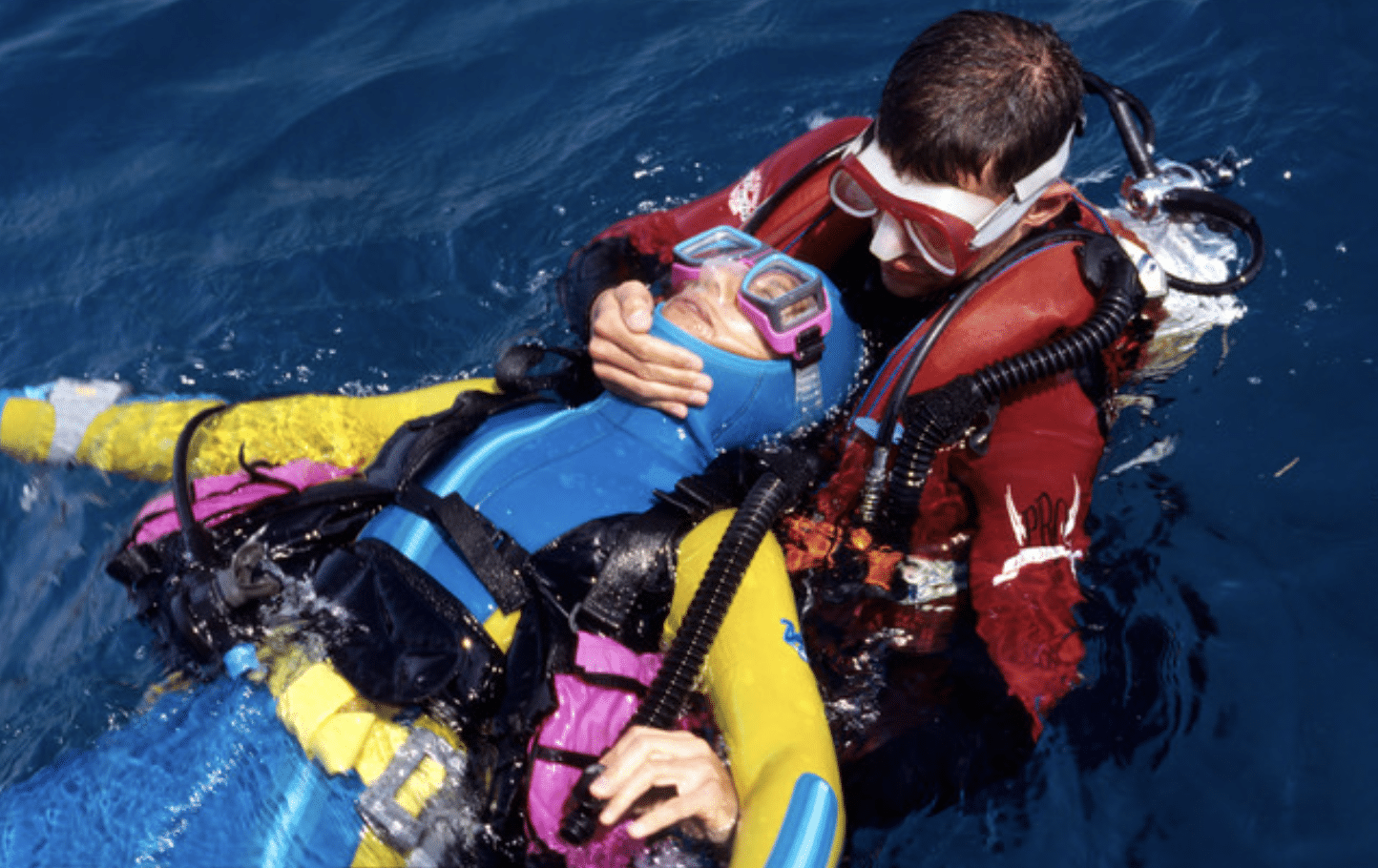
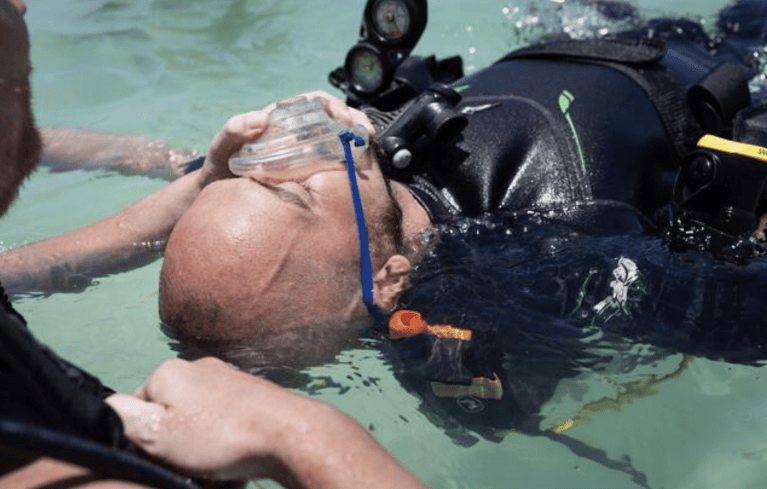
A scuba diver in a red wetsuit supports and rescues another diver wearing a blue and yellow wetsuit, floating on the surface of the water. The rescuer holds the injured diver's head and mask above water.


Become a More Aware, Capable, and Confident Diver

Contact N9BO℠ to begin your SDI Rescue Diver course and develop the awareness, prevention skills, and emergency response capabilities that define truly competent divers.


From the N9BO℠ Knowledge Base


Share this

SDI Advanced Scuba Diver: Recognising Experience and Continued Development

What Is the SDI Advanced Scuba Diver Certification?

One of the unique aspects of the SDI training system is that the Advanced Scuba Diver certification is not earned by completing a single standalone course.

Instead, it is awarded to divers who have demonstrated a commitment to continued education and practical experience. The rating recognises that diver development occurs over time through a combination of speciality training and real-world diving rather than through a single training event.

To earn the SDI Advanced Scuba Diver certification, divers must complete:

  • SDI Open Water Scuba Diver certification
  • Four SDI, TDI, ERDI, or approved speciality certifications
  • A minimum of 25 logged dives

This creates a certification that reflects actual experience and progression rather than attendance on a single course.

At N9BO℠, we view the Advanced Scuba Diver rating as recognition of a diver’s growing competence and commitment to learning.


Why SDI Takes a Different Approach

Many training systems use the word “advanced” to describe a course that introduces divers to new activities or environments.

SDI takes a slightly different approach.

The philosophy behind the Advanced Scuba Diver certification is that experience matters. A diver who has completed multiple speciality programmes and accumulated meaningful diving experience has developed skills and judgement that cannot be acquired during a single weekend course.

The certification therefore recognises both education and practical application.

Rather than asking, “What course have you completed?”, the programme asks, “What experience have you gained?”

At N9BO℠, we believe that capability is built through a combination of training and experience.


Building Your Own Development Pathway

One of the strengths of the SDI Advanced Scuba Diver programme is flexibility.

Divers can select speciality courses that align with their interests, local diving opportunities, and long-term goals. There is no fixed sequence, allowing each diver to create a pathway that suits their own development.

Popular speciality choices often include:

  • Deep Diver
  • Nitrox Diver
  • Wreck Diver
  • Underwater Navigation
  • Drift Diver
  • Night and Limited Visibility Diver
  • Search and Recovery Diver
  • Computer Nitrox Diver

This flexibility allows divers to pursue areas that genuinely interest them while building a broader range of capabilities.

At N9BO℠, we encourage divers to choose training that supports the type of diving they actually enjoy.

A sea turtle swims gracefully underwater above colourful coral reefs, surrounded by clear blue water and bubbles rising to the surface.

The Importance of Logged Experience

Diving is a practical activity. Knowledge is important, but experience plays an equally significant role in diver development.

The requirement for a minimum number of logged dives ensures that Advanced Scuba Diver candidates have spent meaningful time underwater applying what they have learned.

With increasing experience, divers typically develop:

  • Improved buoyancy control
  • Better air consumption
  • Stronger situational awareness
  • Greater environmental awareness
  • Increased confidence in varying conditions

These qualities are difficult to teach entirely in a classroom environment.

They develop gradually through exposure to different dive sites, conditions, and situations.

At N9BO℠, we teach that every dive contributes to the development of judgement and competence.


Moving Beyond Entry-Level Diving

The Open Water Diver course provides the foundation for safe diving, but it is only the beginning.

As divers continue their education and gain experience, they begin to explore more specialised aspects of diving. Different environments and activities introduce new considerations that require additional knowledge and skill.

Through speciality training, divers learn how to:

  • Adapt to different environments
  • Plan dives more effectively
  • Improve safety and efficiency
  • Expand their operational capabilities
  • Develop confidence in unfamiliar situations

This progression helps transform a newly certified diver into a more versatile and capable underwater explorer.

At N9BO℠, we view continuing education as one of the most valuable investments a diver can make.

A scuba diver swims near a coral-encrusted metal structure underwater, surrounded by vibrant coral and small fish in clear blue ocean water.

Developing Better Diving Habits

One of the less obvious benefits of pursuing the Advanced Scuba Diver rating is the development of consistency.

As divers participate in multiple courses and accumulate dives, they refine habits that improve overall performance. Equipment preparation becomes more systematic, buoyancy becomes more natural, and situational awareness becomes more instinctive.

Many divers notice improvements in:

  • Dive planning
  • Gas management
  • Navigation
  • Team communication
  • Environmental interaction

These improvements often occur gradually, but they contribute significantly to safety and enjoyment underwater.

At N9BO℠, we believe strong diving habits are built through repetition and reinforcement.


A Foundation for Future Progression

The Advanced Scuba Diver certification also serves as an important milestone for divers considering further development.

Many divers who achieve this rating later continue into programmes such as:

  • SDI Rescue Diver
  • SDI Divemaster
  • Technical diving programmes
  • Professional leadership pathways

The combination of speciality training and logged experience creates a solid platform for more advanced education.

By this stage, divers have typically gained exposure to a variety of environments and developed a clearer understanding of their interests and goals.

At N9BO℠, we encourage divers to view Advanced Scuba Diver as a waypoint in their journey rather than a final destination.


Recognition of Commitment and Experience

Perhaps the most important aspect of the SDI Advanced Scuba Diver certification is what it represents.

The rating acknowledges that the diver has:

  • Continued learning after Open Water
  • Invested time in speciality training
  • Accumulated meaningful diving experience
  • Expanded their understanding of the underwater environment

It is not simply recognition of completed courses. It is recognition of a diver’s commitment to becoming more knowledgeable, more capable, and more experienced.

At N9BO℠, we believe this approach reflects the reality of how strong divers are developed.


Operational Mindset

The SDI Advanced Scuba Diver certification reinforces a simple but important principle: diving competence develops through both education and experience.

Courses provide knowledge and skills, but experience transforms those skills into confidence and judgement. The combination of speciality training and logged diving creates a more complete diver who is better prepared to adapt to different environments and situations.

Strong divers are rarely defined by a single certification. They are defined by a willingness to continue learning, continue diving, and continue improving.

At N9BO℠, we approach the Advanced Scuba Diver rating as recognition of a diver who has moved beyond the basics and committed to ongoing development.

The certification is not a finish line. It is evidence that the journey has truly begun.

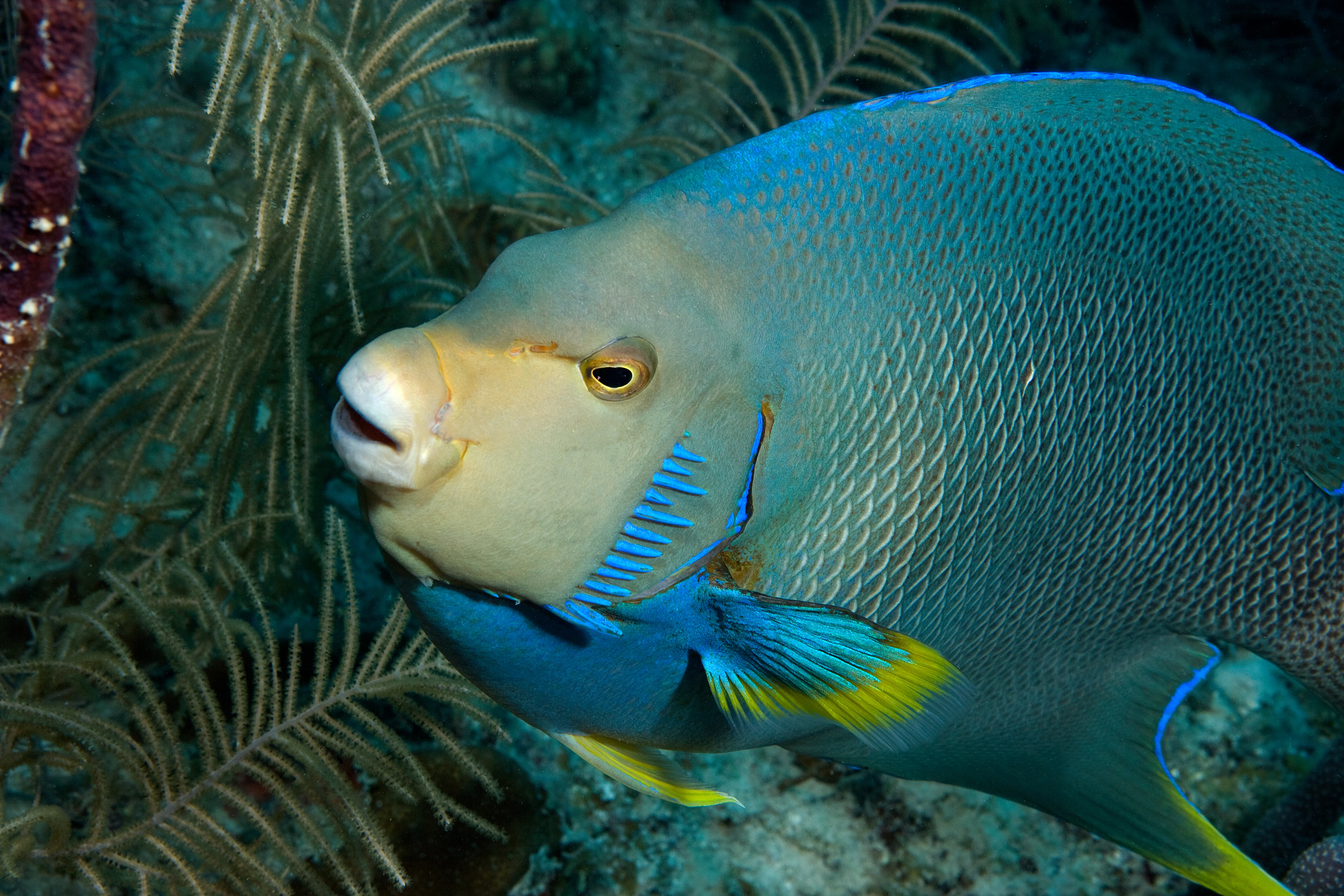
A colourful queen angelfish with blue and yellow markings swims underwater near coral and sea plants in a clear ocean environment.


Take the Next Step in Your Diving Development

Contact N9BO℠ to learn how speciality training and diving experience can help you achieve the SDI Advanced Scuba Diver certification and continue expanding your underwater capabilities.


From the N9BO℠ Knowledge Base


Share this

SDI Advanced Adventure Diver: Expanding Your Skills, Experience, and Confidence

What Is the SDI Advanced Adventure Diver Course?

Many divers complete their Open Water certification eager to continue exploring the underwater world. They want to dive deeper, navigate more confidently, improve buoyancy, or experience activities such as night diving, wreck diving, or drift diving.

The SDI Advanced Adventure Diver course was developed to provide exactly that opportunity.

Rather than concentrating on one speciality area, the course allows divers to experience several different types of diving through a series of Adventure Dives. Each dive introduces new skills, new environments, and new ways of thinking about underwater exploration.

The programme is designed to broaden a diver’s experience while helping them identify areas they may wish to pursue further.

At N9BO℠, we often describe Advanced Adventure Diver as the course where divers begin discovering what kind of diver they want to become.


Building Experience Through Real Diving

One of the strengths of the programme is its practical nature.

The course places a strong emphasis on diving itself. Instead of spending extensive time in the classroom, students learn through direct experience in the water.

Each Adventure Dive introduces a different aspect of diving and allows participants to apply new knowledge immediately. As divers move between different environments and activities, they begin developing adaptability, situational awareness, and confidence.

This practical exposure often accelerates diver development because students encounter a wider variety of conditions and challenges than they may have experienced during their Open Water training.

At N9BO℠, we believe experience is one of the most valuable instructors a diver will ever have.


Exploring Different Types of Diving

The course is intentionally flexible, allowing divers to explore areas that match their interests and local diving opportunities.

Depending on location and instructor recommendations, Adventure Dives may include:

  • Deep Diving
  • Underwater Navigation
  • Night Diving
  • Drift Diving
  • Wreck Diving
  • Search and Recovery
  • Computer Multilevel Diving
  • Peak Performance Buoyancy

Each dive provides an introduction to a new speciality area while exposing divers to the skills and considerations associated with that activity.

The objective is not mastery. The objective is exploration, experience, and informed progression.

At N9BO℠, we encourage divers to use the programme as an opportunity to broaden their horizons and discover new passions underwater.

A scuba diver with an underwater camera swims near vibrant orange coral in clear blue water, capturing marine life beneath a boat.

Developing Confidence Beyond Open Water

Open Water certification provides the foundation for safe diving, but confidence develops through continued experience.

Many newly certified divers still have relatively limited exposure to varying depths, environmental conditions, and diving tasks. The Advanced Adventure Diver programme helps bridge that gap by introducing new situations in a structured and supportive manner.

As divers gain experience, they often become:

  • More relaxed underwater
  • More aware of their surroundings
  • More efficient with equipment
  • Better at managing buoyancy and air consumption

These improvements occur naturally through repetition and exposure rather than through theory alone.

At N9BO℠, we believe confidence is built one dive at a time.


Improving Buoyancy and Situational Awareness

Regardless of which Adventure Dives are selected, most participants notice significant improvements in buoyancy and overall underwater awareness.

As divers gain experience in different environments, they become more conscious of:

  • Trim and body position
  • Breathing patterns
  • Environmental conditions
  • Navigation and orientation
  • Team communication

These improvements often have a positive impact on every future dive.

Divers who become comfortable controlling their position underwater typically experience:

  • Better air consumption
  • Reduced task loading
  • Improved environmental protection
  • Greater overall enjoyment

At N9BO℠, we teach that buoyancy and awareness are skills that continue evolving throughout a diver’s career.


Understanding Diving Beyond the Basics

The Advanced Adventure Diver course introduces divers to concepts that extend beyond the scope of entry-level training.

Students begin exploring topics such as:

  • Depth management
  • Environmental adaptation
  • Navigation strategy
  • Current awareness
  • Dive planning considerations
  • Equipment configuration for different objectives

These experiences help divers understand that diving is not a single activity but a collection of specialised disciplines, each with its own techniques and challenges.

The course broadens perspective while encouraging continued education and development.

At N9BO℠, we view Advanced Adventure Diver as the point where divers begin to think more actively about how and why they dive.

Two women wearing scuba gear stand in clear, shallow turquoise water under a blue sky. They face each other, smiling and talking, possibly preparing for a dive.

A Pathway Towards Future Specialities

One of the major benefits of the programme is the opportunity to sample speciality areas before committing to full speciality training.

Many divers discover interests they never expected.

Some become fascinated by:

  • Wreck exploration
  • Underwater navigation
  • Night environments
  • Search and recovery techniques
  • Deep diving procedures

These experiences often help divers make informed decisions about future training pathways.

Rather than choosing courses based on assumptions, divers can make decisions based on actual experience.

At N9BO℠, we encourage divers to use Advanced Adventure training as a platform for future growth and exploration.


The Difference Between Certification and Experience

A common misconception in diving is that advancement is simply about collecting certification cards.

In reality, the greatest value of the Advanced Adventure Diver programme comes from the experience gained during training.

The course exposes divers to:

  • Different environments
  • Different operational challenges
  • Different diving techniques
  • Different ways of thinking underwater

This variety builds judgement and adaptability, two qualities that become increasingly important as divers progress.

At N9BO℠, we teach that experience—not certification level alone—is what ultimately creates capable divers.


Operational Mindset

The SDI Advanced Adventure Diver course reinforces a simple but important principle: strong divers are developed through exposure, experience, and continued learning.

The programme encourages divers to move beyond the familiarity of entry-level diving and begin exploring the wider possibilities available within the sport.

Through a variety of diving activities, students develop:

  • Confidence
  • Adaptability
  • Environmental awareness
  • Practical experience
  • Improved decision-making skills

At N9BO℠, we approach Advanced Adventure Diver as a course focused on growth, exploration, and discovering what lies beyond the basics.

The best divers never stop learning. They simply continue exploring new ways to experience the underwater world.

A vibrant coral reef underwater, with colourful corals and schools of small orange fish swimming among them, set against a blue ocean backdrop.


Take Your Diving Beyond the Basics

Contact N9BO℠ to begin your SDI Advanced Adventure Diver course and discover new environments, new skills, and new opportunities for underwater exploration.


From the N9BO℠ Knowledge Base


Share this

SDI Open Water Scuba Diver: The Certification That Opens the Underwater World

What Is the SDI Open Water Scuba Diver Course?

For most divers, the Open Water Scuba Diver course marks the true beginning of their diving journey.

Unlike introductory experiences such as Scuba Discovery or supervised diving programmes, the Open Water course is a complete certification programme. Upon successful completion, divers earn an internationally recognised certification allowing them to plan and conduct dives with another certified diver in conditions similar to those in which they were trained.

The course combines academic learning, practical skill development, confined water training, and open water experience to create a well-rounded and capable diver.

At N9BO℠, we often describe Open Water Diver as the licence that unlocks the underwater world.


Learning How Diving Really Works

Many people are initially attracted to diving because of the adventure, marine life, or travel opportunities. However, becoming a safe diver begins with understanding the principles that make scuba diving possible.

Throughout the course, students learn the fundamentals of:

  • Diving physics and physiology
  • Pressure and equalisation
  • Breathing gas management
  • Dive planning and safety procedures
  • Environmental awareness
  • Equipment use and maintenance

These concepts are presented in a practical and accessible way, allowing students to understand not only what to do, but why they are doing it.

This knowledge creates the foundation for safe decision-making throughout a diver’s future development.

At N9BO℠, we believe educated divers become confident divers.


Developing Essential Underwater Skills

A major component of the Open Water course focuses on practical skill development.

Students learn how to manage common situations and solve minor problems underwater while remaining calm and in control. Skills are introduced progressively, allowing students to build confidence through repetition and practice.

Training includes areas such as:

  • Regulator recovery and clearing
  • Mask removal and replacement
  • Buoyancy control
  • Emergency procedures
  • Controlled ascents
  • Buddy communication and teamwork

The goal is not perfection on the first attempt. The objective is competence, comfort, and understanding.

At N9BO℠, we focus on creating capable divers rather than simply completing skills.

A scuba diver with a large underwater camera films a sea turtle swimming close by in clear blue water, surrounded by a few small fish.

Discovering Neutral Buoyancy

One of the most exciting moments in diver development occurs when students begin to understand buoyancy control.

For many new divers, learning to hover effortlessly underwater feels almost magical. Rather than walking, swimming, or floating on the surface, divers learn how to move freely in three dimensions.

Buoyancy control improves:

  • Comfort underwater
  • Air consumption
  • Environmental protection
  • Overall diving enjoyment

As students gain experience, they begin to realise that buoyancy is one of the most important skills in diving.

At N9BO℠, we teach buoyancy as a lifelong skill that continues developing well beyond certification.


Open Water Training Dives

After developing foundational skills in a confined environment, students complete a series of open water dives.

These dives allow students to apply everything they have learned in real-world diving conditions. Under instructor supervision, divers begin developing situational awareness, confidence, and familiarity with the underwater environment.

For many students, this is where diving truly comes alive.

The transition from training exercises to exploring reefs, marine life, and underwater landscapes creates a powerful sense of achievement and excitement.

At N9BO℠, we believe the open water dives are where students stop feeling like trainees and start feeling like divers.


Learning to Dive as Part of a Team

Scuba diving is rarely an individual activity. Throughout the course, students learn the importance of buddy procedures, communication, and teamwork.

Divers develop an understanding of:

  • Pre-dive planning
  • Buddy checks
  • Underwater communication
  • Situational awareness
  • Mutual support and assistance

These skills create safer and more enjoyable diving experiences throughout a diver’s career.

Strong diving teams are built on communication, awareness, and trust.

At N9BO℠, we teach that good divers look after themselves, while great divers look after each other.

A scuba diver with an underwater camera swims near vibrant orange coral in clear blue water, capturing marine life beneath a boat.

The Beginning of a Lifetime of Exploration

One of the most exciting aspects of the Open Water certification is what comes next.

Upon certification, divers gain access to an enormous range of diving opportunities around the world. Coral reefs, wrecks, drift dives, night dives, marine conservation projects, and underwater photography all become possible pathways for future development.

Many divers continue into programmes such as:

  • SDI Advanced Adventure Diver
  • Deep Diver
  • Navigation Diver
  • Nitrox Diver
  • Wreck Diver
  • Rescue Diver

The Open Water certification is therefore not an endpoint. It is the beginning of an ongoing journey of learning and exploration.

At N9BO℠, we encourage divers to view certification as the start of their education rather than its completion.


Building Confidence Through Experience

Perhaps the most important outcome of the Open Water course is confidence.

By the end of training, students have learned how to:

  • Solve common underwater problems
  • Manage equipment effectively
  • Dive safely with a buddy
  • Plan and conduct simple dives
  • Enjoy the underwater environment responsibly

This confidence comes not from receiving a certification card, but from successfully applying knowledge and skills underwater.

Each dive builds experience, and each experience builds confidence.

At N9BO℠, we believe competence is the foundation of confidence.


Why SDI?

SDI has built its training philosophy around modern diving practices and practical diver development.

The programme incorporates:

  • Modern teaching methods
  • Digital learning options
  • Dive computer integration
  • Real-world diving applications

The focus remains on creating divers who are prepared for the way people actually dive today.

This practical approach helps students transition smoothly from training into independent diving.

At N9BO℠, we value training systems that prioritise understanding, adaptability, and long-term diver success.


Operational Mindset

The SDI Open Water Scuba Diver course reinforces a simple but important principle: safe diving is built on knowledge, skill, awareness, and good judgement.

The certification does not create an expert diver. Instead, it provides the tools and understanding necessary to begin diving safely and confidently while continuing to learn through experience.

Strong divers develop through:

  • Practice
  • Observation
  • Continued education
  • Environmental awareness
  • Responsible decision-making

At N9BO℠, we approach Open Water training as the foundation of every future diving achievement.

Every Divemaster, Instructor, Cave Diver, Technical Diver, and Course Director started exactly here—with an Open Water certification and a desire to explore the underwater world.

A school of colourful tropical fish with blue bodies, yellow fins, and black-and-white faces swim together in clear turquoise water above a coral reef.


Start Your Diving Journey Today

Contact N9BO℠ to begin your SDI Open Water Scuba Diver course and earn the certification that opens the door to a lifetime of underwater adventure.


From the N9BO℠ Knowledge Base

Share this

SDI Shallow Water Scuba Diver: Developing Skills, Confidence, and Comfort Underwater

What Is the SDI Shallow Water Scuba Diver Course?

Not everyone begins their diving journey with the goal of immediately becoming an independent diver. Some individuals prefer a gradual approach that allows them to become comfortable underwater while developing the skills and confidence needed for future training.

The SDI Shallow Water Scuba Diver course was created to provide exactly that opportunity.

The programme focuses on introducing divers to the underwater environment while remaining within conservative depth limits and operating under appropriate supervision. Students learn the fundamental skills of scuba diving without the additional demands associated with deeper dives or more advanced training.

At N9BO℠, we often describe the course as a confidence-building stepping stone towards full diver certification.


Learning to Dive in a Controlled Environment

One of the greatest challenges for new divers is adapting to an entirely new environment.

Breathing underwater, managing equipment, controlling buoyancy, and communicating beneath the surface are all unfamiliar experiences for most people. By limiting operational depth and complexity, the course allows students to focus on these foundational skills without feeling overwhelmed.

This gradual approach helps divers become comfortable with:

  • Breathing from a regulator
  • Mask and regulator skills
  • Buoyancy awareness
  • Equipment handling
  • Underwater communication

The emphasis remains on comfort, understanding, and confidence rather than depth or performance.

At N9BO℠, we believe strong divers are built on strong foundations.


Why Shallow Water Matters

Many new divers assume that deeper water automatically means a better diving experience. In reality, some of the most important diving skills are developed in shallow water.

Shallow environments provide:

  • Increased natural light
  • Easy visual orientation
  • Reduced pressure-related stress
  • Greater comfort for new divers
  • Simplified skill development

Students are able to focus on learning and enjoying the underwater environment rather than worrying about depth itself.

The result is often a more relaxed and enjoyable introduction to scuba diving.

At N9BO℠, we teach that confidence should be developed before complexity is added.

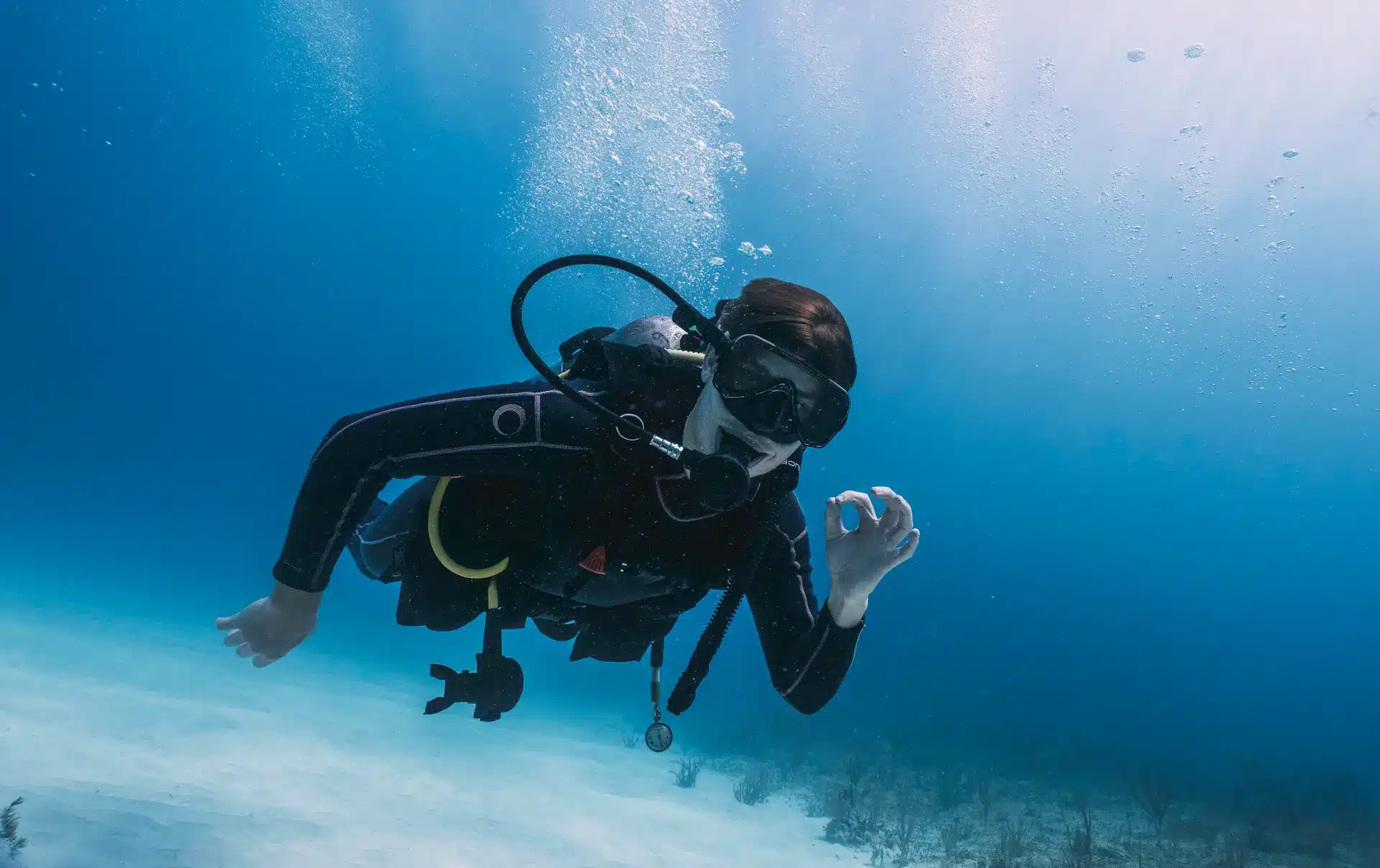
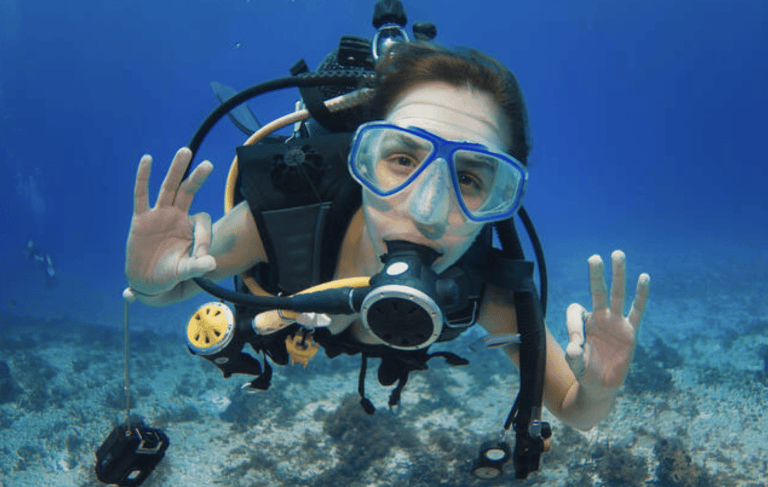
A scuba diver underwater wearing a black wetsuit and mask, making an OK hand signal whilst swimming above the sandy sea floor with some seagrass visible. Bubbles rise to the surface.

Developing Core Diving Skills

The course introduces the essential skills that form the basis of all future scuba training.

Students learn how to:

  • Assemble and prepare scuba equipment
  • Enter and exit the water safely
  • Clear a flooded mask
  • Recover and use a regulator correctly
  • Control buoyancy and movement underwater
  • Maintain awareness of depth, time, and air supply

These skills may appear simple, but they form the foundation upon which every future diving qualification is built.

The more comfortable students become with these basic procedures, the easier future progression becomes.

At N9BO℠, we focus on competence and repetition rather than rushing through skills.


Building Water Confidence

One of the primary objectives of the Shallow Water Scuba Diver course is confidence development.

Many participants begin with little or no previous diving experience. Some may even feel uncertain about spending extended periods underwater.

By introducing skills gradually and maintaining a controlled environment, the programme allows students to gain confidence through successful experiences rather than pressure.

As comfort increases, divers often notice improvements in:

  • Breathing control
  • Relaxation underwater
  • Situational awareness
  • Equipment familiarity
  • Overall enjoyment of the dive

Confidence becomes a natural result of experience and understanding.

At N9BO℠, we believe that confidence is earned underwater, one successful dive at a time.


Preparing for Open Water Certification

For many students, the Shallow Water Scuba Diver course serves as a pathway towards the SDI Open Water Scuba Diver certification. The knowledge and practical skills developed during the programme create a strong foundation for future training. SDI’s full Open Water programme expands upon these fundamentals and prepares divers to conduct open water dives independently with a certified buddy in conditions similar to their training.  

Because students have already developed familiarity with equipment, procedures, and the underwater environment, the transition into full certification is often smoother and more enjoyable.

Rather than starting from scratch, divers continue building upon skills they already understand.

At N9BO℠, we encourage progression at a pace that matches the individual’s confidence and experience level.

A person wearing scuba diving kit swims underwater near coral formations, surrounded by clear blue water and sunlight filtering from above.

Who Is the Course For?

The Shallow Water Scuba Diver course is particularly well suited to individuals who want a gradual introduction to scuba diving.

It is often popular with:

  • First-time divers
  • Individuals seeking additional confidence before Open Water training
  • Younger participants beginning their diving journey
  • Travellers with limited time available
  • People who prefer a structured and progressive learning environment

The course allows participants to experience genuine scuba diving while maintaining conservative limits and professional supervision.

At N9BO℠, we recognise that every diver develops at a different pace.


Discovering the Underwater World

Although the programme focuses on skill development, it also introduces students to the unique experience of underwater exploration.

Even in shallow water, divers can observe:

  • Reef environments
  • Marine life
  • Underwater landscapes
  • The effects of buoyancy and weightlessness

For many participants, this becomes the moment they realise why scuba diving captivates millions of people around the world.

The underwater environment feels peaceful, immersive, and unlike anything experienced on the surface.

At N9BO℠, we believe every diver should have the opportunity to discover that feeling in a safe and supportive environment.


Operational Mindset

The SDI Shallow Water Scuba Diver course reinforces an important principle: successful diving begins with confidence, competence, and gradual progression.

The programme is not designed to create advanced divers overnight. Instead, it provides the opportunity to develop comfort and understanding in a controlled environment before taking on greater responsibility and complexity.

Strong divers are built through:

  • Repetition
  • Understanding
  • Experience
  • Confidence
  • Structured development

At N9BO℠, we approach the Shallow Water Scuba Diver course as the beginning of a long and enjoyable diving journey.

Before divers explore deeper reefs, wrecks, and underwater adventures, they must first become comfortable breathing, moving, and thinking underwater.

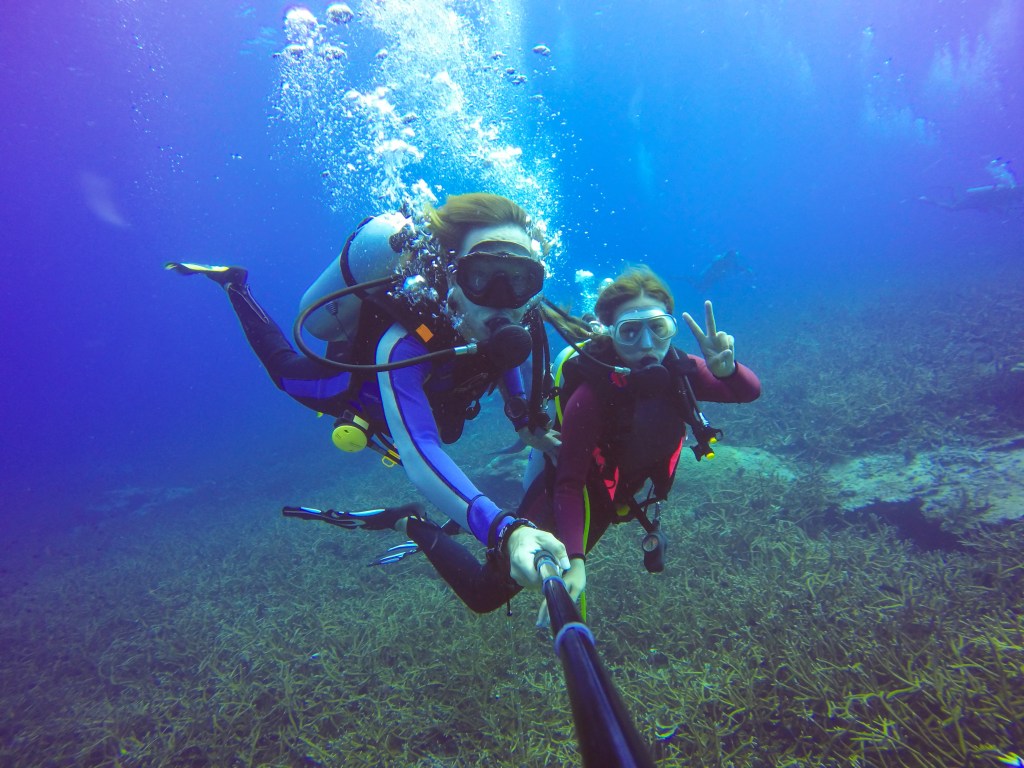
Two scuba divers underwater take a selfie with a selfie stick. One diver flashes a peace sign, and both wear wetsuits, masks, and diving equipment. Sea plants are visible on the sea floor below them.


Not Quite Ready for Open Water? Start with SDI Shallow Water Scuba Diver

Contact N9BO℠ to learn more about the SDI Shallow Water Scuba Diver course and begin developing the skills, confidence, and underwater awareness needed for future diving adventures.


From the N9BO℠ Knowledge Base


Share this

SDI Supervised Diver: Diving with Professional Guidance and Oversight

What Is an SDI Supervised Diver?

The SDI Supervised Diver certification is intended for individuals who have completed the academic and confined water portions of diver training, along with selected open water skills, but who are not yet trained or certified to dive independently with another recreational diver.

Instead, the Supervised Diver is authorised to dive under the direct supervision of an active SDI Divemaster, Assistant Instructor, or Instructor.

This approach allows individuals to gain real-world diving experience while continuing to develop confidence and competence in the underwater environment.

At N9BO℠, we often describe the Supervised Diver programme as a bridge between introductory diving experiences and full independent diver certification.


Why Was the Programme Created?

Not every diver progresses at the same pace.

Some individuals may:

  • Have limited time available during a holiday
  • Be younger participants entering the diving world
  • Prefer additional supervision while building experience
  • Wish to begin diving before completing a full certification programme

The Supervised Diver certification provides a safe and structured solution by allowing individuals to participate in supervised diving activities while continuing their development.

Rather than delaying underwater experiences entirely, the programme enables divers to gain practical exposure under professional guidance.

At N9BO℠, we believe confidence often develops best through experience supported by appropriate supervision.


Learning the Foundations of Safe Diving

Although the Supervised Diver certification has limitations compared to a full Open Water certification, participants still learn many of the same fundamental concepts.

Training typically introduces:

  • Basic diving physics and physiology
  • Equipment use and maintenance
  • Buoyancy awareness
  • Underwater communication
  • Dive planning principles
  • Safety procedures and emergency skills

The programme establishes a strong foundation while recognising that further experience and training are required before independent diving becomes appropriate.

At N9BO℠, we emphasise that strong foundations are more important than rapid progression.

Four scuba divers wearing wetsuits, masks, and oxygen cylinders swim underwater in deep blue ocean water, surrounded by bubbles and illuminated by natural light from above.

The Value of Professional Supervision

The defining feature of the programme is professional oversight.

Diving with a qualified dive professional provides several advantages for developing divers. The supervising professional manages many aspects of the dive operation, allowing the diver to focus on building confidence, awareness, and practical experience.

This often reduces stress and allows participants to enjoy the underwater environment while continuing to improve their skills.

Professional supervision also provides immediate guidance and feedback, helping divers refine:

  • Buoyancy control
  • Breathing techniques
  • Equipment familiarity
  • Situational awareness

At N9BO℠, we view supervision not as a restriction, but as a valuable learning opportunity.


Building Experience Before Independence

One of the greatest benefits of the programme is the opportunity to gain real diving experience before assuming greater responsibility.

Many divers discover that classroom knowledge and confined water skills become much more meaningful once applied in actual diving environments.

Under supervision, divers begin developing:

  • Environmental awareness
  • Comfort underwater
  • Confidence in varying conditions
  • Practical decision-making skills

This experience often makes future progression into full certification programmes smoother and more enjoyable.

At N9BO℠, we encourage divers to focus on competence and comfort rather than rushing towards independence.


Who Is the Programme Suitable For?

The Supervised Diver certification is particularly useful for individuals who want to begin diving but are not yet ready for unrestricted independent diving activities.

This may include:

  • Younger divers entering the sport
  • Individuals with limited available training time
  • Travellers seeking introductory diving experiences
  • Divers who prefer additional guidance and support

The programme provides flexibility while maintaining clear operational limits designed to ensure safety and appropriate supervision.

At N9BO℠, we believe diving pathways should accommodate different learning styles, experience levels, and personal goals.


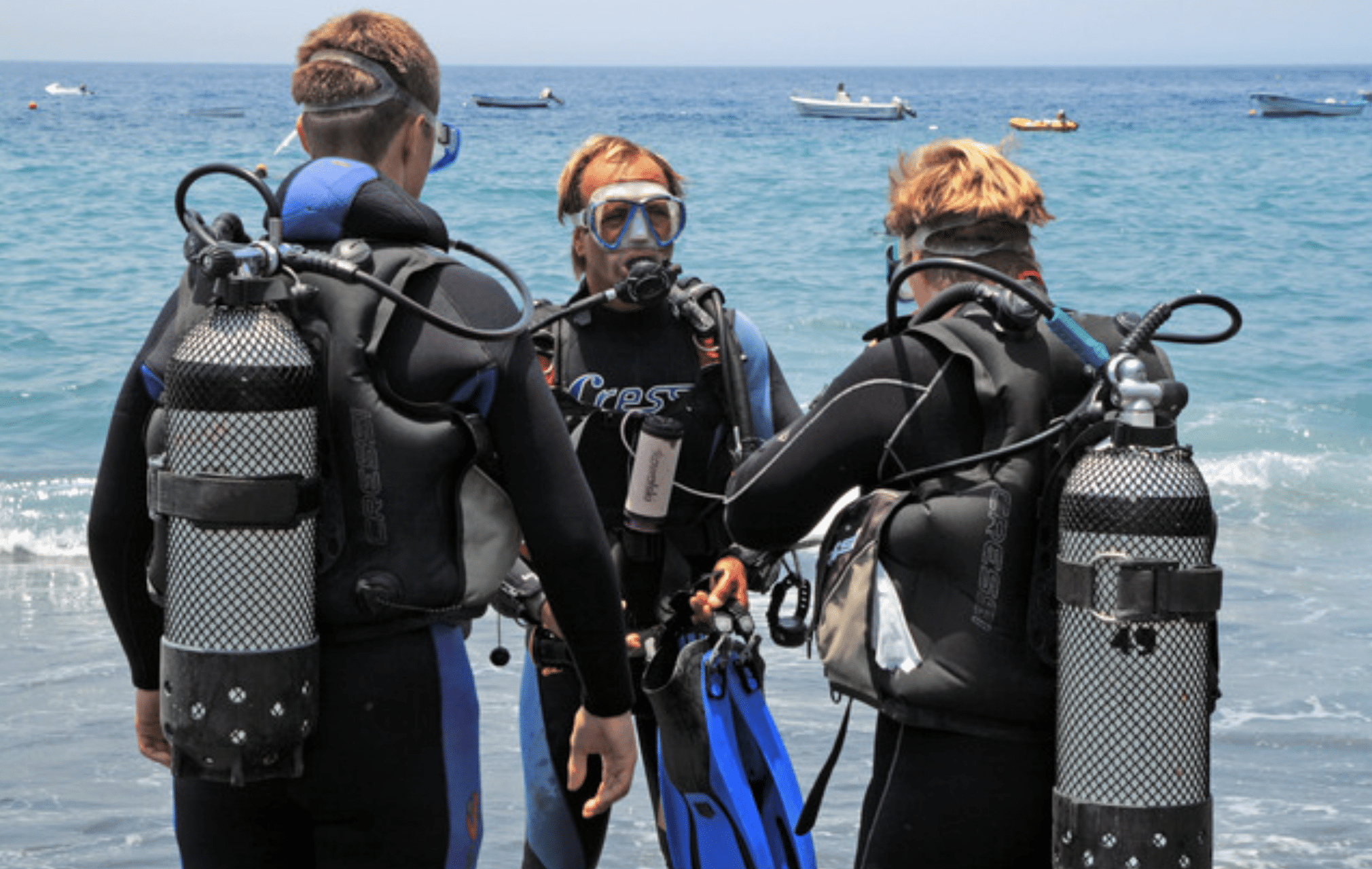
Three scuba divers wearing wetsuits and oxygen tanks stand on the shore, talking and preparing to enter the sea. Small boats float in the blue water in the background under a clear sky.

Progression Towards Open Water Diver

For many participants, the Supervised Diver certification represents a stepping stone towards becoming a fully certified SDI Open Water Scuba Diver.

Because many foundational skills and knowledge areas have already been completed, progression into Open Water training is often straightforward.

As divers continue developing their:

  • Buoyancy skills
  • Equipment familiarity
  • Situational awareness
  • Underwater confidence

they gradually become prepared for the greater responsibilities associated with independent diving.

The programme therefore serves as part of a longer development pathway rather than a final destination.

At N9BO℠, we view Supervised Diver as an opportunity to build experience before expanding responsibility.


Developing Confidence Through Experience

Many new divers initially believe that certification alone creates confidence. In reality, confidence is usually built through successful experiences underwater.

The Supervised Diver programme allows participants to accumulate these experiences gradually while benefiting from professional support.

As dives accumulate, divers often become:

  • More relaxed underwater
  • More comfortable with equipment
  • More aware of their surroundings
  • Better able to manage tasks and procedures

This progression creates stronger divers and often leads to a more enjoyable learning journey overall.

At N9BO℠, we believe confidence should be earned through experience rather than assumed through certification.


Operational Mindset

The SDI Supervised Diver programme reinforces a fundamental diving principle: responsibility should increase alongside experience and competence.

The programme allows divers to enjoy the underwater world while recognising that skill development is a gradual process. Professional supervision provides an additional safety layer while divers continue learning and gaining experience.

Strong divers are not defined by how quickly they achieve independence. They are defined by their willingness to develop skills methodically and build confidence through experience.

At N9BO℠, we approach the Supervised Diver programme as a structured pathway that prioritises safety, learning, and long-term diver development.

Every confident independent diver began by learning under the guidance of someone more experienced.

A scuba diver underwater makes an OK hand signal whilst other divers swim in the background over a coral reef in clear blue water.


Build Experience with Professional Support

Contact N9BO℠ to learn more about the SDI Supervised Diver programme and discover how professional supervision can help you develop confidence, competence, and comfort underwater.


From the N9BO℠ Knowledge Base

Share this

SDI Indoor Diver: Building Confidence and Skills in a Controlled Environment

What Is the SDI Indoor Diver Programme?

The SDI Indoor Diver programme was developed to introduce new divers to scuba diving in an environment specifically designed for learning.

Unlike open water training conducted in oceans, lakes, or quarries, indoor diving takes place in a controlled setting where factors such as waves, currents, visibility, weather, and marine life are removed from the equation.

This allows participants to focus entirely on:

  • Learning scuba skills
  • Understanding equipment
  • Developing confidence underwater
  • Becoming comfortable breathing from a regulator

The programme is ideal for individuals who want a gradual introduction to diving before progressing into open water certification.

At N9BO℠, we describe Indoor Diver as one of the most comfortable and accessible entry points into scuba diving.


Why Learn in an Indoor Environment?

For many people, the underwater environment itself can feel unfamiliar. Learning basic skills while also managing waves, current, visibility, and environmental conditions can sometimes increase stress for new divers.

An indoor facility removes many of these variables and creates a predictable learning environment.

The benefits include:

  • Stable water conditions
  • Excellent visibility
  • Comfortable temperatures
  • Controlled depth progression
  • Reduced environmental distractions

Participants can concentrate on learning and enjoying the experience rather than adapting to changing conditions.

At N9BO℠, we believe confidence develops most effectively when the learning environment supports the student.


Learning the Foundations of Scuba Diving

The Indoor Diver programme focuses on the fundamental skills that form the basis of all scuba training.

Participants learn:

  • Equipment assembly and use
  • Breathing techniques underwater
  • Mask clearing procedures
  • Regulator recovery skills
  • Basic buoyancy awareness
  • Underwater communication methods

These skills are introduced progressively and practised repeatedly until participants become comfortable and relaxed underwater.

The emphasis is on understanding and confidence rather than speed of completion.

At N9BO℠, we teach that strong fundamentals create stronger divers later in their training journey.

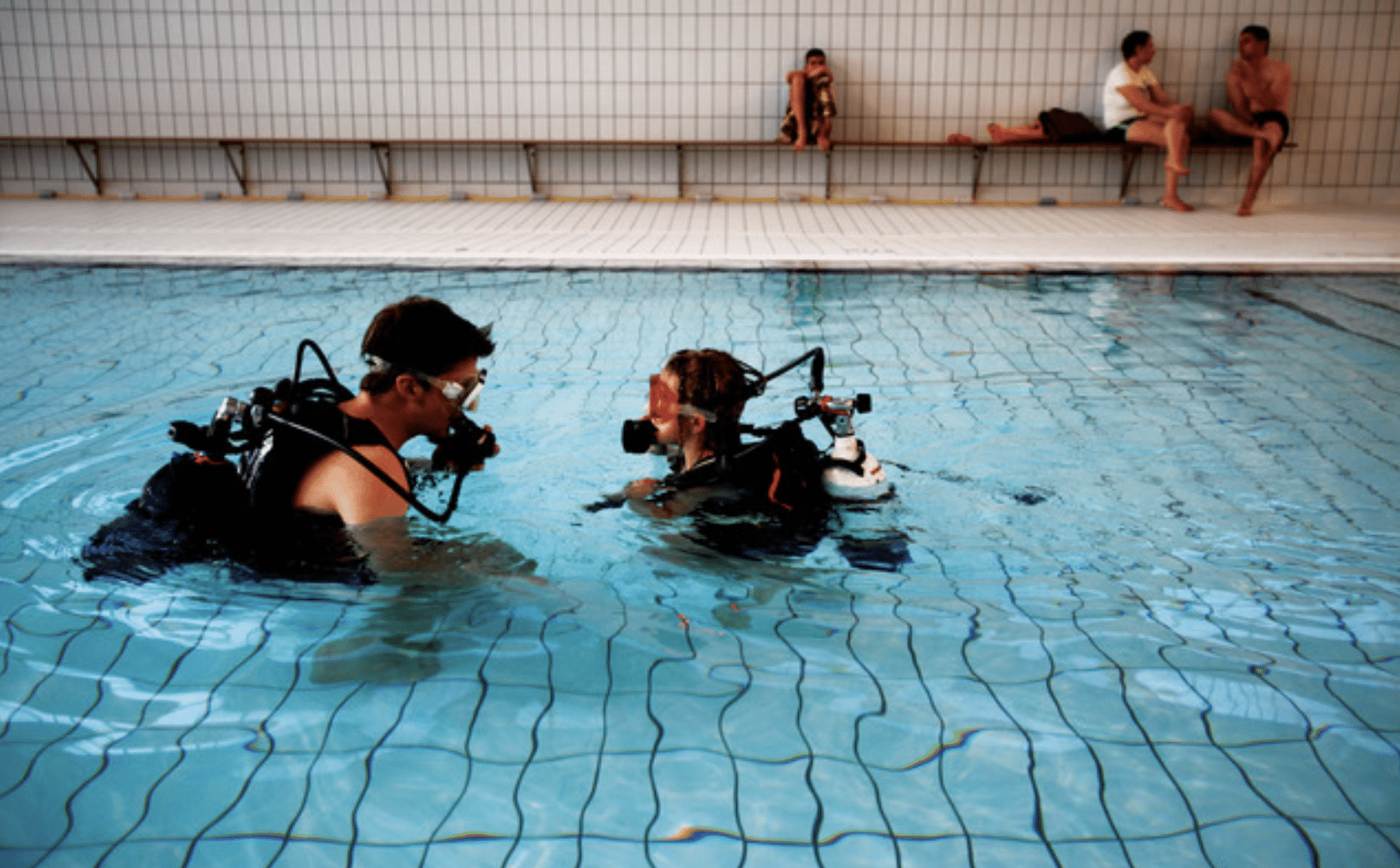
Two people wearing scuba gear practise in an indoor swimming pool, facing each other. Three others sit on benches by the poolside in the background, observing the activity.

Developing Water Confidence

One of the greatest advantages of indoor diving is the opportunity to build confidence gradually.

Many people have never breathed underwater before, and some participants may initially feel nervous about using scuba equipment or submerging completely.

The controlled environment allows instructors to work closely with each participant, helping them become comfortable at their own pace.

As confidence grows, participants typically become:

  • More relaxed underwater
  • More aware of their surroundings
  • More comfortable using equipment
  • Better able to control breathing and movement

This confidence often becomes the most valuable outcome of the programme.

At N9BO℠, we focus on creating divers who are comfortable before they are challenged.


Understanding Buoyancy and Underwater Movement

One of the most fascinating aspects of scuba diving is buoyancy control.

Indoor environments provide an excellent opportunity to introduce participants to the sensation of floating weightlessly underwater.

Divers begin learning how:

  • Breathing affects buoyancy
  • Body position influences movement
  • Equipment configuration impacts balance

Without environmental distractions, students can focus entirely on developing awareness of how their body behaves underwater.

These early experiences often make future open water training significantly easier.

At N9BO℠, we believe buoyancy awareness begins with understanding, not depth.


A Comfortable Introduction for New Divers

The Indoor Diver programme appeals to a wide variety of participants.

Some are curious about scuba diving but unsure whether they wish to pursue certification. Others may prefer to gain experience indoors before transitioning to open water environments.

The programme is particularly useful for:

  • First-time divers
  • Younger participants
  • Individuals returning to the water after a long break
  • Anyone seeking a gradual introduction to scuba equipment and procedures

The controlled environment allows participants to explore scuba diving without feeling overwhelmed.

At N9BO℠, we encourage divers to build confidence first and expand their comfort zone progressively.

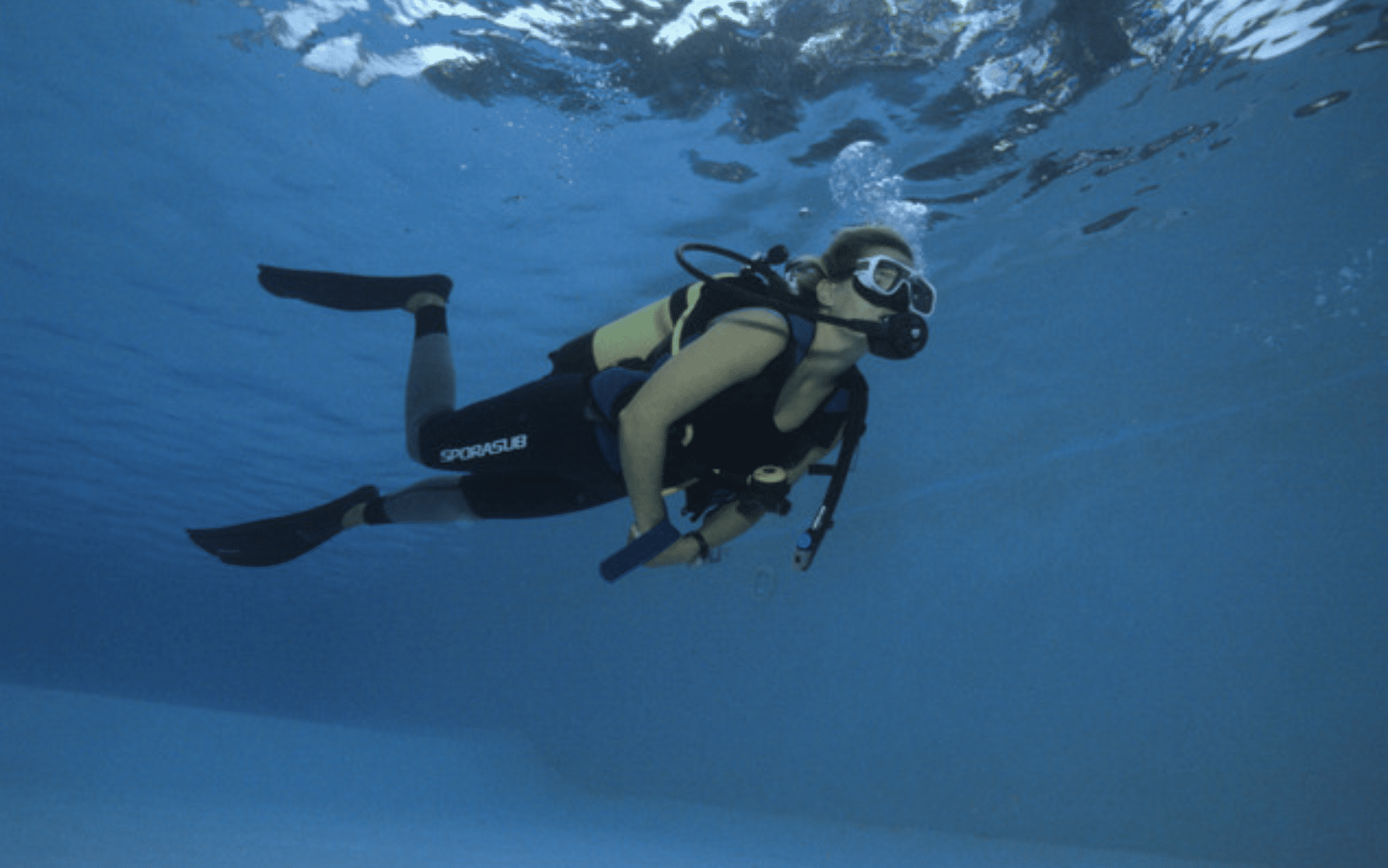
A person wearing scuba gear and fins swims underwater in a clear blue pool, looking ahead and holding a small object.

Preparing for Future Open Water Training

Although the Indoor Diver programme can be enjoyed as a standalone experience, it also provides an excellent foundation for future certification courses.

Participants gain familiarity with:

  • Equipment handling
  • Underwater communication
  • Basic safety procedures
  • Breathing and buoyancy control

As a result, many students who later enrol in the SDI Open Water Scuba Diver course arrive with increased confidence and reduced anxiety.

The transition into open water training often feels smoother because many of the fundamental concepts have already been introduced.

At N9BO℠, we view Indoor Diver as a confidence-building bridge towards broader underwater exploration.


The Value of Controlled Learning

Every diver learns differently. Some people adapt quickly to the underwater environment, while others benefit from additional time and practice.

Indoor diving allows participants to:

  • Learn at a comfortable pace
  • Practise skills repeatedly
  • Build familiarity with equipment
  • Develop confidence without environmental pressure

The programme removes many of the external factors that can distract from the learning process.

This creates a highly supportive environment for skill development and confidence building.

At N9BO℠, we believe the best learning occurs when students are comfortable, engaged, and enjoying the experience.


Operational Mindset

The SDI Indoor Diver programme reinforces an important principle: successful diving begins with confidence and understanding.

Before divers explore reefs, wrecks, or deeper environments, they must first become comfortable with:

  • Breathing underwater
  • Equipment operation
  • Buoyancy awareness
  • Safe diving practices

The indoor environment provides an ideal setting to develop these foundations in a controlled and supportive manner.

At N9BO℠, we approach Indoor Diver as a programme focused on confidence, comfort, and skill development rather than depth or adventure.

Every experienced diver once learned the basics. Indoor Diver provides a safe and enjoyable place to begin that journey.

A scuba diver in full kit gives a thumbs-up while kneeling on the bottom of a tiled pool. Several other divers are visible in the background. Bubbles rise through the water.


Start Your Diving Journey in a Controlled Environment

Contact N9BO℠ to experience the SDI Indoor Diver programme and develop the confidence, comfort, and foundational skills needed to begin exploring the underwater world.


From the N9BO℠ Knowledge Base

Share this

SDI Scuba Discovery: Experience the Underwater World for the First Time

What Is SDI Scuba Discovery?

Many people are fascinated by the underwater world but are unsure whether scuba diving is something they want to pursue long-term. The SDI Scuba Discovery programme was developed specifically for those who want to try diving before committing to a certification course.

Rather than focusing on extensive academics or performance requirements, the programme concentrates on introducing participants to the experience of scuba diving itself. Under the direct supervision of an SDI Instructor, participants learn basic concepts, become familiar with scuba equipment, and enjoy their first underwater experience in a controlled environment.

The goal is simple: discover what scuba diving feels like.

At N9BO℠, we often describe Scuba Discovery as the perfect way to answer the question, “Is diving for me?”


The First Breath Underwater

The most memorable moment for most participants is their first breath underwater.

For someone who has never dived before, the idea of breathing beneath the surface can seem unusual. Yet within minutes, most people realise that the experience feels surprisingly natural.

Once participants become comfortable with the regulator and breathing process, their attention quickly shifts away from the equipment and towards the environment around them.

This moment is often transformative. The ocean stops being something viewed from above and becomes a world that can be explored from within.

At N9BO℠, we have seen countless future divers begin their journey with that very first underwater breath.


Learning the Basics

Before entering the water, participants receive a briefing covering the essential principles needed for a safe and enjoyable experience.

This includes topics such as equipment function, underwater communication, equalisation techniques, and basic safety procedures. The information is presented in a simple and approachable way, allowing participants to understand what they will experience without becoming overwhelmed by technical detail.

Once in the water, the instructor introduces a selection of basic scuba skills that help participants become comfortable with the equipment and environment.

The emphasis is always on confidence and enjoyment rather than performance.

At N9BO℠, we believe that a positive first experience is the foundation of future diver development.

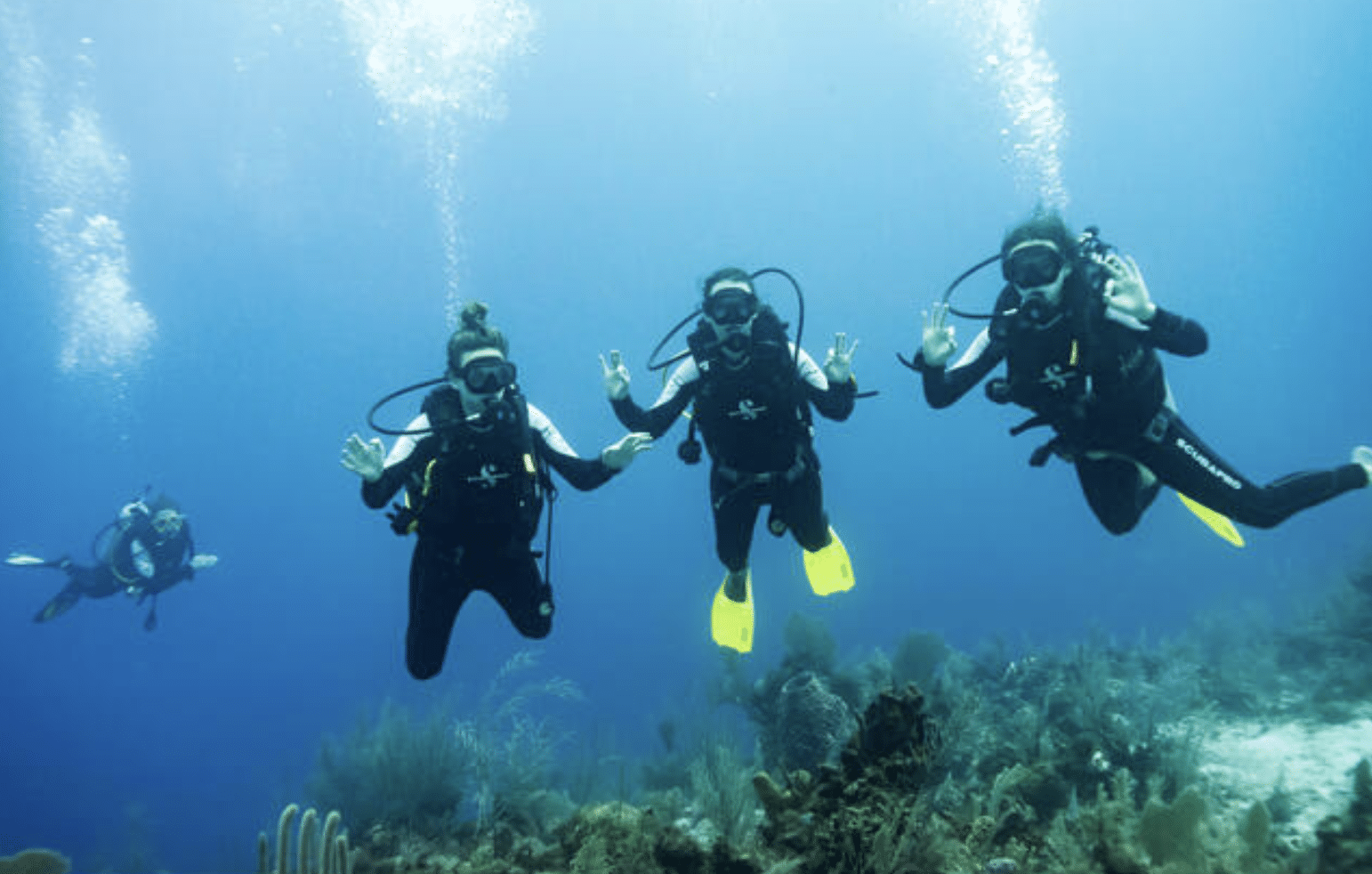
Four scuba divers with yellow fins are underwater, posing and waving for the camera above a coral reef in clear blue water.

Discovering Weightlessness Underwater

One of the most unique aspects of scuba diving is the sensation of neutral buoyancy.

Unlike swimming at the surface, scuba divers can move comfortably through three dimensions, floating effortlessly above reefs, sand, and marine life.

For many first-time participants, this sensation of weightlessness becomes one of the most memorable parts of the entire experience.

Combined with the quiet atmosphere underwater, the feeling often creates a sense of calm and freedom that is difficult to replicate anywhere else.

At N9BO℠, we encourage participants to slow down, relax, and enjoy this entirely new perspective on movement and space.


Meeting the Underwater World Up Close

Scuba diving allows participants to become part of the underwater environment rather than simply observing it from the surface.

Depending on local conditions and location, participants may encounter:

  • Tropical reef fish
  • Coral formations
  • Sea turtles
  • Rays
  • Colourful marine ecosystems

Observing marine life at eye level creates a far deeper connection than watching from a boat or shoreline.

The experience often inspires greater appreciation for marine conservation and ocean protection.

At N9BO℠, we encourage responsible interaction and respectful observation of all marine environments.


Building Water Confidence

Many participants arrive with questions about whether they will feel comfortable underwater.

Scuba Discovery is designed specifically to build confidence gradually. Instructors work closely with participants to ensure they remain relaxed, comfortable, and in control throughout the experience.

As familiarity with the equipment increases, most people quickly discover that the underwater environment feels far less intimidating than they initially expected.

This confidence often extends beyond the dive itself, improving overall comfort in the water and creating enthusiasm for future training.

At N9BO℠, we focus on progression, patience, and individual comfort rather than rushing the experience.

A scuba instructor in a wetsuit teaches a child in scuba gear how to use equipment while standing in shallow, clear blue water near rocky cliffs.

A Safe and Structured Introduction

Safety is the foundation of every Scuba Discovery experience.

Participants dive under direct instructor supervision and remain within carefully controlled limits. Equipment is prepared and checked by trained professionals, and the dive is conducted in conditions appropriate for entry-level participants.

The programme is specifically designed to provide a realistic diving experience while maintaining a high level of supervision and support.

This allows participants to focus on enjoying the underwater world rather than worrying about procedures or technical details.

At N9BO℠, we believe confidence grows naturally when people feel safe and supported.


The First Step Towards Certification

Although Scuba Discovery is not a certification programme, it often serves as a gateway to future training.

Many participants leave the experience wanting to learn more and continue their development through programmes such as:

  • SDI Open Water Scuba Diver
  • SDI Advanced Adventure Diver
  • Specialty Diver courses

Experiencing scuba diving firsthand helps individuals make an informed decision about whether certification is the right next step.

Even for those who never pursue formal training, the experience remains a memorable introduction to a world few people ever have the opportunity to explore.

At N9BO℠, we view Scuba Discovery as the beginning of possibility rather than the end of an activity.


Why Try SDI Scuba Discovery?

The programme is ideal for individuals who are curious about scuba diving but are not yet ready to commit to a full course.

It provides an opportunity to:

  • Experience breathing underwater
  • Learn basic scuba skills
  • Explore the underwater environment safely
  • Build confidence in the water
  • Discover whether scuba diving is right for you

Most importantly, it offers a genuine diving experience rather than simply a demonstration.

At N9BO℠, we believe the best way to understand scuba diving is to experience it firsthand.


Operational Mindset

SDI Scuba Discovery reinforces a simple but important principle: successful diving begins with confidence, understanding, and controlled progression.

Participants learn that scuba diving is not about taking risks or overcoming fear. It is about developing comfort in a new environment through proper instruction and guidance.

The programme introduces the foundations of:

  • Safe diving practices
  • Equipment familiarity
  • Environmental awareness
  • Water confidence

These elements create a positive first experience while opening the door to future diving opportunities.

At N9BO℠, we approach Scuba Discovery as the first step into a much larger underwater world.

Every experienced diver started somewhere. For many, that journey began with a single breath beneath the surface.

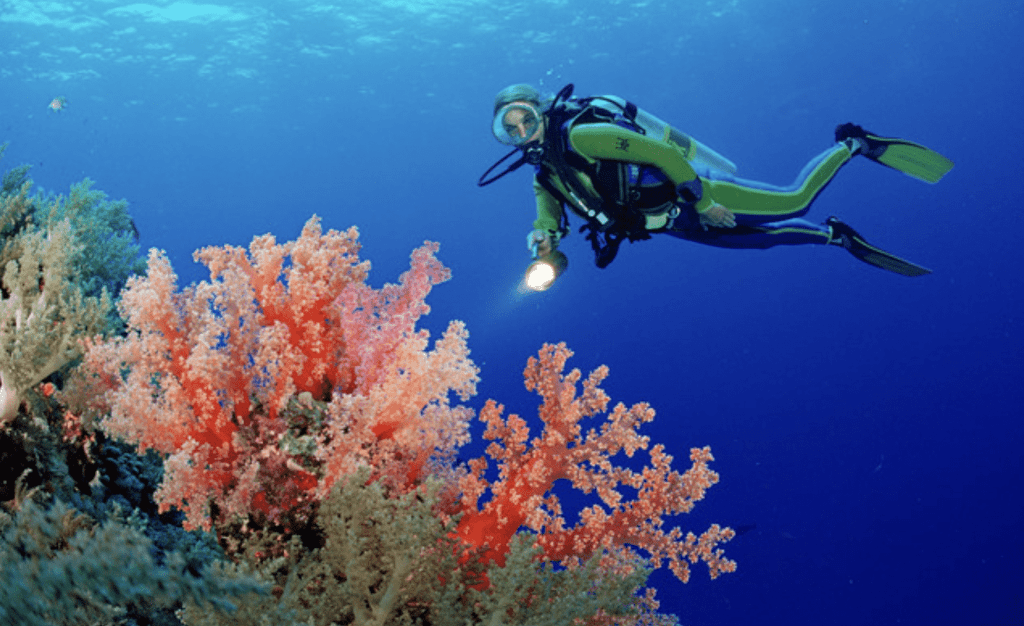
A scuba diver in a wetsuit and goggles swims underwater, shining a torch at vibrant red and pink coral formations surrounded by deep blue water.


Take Your First Breath Underwater

Contact N9BO℠ to experience SDI Scuba Discovery and discover what it feels like to explore the underwater world for the very first time.


From the N9BO℠ Knowledge Base


Share this

Snorkelling: The Gateway to the Underwater World

More Than Just Swimming with a Mask

Many people view snorkelling as a simple holiday activity, but it offers far more than floating on the surface and looking down.

Snorkelling provides direct access to marine environments that would otherwise remain hidden from view. Coral reefs, seagrass meadows, shallow wrecks, lagoons, and coastal ecosystems can often be explored comfortably without scuba equipment.

The experience creates a connection with the ocean that is both immediate and immersive. Even in shallow water, snorkellers can observe marine life behaviour, underwater landscapes, and ecosystem interactions that most people never see.

At N9BO℠, we believe snorkelling is often the beginning of a deeper appreciation for the ocean and its inhabitants.


Why Snorkelling Is So Popular

One of the greatest strengths of snorkelling is its accessibility.

Unlike scuba diving, snorkelling does not require extensive equipment, compressed gas systems, or complex procedures. Most people can begin learning basic snorkelling skills within a very short period of time.

This allows participants to:

  • Explore marine environments easily
  • Observe wildlife in its natural habitat
  • Develop confidence in the water
  • Enjoy the ocean with family and friends

The simplicity of the activity makes it suitable for a wide range of ages and experience levels.

At N9BO℠, we often describe snorkelling as the most direct route into the underwater world.


Learning to Be Comfortable in the Water

One of the most valuable aspects of snorkelling is the development of water confidence.

Many people initially feel uncertain about placing their face in the water, breathing through a snorkel, or floating comfortably at the surface. As these skills develop, participants become more relaxed and confident in aquatic environments.

Snorkelling teaches:

  • Controlled breathing
  • Relaxation in the water
  • Efficient movement and finning
  • Environmental awareness

These skills not only improve the snorkelling experience itself but also provide an excellent foundation for future scuba diving training.

At N9BO℠, we see snorkelling as one of the most effective ways to build natural comfort and confidence in the water.


Understanding the Equipment

The basic snorkelling system consists of three essential components:

  • Mask
  • Snorkel
  • Fins

The mask allows clear underwater vision, the snorkel enables breathing while face-down at the surface, and the fins improve efficiency and movement through the water.

Although the equipment appears simple, proper fit and adjustment are important.

A well-fitting mask prevents leaks and improves comfort, while correctly sized fins reduce fatigue and allow smoother movement through the water.

Learning how to use equipment properly often makes the difference between a frustrating experience and an enjoyable one.

At N9BO℠, we teach that comfort begins with equipment that fits correctly and functions properly.

A person in a swimming costume stands on a sandy beach, holding a snorkelling mask and snorkel, facing clear blue water with a green island in the distance under a partly cloudy sky.

Observing Marine Life Responsibly

Snorkelling provides extraordinary opportunities to observe marine life in its natural environment.

Depending on location, snorkellers may encounter:

  • Tropical reef fish
  • Sea turtles
  • Rays
  • Dolphins
  • Coral ecosystems
  • Seagrass habitats

However, successful wildlife encounters depend on patience and respectful behaviour.

Moving slowly, maintaining a calm presence, and avoiding sudden movements often results in better observations than actively chasing animals.

Marine life generally responds positively to snorkellers who minimise disturbance and allow natural behaviour to continue uninterrupted.

At N9BO℠, we encourage responsible wildlife interaction and environmental stewardship during every snorkelling activity.


Environmental Awareness and Ocean Conservation

Many people develop a stronger appreciation for marine conservation through snorkelling.

Experiencing coral reefs, marine habitats, and wildlife firsthand creates a deeper understanding of:

  • Ocean ecosystems
  • Environmental threats
  • Habitat protection
  • Responsible ocean use

Snorkellers often become ambassadors for marine conservation because they have seen these environments personally.

The activity encourages observation, curiosity, and respect for the natural world.

At N9BO℠, we believe every snorkelling experience is also an opportunity for environmental education.


Developing Swimming and Movement Skills

Snorkelling naturally improves aquatic movement and efficiency.

Participants learn how to:

  • Move efficiently using fins
  • Maintain relaxed breathing patterns
  • Conserve energy in the water
  • Position themselves comfortably at the surface

As confidence grows, snorkellers become more capable of dealing with:

  • Small waves and surface conditions
  • Current awareness
  • Different water environments

These skills contribute to safer and more enjoyable experiences in both recreational water activities and future diving progression.

At N9BO℠, we teach that efficiency and relaxation are fundamental to enjoying time in the water.

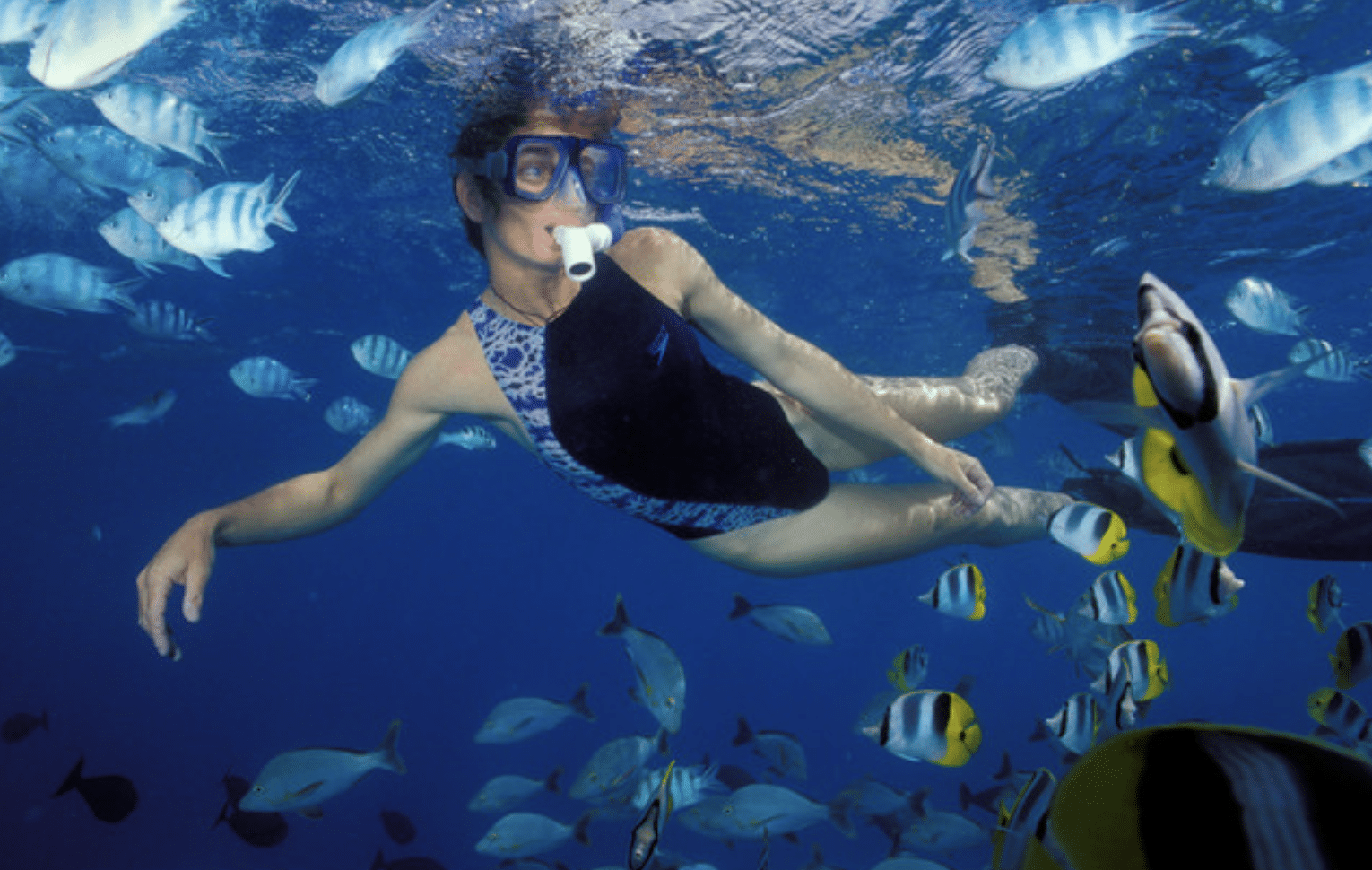
A person wearing a snorkel and swimming goggles swims underwater among colourful fish in clear blue water. The person is surrounded by various species of fish, some with stripes and others with yellow markings.

A Foundation for Future Diving

Many scuba divers first discovered their passion for the underwater world through snorkelling.

The activity introduces several concepts that later become important in diving:

  • Breathing control
  • Equipment familiarity
  • Marine life awareness
  • Environmental observation
  • Comfort in the water

Because of this, snorkelling often serves as a natural stepping stone towards programmes such as:

  • Skin Diving
  • Discover Scuba Diving
  • Open Water Diver training

The transition becomes much easier when basic water confidence already exists.

At N9BO℠, we frequently recommend snorkelling as the perfect introduction to underwater exploration.


The Value of Simplicity

One of the most overlooked aspects of snorkelling is its simplicity.

There are no decompression considerations, no complex gas planning requirements, and no extensive equipment systems to manage. This allows participants to focus entirely on:

  • Observation
  • Relaxation
  • Environmental appreciation
  • Enjoyment of the experience

The activity reminds us that meaningful underwater experiences do not always require depth or complexity.

Sometimes the most memorable encounters occur only a few metres from shore.

At N9BO℠, we believe snorkelling demonstrates that the underwater world is accessible to almost everyone.


Operational Mindset

Snorkelling reinforces a simple but important principle: comfort and awareness create enjoyment in the water.

Participants who learn to relax, breathe calmly, and move efficiently gain far more from the experience than those who rush or fight the environment.

Strong snorkellers develop:

  • Water confidence
  • Environmental awareness
  • Respect for marine life
  • Efficient movement and breathing habits

These skills provide benefits that extend far beyond snorkelling itself.

At N9BO℠, we approach snorkelling as the foundation of underwater exploration and ocean appreciation.

The journey into the underwater world often begins not with a scuba cylinder, but with a mask, snorkel, and curiosity.

A person snorkels in clear turquoise water near a tropical island with dense palm trees under a bright blue sky.


Discover the Underwater World from the Surface

Contact N9BO℠ to learn snorkelling skills, build confidence in the water, and begin exploring the beauty of the ocean in a safe and enjoyable way.


From the N9BO℠ Knowledge Base

Share this

Ice Diving: Operating Beneath a Frozen Surface

What Makes Ice Diving Different

At first glance, ice diving may appear similar to cold-water diving conducted beneath a frozen lake or river. In reality, the environment changes the dive completely.

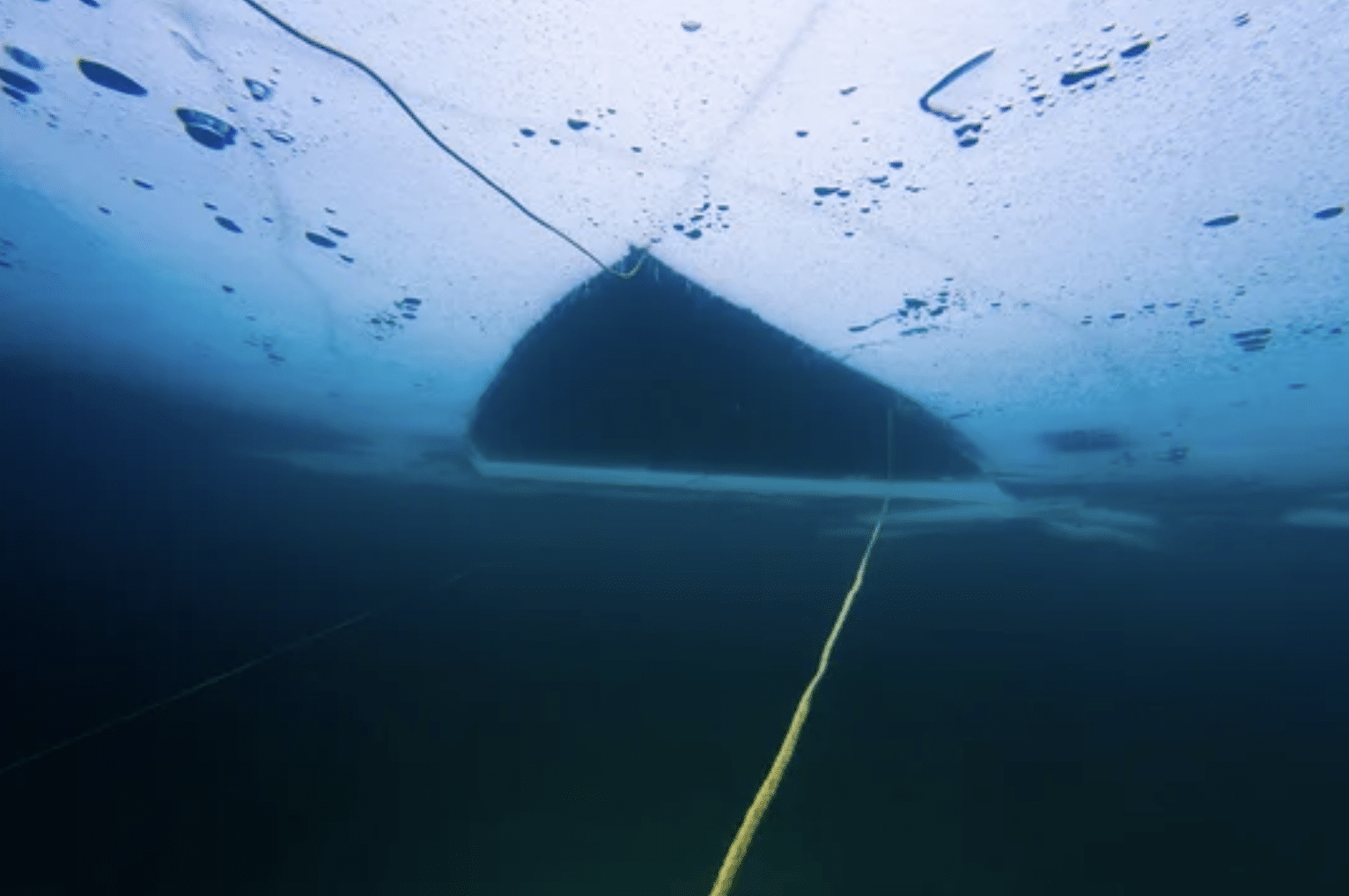
Once beneath the ice, the diver no longer has unrestricted access to the surface. The ice itself becomes an overhead environment, meaning ascent is only possible through designated entry and exit points cut into the surface.

This single factor changes:

  • Emergency procedures
  • Gas management
  • Team coordination
  • Navigation priorities
  • Psychological stress levels

The diver must continuously maintain awareness of:

  • The entry point location
  • Guideline orientation
  • Team communication
  • Environmental conditions beneath the ice

At N9BO℠, we teach ice diving as overhead environment diving combined with extreme environmental exposure.


The Psychological Environment Beneath the Ice

Few diving environments alter perception as dramatically as ice diving.

The underwater world beneath the ice is:

  • Quiet
  • Isolated
  • Visually unusual
  • Physically restrictive

Natural light behaves differently beneath the frozen surface, often creating an environment of muted colour, shadow, and filtered illumination.

For many divers, the greatest challenge is psychological. Knowing that the surface above is inaccessible except through a controlled exit point naturally increases stress and task loading.

Divers quickly realise that calmness and procedural discipline are essential. Panic or impulsive behaviour beneath the ice can escalate rapidly.

At N9BO℠, we emphasise that mental control is one of the most important safety systems in ice diving.


The Importance of the Surface Team

Ice diving is fundamentally a team operation.

Unlike many forms of recreational diving, ice divers rely heavily on surface support personnel throughout the dive. A properly organised surface team typically includes:

  • Dive supervisors
  • Tender personnel
  • Backup divers
  • Safety and support staff

The surface team monitors:

  • Diver position
  • Line tension and communication
  • Dive timing
  • Environmental conditions
  • Emergency readiness

The diver beneath the ice is never operating independently.

This structured operational framework is one of the defining characteristics of ice diving.

At N9BO℠, we reinforce that successful ice diving depends on disciplined team coordination above and below the surface.

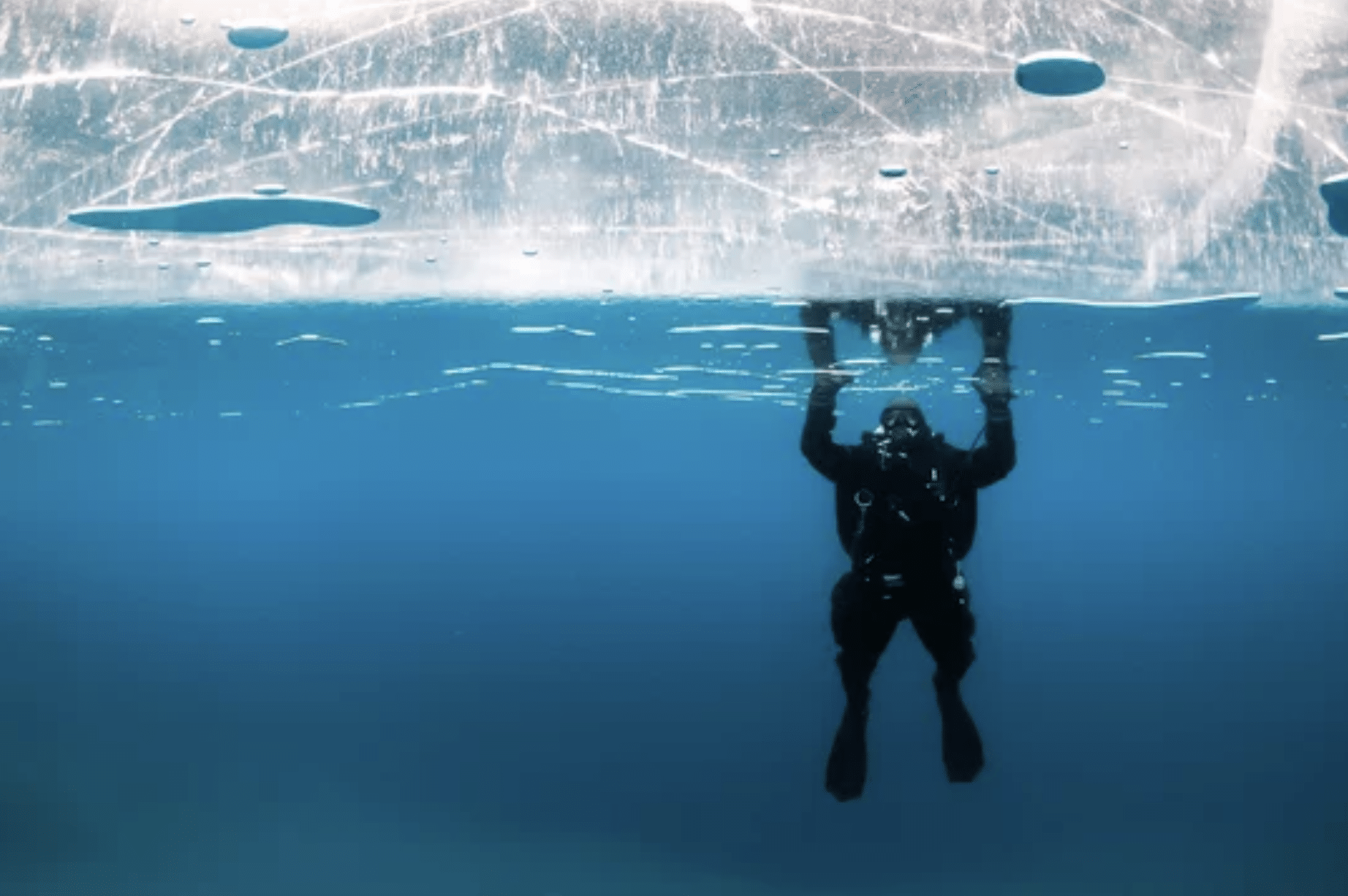
A scuba diver in dark kit is underwater, holding onto the underside of thick, cracked ice, with clear blue water below and light filtering through the ice above.

Guidelines and Tether Systems

Guidelines are critical during ice diving operations because direct ascent is impossible through the ice layer itself.

Divers typically remain connected to the surface using:

  • Tether lines
  • Safety lines
  • Communication systems where applicable

The line provides:

  • Direction back to the entry point
  • Diver tracking and control
  • Surface communication capability
  • Emergency retrieval support

Without line discipline, disorientation beneath the ice can become extremely dangerous.

Visibility conditions beneath the ice may also change rapidly due to suspended sediment, darkness, or environmental factors.

At N9BO℠, we teach that the line is the diver’s direct connection to safety beneath the ice.


Cold Exposure and Physiological Stress

Extreme cold is one of the defining environmental challenges of ice diving.

Cold water rapidly affects:

  • Dexterity
  • Breathing rate
  • Equipment performance
  • Decision-making ability
  • Physical endurance

Exposure protection therefore becomes critical.

Most ice divers use:

  • Drysuits
  • Thermal undergarments
  • Environmental sealing systems
  • Cold-water regulator configurations

Even with proper equipment, the cold environment significantly increases physiological stress and energy expenditure.

Divers must therefore monitor themselves carefully for:

  • Reduced dexterity
  • Mental fatigue
  • Cold-related distraction
  • Increased breathing workload

At N9BO℠, we emphasise that cold management begins long before entering the water.


Equipment Requirements and Redundancy

Ice diving requires specialised equipment preparation because cold water affects both diver performance and mechanical systems.

Regulator freeze-up becomes a significant concern in near-freezing water. Divers therefore often use:

  • Environmentally sealed regulators
  • Redundant gas systems
  • Cold-water-specific equipment configurations

Equipment must also be streamlined and accessible while wearing heavier thermal protection systems.

Pre-dive checks become particularly important because troubleshooting equipment problems underwater while wearing gloves and operating in extreme cold is significantly more difficult.

At N9BO℠, we teach that reliability and simplicity become increasingly important as environmental severity increases.

Underwater view showing a large triangular hole in the ice above, with a yellow rope leading up to the opening. Blue tones dominate the scene, suggesting cold temperatures and icy water.

Buoyancy and Movement Control

Ice divers often operate in confined areas with limited visibility and overhead restrictions, making buoyancy control especially important.

Poor buoyancy may lead to:

  • Contact with the ice ceiling
  • Silt disturbance
  • Increased stress and workload
  • Difficulty maintaining stable orientation

The diver must remain:

  • Calm
  • Stable
  • Deliberate in movement

Cold conditions and bulky equipment also increase task loading, making precise movement more challenging than in warm-water environments.

At N9BO℠, we emphasise slow, controlled movement and disciplined trim control during ice operations.


Environmental Awareness Beneath the Ice

Ice environments create unusual underwater conditions that differ significantly from open-water diving.

Divers may encounter:

  • Altered sound perception
  • Limited natural light penetration
  • Entrapped air pockets beneath the ice
  • Surface textures and formations unseen in normal diving environments

The frozen surface itself often becomes one of the most visually striking elements of the dive.

At the same time, the environment remains unforgiving. Divers must continuously maintain awareness of:

  • Orientation
  • Distance from the entry point
  • Team communication
  • Environmental changes

At N9BO℠, we teach divers to appreciate the beauty of the environment without becoming distracted by it.


Operational Discipline and Emergency Planning

Ice diving demands procedural discipline because environmental margins are reduced significantly.

Every dive requires:

  • Detailed planning
  • Surface emergency preparation
  • Controlled entry and exit procedures
  • Strict communication protocols

Emergency response under ice conditions is more complex because:

  • Access points are limited
  • Surface conditions may hinder support operations
  • Cold stress affects both divers and surface teams

For this reason, ice diving operations are conducted conservatively and methodically.

At N9BO℠, we reinforce that successful ice diving depends on preparation long before the diver enters the water.


Operational Mindset

Ice diving reinforces a critical principle of advanced environmental diving: as environmental severity increases, procedural discipline becomes more important.

The frozen overhead environment removes direct access to the surface and introduces:

  • Extreme cold
  • Psychological stress
  • Increased task loading
  • Reduced emergency options

Divers must therefore rely on:

  • Team coordination
  • Line discipline
  • Situational awareness
  • Calm decision-making
  • Conservative operational planning

Strong ice divers are not defined by aggression or endurance. They are defined by precision, composure, and operational control.

At N9BO℠, we approach ice diving as structured environmental adaptation supported by disciplined procedures and teamwork.

The environment beneath the ice is extraordinary—but it demands respect at every stage of the dive.

Two scuba divers in wetsuits are partially submerged in a hole cut into the surface of a frozen lake, surrounded by ice and snow, with trees and reeds visible in the background on a clear day.


Experience the Frozen Underwater World Safely

Contact N9BO℠ to begin ice diving training and develop the awareness, cold-water procedures, and operational discipline required for safe diving beneath frozen surfaces.


From the N9BO℠ Knowledge Base

Share this
Facebook
Instagram
X (Twitter)
TikTok
Youtube
Whatsapp