Purpose of the Rescue Diver Course
The Rescue Diver course is designed to move divers beyond personal skill development and introduce responsibility for the safety and wellbeing of others.
While previous training primarily focuses on managing oneself underwater, Rescue Diver training expands awareness outward. Divers learn to identify stress, recognise developing problems, and intervene before incidents escalate.
The programme develops:
- Situational awareness
- Risk assessment and prevention
- Diver assistance and rescue procedures
- Emergency management and coordination
The objective is not simply to react to emergencies, but to prevent them whenever possible.
At N9BO℠, we describe Rescue Diver as the course where divers begin thinking operationally rather than individually.
Why It Is Called “Serious Fun”
The phrase “serious fun” has become strongly associated with the Rescue Diver course because it combines realistic emergency training with highly engaging scenario-based learning.
The course addresses serious topics:
- Missing diver situations
- Panicked diver response
- Unresponsive diver recovery
- Emergency management and evacuation
However, the training environment is often energetic, interactive, and highly memorable. Scenario work creates problem-solving situations that challenge divers physically and mentally while still remaining enjoyable and rewarding.
Many divers finish the course describing it as the point where diving became both more meaningful and more enjoyable.
At N9BO℠, we believe Rescue Diver training succeeds because it combines realism with confidence-building progression.
Developing Situational Awareness
One of the most important skills developed during the course is situational awareness.
Divers learn to monitor:
- Diver behaviour and stress indicators
- Environmental conditions
- Equipment issues
- Team positioning and communication
This broader awareness allows problems to be identified early, often before they become emergencies.
The course teaches divers to observe actively rather than simply participate passively in the dive.
This shift in mindset improves overall safety and often enhances diving performance in general.
At N9BO℠, we emphasise that prevention is the most effective form of rescue.

Recognising Stress and Diver Problems
Stress is a major contributing factor in diving incidents. Rescue training develops the ability to recognise both physical and psychological signs of diver stress.
These may include:
- Rapid breathing
- Poor buoyancy control
- Confusion or fixation
- Unusual behaviour or loss of awareness
The earlier stress is recognised, the easier it is to manage.
Divers learn how calm communication, controlled assistance, and structured intervention can prevent escalation.
This understanding becomes valuable not only in emergencies, but during everyday recreational diving.
At N9BO℠, we train divers to identify problems early and respond before control is lost.
Rescue Skills and Emergency Procedures
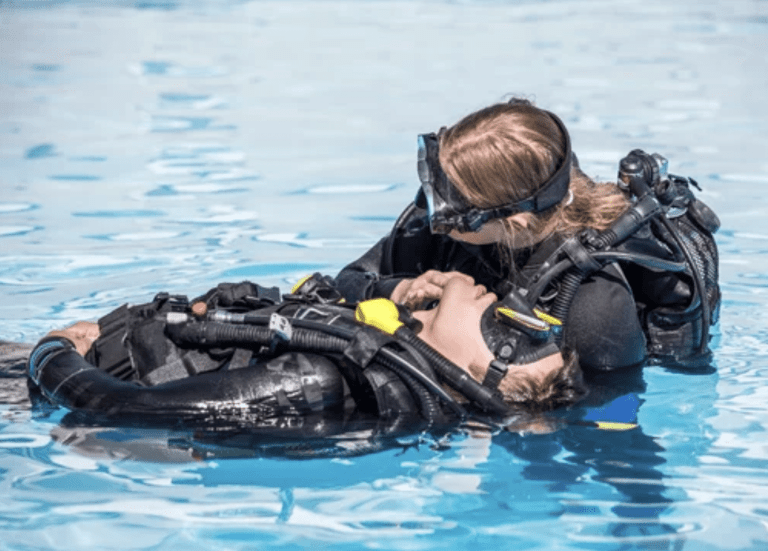
The course develops practical rescue skills both at the surface and underwater.
Training includes:
- Assisting tired or panicked divers
- Managing emergency ascents
- Responding to unresponsive divers
- Conducting underwater searches
- Providing in-water rescue breaths
- Coordinating exits and emergency support
These skills require coordination, calmness, and controlled execution under pressure.
The emphasis is not physical strength, but procedure and decision-making.
Divers quickly realise that effective rescue depends more on awareness and structure than force.
At N9BO℠, we emphasise control and communication as the foundation of successful rescue response.
Scenario-Based Learning
A defining feature of the Rescue Diver course is its scenario-based training structure.
Rather than isolated skills alone, divers participate in realistic emergency simulations where multiple problems must be managed simultaneously.
These scenarios develop:
- Decision-making under stress
- Team coordination
- Prioritisation of actions
- Communication and leadership
The unpredictability of scenarios forces divers to think critically while maintaining composure.
This creates highly engaging training that many divers remember long after certification.
At N9BO℠, we believe realistic scenarios are essential for building true operational confidence.

The Psychological Impact of Rescue Training
The Rescue Diver course often changes how divers perceive themselves underwater.
Many divers report:
- Increased confidence
- Reduced anxiety
- Better control under stress
- Improved awareness and calmness
This happens because competence reduces uncertainty. Divers become more comfortable not only with emergencies, but with diving in general.
The course also reinforces teamwork and mutual support, strengthening overall dive culture.
At N9BO℠, we view Rescue Diver as both technical development and psychological development.
Emergency Management and Leadership
The course introduces basic emergency management principles, including scene control and coordination with emergency services.
Divers learn how to:
- Assess the situation systematically
- Prioritise actions correctly
- Coordinate available resources
- Manage bystanders and team members
This creates a more structured response mindset rather than reactive behaviour.
Leadership begins to emerge naturally during these exercises, even in divers who previously considered themselves inexperienced.
At N9BO℠, we emphasise that calm leadership improves outcomes in every emergency environment.
Why Rescue Diver Improves Overall Diving Ability
Many instructors consider Rescue Diver to be the course that creates the biggest improvement in overall diving competence.
The increased awareness, confidence, and understanding developed during the programme often lead to:
- Better buoyancy and gas control
- Improved communication
- Stronger dive planning
- Greater environmental awareness
Divers stop focusing only on themselves and begin understanding the entire diving environment more clearly.
This broader perspective improves both safety and enjoyment.
At N9BO℠, we believe Rescue Diver training transforms capable divers into aware divers.
Position Within the Diving Pathway
The Rescue Diver course is also a major milestone within the recreational and professional training pathway.
It is required before progressing toward:
- Divemaster certification
- Instructor development
- Many leadership-level programmes
The course therefore acts as both a safety programme and a transition toward higher levels of responsibility within diving.
At N9BO℠, we position Rescue Diver as the bridge between recreational participation and operational awareness.
Operational Mindset
The Rescue Diver course reinforces a simple but critical principle: the safest divers are the ones who remain aware, calm, and prepared.
Emergencies are rarely random. Most incidents develop progressively through stress, poor awareness, or delayed intervention.
Rescue training teaches divers to identify these problems early and respond in a controlled, structured way.
At N9BO℠, we approach Rescue Diver as a course about prevention first and response second.
It is “serious fun” because the training is engaging and rewarding—but the skills developed can genuinely save lives.

Become the Diver Others Can Rely On
Contact N9BO℠ to begin your PADI Rescue Diver course and develop the awareness, confidence, and rescue capability that define safer and more capable divers.
From the N9BO℠ Knowledge Base