Purpose of the PADI Tec Sidemount Course
The Tec Sidemount course is designed to introduce and develop sidemount configuration for technical diving. Unlike recreational sidemount, which focuses on comfort and flexibility, this course applies the configuration to multi-cylinder, decompression-capable environments.
Divers are trained to manage two or more cylinders, with progression toward handling additional stage or decompression gases.
The objective is not simply to change equipment placement. It is to build a system where configuration supports gas management, procedural efficiency, and failure response.
At N9BO℠, we position sidemount as a configuration choice that must enhance control, not just comfort.
Prerequisites and Entry Requirements
The Tec Sidemount course requires divers to already demonstrate a solid foundation in diving skills and experience. Candidates must be at least 18 years old, hold an Advanced Open Water Diver certification (or equivalent), and have a minimum of 30 logged dives.
Enriched Air certification is strongly recommended, as gas management becomes a central component of the course.
These prerequisites reflect the level of control required. Sidemount in a technical context is not an entry-level skill, but a refinement of existing capability.
At N9BO℠, we treat prerequisites as operational baselines rather than administrative requirements.
Why Sidemount in Technical Diving
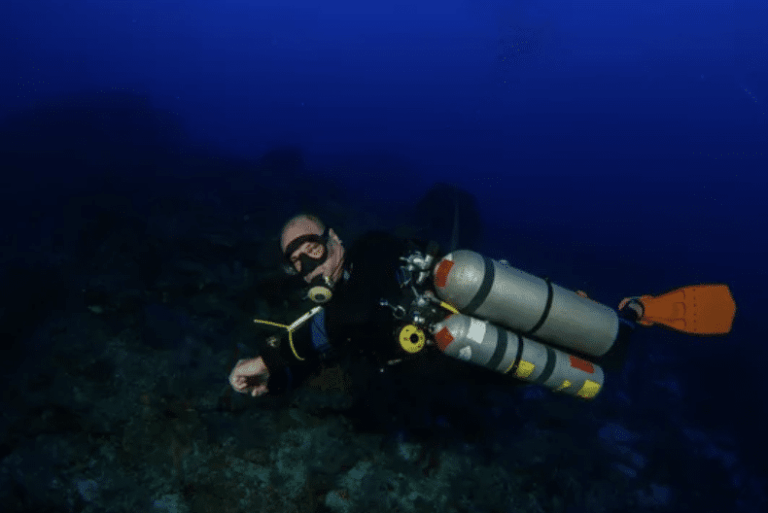
Sidemount configuration places cylinders along the diver’s sides rather than on the back, improving access to valves and regulators while increasing flexibility in gas management.
This configuration offers operational advantages. It allows divers to manage multiple cylinders more effectively, improves streamlining, and provides direct access to critical components during emergencies.
It also supports redundancy. Each cylinder operates independently, requiring the diver to actively manage gas distribution and maintain balance throughout the dive.
However, these benefits depend on discipline. Without structured procedures, sidemount increases complexity rather than reducing it.
At N9BO℠, we emphasise that sidemount is a system that must be actively managed.
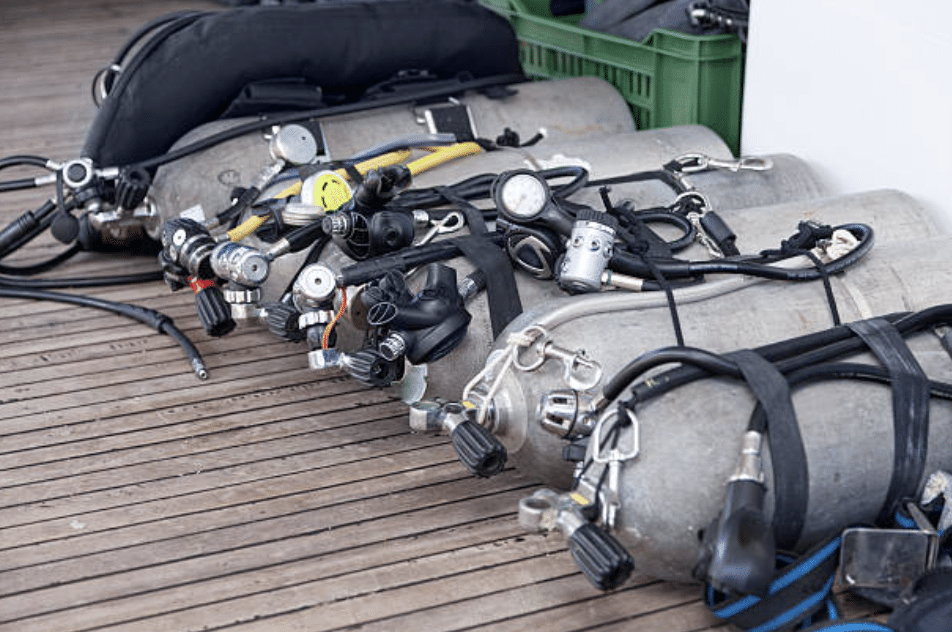
Equipment Configuration and Standardisation
The course focuses heavily on equipment configuration. Harness setup, cylinder positioning, regulator routing, and attachment points must all be standardised.
Configuration must support:
- Clear identification of each cylinder
- Efficient regulator switching
- Stable trim and buoyancy
Poor configuration leads to instability and increased task load. The diver must be able to access all equipment without hesitation, even under stress.
Standardisation ensures that procedures remain consistent, regardless of conditions.
At N9BO℠, we treat configuration as a critical control layer in technical diving.
Gas Management in Independent Cylinders
Unlike manifolded backmount systems, sidemount requires active gas management between independent cylinders. The diver must alternate regulators to maintain balance and ensure adequate reserves in each cylinder.
This introduces a procedural requirement. Gas consumption must be tracked continuously, and switching must occur at defined intervals.
Failure to manage gas correctly can lead to imbalance, increased drag, or compromised emergency reserves.
This system requires awareness and discipline. The diver must always know the status of each cylinder and the overall gas plan.
At N9BO℠, we emphasise that sidemount gas management is an active process, not a passive system.
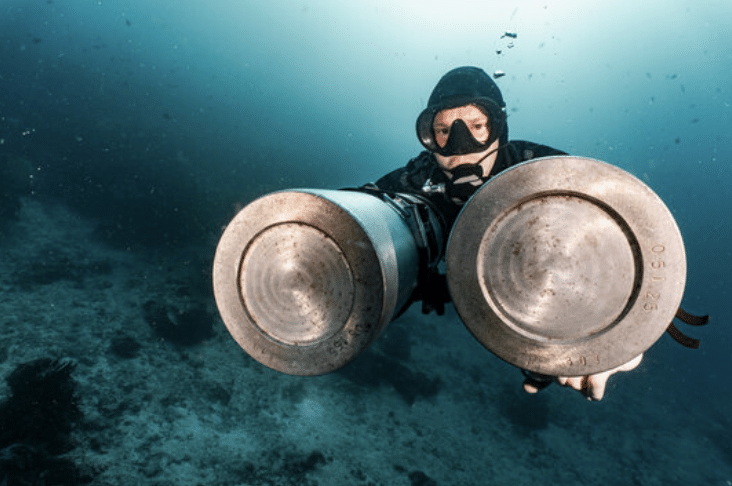
Skill Development and Task Integration
The course develops specific motor skills required for sidemount diving. These include regulator switching, valve manipulation, buoyancy control, and propulsion techniques adapted to the configuration.
These skills must be performed while maintaining stable trim and awareness. Task loading increases as additional cylinders are introduced, particularly when stage or decompression gases are added.
Training progresses from basic two-cylinder configurations to more complex setups, reinforcing control at each stage.
The objective is not speed, but consistency. Each action must be repeatable and controlled under varying conditions.
At N9BO℠, we train divers to integrate skills into a structured operational system.
Integration with Technical Diving Pathway
The Tec Sidemount course can be integrated with other TecRec programmes such as Tec 40, Tec 45, and Tec 50.
This allows divers to develop sidemount capability alongside decompression training, rather than treating it as a separate pathway.
Sidemount becomes a platform for technical diving, supporting multi-gas planning and execution within a flexible configuration.
It is not mandatory within the technical pathway, but it provides an alternative system that can be advantageous in specific environments such as wrecks or confined spaces.
At N9BO℠, we position sidemount as a strategic configuration choice within technical development.
Task Load, Awareness, and Control
Sidemount increases task load by requiring active management of multiple independent systems. The diver must monitor gas balance, maintain trim, and execute procedures without loss of awareness.
This requires structured attention. The diver must track multiple variables simultaneously while avoiding fixation on any single element.
Control is achieved through repetition and discipline. Each task must be integrated into the overall dive, not treated in isolation.
At N9BO℠, we emphasise that sidemount demands continuous awareness and active control.
Operational Mindset
The Tec Sidemount course reinforces that equipment configuration is not a preference—it is a system that directly affects performance and safety.
The diver must plan, configure, and execute with precision. Every cylinder, regulator, and procedure must align with the overall dive plan.
Sidemount provides flexibility, but only when managed within a structured framework.
At N9BO℠, we approach sidemount as a control system. It allows divers to manage complexity more effectively, but only when discipline is maintained.
In technical diving, configuration does not simplify the dive. It defines how the dive is managed.
Configure Your Diving for Control and Efficiency
Contact N9BO℠ to integrate PADI Tec Sidemount training into your technical development, building the precision, flexibility, and gas management capability required for advanced diving operations.
From the N9BO℠ Knowledge Base