What a DPV Actually Changes
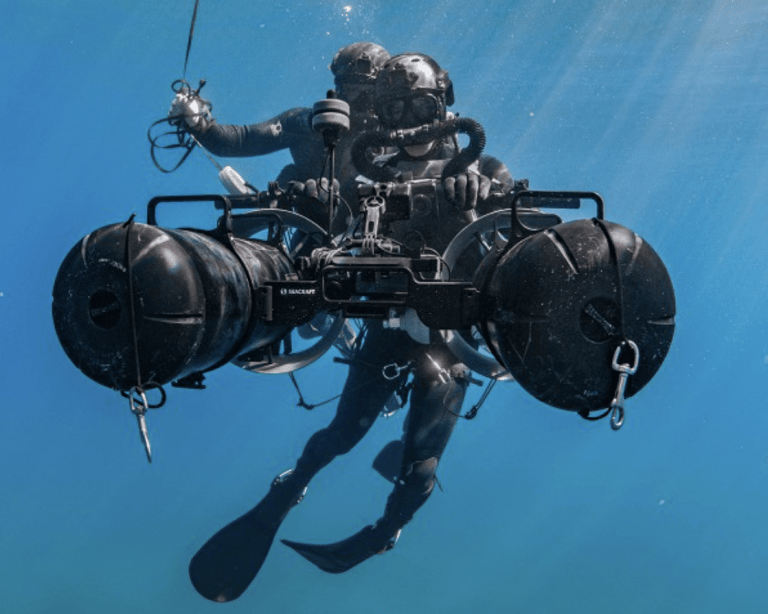
A Diver Propulsion Vehicle does not just make a dive “faster.”
It fundamentally alters:
- Range.
- Gas consumption profiles.
- Exit timing.
- Team positioning.
- Failure consequences.
In open water, DPVs increase exploration efficiency.
In overhead environments, they extend penetration distance significantly.
But extended range without structured planning creates compounded risk.
Why Technical DPV Is Not a Recreational Scooter Course
Recreational DPV use often focuses on:
- Enjoyment.
- Shallow open-water cruising.
- Visual exploration.
Technical DPV training focuses on:
- Gas matching to propulsion speed.
- Exit gas reserve recalculation.
- Team spacing under propulsion.
- Controlled acceleration and deceleration.
- Failure drills at maximum penetration.
The vehicle becomes part of the life support strategy. Not a toy.
Gas Planning With Propulsion
DPVs alter:
- Work rate.
- Respiratory demand.
- Exit timing.
However, gas consumption must still assume the worst-case scenario.
If the DPV fails at maximum penetration, the diver must:
- Swim out.
- With full team coordination.
- Using pre-calculated gas reserves.
Planning for DPV failure is central. Not optional.
Failure Management Underwater
DPV-specific failure scenarios include:
- Dead battery.
- Flooded motor.
- Trigger malfunction.
- Propeller entanglement.
- Throttle runaway.
- Line entrapment.
Training emphasises:
- Immediate stabilisation.
- Team signal protocol.
- Controlled shutdown.
- Tow procedures.
- Gas re-evaluation.
The longer the penetration, the higher the consequence of propulsion failure.
Team Movement and Positioning
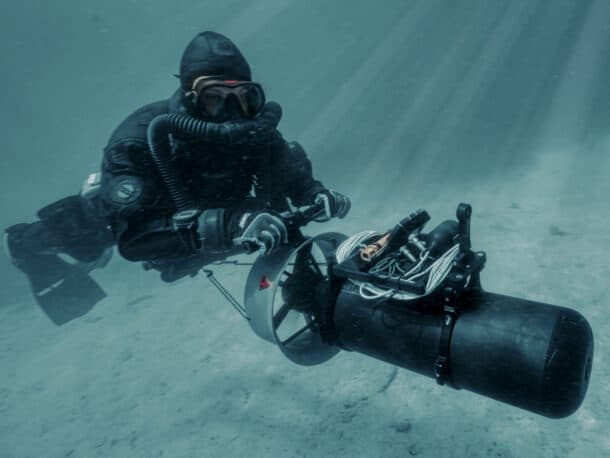
DPV teams require:
- Structured formation.
- Defined leader position.
- Clear hand signal protocol.
- Controlled speed discipline.
Excessive speed:
- Increases silt disturbance.
- Reduces reaction time.
- Magnifies entanglement risk.
- Raises task loading.
Technical propulsion is deliberate. Not aggressive.
Trim and Buoyancy Under Propulsion
DPVs amplify poor technique.
Improper trim causes:
- Increased drag.
- Motor strain.
- Silt disturbance.
- Unstable team spacing.
Correct posture requires:
- Neutral buoyancy.
- Stable body alignment.
- Minimal fin input.
- Controlled grip.
DPV efficiency begins with diver efficiency.
Overhead Environment Considerations
In caves and wrecks, DPVs extend penetration distance.
This increases:
- Decompression obligation.
- Navigation complexity.
- Team separation risk.
- Psychological pressure.
Training includes:
- Controlled turns in restrictions.
- Line management under propulsion.
- Visibility discipline.
- Emergency line-follow under failure.
Extended range requires extended discipline.
Psychological Impact of Speed
Speed changes perception.
Divers often:
- Feel more confident.
- Underestimate risk.
- Overlook detail.
But propulsion compresses reaction time.
Small navigation errors:
- Escalate quickly.
- DPV training slows mindset.
- Even if movement accelerates.
Equipment Configuration
Technical DPV divers integrate:
- Tow harness systems.
- Emergency jettison procedures.
- Redundant propulsion strategy (in advanced teams).
- Light coordination.
- Stage bottle positioning compatibility.
Improper configuration:
- Increases drag.
- Interferes with shutdown drills.
- Complicates emergency response.

Decompression Implications
DPVs can:
- Shorten transit time.
- Extend exploration time.
But decompression planning must assume:
- Total bottom exposure.
- Worst-case return timing.
Faster in does not mean faster out. Gas discipline remains unchanged.
Environmental Responsibility
High-powered DPVs can:
- Damage fragile cave formations.
- Dislodge wreck sediment.
- Disrupt marine ecosystems.
Proper propulsion technique:
- Minimises impact.
- Control defines professionalism.
Why the TDI DPV Course Exists
The TDI Technical DPV Diver course builds:
- Structured propulsion strategy.
- Failure anticipation mindset.
- Team-based coordination.
- Gas planning discipline.
- Movement efficiency.
It prepares divers to expand capability without expanding risk.
Operational Philosophy at N9BO℠
At N9BO℠, DPV training is delivered as an extension of technical discipline.
We emphasise:
- Failure drills.
- Structured team movement.
- Conservative gas planning.
- Controlled propulsion speed.
- Clear communication protocols.
Propulsion is treated as a force multiplier. But only when discipline controls it.
Final Perspective
DPVs expand reach. But expanded reach expands consequence.
Technical propulsion is not about speed. It is about:
- Efficiency.
- Structure.
- Failure anticipation.
- Team cohesion.
The vehicle extends range. Training protects survival.

Ready to Extend Your Technical Range Safely?
Explore the TDI Technical DPV Diver programme and learn structured propulsion planning, failure management, and team integration.
From the N9BO℠ Knowledge Base