Gas Is Life Support
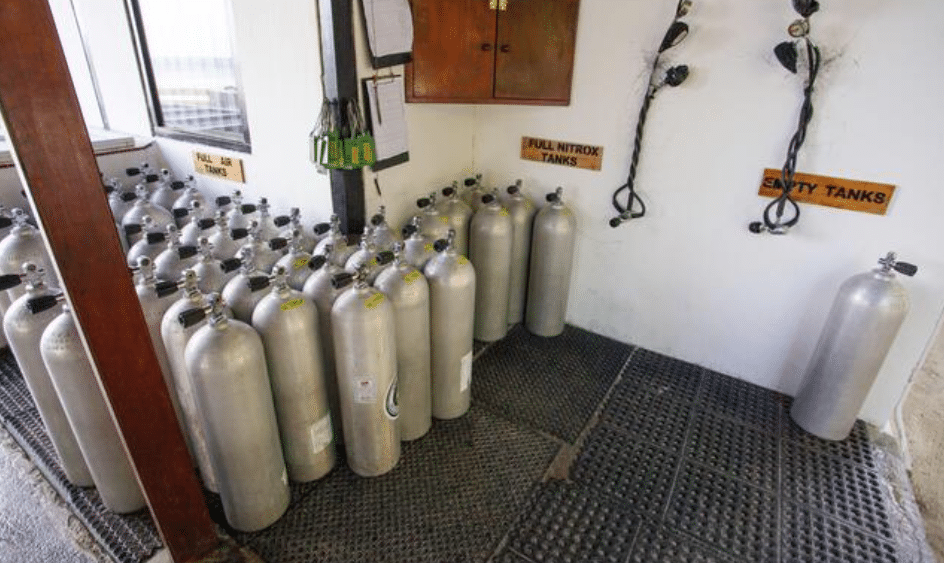
Every diver depends on breathing gas.
In recreational diving, this may be:
- Compressed air.
- Nitrox mixtures.
In technical diving:
- Multiple Nitrox blends.
- Oxygen-rich decompression gases.
- Mixed gas configurations.
Gas is not fuel.
It is life support.
Improper blending compromises safety before the diver even enters the water.
What Nitrox Really Is
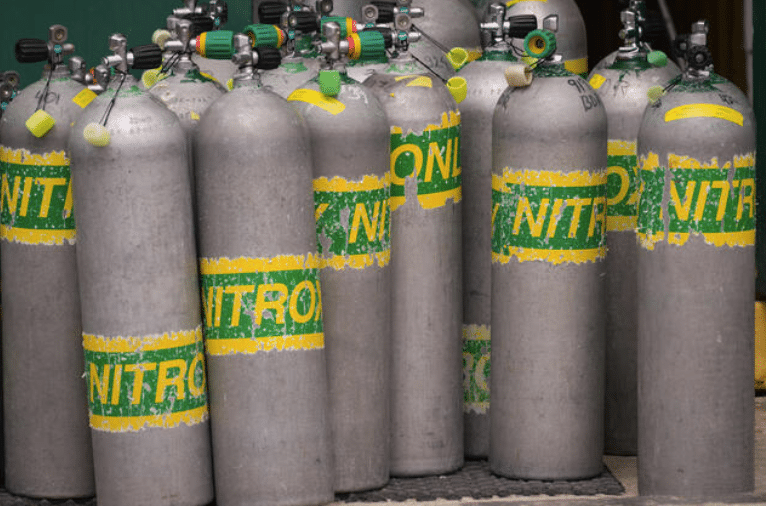
Nitrox refers to enriched air mixtures containing:
- More than 21% oxygen.
- Typically 32% or 36% O₂ in recreational contexts.
Increasing oxygen reduces:
- Nitrogen loading.
- Decompression stress (within limits).
However, oxygen introduces new risks:
- Oxygen toxicity.
- Fire hazard during blending.
- Equipment compatibility requirements.
Understanding oxygen is essential.
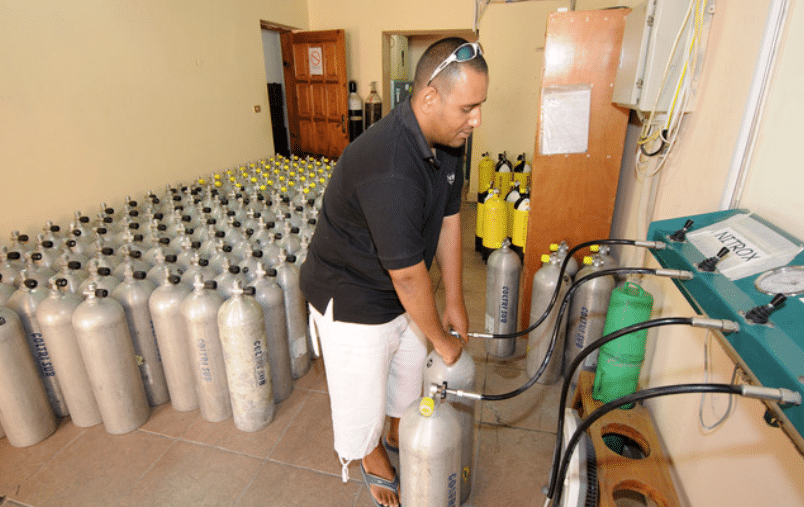
Blending Is Not Guesswork
The TDI Nitrox Gas Blender course covers:
- Dalton’s Law of Partial Pressures.
- Oxygen fraction calculations.
- Target blend formulas.
- Pressure-temperature relationships.
- Cylinder preparation.
Blenders must calculate:
Target mix %
Starting pressure
Oxygen addition amount
Top-up air volume
Math prevents error.
Error increases exposure.
Gas planning begins in the fill station.

Blending Methods
Common blending techniques include:
Partial Pressure Blending
- Oxygen added first.
- Air topped to target pressure.
- Requires oxygen-clean cylinders.
Continuous Flow Blending
- Oxygen injected into air stream.
- Mixed before entering cylinder.
- Requires specialised equipment.
Each method requires:
- Monitoring.
- Verification.
- Documentation.
Procedure matters.
Shortcuts increase risk.
Oxygen Handling and Fire Risk
Oxygen supports combustion.
In high concentrations, materials that are safe in air can ignite.
Blenders must understand:
- Oxygen-clean standards.
- Proper lubricants.
- Hydrocarbon contamination risks.
- Temperature control during filling.
A single contaminated fitting can create catastrophic failure.
Cleanliness is safety.
Analysis and Documentation
After blending:
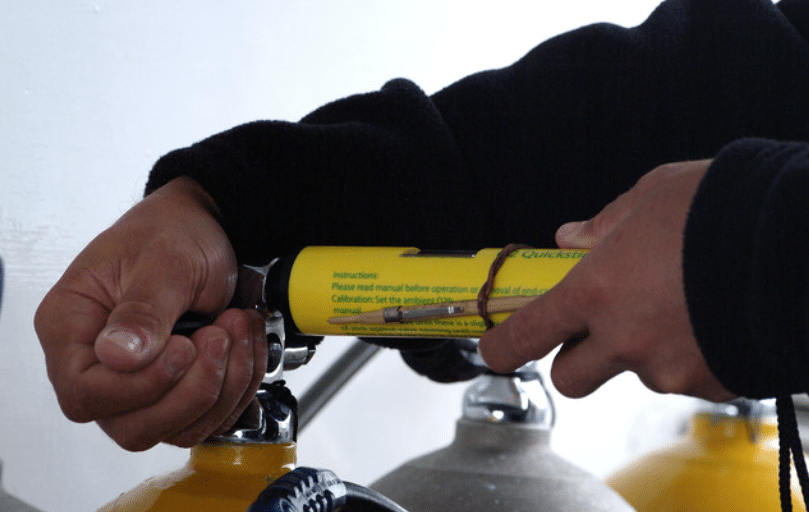
- Gas must be analysed.
- Oxygen fraction verified.
- Cylinder labelled.
- MOD (Maximum Operating Depth) marked.
Divers rely on:
- Accurate analysis.
- Clear documentation.
- Proper identification.
Gas without verification is assumption.
Assumption has no place in life support.
Human Factors in Blending
Blending errors often result from:
- Distraction.
- Calculation shortcuts.
- Fatigue.
- Inadequate documentation.
Professional blending requires:
- Structured checklist.
- Focused attention.
- Clear recording.
- Double-check protocol.
Discipline protects outcome.
At N9BO℠, we emphasise that blending is a safety role — not an administrative task.
The blender protects divers before they descend.
Why Blender Training Matters
Many divers assume gas blending is simple.
It is not.
Proper training ensures:
- Accurate mixture calculation.
- Safe oxygen handling.
- Equipment compatibility awareness.
- Liability reduction.
A certified TDI Nitrox Gas Blender understands both:
- The science.
- The responsibility.
Competence behind the scenes protects lives underwater.
Blending in Professional Operations
Blender competence is essential in:
- Dive centres.
- Technical diving facilities.
- Expedition teams.
- Public safety units.
- Offshore operations.
When multiple gases are involved, procedural discipline becomes critical.
Gas must match plan.
Plan must match depth.
Depth determines exposure.
From Fill Station to Decompression Stop
The gas blended at the station directly influences:
- Bottom time.
- CNS exposure.
- Decompression profile.
- Diver safety margin.
Incorrect blending may lead to:
- Unexpected oxygen toxicity.
- Incorrect decompression assumptions.
- Computer profile mismatch.
Blending is upstream risk control.
Upstream discipline prevents downstream crisis.
Professional Identity Through Precision
The TDI Nitrox Gas Blender certification represents:
- Technical competence.
- Scientific literacy.
- Oxygen safety awareness.
- Operational responsibility.
Blenders are part of the safety chain.
Their work is invisible during the dive.
But essential before it begins.
Ready to Become a Certified Nitrox Gas Blender?
Precision blending protects every dive. Contact N9BO℠ to learn more about the TDI Nitrox Gas Blender course and professional gas management training.
From the N9BO℠ Knowledge Base