When Prevention Fails
Modern dive planning emphasises:
- Conservative ascent rates
- Decompression modelling
- Gas management discipline
- Risk mitigation
Yet even well-trained divers may experience:
- Decompression sickness (DCS)
- Arterial gas embolism (AGE)
- Oxygen toxicity complications
- Contaminant exposure
When serious symptoms appear, time matters.
Recompression becomes treatment — not theory.
What a Recompression Chamber Actually Is
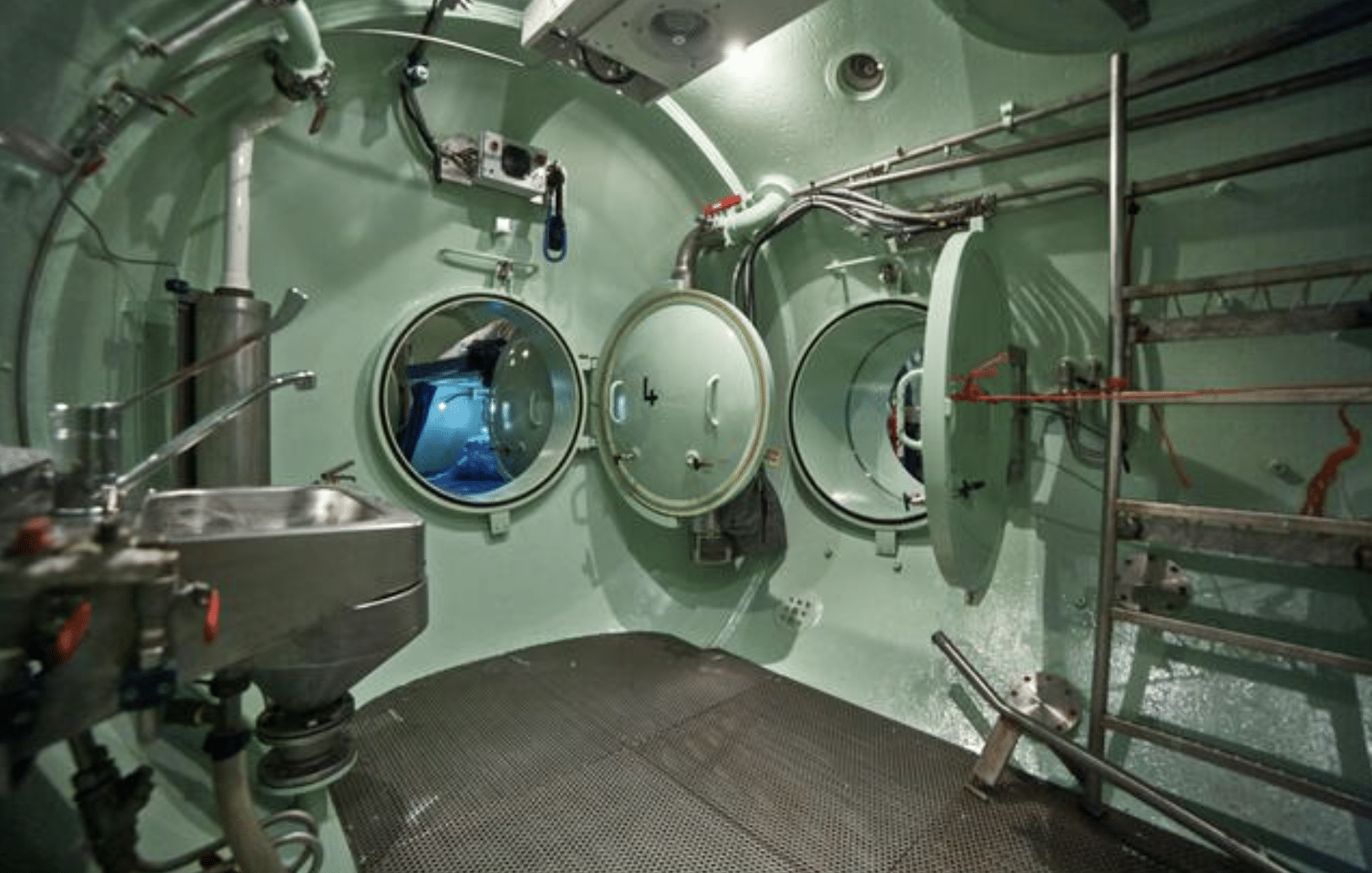
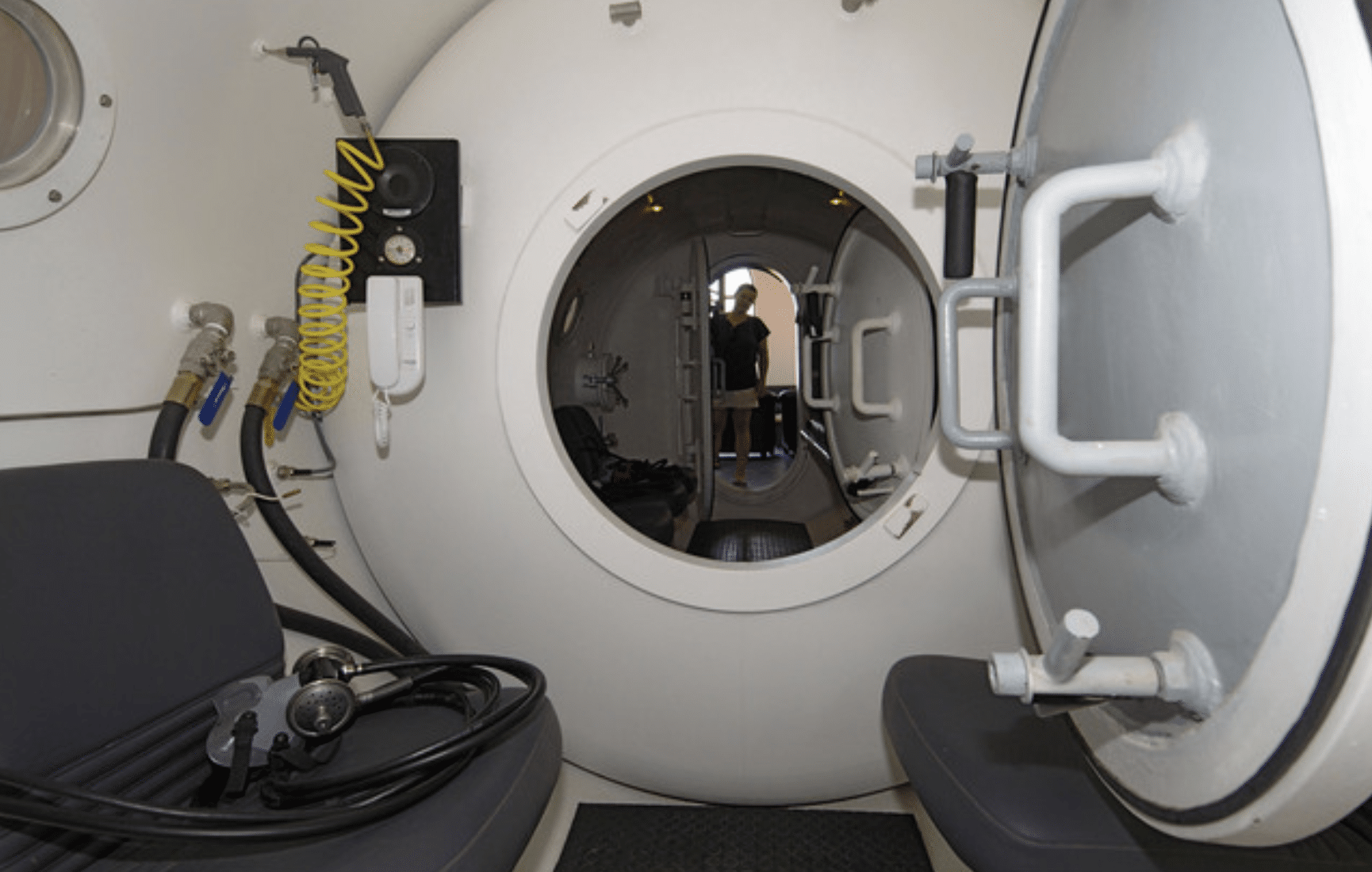
A recompression chamber is:
- A pressure-rated vessel
- Designed to simulate depth
- Used to treat diving-related illnesses
- Equipped for medical monitoring
Chambers may be:
- Monoplace (single patient)
- Multiplace (multiple occupants, including attendants)
Inside, the patient is:
- Re-pressurised
- Supplied with oxygen
- Monitored continuously
The environment is controlled.
The procedure is structured.
Improvisation is unacceptable.

Hyperbaric Oxygen Therapy (HBOT) Principles
Recompression protocols are based on:
- Boyle’s Law
- Henry’s Law
- Oxygen partial pressure management
By increasing ambient pressure:
- Inert gas bubbles shrink
- Dissolved gases re-enter solution
- Tissue perfusion improves
Oxygen accelerates recovery.
But oxygen also carries risk.
Exposure must be controlled precisely.
The Role of the Chamber Operator
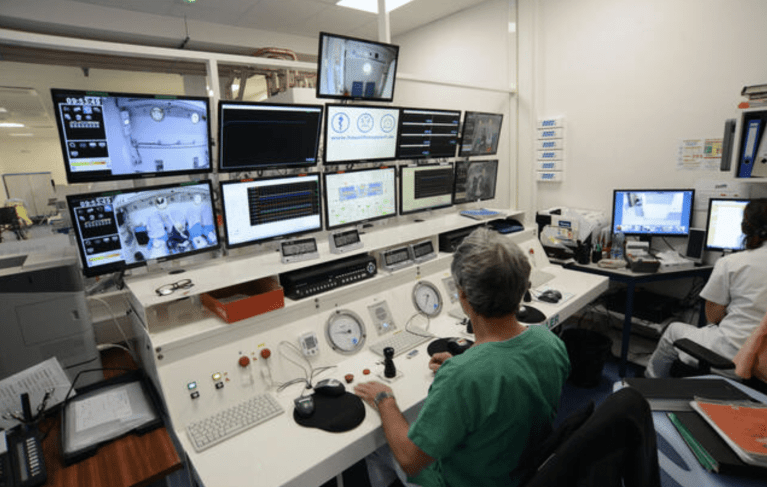
A recompression chamber operator is responsible for:
- Pressure control
- Oxygen delivery sequencing
- Monitoring internal atmosphere
- Managing treatment tables
- Coordinating with medical personnel
Operators must understand:
- Treatment protocols (e.g., US Navy Tables)
- Oxygen toxicity limits
- Pressure change rates
- Emergency procedures
Operating a chamber incorrectly can:
- Injure patient
- Endanger attendants
- Damage equipment
The operator is not a button-pusher.
They are a life-support technician.
Why Operator Training Is Critical
Recompression chambers involve:
- High pressure
- Elevated oxygen environments
- Confined space conditions
Risk factors include:
- Fire hazard
- Rapid decompression injury
- Mechanical failure
- Human error
Operator training ensures:
- Correct pre-treatment checks
- Structured pressurisation sequence
- Emergency response readiness
- Post-treatment protocols
Professional chamber operation requires discipline equal to technical diving.
From Diver to Operator: Expanding Professional Responsibility
Many divers assume recompression is:
- A hospital responsibility
- A remote facility concern
In reality:
- Remote operations
- Offshore environments
- Military deployments
- Commercial dive operations
Often require onsite chamber capability.
Trained operators extend safety infrastructure.
At N9BO℠, we recognise that dive safety does not end at the surface. Chamber operator training reinforces safety culture across professional operations.
Treatment Tables and Procedural Precision
Operators must be familiar with:
- Standard treatment tables
- Oxygen breathing cycles
- Air breaks
- Controlled ascent rates
Deviation from treatment profile can:
- Reduce effectiveness
- Increase risk
Precision matters.
Checklists matter.
Documentation matters.
Chamber operation is procedural medicine.
Emergency Scenarios Inside the Chamber
Operators must manage:
- Oxygen toxicity events
- Seizures
- Panic
- Equipment malfunction
- Power interruption
Emergency drills are essential.
Calm authority preserves stability.
Training builds reflexive competence.
Chamber Safety Culture
Recompression chambers require:
- Fire safety discipline
- Equipment inspection routines
- Maintenance logs
- Atmosphere monitoring
Even minor procedural shortcuts can create major hazards.
Safety culture inside the chamber mirrors safety culture underwater.
Consistency protects lives.
The TDI Recompression Chamber Operator Course
The TDI Recompression Chamber Operator course provides:
- Hyperbaric theory
- Chamber mechanics
- Treatment protocol training
- Safety procedures
- Emergency management drills
It bridges diving physiology with operational responsibility.
The course prepares operators to:
- Support medical staff
- Conduct safe pressurisation
- Maintain chamber integrity
Professional chamber operation is a discipline of its own.
Why This Training Matters in Professional Environments
Industries requiring chamber competence include:
- Commercial diving
- Offshore oil & gas
- Military diving units
- Remote expedition teams
- Professional training centres
Preparedness reduces fatal delay.
Response time defines outcome.
Recompression is time-sensitive.
Operator competence ensures treatment begins safely and effectively.
The Last Line of Defence
Recompression chambers represent:
- Redundancy
- Preparedness
- Infrastructure resilience
Divers train to avoid injury.
Professionals train to respond when injury occurs.
The chamber is not dramatic equipment.
It is structured safety engineering.
Competent operators protect recovery.
Become a Certified Recompression Chamber Operator
Hyperbaric environments demand procedural precision and structured training. Contact N9BO℠ to learn about the TDI Recompression Chamber Operator course.
From the N9BO℠ Knowledge Base