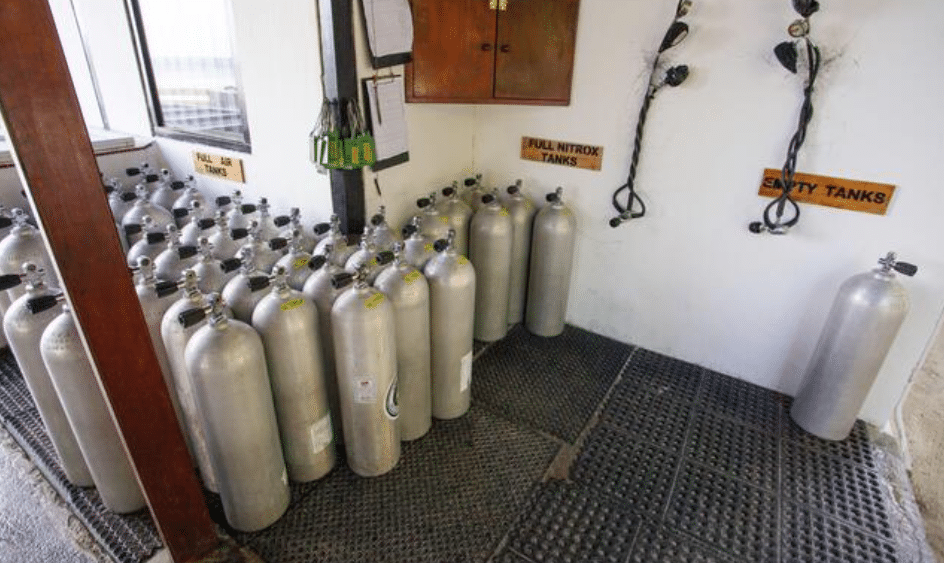
Why Boosters Exist
Standard compressors are limited in:
- Maximum output pressure.
- Helium handling capability.
- Efficient gas transfer from storage banks.
Gas boosters allow:
- Topping up cylinders to full working pressure.
- Efficient helium transfer.
- Precise pressure control.
- Mixed gas preparation flexibility.
In technical and expedition contexts, boosters are essential infrastructure.
Without them, advanced gas operations are limited.
Understanding Booster Mechanics
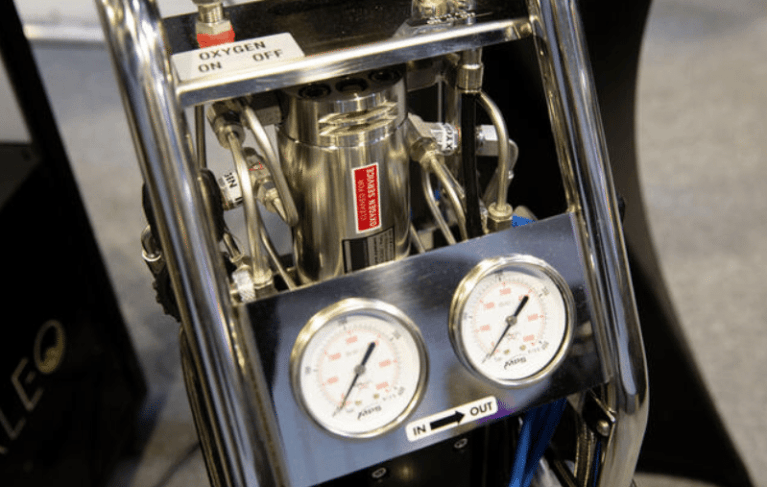
A gas booster is a pressure-amplifying device that:
- Uses air drive or hydraulic power.
- Transfers gas from supply cylinder to receiving cylinder.
- Increases pressure beyond supply bank level.
It does not create gas.
It moves and amplifies it.
Understanding the mechanical function is critical.
Boosters operate under:
- High pressure.
- High oxygen concentration.
- Potential mechanical heat.
Improper use creates significant risk.
Oxygen Boosting: Elevated Risk Environment
Boosting oxygen introduces:
- Increased fire hazard.
- Heat generation during compression.
- Contamination sensitivity.
- Oxygen compatibility requirements.
Operators must understand:
- Oxygen-clean components.
- Lubricant compatibility.
- Temperature monitoring.
- Slow compression rates.
Heat plus oxygen equals ignition potential.
Procedure prevents escalation.
Helium Boosting and Cost Control
Helium is:
- Expensive.
- Logistically complex.
- Sometimes scarce.
Boosters allow:
- Efficient use of remaining bank pressure.
- Minimal helium waste.
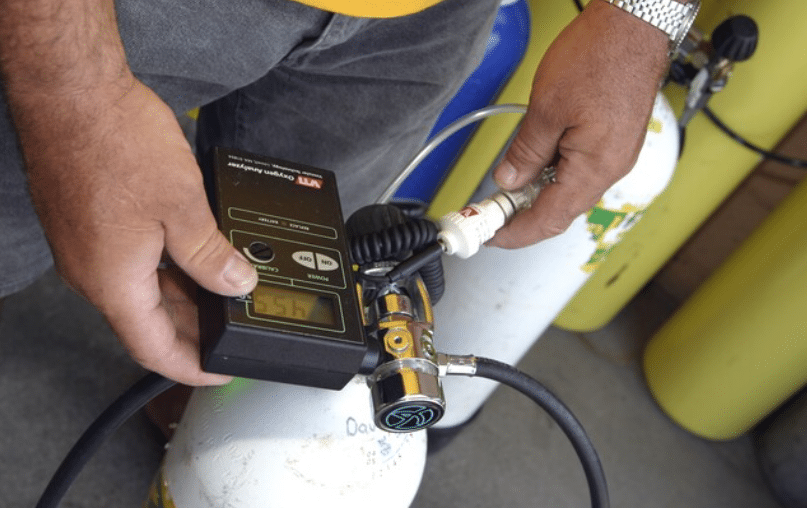
- Accurate trimix preparation.
Without boosting, partial cylinders may be unusable.
Efficiency protects operational budget.
Precision protects dive planning.
Pressure and Temperature Awareness
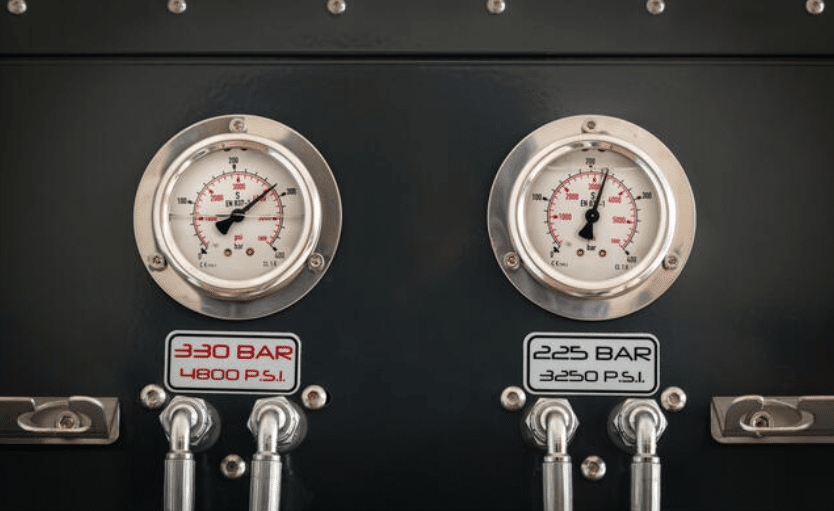
High-pressure gas transfer increases:
- Internal temperature.
- Mechanical stress.
- Risk of seal failure.
Booster operators must:
- Monitor pressure rise carefully.
- Allow cooling time.
- Prevent rapid over-compression.
- Verify integrity before disconnection.
Thermal management is safety management.
Pressure must be controlled deliberately.
Contamination and Cleanliness
Booster systems must be:
- Maintained regularly.
- Inspected for contamination.
- Oxygen-clean where applicable.
- Serviced according to manufacturer guidelines.
Hydrocarbon contamination in oxygen systems can lead to:
- Combustion.
- Equipment failure.
- Severe injury.
Clean systems are non-negotiable.
Routine inspection protects lives.
Operational Protocol and Checklists
Booster operation requires:
- Pre-use inspection.
- Pressure verification.
- Valve sequencing.
- Controlled ramp-up.
- Documentation.
Checklists prevent:
- Incorrect valve alignment.
- Over-pressurisation.
- Gas cross-contamination.
- Equipment damage.
Boosters amplify pressure.
Procedural discipline must amplify attention.
At N9BO℠, booster training emphasises that high-pressure systems are unforgiving of distraction.
Failure Scenarios and Emergency Management
Operators must be prepared for:
- Seal failure.
- Hose rupture.
- Rapid decompression.
- Unexpected temperature spikes.
- Gas leaks.
Emergency protocols include:
- Immediate isolation.
- Pressure venting.
- Safe shutdown.
- Post-incident inspection.
Preparedness reduces consequence.
Untrained operation increases exposure.
Legal and Professional Accountability
Gas infrastructure management includes:
- Liability awareness.
- Equipment log tracking.
- Service interval documentation.
- Compliance with safety standards.
Booster operators hold responsibility for:
- Accurate pressure transfer.
- Safe oxygen handling.
- Equipment integrity.
Professionalism requires transparency.
Documentation protects operator and facility.
Booster Operation in Technical Facilities
Booster certification is essential for:
- Technical dive centres.
- Expedition teams.
- Public safety units.
- Military support facilities.
- Remote operations.
Advanced gas operations rely on:
- Reliable infrastructure.
- Competent personnel.
- Conservative procedures.
Booster failure can interrupt entire operations.
Operational continuity depends on trained operators.
Infrastructure Is Part of Dive Safety
Divers often focus on:
- Gas planning.
- Equipment configuration.
- Decompression profiles.
But gas must first be prepared correctly.
Booster operators are upstream safety guardians.
Every properly filled cylinder reflects:
- Mathematical precision.
- Mechanical understanding.
- Procedural discipline.
The dive begins in the fill station.

Become a Certified TDI Booster Operator
High-pressure gas systems demand precision and disciplined handling. Contact N9BO℠ to learn more about the TDI Booster Operator course and professional gas infrastructure training.
From the N9BO℠ Knowledge Base