Public Safety Diving Is a Team Operation
Unlike recreational diving, public safety diving is never an individual activity.
A surface team supports every diver in the water—and at the centre of that team is the tender. When tending fails, divers get lost, entangled, or worse.
What Is a Tender?
A tender is the surface-based operator responsible for:
- Managing the diver’s lifeline
- Maintaining orientation and search patterns
- Monitoring diver progress
- Communicating commands and status
- Initiating emergency response
The tender controls the dive—the diver executes it.
Instructor Perspective: The Tender Prevents Emergencies
Instructors frequently analyse incidents where divers “disappeared” underwater.
At N9BO℠, post-incident reviews often reveal the same cause: inadequate tending, not diver incompetence.
Line Management Is Not Rope Handling
The tether is not a leash—it is a navigation and safety system.
Tenders are trained to:
- Pay out and retrieve line precisely
- Detect tension changes
- Interpret line signals
- Maintain consistent reference
Poor line discipline creates confusion underwater.
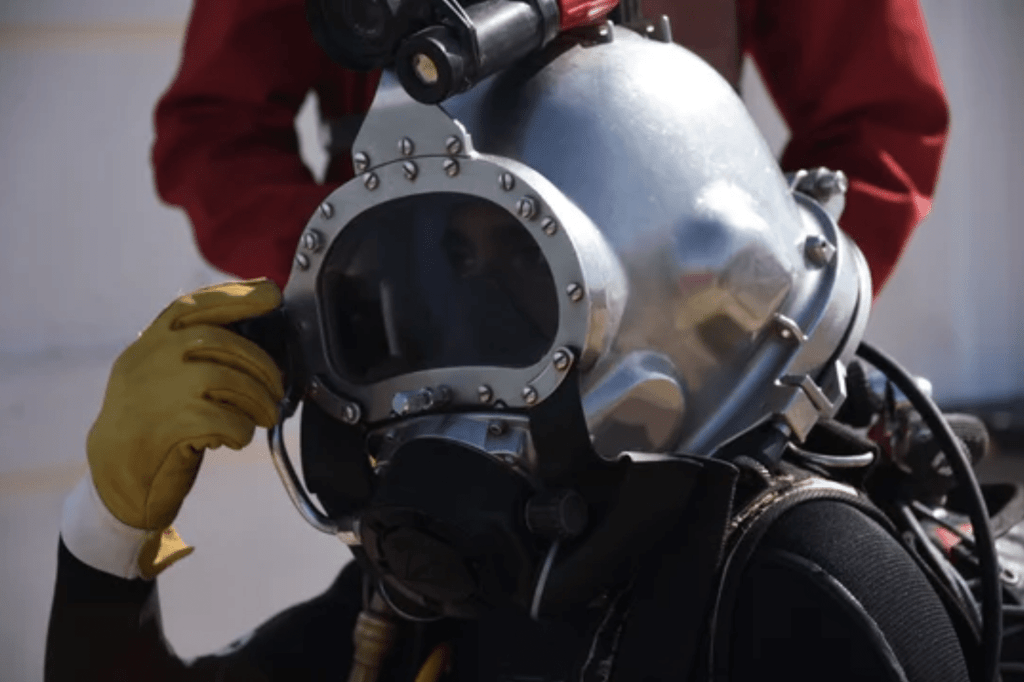
Communication Is the Tender’s Primary Tool
Most public safety dives occur in zero visibility.
The tender becomes the diver’s eyes and ears through:
- Line pull signals
- Voice communication systems
- Pre-arranged command structures
Clear, calm communication keeps divers oriented and focused.
Maintaining Situational Awareness
The tender tracks:
- Diver location
- Search progress
- Time and air considerations
- Environmental changes
The diver cannot see the whole picture—the tender must.
Search Pattern Control
In ERDI operations, search patterns are controlled from the surface.
Tenders ensure:
- Proper spacing
- Complete coverage
- No overlap or missed areas
A good tender guarantees search integrity.
Emergency Recognition and Response
The tender is often the first to recognise trouble.
Changes in:
- Line tension
- Communication patterns
- Diver timing
May indicate entanglement, disorientation, or distress. Early intervention saves lives.
The Psychological Anchor
Divers working blind and tethered rely on trust.
A competent tender provides psychological stability, reducing stress and cognitive overload. Confidence underwater begins topside.
Tender ≠ Junior Role
Tending is not a beginner assignment.
Professional teams assign experienced personnel to tender roles because mistakes at the surface propagate underwater.
Training the Tender Properly
ERDI training treats tenders as operators, not assistants.
They are trained in:
- Dive theory
- Search methodology
- Emergency procedures
- Team coordination
The role demands competence, not convenience.
The Bottom Line
Public safety divers do not work alone.
The tender is the unseen professional who ensures dives are controlled, recoverable, and safe. At N9BO℠, tender training is delivered with the same seriousness as diver training—because the most critical role is often the one nobody sees.

Building a Complete Public Safety Diving Team?
Effective PSD operations depend as much on surface support as underwater skill. Contact us to discuss ERDI team training and operational development programmes.
From the N9BO℠ Knowledge Base