The Objective: Building Operational Capability
A public safety dive team is not a group of divers.
It is an operational unit.
The objective of training is not simply to improve individual skills, but to build:
- Team coordination
- Procedural discipline
- Communication clarity
- Decision-making under pressure
Every training session is designed with a purpose.
Not to simulate perfection, but to reveal weaknesses.
Because weaknesses exposed in training can be corrected.
In operations, they cannot.
The Day Begins With a Structured Briefing
Before anyone enters the water, the team gathers for a detailed briefing.
This includes:
- Mission objectives
- Environmental conditions
- Assigned roles
- Equipment configuration
- Emergency procedures
- Communication protocols
The briefing is not a formality.
It establishes:
- Clarity
- Alignment
- Expectations
Every team member must understand:
- What is happening
- Why it is happening
- What their role is
Ambiguity at this stage leads to confusion later.
Equipment Preparation: No Assumptions
Public safety diving environments are unforgiving.
Equipment preparation is therefore:
- Systematic
- Verified
- Cross-checked
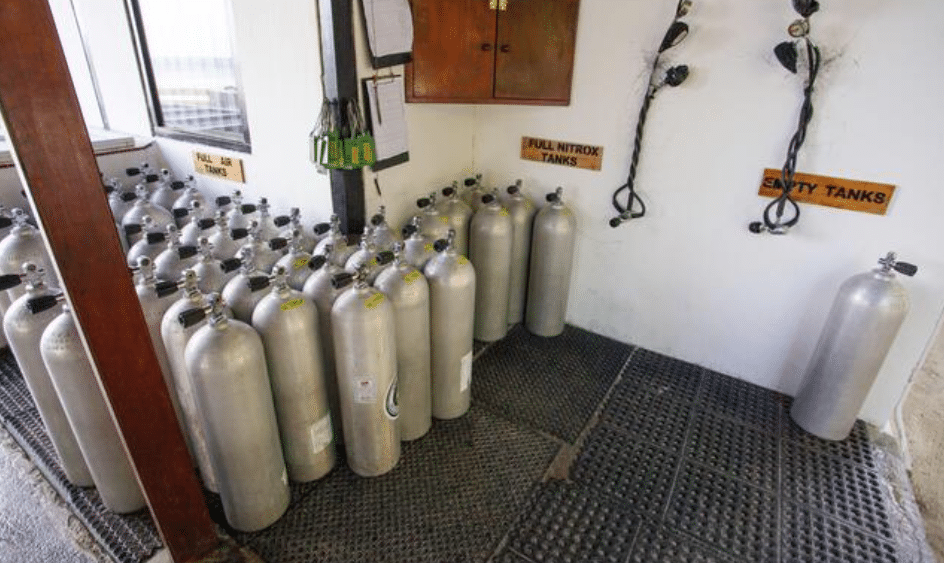
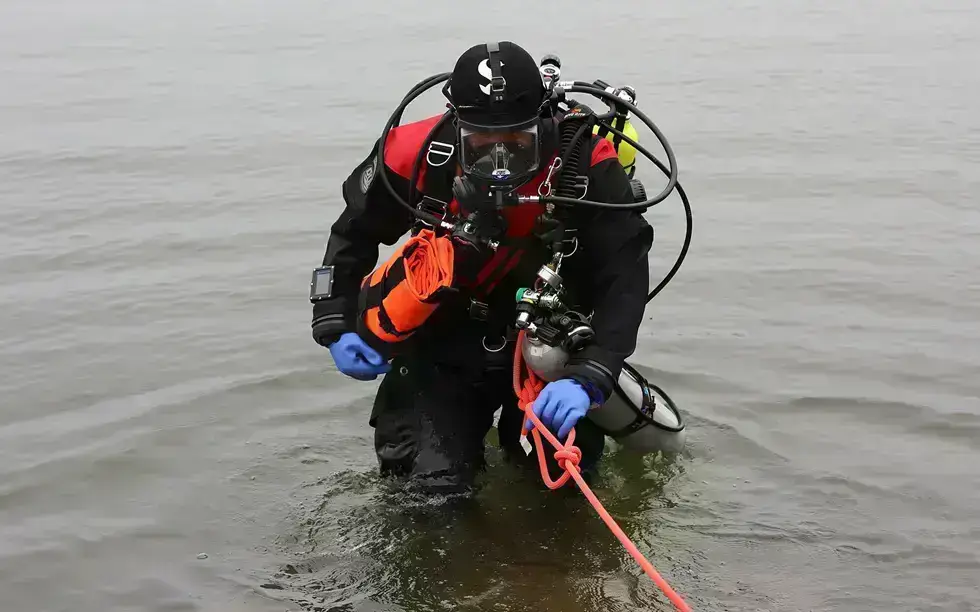
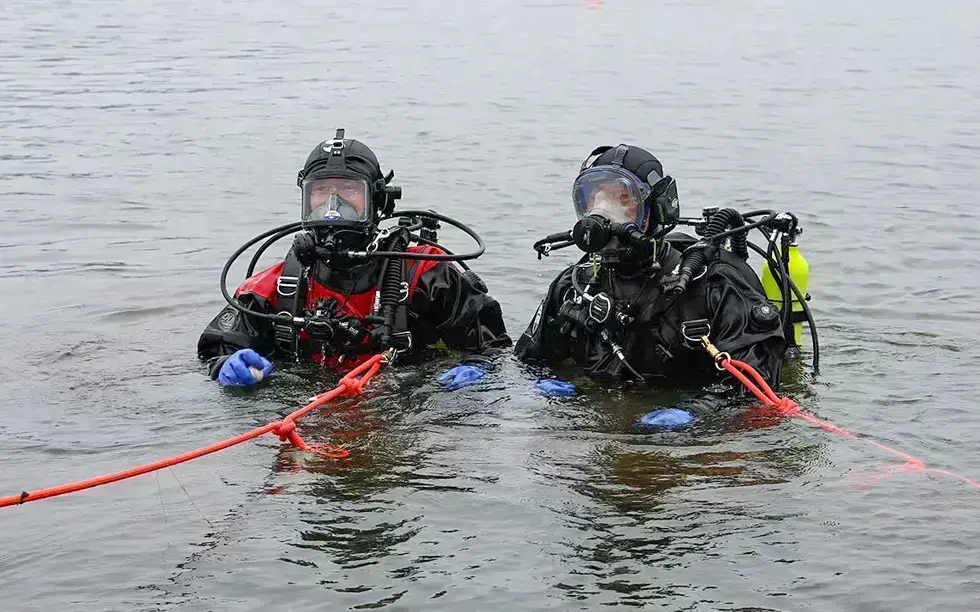
Divers prepare:
- Full-face masks
- Communications systems
- Dry suits
- Redundant air sources
- Tether lines
Surface teams prepare:
- Tending systems
- Communication lines
- Time tracking
- Emergency equipment
Checklists are used.
Not because divers forget.
But because consistency must be guaranteed.
Role Assignment: Everyone Has a Function
A public safety dive team operates through defined roles.
These include:
- Primary diver
- Backup diver
- Tender
- Dive supervisor
- Safety officer
Each role has:
- Responsibilities
- Boundaries
- Expectations
There is no overlap without purpose.
There is no improvisation without control.
The diver underwater is only one part of the system.
The surface team is equally critical.
Entering the Water: Controlled Execution
Entry into the water is not casual.
It is:
- Controlled
- Observed
- Communicated
The diver confirms:
- Equipment status
- Communication function
- Line tension
The tender establishes:
- Contact
- Orientation
- Stability
From the moment the diver submerges, the operation becomes:
System-driven.
Search Operations: Structure Over Speed
Most public safety dives involve search patterns.
These are not improvised.
They are:
- Planned
- Executed systematically
- Monitored from the surface
Common patterns include:
- Jackstay
- Circular
- Arc search
The objective is not to move quickly.
It is to cover the area effectively.
Speed without structure creates gaps.
Gaps reduce success.
Communication: Constant and Clear
Communication between diver and surface is continuous.
The tender monitors:
- Diver movement
- Line signals
- Verbal communication (if available)
The diver reports:
- Progress
- Conditions
- Findings
Silence is not neutral.
It is a warning.
Breakdowns in communication are treated immediately.
Because loss of communication equals loss of control.
Scenario-Based Training: Introducing Stress
Training evolves beyond basic drills.
Scenarios are introduced to simulate:
- Equipment failure
- Lost line
- Diver distress
- Reduced visibility
- Task overload
These scenarios are not random.
They are designed to:
- Increase cognitive load
- Test decision-making
- Reveal procedural gaps
The goal is not to create difficulty.
It is to create realism.
The Role of the Instructor
Instructors do not simply observe.
They:
- Control the scenario
- Adjust variables
- Introduce problems
- Evaluate responses
They are looking for:
- Consistency
- Discipline
- Awareness
Not perfection.
Because perfection is not realistic.
Consistency is.
Debriefing: Where Learning Happens
After the dive, the team gathers again.
The debrief is structured.
It covers:
- What went well
- What did not
- Why errors occurred
- How to correct them
Feedback is:
- Direct
- Specific
- Actionable
This is where improvement happens.
Without debriefing, training becomes repetition.
With debriefing, it becomes progression.
Physical and Mental Fatigue
A full training day is demanding.
Divers experience:
- Physical fatigue
- Cognitive overload
- Reduced concentration
This is intentional.
Operations do not occur in ideal conditions.
Training must reflect that reality.
Learning to perform while fatigued is part of:
Operational readiness.
Operational Philosophy at N9BO℠
At N9BO℠, public safety dive training is structured around:
Realism.
We emphasise:
- Role clarity
- Procedural discipline
- Team integration
- Stress exposure
- Controlled execution
Because public safety diving is not about individual performance.
It is about system performance.
Final Perspective
A day of training a public safety dive team is not about diving.
It is about preparing for environments where:
- Visibility is zero
- Conditions are unpredictable
- Outcomes matter
Every step, from briefing to debriefing, is designed to build:
Reliability.
Because in public safety operations, success is not defined by effort.
It is defined by:
Execution.
Building or Training a Public Safety Dive Team?
Contact N9BO℠ to develop structured, operationally focused ERDI training programmes for your Team.
From the N9BO℠ Knowledge Base