The Purpose of a dSMB Beyond Visibility
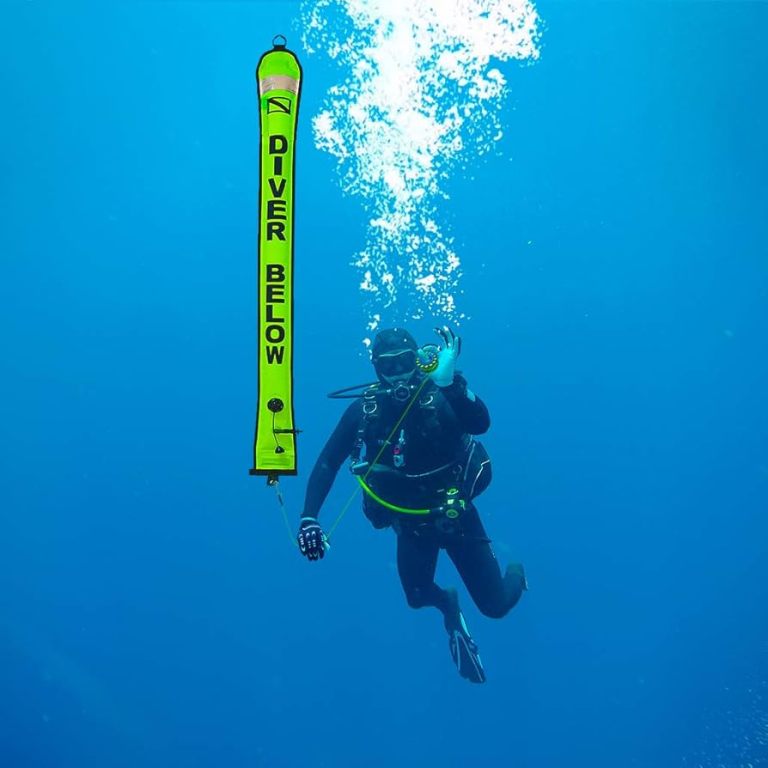
At first glance, a delayed surface marker buoy appears to serve a single purpose: allowing divers to be seen at the surface. In practice, its role is far broader. A correctly deployed dSMB communicates location, intention, and movement to boats, surface teams, and other divers. It transforms an otherwise invisible ascent into a predictable and controlled process.
In environments with boat traffic, currents, or reduced visibility, surfacing without a marker introduces unnecessary risk. Surface crews rely on visual references to track divers during ascent, particularly in drift dives or when decompression stops are conducted away from a fixed ascent line. The dSMB becomes a communication tool — a signal that allows coordination between underwater and surface environments during one of the most vulnerable phases of the dive.
At N9BO℠, this is emphasised from the beginning: a dSMB is not an accessory. It is part of the dive plan, part of communication, and part of risk management.
Why Many Divers Struggle With Deployment
Despite its importance, dSMB deployment is frequently poorly executed. Many divers encounter the skill briefly during advanced courses and then rarely practice it again. The result is predictable: uncontrolled ascents while inflating the buoy, entanglement in reels or spools, loss of buoyancy control, or excessive task loading at depth.
The issue is rarely equipment. It is procedural competence. Effective deployment requires stable buoyancy, controlled breathing, situational awareness, and deliberate movement. When these fundamentals are weak, the task becomes stressful. Stress leads to rushing, and rushing leads to mistakes.
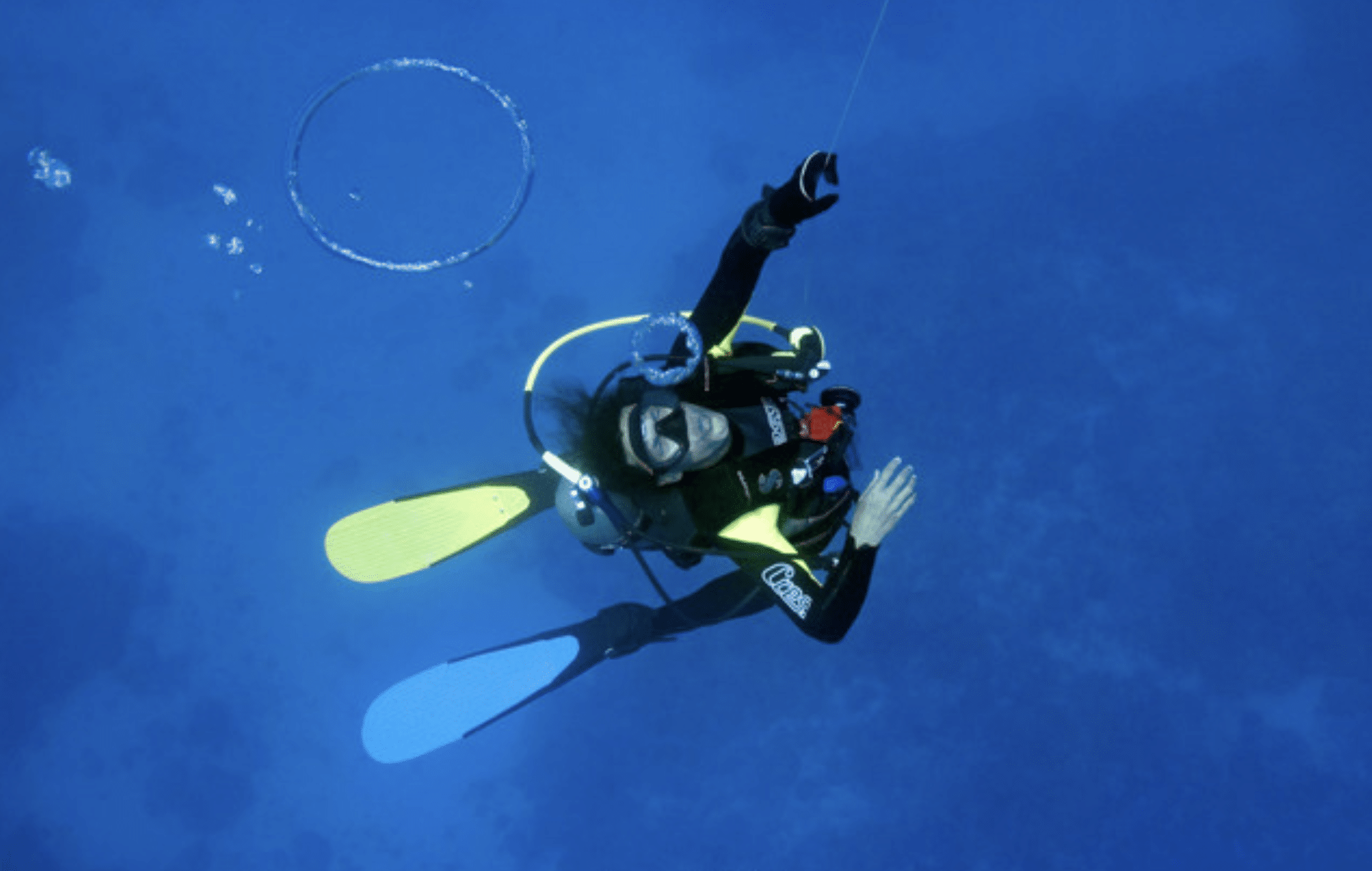
Within N9BO℠ training philosophy, deployment is broken down into repeatable steps. Divers learn to deploy neutrally buoyant, without depth change, and without losing awareness of their environment or team. The objective is not speed, but consistency and control — skills that remain applicable as divers progress toward technical or professional environments.
dSMB Use in Technical and Professional Diving
In technical diving, dSMB deployment is not optional — it is expected. Divers may ascend far from shot lines, conduct decompression in mid-water, or surface at a distance from the entry point. A stable surface marker allows support crews to anticipate diver position and respond quickly if required.
The same applies in professional and public safety operations. Operational divers depend on clear signalling to manage vessel movement, maintain safety zones, and coordinate recovery procedures. In these environments, poor deployment reduces safety margins for the entire operation.
Because N9BO℠ operates across recreational, technical, and public safety diving domains, the skill is taught with scalability in mind. The same disciplined procedure applies whether on a recreational drift dive in Thailand or during structured operational diving scenarios.

Buoyancy, Task Loading, and Control
One of the most valuable aspects of dSMB training is its effect on overall diving performance. Deployment immediately exposes weaknesses in buoyancy, trim, and breathing control. A diver who struggles to maintain depth while managing a spool quickly understands where improvement is needed.
For instructors, the exercise becomes a diagnostic tool. When taught correctly, it reinforces slow, deliberate movement and reinforces the idea that safety underwater comes from stability rather than speed. Divers learn to manage workload without rushing — an essential skill as dives become more complex.
At N9BO℠, this approach reflects a broader philosophy: training beyond minimum standards. The goal is not to demonstrate deployment once, but to ensure it can be executed reliably under stress, current, or reduced visibility.
A Safety Skill That Should Never Be Optional
A significant number of diving incidents occur during ascent or at the surface — separation from boats, surfacing in traffic lanes, or drifting away from support. The dSMB directly mitigates these risks, yet it is often treated as optional equipment rather than a core safety system.
Professional divers approach it differently. The buoy is prepared before the dive, deployment is part of the ascent strategy, and execution is consistent regardless of conditions. There is no improvisation when workload and fatigue are highest.
A dedicated dSMB specialty reinforces this mindset. It teaches that small procedural disciplines prevent larger problems and that simple tools, used correctly, dramatically increase safety margins.
Ultimately, the delayed surface marker buoy represents more than equipment. It reflects planning, communication, and responsibility — values that define the training philosophy at N9BO℠ and underpin safe, professional diving.

Improve Your Surface Safety and Deployment Skills
Proper dSMB deployment is a fundamental safety skill for recreational, technical, and professional divers alike. Contact N9BO℠ to learn more about structured dSMB specialty training.
From the N9BO℠ Knowledge Base