Sump Diving Is Not Just Cave Diving With Water
A sump is a flooded section of a cave that interrupts otherwise dry passage.
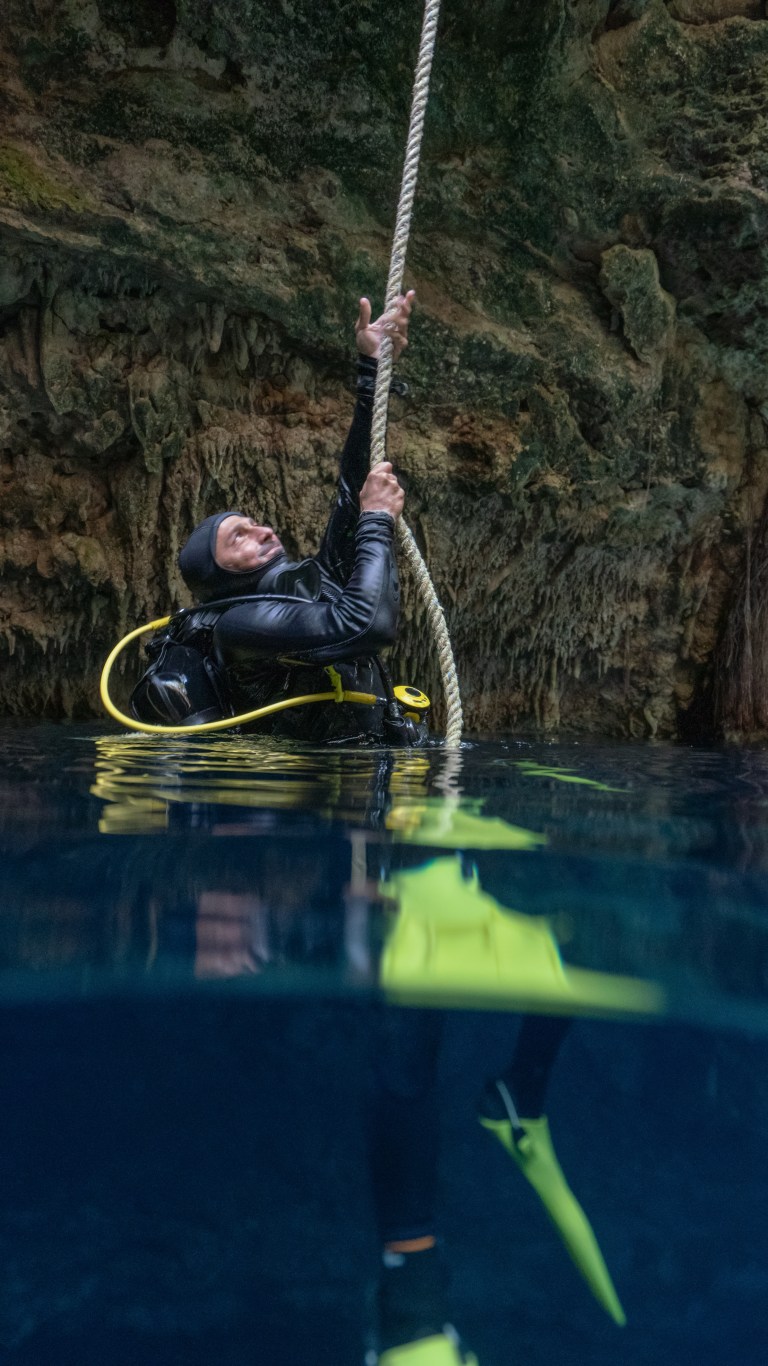
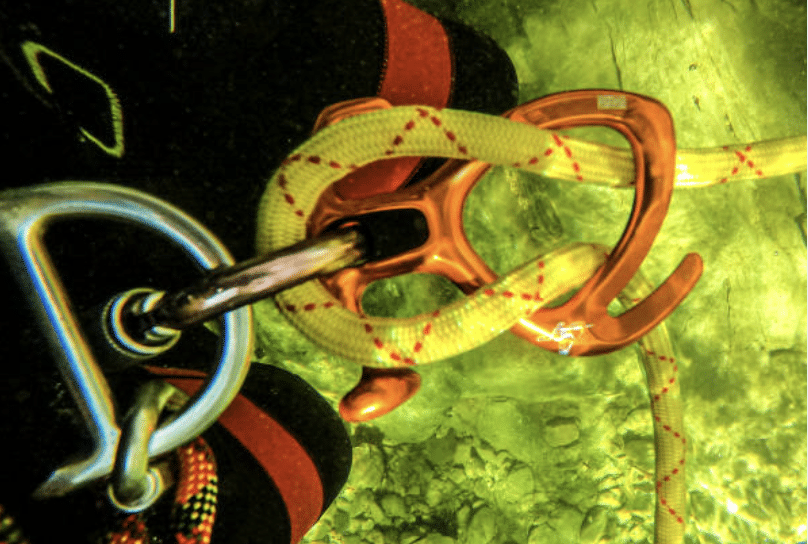
Accessing and exiting a sump often requires:
- Vertical drops or climbs
- Rope systems and anchors
- Confined movement in wet, unstable terrain
Sump diving is therefore a hybrid discipline, not a purely underwater activity.
Why Vertical Skills Are Non-Negotiable
Many sump-related incidents occur outside the water.
Falls, rope mismanagement, anchor failure, and exhaustion before the dive even begins all increase risk dramatically. Professional sump diving training treats climbing competence as a core safety requirement.
Ropework as Life Support
In sump environments, ropes are not convenience tools.
They provide:
- Access and egress
- Equipment transfer pathways
- Emergency evacuation routes
Errors in rigging or technique can trap divers on either side of the sump. Climbing discipline is therefore life-critical.

Instructor Perspective: Where Divers Struggle Most
Instructors frequently observe technically strong divers falter during vertical movement.
At N9BO℠, sump training deliberately exposes divers to:
- Rope ascents and descents under load
- Equipment hauling techniques
- Transition management between dry and wet environments
This builds confidence where most incidents occur.
Transition Zones Are the Highest Risk Areas
The interface between dry cave, ropework, and submerged passage is where complexity peaks.
Divers must manage:
- Buoyancy and trim
- Equipment donning and doffing
- Line management
- Fatigue and thermal stress
Professional training focuses heavily on these transition points.
Equipment Configuration for Vertical–Underwater Integration
Sump divers must configure equipment to function both vertically and underwater.
This includes:
- Streamlined harnesses
- Secure attachment points
- Redundant lighting and cutting tools
Poor configuration amplifies risk during transitions.
Fatigue and Cognitive Load
Climbing before and after a dive increases exhaustion.
Fatigue degrades judgement, gas management, and emergency response. Professional sump training integrates pacing, rest, and decision discipline.
Emergency Scenarios Are Complex
Rescues in sump environments are exceptionally challenging.
Vertical constraints, limited access, and water barriers complicate response. Training emphasises prevention and conservative planning.
Ethical and Environmental Responsibility
Sump systems are fragile and often form part of sensitive cave networks.
Responsible training includes minimal-impact techniques and access stewardship.
Professional Parallels
Sump diving shares principles with alpine rescue and confined-space operations.
In all cases, vertical competence is a prerequisite—not an optional skill.
The Bottom Line
Sump diving is a three-dimensional discipline.
Without climbing and ropework competence, underwater skill alone is insufficient. Professional training integrates vertical and submerged techniques into a single operational framework.
At N9BO℠, sump diving education respects the full complexity of the environment—above and below the waterline.

Preparing for Cave or Expedition Diving?
Sump diving combines vertical access and underwater skills that require specialised preparation. Contact us to discuss cave and expedition training pathways.
From the N9BO℠ Knowledge Base