From Intro to Full Cave: What Actually Changes
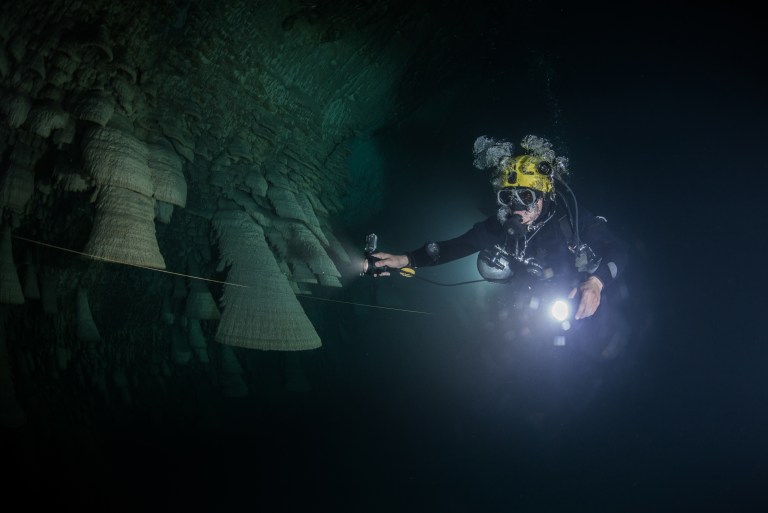
Introductory cave training teaches:
- Primary reel deployment
- Basic navigation
- Gas planning frameworks
- Light discipline
Full Cave training expands that foundation into complexity.
Divers must manage:
- Multiple navigation choices
- T-intersections and circuits
- Jump and gap procedures
- Team spacing in confined passages
- Advanced failure simulations
The environment becomes more layered.
Competence must scale accordingly.
Navigation in Multi-Line Systems
Complex cave systems may contain:
- Permanent lines
- Side passages
- Dead ends
- Loop systems
- Multiple exits
Divers must execute:
- Clear directional marking
- Personal marker placement
- Confirmation protocols before movement
- Verbal (or tactile) team confirmation
Navigation is not guessing — it is structured decision-making.
Mistakes are rarely dramatic. They are subtle and cumulative.
Full Cave training reinforces precision in marker placement and line reading.
The line becomes both path and memory.
Gas Planning Under Horizontal Constraint
In overhead cave systems, horizontal distance can exceed vertical depth by significant margins.
Gas planning must account for:
- Long swim distances
- Variable depth profiles
- Stress contingencies
- Team gas-sharing scenarios
Rule-of-thirds is a baseline.
Advanced teams often plan more conservatively depending on system complexity.
Gas is not simply supply — it is decision flexibility.
Professional divers treat unused gas as safety margin, not inefficiency.
Team Protocol Inside the Cave
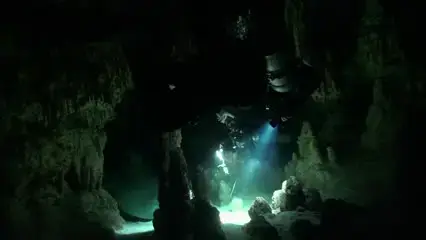
Cave diving is a team discipline.
Spacing must allow:
- Visual contact
- Light communication
- Immediate assistance
- Controlled manoeuvring
Too close increases silt disturbance.
Too far reduces response capability.
Structured team positioning reduces ambiguity.
Communication underwater may include:
- Light signals
- Touch contact in zero visibility
- Pre-agreed response sequences
Team integrity preserves exit reliability.
Zero-Visibility Competence
Full Cave training includes deliberate silt-out scenarios.
Divers practice:
- Maintaining contact with the guideline
- Controlling buoyancy without visual cues
- Executing touch-based communication
- Managing breathing under darkness
Zero visibility is not hypothetical.
Silt disturbance or equipment failure can eliminate light instantly.
Training removes novelty.
Calm response replaces panic when experience is structured.
Failure Management in Constrained Environments
Advanced cave drills address:
- Primary light failure
- Complete light failure
- Lost line procedure
- Lost buddy protocol
- Gas-sharing exit
Each scenario reinforces one principle:
Stop. Stabilise. Solve. Exit.
Improvisation degrades clarity.
Procedure preserves it.
At N9BO℠, we emphasise that overhead competence is built on repeatable behaviour under stress.
Psychological Stability and Spatial Awareness
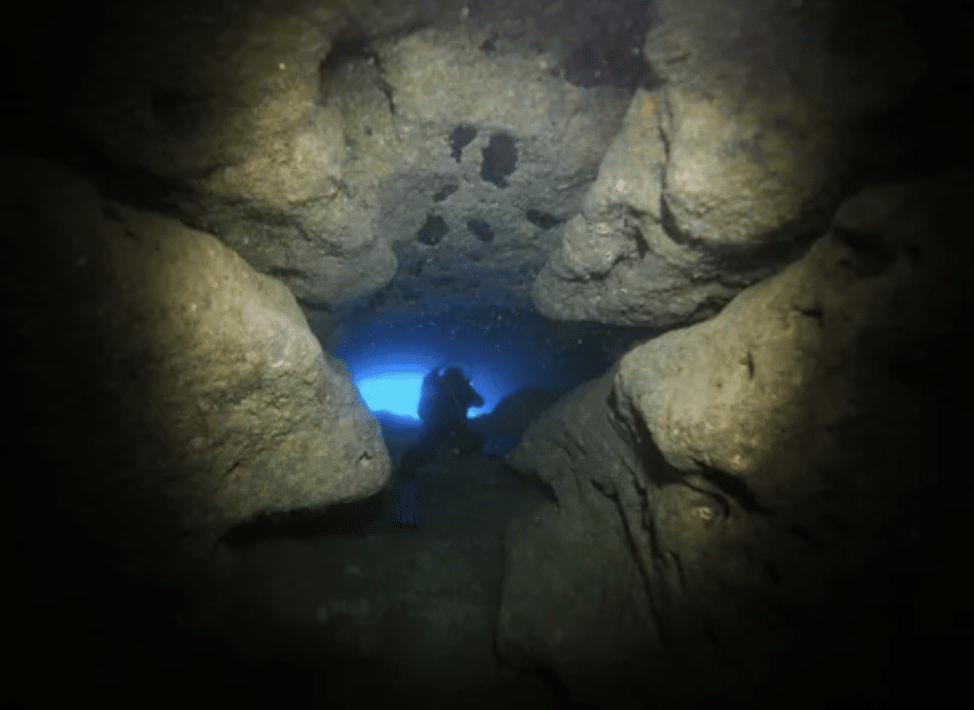
Full Cave diving introduces:
- Narrow passages
- Vertical drops
- Complex rock formations
- Low ceilings
Spatial disorientation can occur without reference.
Stable trim and controlled propulsion reduce contact and silt.
Calm breathing preserves gas and clarity.
The diver’s mental bandwidth must remain available for navigation.
Cave environments punish cognitive overload.
Why Distance Does Not Define Success
The temptation to measure cave diving by penetration distance is misguided.
Professional cave diving evaluates:
- Precision of navigation
- Gas margin at exit
- Team stability
- Absence of disturbance
- Procedural adherence
The safest dive is the one executed within planned parameters.
The cave does not reward ambition.
It rewards discipline.
Exit Certainty as the Core Metric
Full Cave competence is defined by exit certainty.
Can the team:
- Locate the line without hesitation?
- Confirm direction instantly?
- Share gas while moving?
- Exit under zero visibility?
If the answer is consistently yes, competence exists.
If hesitation appears, progression pauses.
Overhead diving demands humility.
Ready to Progress Into Full Cave Training?
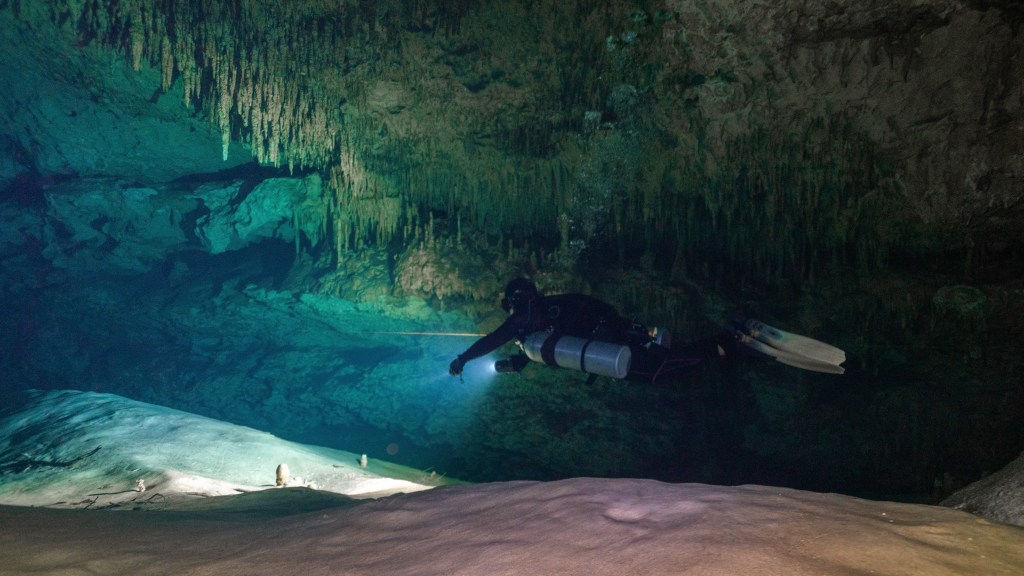
Overhead environments require disciplined navigation, gas management, and zero-visibility competence. Contact N9BO℠ to discuss structured Full Cave progression.
From the N9BO℠ Knowledge Base