What Task Loading Really Means
Task loading is not about how many tasks a diver performs, but about how many tasks compete for attention at the same time. In technical diving, even routine actions—buoyancy control, navigation, communication—consume cognitive resources.
When additional tasks are layered on without structure, attention fragments. Technical diving training treats task loading as a predictable stressor that must be managed deliberately, not avoided entirely.
Complexity is inevitable. Loss of control is not.
Why Task Loading Is So Dangerous Underwater
Underwater environments amplify task loading effects. Factors such as narcosis, reduced visibility, cold, and equipment bulk already tax cognitive capacity. Adding tasks can quickly exceed what the brain can manage effectively.
When this happens, divers experience:
- Narrowed focus
- Missed cues
- Delayed responses
- Poor prioritisation
Advanced technical diving progression is designed to expose these limits safely so divers learn to recognise and respect them.
The Myth of Multitasking
Humans do not multitask well. We switch attention rapidly between tasks, and each switch incurs a cognitive cost. Under stress, this cost increases.
Divers who believe they can “handle more” often confuse confidence with capacity. TDI technical diving courses demonstrate that even highly skilled divers have limits—and that exceeding them leads to predictable failure modes.
Why Experienced Divers Are Vulnerable
Experience can mask task loading risk. Familiar tasks feel automatic, encouraging divers to add more without realising cumulative load.
This is why incidents often involve experienced divers performing “routine” dives. Advanced technical diving progression challenges experienced candidates with controlled task layering to reveal where automation ends.
Early Warning Signs of Overload
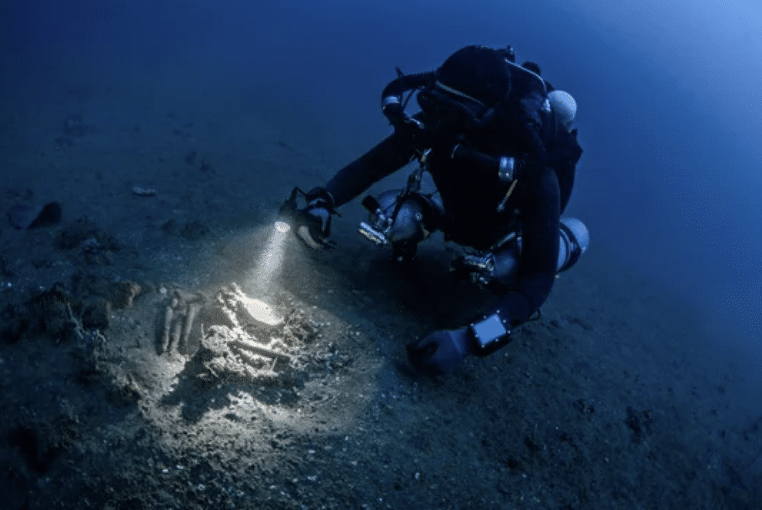
Task overload rarely announces itself clearly. Early indicators include:
- Fixation on a single task
- Missed depth or time checks
- Sloppy buoyancy or trim
- Reduced communication
Recognising these signs early allows divers to pause, simplify, or abort. Technical diving training teaches divers to treat these cues as safety signals, not personal shortcomings.
Training Task Loading Progressively
Effective training introduces task loading gradually. Skills are layered only after foundational behaviours become automatic.
At N9BO℠, instructors resist the temptation to overload candidates prematurely. Complexity is added deliberately, ensuring that control is maintained at every stage.
Task Prioritisation: A Critical Skill
When tasks compete, prioritisation becomes essential. Divers must know which tasks can wait and which cannot.
Advanced technical diving progression teaches divers to prioritise:
- Life support
- Awareness
- Team integrity
- Mission objectives
This hierarchy prevents minor tasks from overshadowing critical ones.

The Role of Pausing
One of the most effective responses to overload is pausing. Stopping movement, stabilising position, and taking a breath allows cognitive resources to reset.
Many divers hesitate to pause, fearing it signals weakness. Technical diving training reframes pausing as a professional response, not a failure.
Team-Based Task Management
Teams can distribute task load. Clear role assignment reduces individual burden and improves efficiency.
TDI technical diving courses emphasise explicit task delegation and communication to prevent overload. When everyone assumes someone else is handling a task, no one is.
When Task Loading Requires Aborting
There are moments when task loading exceeds safe limits despite best efforts. Recognising this early and aborting is a mark of competence.
At N9BO℠, aborting due to overload is treated as correct judgement, not defeat.
Professional Parallels
In aviation, medicine, and emergency response, task loading is a well-studied hazard. Professionals are trained to manage complexity through checklists, role assignment, and deliberate pacing.
Technical diving aligns with this model. Divers are trained not to do more, but to do less, better.
The Bottom Line
Task loading does not fail all at once.
It erodes awareness quietly—until it overwhelms it.
The safest divers are not those who can do the most underwater, but those who know exactly how much is too much.
In technical diving, restraint is a skill.

Feeling Overloaded Underwater?
Adding tasks incrementally can push divers past safe cognitive limits. Contact us to learn how to recognise and manage task loading before it compromises a dive.
From the N9BO℠ Knowledge Base