Why PPO₂ Control Is the Defining Feature of CCR Diving
In open circuit diving, the diver breathes a fixed gas mix. The partial pressure of oxygen increases and decreases automatically with depth. The diver manages exposure through planning and ascent control, but not by dynamically adjusting the oxygen fraction in real time.
CCR changes this entirely.
A closed circuit rebreather monitors oxygen levels within the breathing loop and injects oxygen to maintain a set partial pressure — typically between 1.0 and 1.3 ATA during the working portion of a dive. This allows the diver to maintain an optimal PPO₂ throughout descent, bottom time, and decompression.
The result is greater gas efficiency, extended runtime, and optimised decompression profiles. But more importantly, it introduces active life-support management. The diver is no longer simply consuming gas — they are managing a system.
This is where the difference lies. CCR diving is not about “longer dives.” It is about oxygen control.
Physiology First: Why PPO₂ Matters to the Human Body
Oxygen is both essential and potentially toxic.
At insufficient partial pressures, hypoxia can lead to unconsciousness without warning. At excessive levels, hyperoxia increases the risk of central nervous system oxygen toxicity — including convulsions underwater.
CCR divers operate within a narrow operational window.
Maintaining a stable PPO₂ requires:
- Accurate sensor calibration
- Proper unit assembly
- Awareness of metabolic demand
- Continuous monitoring of displays
The danger is rarely dramatic equipment failure. It is usually slow deviation: a sensor drifting, a diver distracted, a missed cross-check.
At N9BO℠, CCR training begins with oxygen physiology before complexity. Understanding how the body responds to oxygen exposure is fundamental. Without this foundation, technology becomes a liability.
The Illusion of Automation
Modern rebreathers include electronic control systems, redundant sensors, and automated oxygen injection. This creates a subtle psychological trap: the illusion that the system is “managing itself.”
It is not.
The diver must cross-check sensor readings, verify calibration accuracy, monitor loop volume, and interpret trends — not just numbers. A stable display does not guarantee a stable system.
Professional CCR training reinforces manual competence:
- Manual oxygen addition drills
- Diluent flush procedures
- Hypoxia recognition
- Hyperoxia mitigation
- Bailout decision-making
Automation supports the diver. It does not replace vigilance.
Bailout Planning: When PPO₂ Control Is Lost
The defining skill of a competent CCR diver is not smooth runtime extension. It is bailout discipline.
When oxygen control fails — due to electronics, flooding, or sensor disagreement — the diver must transition immediately to open circuit bailout gas. That bailout gas must be:
- Sufficient for depth and ascent
- Pre-planned for worst-case scenarios
- Accessible without confusion
This is where CCR diving intersects directly with technical diving fundamentals: gas planning, redundancy, and decision-making.
At N9BO℠, bailout planning is treated as the backbone of CCR safety. Every dive is planned as though bailout will be required. If bailout is unnecessary, the plan has still served its purpose.
Human Factors in CCR Diving
CCR increases cognitive load.
Unlike open circuit (OC), where breathing is intuitive and mechanical simplicity reduces monitoring, CCR demands constant system awareness. Divers must manage:
- PPO₂ setpoint changes
- Depth transitions
- Scrubber duration
- Loop volume
- Sensor health
Add current, overhead environments, or decompression obligations, and task loading increases further.
Human factors training — situational awareness, stress management, decision pacing — becomes critical.
Many CCR incidents are not caused by mechanical failure. They are caused by distraction, complacency, or failure to cross-check.
This is why CCR training at N9BO℠ integrates human performance principles alongside system management. Oxygen control is both technical and psychological.
Why CCR Is Not a Shortcut to Advanced Diving
A common misconception is that rebreathers are simply a more advanced tool for deeper or longer dives.
In reality, CCR is an entirely different life-support philosophy.
It requires:
- Discipline before depth
- Standardisation before exploration
- Procedural repetition before progression
The goal is not maximum runtime. It is predictable system behaviour under stress.
Divers who approach CCR with an “equipment upgrade” mindset often struggle. Divers who approach it as a disciplined operational system tend to succeed.
Why PPO₂ Control Changes Everything
Open circuit diving is about gas consumption and ascent discipline.
CCR diving is about oxygen control and life-support management.
That single shift — from passive breathing to active PPO₂ regulation — changes how divers think, plan, and execute every dive. It demands higher awareness, structured procedures, and conservative planning.
When properly trained, CCR becomes a powerful, efficient, and elegant system. When approached casually, it becomes unforgiving.
Technology expands capability. Discipline preserves safety.
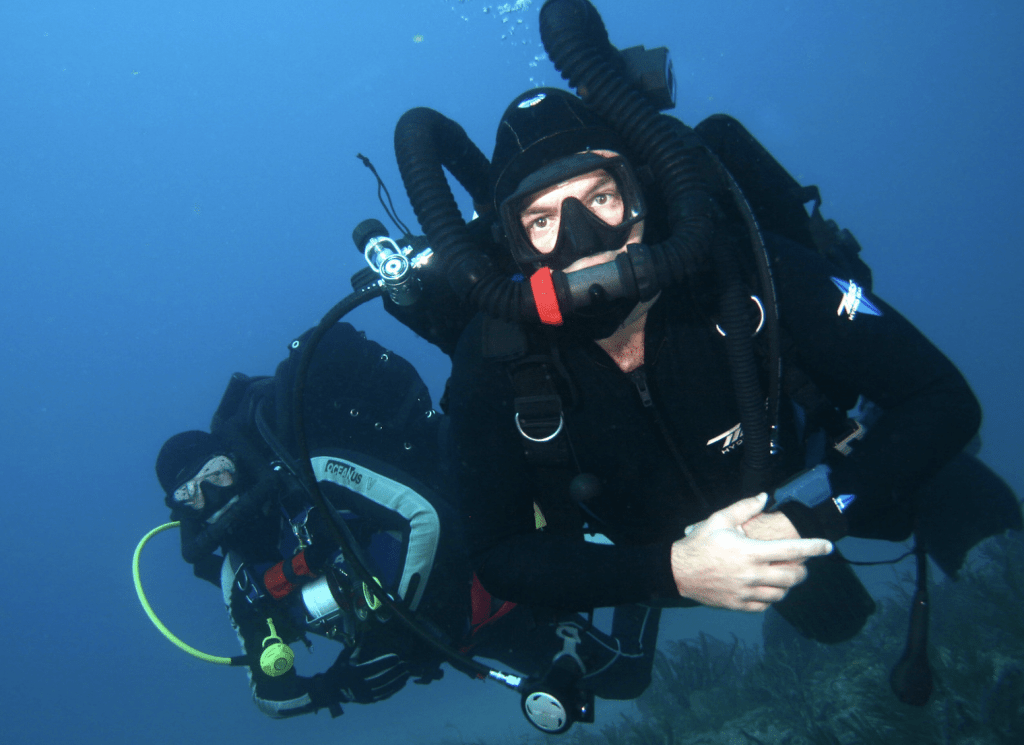
Considering Closed Circuit Rebreather Training?
CCR diving demands structured training, disciplined bailout planning, and a deep understanding of oxygen physiology. Contact N9BO℠ to discuss rebreather pathways and readiness assessment.
From the N9BO℠ Knowledge Base