Physics Does Not Care About Experience
The ocean does not adapt to divers.
Gas obeys physical laws regardless of certification level, confidence, or intent. The Ideal Gas Law governs every breath you take underwater, whether you acknowledge it or not.
The Ideal Gas Law Explained
The Ideal Gas Law is expressed as:
PV = nRT
Where:
- P = Pressure
- V = Volume
- n = Amount of gas (moles)
- R = Gas constant
- T = Temperature (Kelvin)
This single equation links all gas behaviour relevant to diving.
Pressure and Volume: Why Buoyancy Changes
As pressure increases with depth, gas volume decreases.
This explains:
- BCD compression
- Wetsuit squeeze
- Lung volume reduction
Ignoring this relationship leads to uncontrolled ascents or descents.
Gas Consumption and Depth
Gas density increases with pressure.
At depth:
- Each breath contains more molecules
- Gas is consumed faster
- Work of breathing increases
This is not a regulator issue—it is physics.
Instructor Perspective: Memorisation vs Understanding
Many divers memorise “rules of thumb” without understanding why they work.
At N9BO℠, physics is taught conceptually so divers can adapt when conditions change—rather than relying on fixed numbers.
Temperature Matters More Than You Think
Temperature affects pressure and volume.
Cold gas contracts, hot gas expands. This impacts:
- Cylinder pressure readings
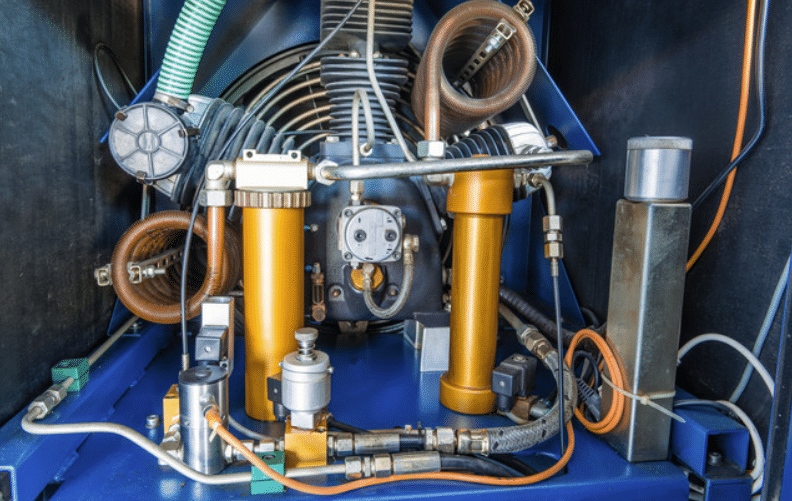
- Compressor operations
- Oxygen handling safety
Ignoring temperature introduces dangerous assumptions.
Gas Density and Narcosis
Increased gas density contributes to:
- CO₂ retention
- Increased work of breathing
- Cognitive impairment
Understanding gas behaviour informs safer gas choices at depth.
Decompression and Gas Loading
While decompression models are complex, they rely on simple principles:
- Gas dissolves under pressure
- Gas comes out of solution during ascent
The Ideal Gas Law is part of this foundational framework.
Equipment Design and Function
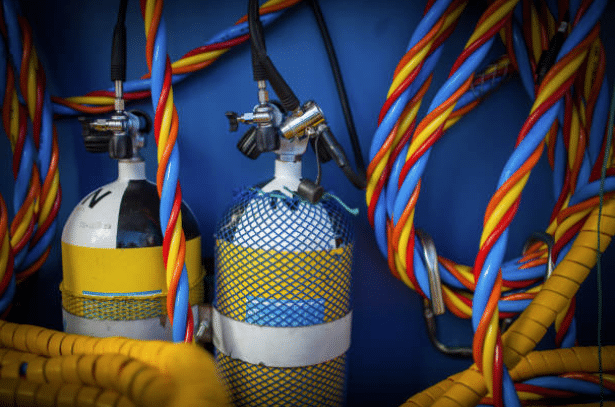
Regulators, cylinders, and valves are engineered around gas laws.
Failures often occur when divers misuse equipment without understanding these constraints.
Why Technical Divers Must Know This
Technical diving magnifies gas effects:
- Higher pressures
- Mixed gases
- Longer exposures
Physics becomes operational, not theoretical.
The Professional Lesson
Divers who understand gas behaviour:
- Plan more accurately
- Respond better to anomalies
- Avoid compounding errors
Knowledge reduces task loading under stress.
The Bottom Line
Every safe dive begins with physics.
The Ideal Gas Law is not academic—it is operational reality. At N9BO℠, gas physics is taught as a practical survival tool, ensuring divers understand why systems behave as they do under pressure.

Want to Understand the Physics Behind Diving?
A clear understanding of gas behaviour improves planning, safety, and decision-making underwater. Contact us to discuss training programmes that integrate theory with real diving practice.
From the N9BO℠ Knowledge Base