The Appeal of Personal Preference
Divers naturally develop preferences. Certain equipment feels more comfortable, procedures feel more intuitive, and habits form through repetition. Personalisation can increase comfort and confidence—up to a point.
The problem arises when personal preference replaces standardisation.
Technical diving training recognises that while individuality may improve comfort, it often degrades team performance and predictability. What feels natural to one diver may be confusing or dangerous to another.
Why Standardisation Exists
Standardisation exists to create shared expectations. When equipment, procedures, and signals are consistent, teams do not need to interpret behaviour—they recognise it instantly.
In high-risk environments, delay equals danger. Advanced technical diving progression treats standardisation as a time-saving and error-reducing strategy, not a bureaucratic imposition.
“I Know My Gear” Is Not Enough
Divers often argue that personal configurations are safe because they understand them. This reasoning ignores the team.
In an emergency, teammates must be able to:
- Locate valves
- Identify regulators
- Interpret signals
- Predict actions
Technical diving training emphasises that gear must be understandable not only to the owner, but to the entire team.

When Preference Becomes Ego
Resistance to standardisation is sometimes framed as independence or experience. In reality, it often reflects ego rather than competence.
Professional divers prioritise team effectiveness over individual comfort. Advanced technical diving progression challenges candidates to adopt standardisation even when it conflicts with personal habit.
Communication Depends on Consistency
Hand signals, positioning, and procedures only work when everyone shares the same meaning. Personal variations introduce ambiguity.
In low visibility or high stress, ambiguity becomes dangerous. Technical diving training enforces standardised communication to preserve clarity when cognitive capacity is limited.
Equipment Configuration as Language
Equipment configuration communicates intent. Valve orientation, hose routing, and attachment points all convey information to teammates.
Unusual configurations force teammates to stop and interpret—costing time and attention. Advanced technical diving progression treats configuration as a shared language rather than a personal choice.
The Cost of “Minor” Deviations
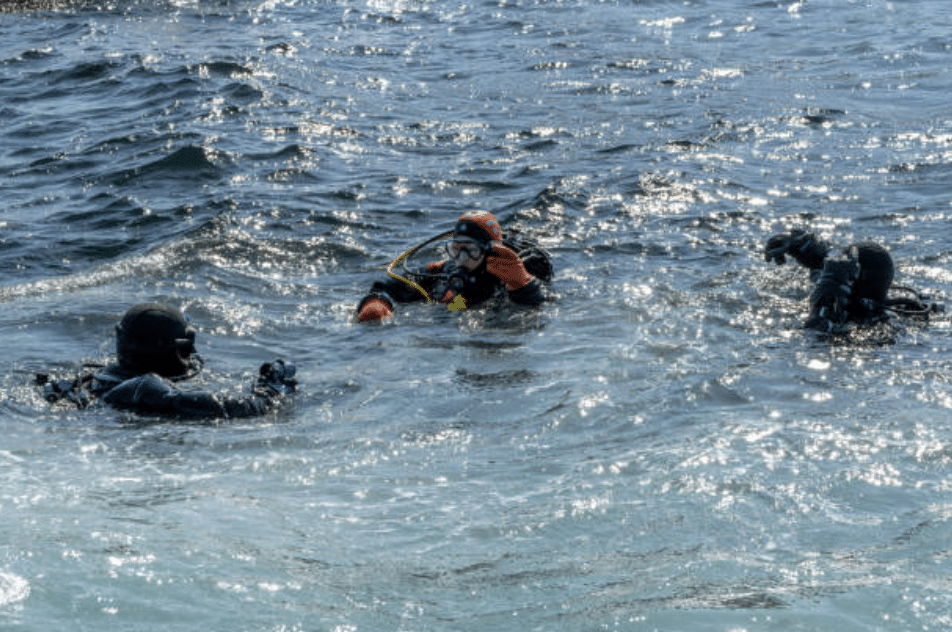
Small deviations accumulate. One diver prefers a different hose length. Another modifies a signal. Over time, the team loses coherence.
Many incidents involve confusion rather than failure. Technical diving training identifies inconsistency as a frequent precursor to delayed response.
Instructor Perspective: Teaching Discipline Over Preference
Instructors often encounter candidates who resist standardisation because they “have always done it this way.” This mindset must be addressed early.
At N9BO℠, instructors explain why standards exist, reinforcing that discipline is not about control—it is about safety and trust.
Professional Parallels
In aviation, emergency medicine, and military operations, standardisation is non-negotiable. Personal preference is subordinate to system reliability.
Technical diving aligns with these professional standards. Uniformity enables speed, predictability, and mutual support.
When Flexibility Is Appropriate
Standardisation does not mean rigidity. Adjustments may be necessary for body size, environment, or mission requirements.
However, changes must be:
- Deliberate
- Communicated
- Understood by the team
Advanced technical diving progression emphasises that flexibility is acceptable only when it preserves shared understanding.
The Bottom Line
Comfort is personal.
Safety is collective.
In technical diving, “my way” thinking undermines team effectiveness. The most professional divers sacrifice personal preference to ensure clarity, predictability, and trust.
At N9BO℠, standardisation is not conformity—it is commitment to the team.
Still Doing Things “Your Own Way”?
Standardised procedures reduce confusion and error when pressure increases. Contact us to discuss why consistency improves safety in technical diving.
From the N9BO℠ Knowledge Base