Purpose of Semi-Closed Rebreathers
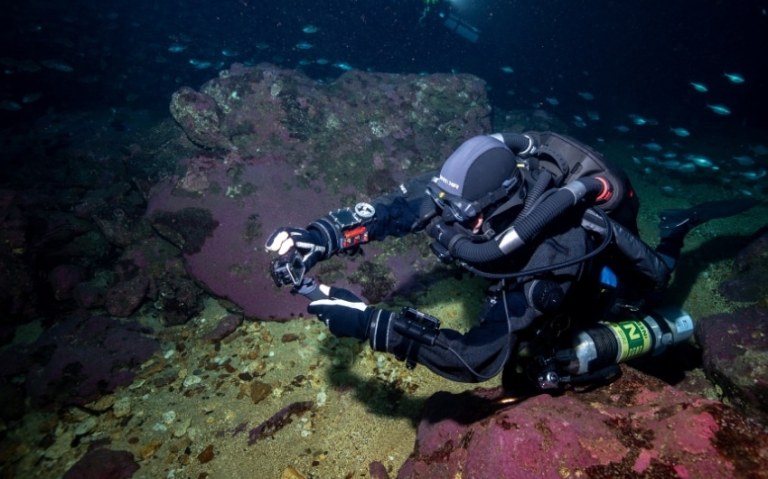
SCR systems are designed to improve gas efficiency by reusing part of the diver’s exhaled breath. Instead of venting all gas into the water as in open circuit diving, the system removes carbon dioxide and reintroduces oxygen through a controlled addition process.
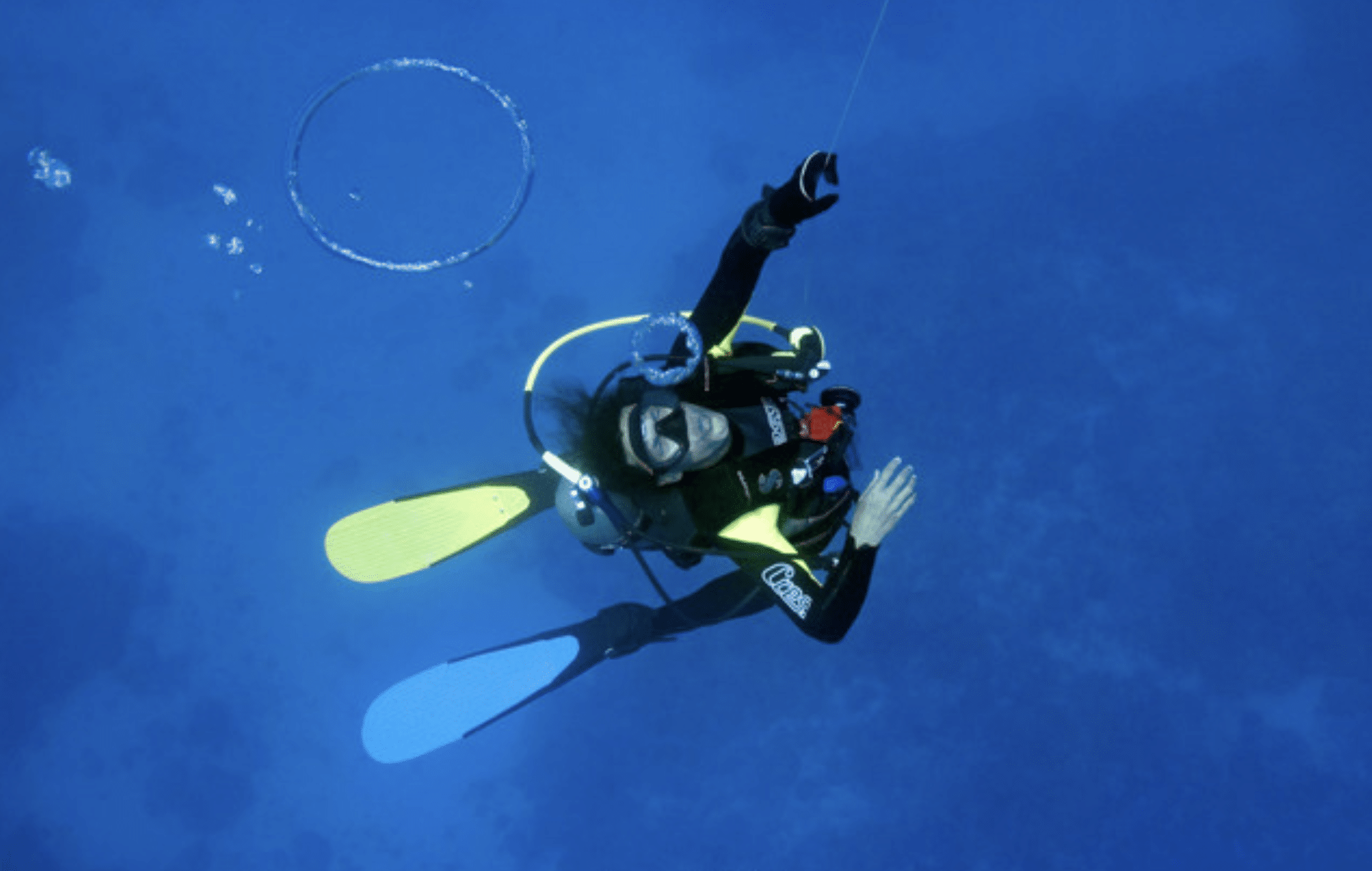
This allows divers to extend bottom time while using smaller gas supplies. It also reduces bubble output, which can be beneficial in environments where disturbance must be minimised.
However, this efficiency changes the nature of diving. The diver is no longer simply breathing from a cylinder but managing a breathing system that must function correctly at all times.
At N9BO℠, we position SCR diving as the transition from equipment use to system control.
How SCR Systems Work
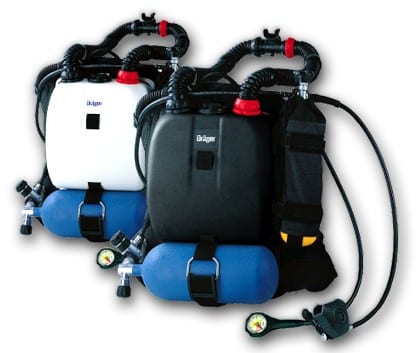
SCR units such as the Dolphin, Ray, and Azimuth operate on a semi-closed loop. The diver inhales and exhales within a breathing circuit, where exhaled gas passes through a scrubber that removes carbon dioxide.
Fresh nitrox is continuously added to replace the oxygen consumed during metabolism, while excess gas is vented from the system to maintain pressure balance.
This creates a dynamic breathing environment. Oxygen levels are not fixed but vary depending on depth, breathing rate, and system configuration.
The system is typically mechanical, without electronic oxygen monitoring. This reduces complexity but requires the diver to manage gas selection and system behaviour manually.
At N9BO℠, we emphasise that understanding the loop is essential to safe SCR operation.
Operational Limits and Application
SCR systems are generally designed for recreational or limited technical diving, typically within depth limits around 30–40 metres depending on the unit and gas selection.
They are not intended for advanced decompression diving or deep technical exposure. These limits are defined by the system’s ability to maintain safe oxygen partial pressures without active monitoring.
Within these constraints, SCR systems are highly effective for:
- Extended no-decompression diving
- Scientific or survey diving
- Photography and low-impact operations
Operating beyond defined limits introduces risks that cannot be mitigated by the system alone.
At N9BO℠, we treat these limits as operational boundaries that must be strictly respected.
Gas Management and Oxygen Control
Gas management in SCR diving differs significantly from open circuit systems. Oxygen levels are controlled indirectly through the choice of nitrox mixture and the system’s flow rate.
This means the diver must understand how oxygen partial pressure changes with depth and activity. Unlike closed circuit systems, there is no automatic adjustment to maintain a constant setpoint.
Incorrect gas selection or misuse can lead to hypoxia or hyperoxia, both of which present immediate risk.
The diver must therefore plan carefully, monitor depth and exposure, and operate within the parameters defined by training.
At N9BO℠, we emphasise that SCR gas management is an active, continuous process.
Advantages of SCR Systems
SCR units offer several operational advantages when used within their intended limits. The most immediate benefit is extended bottom time, achieved through efficient gas recycling.
Reduced bubble output improves interaction with marine life and reduces environmental disturbance. This is particularly useful in research or observation-based diving.
Mechanical simplicity is another advantage. Compared to fully electronic systems, SCR units have fewer failure points related to electronics.
These benefits make SCR systems an effective introduction to rebreather diving.
At N9BO℠, we emphasise that these advantages depend on correct setup and disciplined use.
System Risks and Failure Management
SCR systems introduce failure modes that differ from open circuit diving. These include scrubber exhaustion, gas flow interruption, loop leaks, and incorrect gas mixtures.
These issues may not be immediately obvious, which increases the importance of early detection and disciplined monitoring.
Divers must be trained to recognise symptoms of carbon dioxide buildup, oxygen imbalance, and system malfunction. Immediate and correct response is essential.
A bailout system is mandatory. The diver must always have access to an independent open circuit gas supply to exit safely in case of failure.
At N9BO℠, we treat failure management as a core component of SCR training.
Training and Unit-Specific Certification
SCR training is unit-specific. Divers must be certified on the exact system they intend to use, whether Dolphin, Ray, or Azimuth, as each has different characteristics and procedures.
Training includes system assembly, pre-dive checks, gas planning, in-water procedures, and emergency response.
The emphasis is on repetition and consistency. The diver must be able to set up and operate the system without deviation.
SCR diving cannot be approached casually. It requires a structured training pathway and disciplined execution.
At N9BO℠, we treat rebreather training as system qualification, not general knowledge.
Position Within the Rebreather Pathway
SCR systems represent the entry point into rebreather diving. They introduce the concept of loop-based breathing without the full complexity of closed circuit systems.
From this level, divers may progress to closed circuit rebreathers (CCR), where oxygen control becomes more precise and operational capability expands.
However, progression requires a solid understanding of gas dynamics, system management, and failure response developed during SCR training.
At N9BO℠, we position SCR diving as a foundational step toward advanced rebreather operations.
Operational Mindset
SCR diving reinforces a fundamental shift in mindset. The diver moves from passive gas consumption to active system management.
Every aspect of the dive must be controlled, from gas selection to equipment setup and in-water monitoring. There is no tolerance for assumption.
The system must be understood, not just used. Procedures must be followed consistently, and deviations must be recognised immediately.
At N9BO℠, we approach SCR diving as a controlled system where gas, equipment, and discipline must align.
In rebreather diving, efficiency increases capability—but only when matched by precision.

Step Into Rebreather Diving with Control
Contact N9BO℠ to integrate SCR training into your diving pathway, building the discipline, awareness, and system control required for safe and efficient rebreather operations.
From the N9BO℠ Knowledge Base