Silence Is Rarely Neutral
Underwater, silence is often interpreted as “all is well.” In reality, silence may mean uncertainty, hesitation, or unvoiced concern.
Many incidents begin with a diver noticing something wrong—but not communicating it. Technical diving training treats silence as a potential warning sign, not reassurance.
Why Divers Don’t Speak Up Underwater
Several factors suppress communication:
- Fear of being wrong
- Perceived hierarchy or experience gaps
- Task saturation
- Stress-induced tunnel vision
Underwater, signalling feels disruptive. Advanced technical diving progression teaches that early communication prevents disruption later.
Communication Degrades Under Stress
Stress narrows attention and reduces expressive capacity. Divers may focus inward and forget to signal outward.
This is why technical diving training integrates communication drills under stress, ensuring signalling remains automatic when pressure rises.
Ambiguity Is the Enemy of Teamwork
Vague or inconsistent signals create confusion. Teams waste time interpreting intent rather than acting.
Professional divers use standardised, unambiguous communication. Advanced technical diving progression treats clarity as a safety requirement—not a courtesy.

The Cost of Delayed Communication
Late signals often force reactive decisions. What could have been managed calmly becomes urgent.
Technical diving training emphasises that early communication preserves options, while delayed communication removes them.
Instructor Perspective: Teaching Proactive Signalling
Instructors often observe students waiting “until it’s serious” before signalling.
At N9BO℠, instructors correct this behaviour early, reinforcing that signalling is a preventative tool—not an emergency-only response.
Non-Verbal Communication Still Requires Discipline
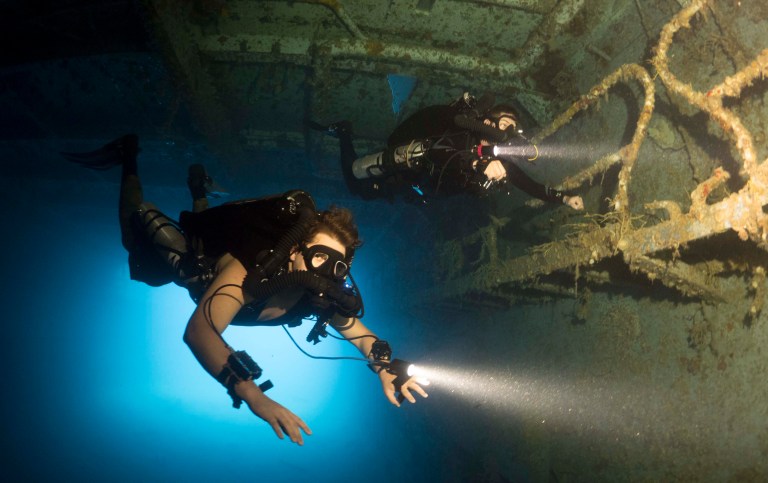
Hand signals, light signals, positioning, and movement all communicate information.
Unintentional signals—such as erratic movement or drifting—also communicate stress. Advanced technical diving progression teaches divers to manage both intentional and unintentional signals.

Communication and Authority Gradient
Divers may hesitate to signal concerns to more experienced teammates.
Professional teams flatten authority gradients explicitly. Technical diving training reinforces that any diver can—and must—signal concerns without justification.
Team Briefings Set Communication Tone
Clear pre-dive agreements about communication expectations increase signalling frequency underwater.
At N9BO℠, briefings explicitly state that early signalling is expected and respected.
Professional Parallels
In aviation and emergency services, communication breakdown is a leading cause of incidents. These fields train assertive communication deliberately.
Technical diving aligns with this approach. Communication is trained, practised, and enforced.
The Bottom Line
Most underwater problems don’t start with failure.
They start with silence.
In technical diving, communication is not optional—it is a continuous safety function. The most professional teams speak early, clearly, and often.
At N9BO℠, silence is treated as information.
Want Stronger Communication in Your Dive Team?
Clear communication prevents small issues from escalating into emergencies. Contact us to discuss training that improves coordination and awareness underwater.
From the N9BO℠ Knowledge Base