Sidemount Is a System, Not a Fashion Choice
Sidemount’s popularity has grown rapidly in recent years. Its streamlined profile, redundancy, and adaptability appeal to divers seeking improved comfort and access to overhead environments.
But sidemount is not simply an alternative to backmount.
It is a configuration philosophy built around balance, accessibility, and failure management. When treated casually — with improvised harness adjustments, inconsistent bungee routing, or poorly placed bolt snaps — the system quickly loses its advantages.
A properly configured sidemount rig should:
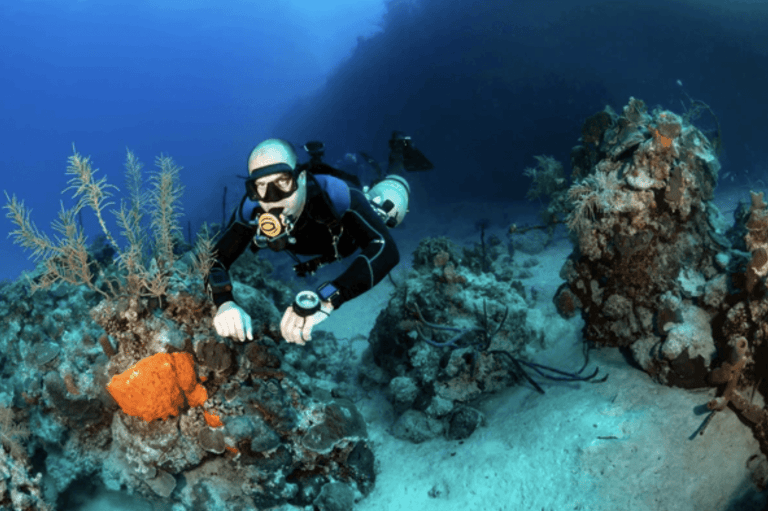
- Maintain horizontal trim at all times
- Keep cylinders aligned with the torso
- Allow immediate access to valves
- Minimise drag and clutter
At N9BO℠, sidemount training begins with configuration discipline before entering complex environments. Equipment must support the diver — not distract from the mission.
Trim: The Non-Negotiable Foundation
The most visible marker of sidemount competence is trim.
In backmount, minor imbalance can be masked by wing lift distribution and rigid tank position. In sidemount, imbalance becomes immediately obvious. Poor cylinder placement creates:
- Head-up or feet-down posture
- Uneven drag
- Increased workload
- Reduced situational awareness
Proper trim depends on:
- Harness adjustment
- Tank rigging height
- Bungee tension
- Weight distribution
- Lung volume control
The objective is not simply “horizontal.” It is stable, motionless neutrality. A sidemount diver should be able to hover without sculling or fin correction.
Trim is not cosmetic. It directly influences gas consumption, stress level, and the ability to perform critical tasks such as valve shutdowns or line work.

Gas Management and Alternating Regulators
One of the defining characteristics of sidemount is independent cylinder management.
Each cylinder carries its own regulator and pressure gauge. Gas must be consumed in a balanced manner to maintain symmetry. Alternating regulators at structured intervals prevents uneven buoyancy shifts and maintains trim integrity.
This is not optional discipline — it is core procedure.
Failure to alternate regulators leads to:
- One cylinder becoming significantly heavier
- Trim distortion
- Increased workload
- Poor shutdown access
Structured switching intervals maintain system equilibrium and reinforce gas awareness.
Gas management in sidemount is deliberate, not passive.
Valve Access and Shutdown Drills
A major advantage of sidemount is direct valve access. Unlike backmount, where flexibility and shoulder mobility can limit shutdown ability, sidemount places valves within clear reach.
However, accessibility only translates into safety when shutdown drills are practiced methodically.
Divers must be proficient in:
- Identifying regulator failure
- Isolating the affected cylinder
- Securing the valve smoothly
- Re-establishing breathing stability
Failure management in sidemount is clean and efficient when rehearsed. When not rehearsed, it becomes frantic.
Training must ensure shutdown drills are integrated into neutral buoyancy and mid-water control, not practiced kneeling or anchored to the bottom.
Task Loading in Overhead Environments
Sidemount is frequently associated with cave and mine diving, where restrictions demand streamlined configuration.
In these environments, task loading increases:
- Line management
- Navigation
- Depth control
- Gas planning
- Communication
If sidemount configuration is unstable, cognitive bandwidth shrinks rapidly. The diver begins compensating for imbalance rather than focusing on navigation or environmental hazards.
This is why equipment simplicity and consistency are critical. Standardised routing, predictable hose lengths, and disciplined gas switching free mental capacity for environmental awareness.
Sidemount should reduce workload — not increase it.

Common Mistakes in Sidemount Training
Many divers transition to sidemount seeking comfort rather than competence. This often leads to:
- Poorly adjusted harness systems
- Excessive accessories
- Inconsistent clipping procedures
- Neglect of trim refinement
The system becomes cluttered rather than streamlined.
Professional sidemount training emphasises minimalism and repeatability. Each attachment point, hose routing decision, and bolt snap placement must serve a purpose.
If equipment does not enhance safety or efficiency, it should be removed.
Why Configuration Discipline Defines Capability
Sidemount’s strength lies in its adaptability. Cylinders can be removed in restrictions. Gas redundancy is inherently independent. Valve access is improved.
But these advantages only exist when configuration is deliberate.
At N9BO℠, we emphasise that sidemount mastery begins on the surface — with harness fitting, cylinder rigging precision, and procedural clarity. Water time refines skill; structure builds foundation.
The goal is not aesthetic perfection. It is operational reliability.
When configured and trained properly, sidemount becomes one of the most versatile and controllable technical diving systems available.
When approached casually, it becomes unstable and distracting.
Capability comes from discipline — not equipment placement.

Ready to Refine Your Sidemount Configuration?
True sidemount proficiency requires structured setup, trim discipline, and failure management training. Contact N9BO℠ to discuss sidemount progression pathways.
From the N9BO℠ Knowledge Base