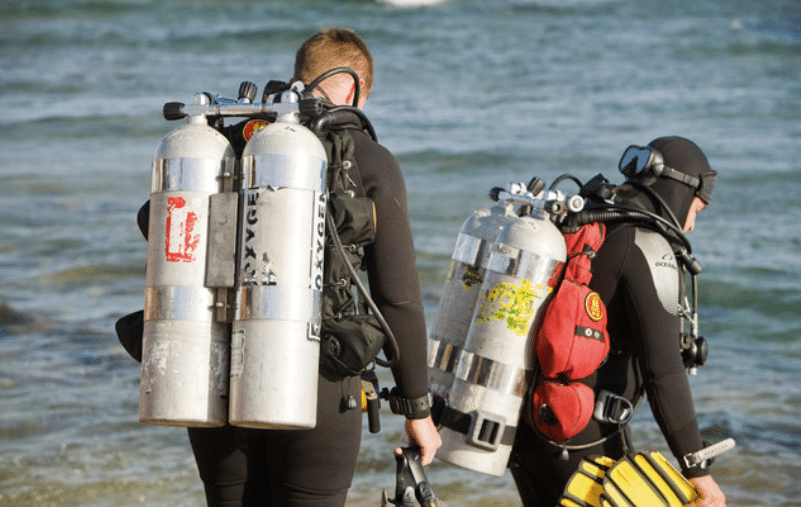
Beyond Nitrox: Enter Helium
While Nitrox reduces nitrogen exposure, advanced technical diving introduces helium to:
- Reduce narcosis.
- Manage gas density at depth.
- Improve cognitive clarity.
- Enhance decompression efficiency (in some profiles).
Helium changes the equation.
Literally.
Blending Trimix or Heliox involves:
- Oxygen fraction.
- Helium fraction.
- Nitrogen balance.
- Target MOD.
- END (Equivalent Narcotic Depth).
Advanced blending is precision chemistry.
Why Helium Changes the Risk Profile
Helium introduces new considerations:
- Cost and availability.
- Thermal conductivity effects.
- Gas density management.
- Accurate pressure tracking.
- Supply logistics.
Helium is expensive.
It must be managed responsibly.
Wasted helium is wasted margin.
Advanced blenders must calculate accurately to avoid:
- Over-blending.
- Under-blending.
- Costly errors.
- Dangerous composition shifts.
Trimix Calculations: No Room for Assumption
Advanced blending requires understanding:
- Dalton’s Law.
- Gas density thresholds.
- Partial pressure relationships.
- Oxygen exposure limits.
- Target depth planning.
Blenders must calculate:
- Target FO₂.
- Target FHe.
- Resulting FN₂.
- Cylinder pressure additions.
- Temperature corrections.
Even small percentage errors matter at depth.
At 60 metres, miscalculation becomes consequence.
Blending Methods in Advanced Context
Advanced blending may involve:
- Partial pressure blending (O₂ and He added separately).
- Continuous blending with helium injection systems.
- Banked helium storage management.
- Decanting from high-pressure cylinders.
Helium behaves differently than oxygen during filling.
Temperature and pressure relationships must be monitored carefully.
Proper sequencing prevents stratification.
Gas homogeneity must be verified.
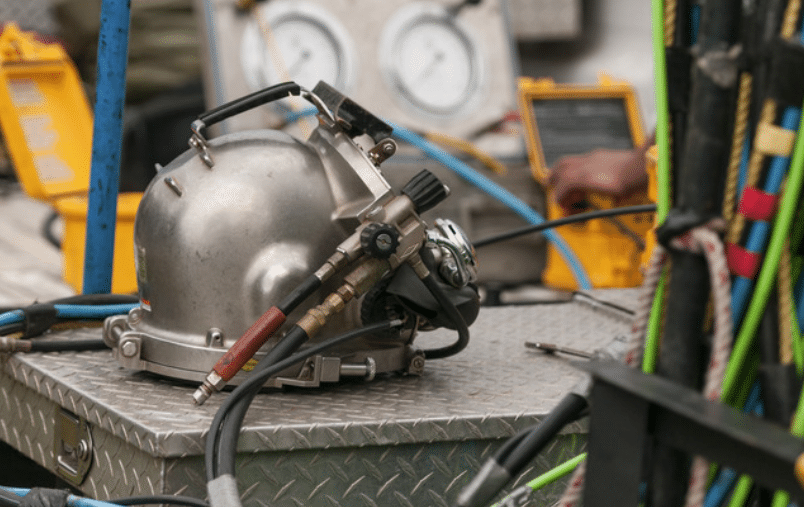
Oxygen Cleanliness and Compatibility
Advanced blending typically involves:
- High oxygen partial pressures.
- Dedicated oxygen-clean cylinders.
- Hydrocarbon-free systems.
- Controlled filling speeds.
Oxygen handling errors increase fire risk dramatically.
Advanced blenders must:
- Inspect equipment thoroughly.
- Maintain oxygen-clean standards.
- Avoid incompatible lubricants.
- Control temperature rise during fills.
Cleanliness is not optional.
It is life support hygiene.
Gas Density and Human Performance
Modern technical diving increasingly recognises gas density as a safety factor.
High-density gas increases:
- Work of breathing.
- CO₂ retention risk.
- Cognitive impairment under stress.
Advanced blenders must understand how mixture composition influences:
- Diver respiratory workload.
- CO₂ retention potential.
- Operational safety margin.
Blending is connected to physiology.
The gas prepared determines diver workload.
Documentation and Quality Control
Advanced gas blending requires:
- Clear labelling.
- MOD marking.
- END documentation.
- Helium percentage confirmation.
- Logbook recording.
Analysis must include:
- Oxygen verification.
- Helium verification (when possible).
- Cross-check procedures.
Gas without documentation is unsafe.
Professional culture requires traceability.

Error Pathways in Advanced Blending
Common errors include:
- Calculation mis-entry.
- Pressure misreading.
- Inadequate mixing time.
- Incorrect top-off pressure.
- Labelling errors.
These errors propagate:
- Incorrect decompression assumptions.
- Misaligned dive planning.
- Increased narcosis exposure.
- Hypoxic breathing gas risk.
Upstream discipline prevents downstream failure.
At N9BO℠, gas blending training emphasises that blending is an operational responsibility equal to dive leadership.
The blender protects the team before the dive begins.
Operational Contexts for Advanced Blenders
Advanced Gas Blender certification is essential for:
- Technical dive centres.
- Expedition teams.
- Public safety units.
- Military dive operations.
- Offshore commercial diving support.
Wherever Trimix is used, blending competence must match dive complexity.
Gas complexity increases exposure.
Exposure requires structured preparation.
Ethics and Accountability
Blenders must:
- Refuse unsafe requests.
- Verify diver qualification before supplying gases.
- Educate customers on MOD and END.
- Maintain strict standards.
Professional integrity protects:
- The diver.
- The facility.
- The operation.
Blending is not customer service.
It is safety control.
Precision Behind Every Technical Dive
Advanced gas blending is invisible during the dive.
Yet every technical diver depends on:
- Accurate FO₂.
- Correct helium fraction.
- Verified MOD.
- Reliable gas density.
Blending errors are silent.
Consequences are not.
Professional diving culture treats blending as mission-critical.
Precision defines professionalism.

Become a Certified TDI Advanced Gas Blender
Mixed gas diving demands disciplined preparation at the fill station. Contact N9BO℠ to learn about the TDI Advanced Gas Blender course and professional Trimix management training.
From the N9BO℠ Knowledge Base